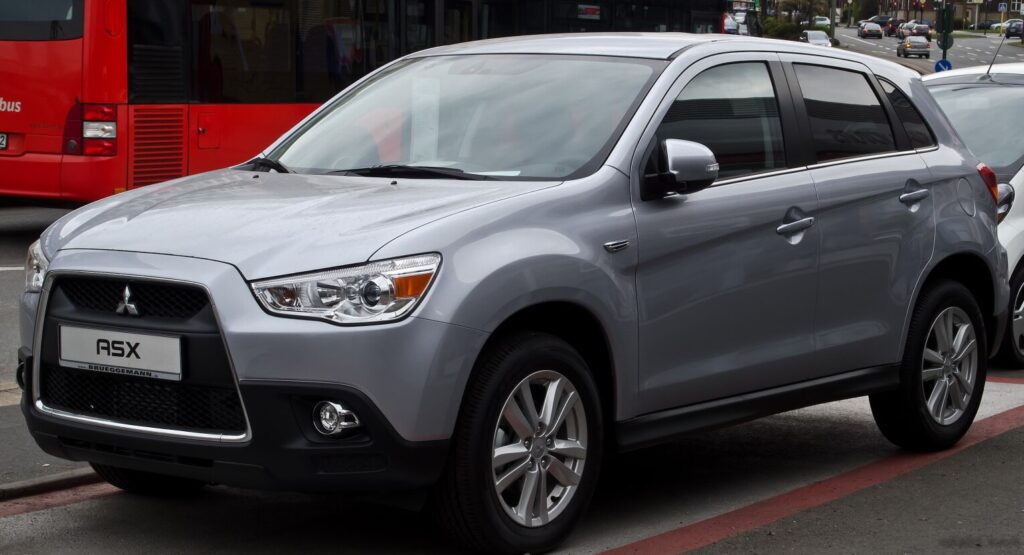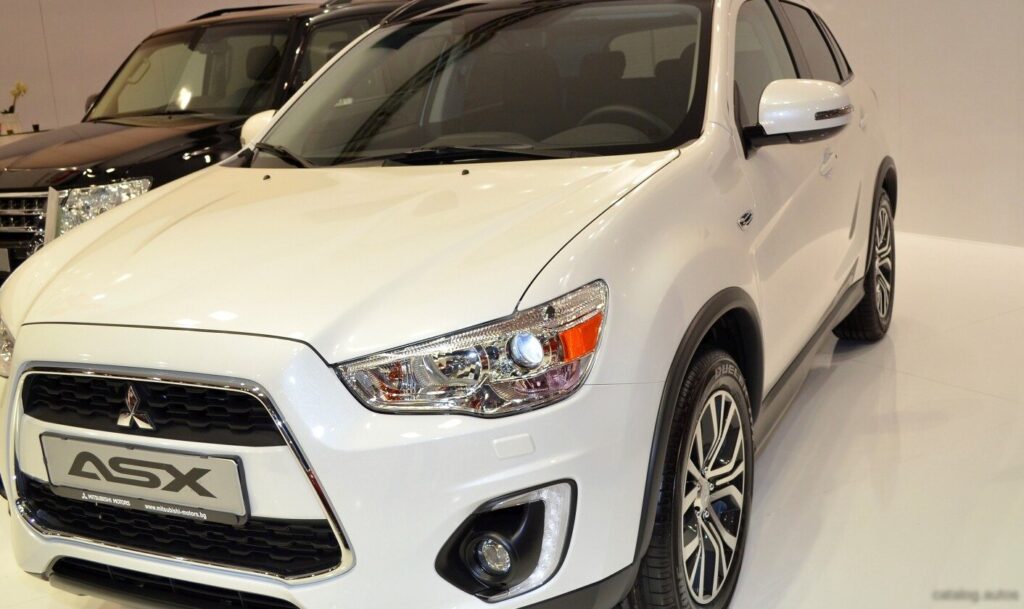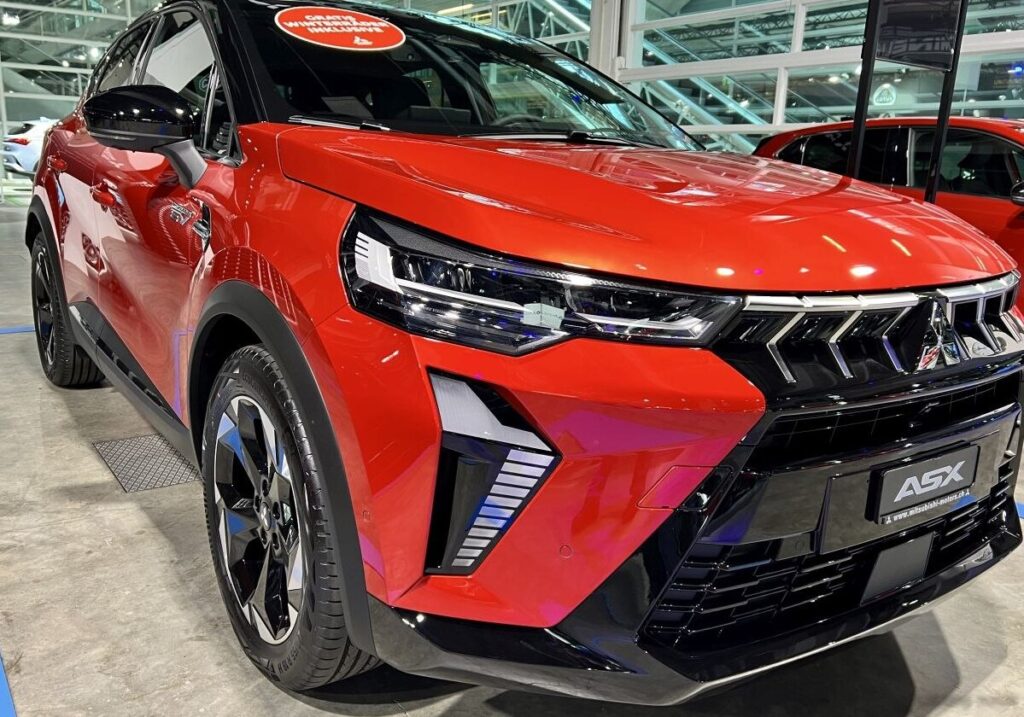
The Mitsubishi ASX II (facelift 2024) 1.0 Turbo, producing 91 horsepower, represents an entry-level offering within the updated second-generation ASX lineup. Introduced in June 2024, this variant is positioned as a fuel-efficient and accessible option for buyers seeking a compact SUV. The facelifted ASX builds upon the foundation of the 1HX0 platform, originally shared with other Stellantis products like the Peugeot 3008 and Opel/Vauxhall Crossland. Production of this specific configuration is slated to continue through December 2025, making it a relatively short-lived iteration within the broader ASX II cycle.
Technical Specifications
| Brand | Mitsubishi |
| Model | ASX |
| Generation | ASX II (facelift 2024) |
| Type (Engine) | 1.0 Turbo (91 Hp) |
| Start of production | June, 2024 |
| End of production | December, 2025 |
| Powertrain Architecture | Internal Combustion engine |
| Body type | SUV, Crossover |
| Seats | 5 |
| Doors | 5 |
| Fuel consumption at Low speed (WLTP) | 6.9-7.0 l/100 km (34.1 – 33.6 US mpg, 40.9 – 40.4 UK mpg, 14.5 – 14.3 km/l) |
| Fuel consumption at Medium speed (WLTP) | 5.5 l/100 km (42.8 US mpg, 51.4 UK mpg, 18.2 km/l) |
| Fuel consumption at high speed (WLTP) | 5.1 l/100 km (46.1 US mpg, 55.4 UK mpg, 19.6 km/l) |
| Fuel consumption at very high speed (WLTP) | 6.6 l/100 km (35.6 US mpg, 42.8 UK mpg, 15.2 km/l) |
| Combined fuel consumption (WLTP) | 6.0 l/100 km (39.2 US mpg, 47.1 UK mpg, 16.7 km/l) |
| CO2 emissions (WLTP) | 135 g/km |
| Fuel Type | Petrol (Gasoline) |
| Acceleration 0 – 100 km/h | 14 sec |
| Acceleration 0 – 62 mph | 14 sec |
| Acceleration 0 – 60 mph | 13.3 sec |
| Maximum speed | 168 km/h (104.39 mph) |
| Emission standard | Euro 6d |
| Weight-to-power ratio | 13.4 kg/Hp, 74.5 Hp/tonne |
| Weight-to-torque ratio | 7.6 kg/Nm, 131 Nm/tonne |
| Power | 91 Hp @ 4800-5000 rpm |
| Power per litre | 91.1 Hp/l |
| Torque | 160 Nm @ 2000-3750 rpm (118.01 lb.-ft. @ 2000-3750 rpm) |
| Engine layout | Front, Transverse |
| Engine Model/Code | H4D 470 |
| Engine displacement | 999 cm3 (60.96 cu. in.) |
| Number of cylinders | 3 |
| Engine configuration | Inline |
| Cylinder Bore | 72.2 mm (2.84 in.) |
| Piston Stroke | 81.34 mm (3.2 in.) |
| Compression ratio | 9.5:1 |
| Number of valves per cylinder | 4 |
| Fuel injection system | Multi-port manifold injection |
| Engine aspiration | Turbocharger, Intercooler |
| Valvetrain | DOHC |
| Engine oil capacity | 4.2 l (4.44 US qt | 3.7 UK qt) |
| Coolant | 6.4 l (6.76 US qt | 5.63 UK qt) |
| Kerb Weight | 1221-1226 kg (2691.84 – 2702.87 lbs.) |
| Max. weight | 1730 kg (3814 lbs.) |
| Max load | 504-509 kg (1111.13 – 1122.15 lbs.) |
| Trunk (boot) space – minimum | 484 l (17.09 cu. ft.) |
| Trunk (boot) space – maximum | 1596 l (56.36 cu. ft.) |
| Fuel tank capacity | 48 l (12.68 US gal | 10.56 UK gal) |
| Max. roof load | 80 kg (176.37 lbs.) |
| Permitted trailer load with brakes (12%) | 1200 kg (2645.55 lbs.) |
| Permitted trailer load without brakes | 645 kg (1421.98 lbs.) |
| Permitted towbar download | 75 kg (165.35 lbs.) |
| Length | 4239 mm (166.89 in.) |
| Width | 1797 mm (70.75 in.) |
| Width including mirrors | 2003 mm (78.86 in.) |
| Height | 1584 mm (62.36 in.) |
| Wheelbase | 2639 mm (103.9 in.) |
| Front track | 1562 mm (61.5 in.) |
| Rear (Back) track | 1547 mm (60.91 in.) |
| Front overhang | 883 mm (34.76 in.) |
| Rear overhang | 717 mm (28.23 in.) |
| Ride height (ground clearance) | 169 mm (6.65 in.) |
| Minimum turning circle (turning diameter) | 11.1 m (36.42 ft.) |
| Drivetrain Architecture | The Internal combustion engine (ICE) drives the front wheels of the vehicle. |
| Drive wheel | Front wheel drive |
| Number of gears and type of gearbox | 6 gears, manual transmission |
| Front suspension | Independent type McPherson |
| Rear suspension | Torsion |
| Front brakes | Ventilated discs |
| Rear brakes | Drum |
| Assisting systems | ABS (Anti-lock braking system) |
| Steering type | Steering rack and pinion |
| Power steering | Electric Steering |
| Tires size | 215/60 R17 |
| Wheel rims size | 7J x 17 |
Powertrain & Engine Architecture
The heart of this ASX variant is the H4D 470, a 999cc, three-cylinder turbocharged gasoline engine. This engine utilizes a single-scroll turbocharger and intercooler to boost power output to 91 horsepower and 160 Nm (118 lb-ft) of torque. The engine employs multi-point fuel injection and a double overhead camshaft (DOHC) valvetrain with four valves per cylinder. The compression ratio is set at 9.5:1. This engine is part of Mitsubishi’s efforts to offer downsized, turbocharged options for improved fuel efficiency. It’s paired with a 6-speed manual transmission, directing power to the front wheels. While an automatic transmission is available on other ASX II trims, it is not offered with this specific 1.0 Turbo engine.
Driving Characteristics
The 1.0 Turbo engine delivers adequate performance for everyday driving, but it’s not designed for spirited acceleration. The 0-60 mph time of around 13.3 seconds and a top speed of 104.39 mph reflect this. The turbocharger provides a noticeable boost in power during acceleration, but the engine can feel strained at higher speeds or when fully loaded. The manual transmission allows for greater driver control, but the relatively low torque output means frequent gear changes are necessary to maintain momentum, especially on inclines. Compared to higher-output ASX variants, such as those with larger displacement engines, this version prioritizes fuel economy over outright performance.
Equipment & Trim Levels
The 1.0 Turbo trim typically serves as the entry point to the ASX II range. Standard equipment generally includes air conditioning, a touchscreen infotainment system with smartphone integration (Apple CarPlay and Android Auto), basic safety features like ABS and multiple airbags, and power windows. Interior upholstery is typically cloth. Optional extras, depending on the market, may include alloy wheels, parking sensors, a rearview camera, and upgraded infotainment systems. The interior design is functional and modern, but materials are generally of a lower grade compared to higher trim levels.
Chassis & Braking
The ASX II utilizes a front-wheel-drive configuration with an independent McPherson strut suspension at the front and a torsion beam setup at the rear. The braking system consists of ventilated discs at the front and drum brakes at the rear. This configuration is typical for vehicles in this weight class and price range. The suspension is tuned for comfort, providing a reasonably smooth ride on most road surfaces. The electric power steering offers light and easy steering feel, making it suitable for urban driving.
Market Reception & Comparison
The 1.0 Turbo ASX II has been generally well-received as an affordable and fuel-efficient option within the compact SUV segment. Critics have praised its low running costs and ease of driving, but have also noted its limited performance. Compared to other trims in the ASX lineup, the 1.0 Turbo offers the lowest price point but sacrifices performance and some features. Against competitors like the Nissan Juke or Renault Captur with similar engine displacements, the ASX II 1.0 Turbo holds its own in terms of fuel economy and practicality.
Legacy
The long-term reliability of the H4D 470 engine remains to be fully established, as it is a relatively new powerplant. However, Mitsubishi has a generally good reputation for building reliable vehicles. On the used car market, the 1.0 Turbo ASX II is likely to appeal to budget-conscious buyers seeking a practical and economical SUV. Its relatively low power output may limit its appeal to those who prioritize performance, but its fuel efficiency and affordability could make it a popular choice for urban commuters and first-time car buyers.