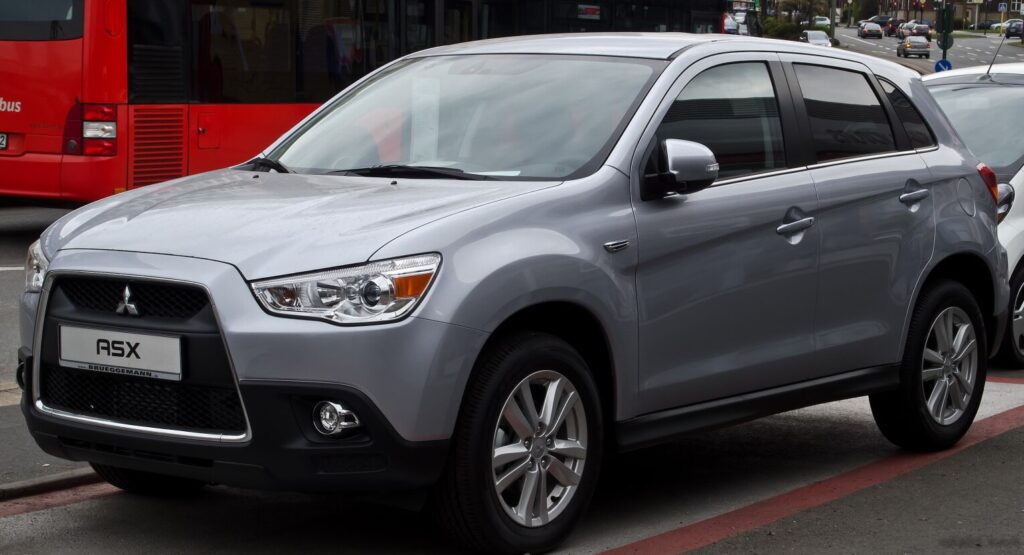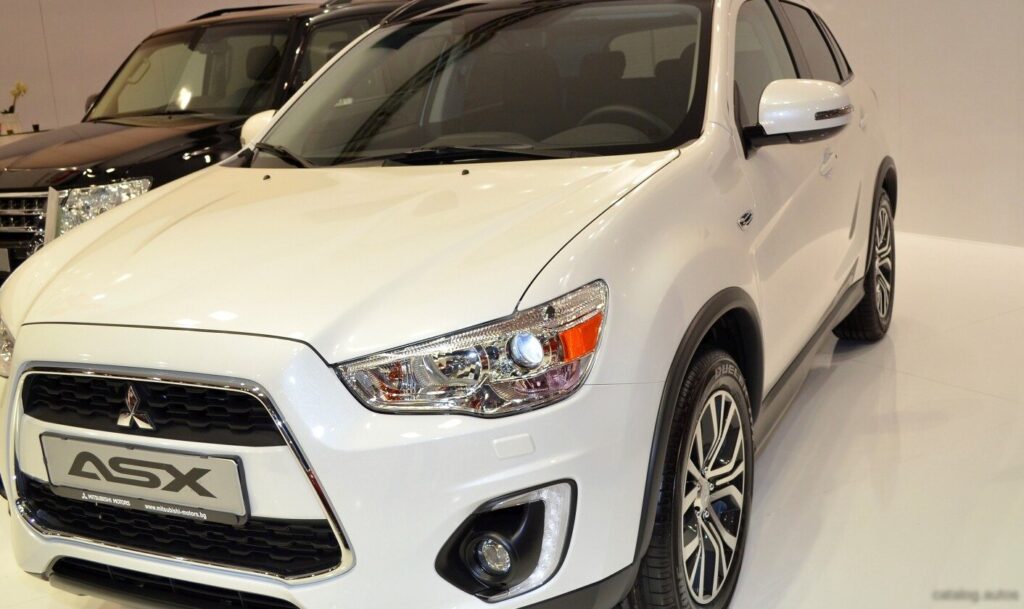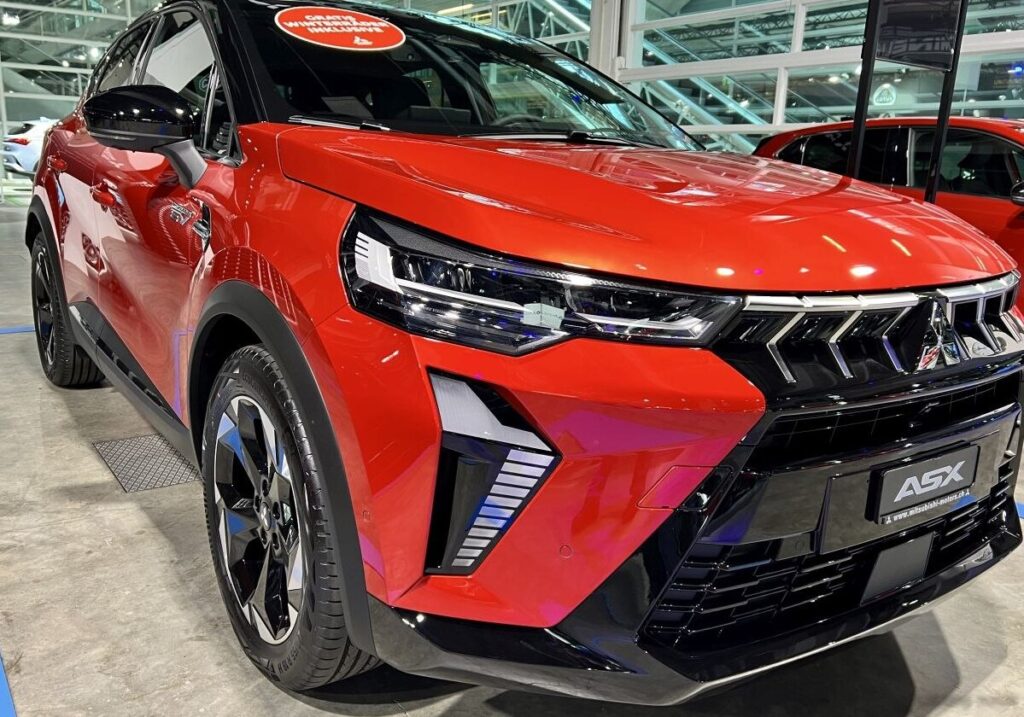
The Mitsubishi ASX II (facelift 2024) 1.2 Turbo, producing 114 horsepower, represents an entry-level offering within the redesigned ASX lineup. Introduced in December 2025, this variant is positioned as a fuel-efficient and accessible option for buyers seeking a compact crossover SUV. It builds upon the foundation of the broader ASX II generation, which itself is a rebadged version of the Renault Captur, marking a significant shift in Mitsubishi’s strategy for the European and other international markets. This model aims to provide a balance between affordability, practicality, and modern features.
Technical Specifications
| Brand | Mitsubishi |
| Model | ASX |
| Generation | ASX II (facelift 2024) |
| Type (Engine) | 1.2 Turbo (114 Hp) |
| Start of production | December, 2025 |
| Powertrain Architecture | Internal Combustion engine |
| Body type | SUV, Crossover |
| Seats | 5 |
| Doors | 5 |
| Fuel consumption at Low speed (WLTP) | 6.9 l/100 km (34.1 US mpg, 40.9 UK mpg, 14.5 km/l) |
| Fuel consumption at Medium speed (WLTP) | 5.4 l/100 km (43.6 US mpg, 52.3 UK mpg, 18.5 km/l) |
| Fuel consumption at high speed (WLTP) | 5.1 l/100 km (46.1 US mpg, 55.4 UK mpg, 19.6 km/l) |
| Fuel consumption at very high speed (WLTP) | 6.5 l/100 km (36.2 US mpg, 43.5 UK mpg, 15.4 km/l) |
| Combined fuel consumption (WLTP) | 5.9 l/100 km (39.9 US mpg, 47.9 UK mpg, 16.9 km/l) |
| CO2 emissions (WLTP) | 133 g/km |
| Fuel Type | Petrol (Gasoline) |
| Acceleration 0 – 100 km/h | 12.3 sec |
| Acceleration 0 – 62 mph | 12.3 sec |
| Acceleration 0 – 60 mph | 11.7 sec |
| Maximum speed | 180 km/h (111.85 mph) |
| Emission standard | Euro 6e-bis-FCM |
| Weight-to-power ratio | 10.7 kg/Hp, 93.4 Hp/tonne |
| Weight-to-torque ratio | 6.4 kg/Nm, 155.6 Nm/tonne |
| Power | 114 Hp @ 4000-4350 rpm |
| Torque | 190 Nm @ 1750-4000 rpm (140.14 lb.-ft. @ 1750-4000 rpm) |
| Engine layout | Front, Transverse |
| Engine Model/Code | H5F G6 |
| Engine displacement | 1199 cm3 (73.17 cu. in.) |
| Number of cylinders | 3 |
| Engine configuration | Inline |
| Number of valves per cylinder | 4 |
| Fuel injection system | Direct injection |
| Engine aspiration | Turbocharger, Intercooler |
| Valvetrain | DOHC |
| Engine systems | Start & Stop System, Particulate filter |
| Kerb Weight | 1221 kg (2691.84 lbs.) |
| Max. weight | 1730 kg (3814 lbs.) |
| Max load | 509 kg (1122.15 lbs.) |
| Trunk (boot) space – minimum | 484 l (17.09 cu. ft.) |
| Trunk (boot) space – maximum | 1596 l (56.36 cu. ft.) |
| Fuel tank capacity | 48 l (12.68 US gal | 10.56 UK gal) |
| Max. roof load | 80 kg (176.37 lbs.) |
| Permitted trailer load with brakes (12%) | 1200 kg (2645.55 lbs.) |
| Permitted trailer load without brakes | 660 kg (1455.05 lbs.) |
| Permitted towbar download | 75 kg (165.35 lbs.) |
| Length | 4239 mm (166.89 in.) |
| Width | 1797 mm (70.75 in.) |
| Width including mirrors | 2003 mm (78.86 in.) |
| Height | 1584 mm (62.36 in.) |
| Wheelbase | 2639 mm (103.9 in.) |
| Front track | 1562 mm (61.5 in.) |
| Rear (Back) track | 1547 mm (60.91 in.) |
| Front overhang | 883 mm (34.76 in.) |
| Rear overhang | 717 mm (28.23 in.) |
| Ride height (ground clearance) | 169 mm (6.65 in.) |
| Minimum turning circle (turning diameter) | 11.1 m (36.42 ft.) |
| Drivetrain Architecture | The Internal combustion engine (ICE) drives the front wheels of the vehicle. |
| Drive wheel | Front wheel drive |
| Number of gears and type of gearbox | 6 gears, manual transmission |
| Front suspension | Independent type McPherson |
| Rear suspension | Torsion |
| Front brakes | Ventilated discs |
| Rear brakes | Drum |
| Assisting systems | ABS (Anti-lock braking system) |
| Steering type | Steering rack and pinion |
| Power steering | Electric Steering |
| Tires size | 215/60 R17 |
| Wheel rims size | 7J x 17 |
INTRODUCTION
The Mitsubishi ASX II (facelift 2024) 1.2 Turbo is a front-wheel-drive compact crossover SUV that debuted in December 2025. This variant is a key component of Mitsubishi’s revised European strategy, leveraging a rebadged Renault Captur platform (the 1HX0/A3 platform). It serves as the entry point into the ASX II range, offering a more affordable option compared to higher-trim levels and plug-in hybrid variants. The facelift brings updated styling and potentially minor equipment revisions to the existing second-generation model. The 1.2 Turbo engine is designed to appeal to buyers prioritizing fuel efficiency and lower running costs.
Powertrain & Engine Architecture
At the heart of the ASX II 1.2 Turbo lies the H5F G6 engine, a 1.2-liter turbocharged three-cylinder gasoline engine. This engine utilizes direct fuel injection and a turbocharger with an intercooler to boost power and efficiency. The engine produces 114 horsepower at 4000-4350 rpm and 190 Nm (140.14 lb.-ft.) of torque between 1750 and 4000 rpm. The engine features a double overhead camshaft (DOHC) valvetrain and incorporates a start/stop system to further reduce fuel consumption. A particulate filter is also included to meet stringent Euro 6e-bis-FCM emission standards. The engine is paired with a 6-speed manual transmission, delivering power to the front wheels. This configuration prioritizes fuel economy over outright performance.
Driving Characteristics
The 1.2 Turbo engine, coupled with the manual transmission, provides adequate performance for everyday driving. Acceleration from 0 to 100 km/h (0-62 mph) takes approximately 12.3 seconds, while 0-60 mph is achieved in around 11.7 seconds. Top speed is limited to 180 km/h (111.85 mph). The turbocharger provides a noticeable boost in power during acceleration, but the engine can feel somewhat strained when fully loaded or climbing hills. The 6-speed manual transmission offers a reasonable range of gear ratios, allowing drivers to keep the engine in its optimal power band. Compared to potential higher-output variants (if offered), this 1.2 Turbo version prioritizes fuel efficiency and a more relaxed driving experience. The manual transmission provides more driver engagement than an automatic, but requires more effort in stop-and-go traffic.
Equipment & Trim Levels
The ASX II 1.2 Turbo typically comes with a standard equipment list focused on practicality and convenience. This generally includes air conditioning, a touchscreen infotainment system with smartphone integration (Apple CarPlay and Android Auto), Bluetooth connectivity, and basic safety features like ABS, stability control, and multiple airbags. Interior upholstery is typically cloth, and the dashboard features a functional, if not luxurious, design. Optional extras may include alloy wheels, a rearview camera, parking sensors, and upgraded infotainment systems with navigation. Specific trim levels and available options vary depending on the market.
Chassis & Braking
The ASX II utilizes a McPherson strut independent suspension setup at the front and a torsion beam suspension at the rear. This configuration provides a comfortable ride quality, suitable for everyday driving conditions. The front brakes are ventilated discs, offering good stopping power, while the rear brakes are drums, a cost-saving measure common in this segment. The electric power steering provides light and easy steering feel. The vehicle’s weight of 1221 kg (2691.84 lbs.) contributes to its relatively nimble handling.
Market Reception & Comparison
The Mitsubishi ASX II 1.2 Turbo is generally viewed as a competitive offering in the compact crossover segment, particularly for buyers seeking a fuel-efficient and affordable vehicle. Critics have praised its fuel economy (5.9 l/100 km combined) and practical interior space. However, some have noted that the engine can feel underpowered in certain situations. Compared to other trims in the ASX II lineup, the 1.2 Turbo offers the lowest price point but also the least amount of power. It competes with other popular crossovers like the Nissan Juke, Peugeot 2008, and Renault Captur, offering a similar blend of practicality, fuel efficiency, and affordability.
Legacy
The long-term reliability of the H5F G6 engine remains to be fully established, as it is a relatively new powertrain in the Mitsubishi lineup. However, the Renault-sourced platform has a proven track record in Europe. The 1.2 Turbo variant is expected to hold its value reasonably well in the used car market, particularly as fuel efficiency becomes an increasingly important factor for buyers. Its simplicity and relatively low maintenance costs should also contribute to its appeal on the used market. The ASX II 1.2 Turbo represents Mitsubishi’s attempt to remain competitive in the crowded crossover segment by offering a value-oriented and fuel-efficient option.