
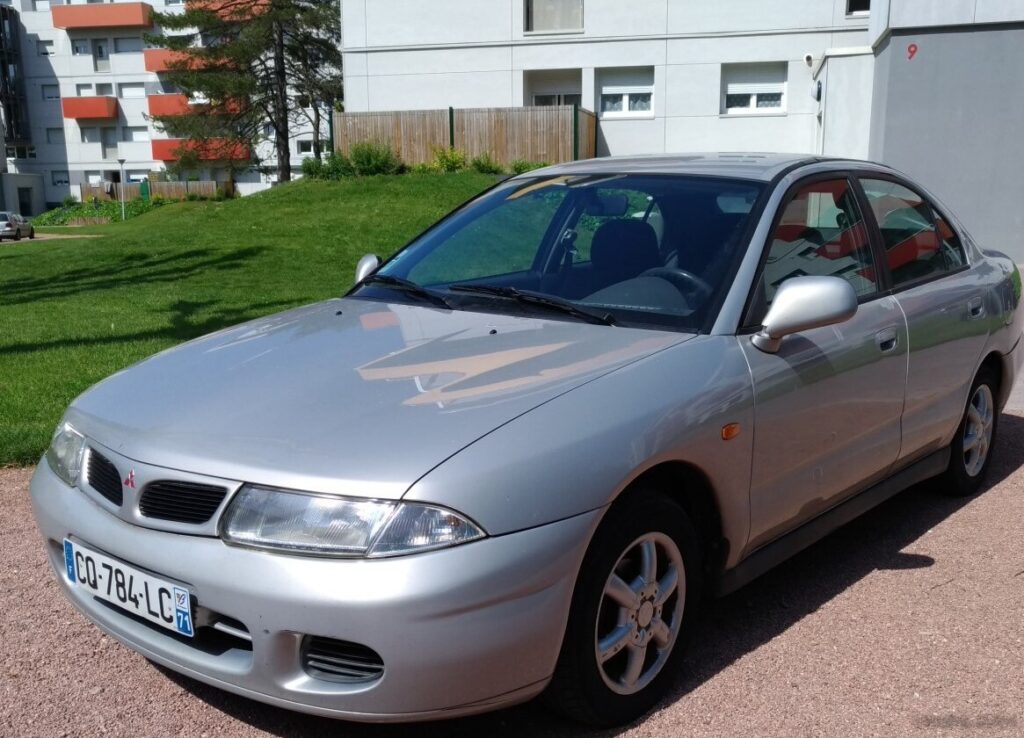
The Mitsubishi Carisma 1.6, producing 99 horsepower, was a mainstay of the Carisma range produced between 1997 and 2000. Positioned as an entry-level to mid-range offering, it aimed to provide affordable and practical transportation within the compact sedan segment. The Carisma, internally designated as the DA_ platform, represented Mitsubishi’s attempt to create a globally competitive vehicle, particularly in the European market, and was a collaborative effort with Volvo, sharing some components with the S40 and V40. This variant, with its 1.6-liter engine and typically a five-speed manual transmission (though an automatic was also available), served as a volume seller, appealing to buyers prioritizing fuel efficiency and reasonable running costs over outright performance.
Technical Specifications
| Brand | Mitsubishi |
| Model | Carisma |
| Generation | Carisma |
| Type (Engine) | 1.6 (99 Hp) |
| Start of production | 1997 |
| End of production | 2000 |
| Powertrain Architecture | Internal Combustion engine |
| Body type | Sedan |
| Seats | 5 |
| Doors | 4 |
| Fuel consumption (urban) | 9.7 l/100 km (24.2 US mpg) |
| Fuel consumption (extra urban) | 5.6 l/100 km (42 US mpg) |
| Fuel Type | Petrol (Gasoline) |
| Acceleration 0 – 100 km/h | 11.5 sec |
| Acceleration 0 – 62 mph | 11.5 sec |
| Acceleration 0 – 60 mph | 10.9 sec |
| Maximum speed | 185 km/h (114.95 mph) |
| Weight-to-power ratio | 11.2 kg/Hp |
| Weight-to-torque ratio | 8.1 kg/Nm |
| Power | 99 Hp @ 5750 rpm |
| Power per litre | 62 Hp/l |
| Torque | 137 Nm @ 4000 rpm (101.05 lb.-ft. @ 4000 rpm) |
| Engine layout | Front, Transverse |
| Engine displacement | 1597 cm3 (97.45 cu. in.) |
| Number of cylinders | 4 |
| Engine configuration | Inline |
| Cylinder Bore | 81 mm (3.19 in.) |
| Piston Stroke | 77.5 mm (3.05 in.) |
| Compression ratio | 10:1 |
| Number of valves per cylinder | 4 |
| Fuel injection system | Multi-port manifold injection |
| Engine aspiration | Naturally aspirated engine |
| Valvetrain | OHC |
| Kerb Weight | 1105 kg (2436.11 lbs.) |
| Max. weight | 1630 kg (3593.53 lbs.) |
| Max load | 525 kg (1157.43 lbs.) |
| Trunk (boot) space – maximum | 460 l (16.24 cu. ft.) |
| Fuel tank capacity | 60 l (15.85 US gal | 13.2 UK gal) |
| Length | 4435 mm (174.61 in.) |
| Width | 1710 mm (67.32 in.) |
| Height | 1405 mm (55.31 in.) |
| Wheelbase | 2550 mm (100.39 in.) |
| Front track | 1455 mm (57.28 in.) |
| Rear (Back) track | 1475 mm (58.07 in.) |
| Drivetrain Architecture | The Internal combustion engine (ICE) drives the front wheels of the vehicle. |
| Drive wheel | Front wheel drive |
| Number of gears and type of gearbox | 5 gears, manual transmission |
| Front suspension | Spring Strut |
| Rear suspension | Coil spring |
| Front brakes | Ventilated discs |
| Rear brakes | Drum |
| Assisting systems | ABS (Anti-lock braking system) |
| Steering type | Steering rack and pinion |
| Power steering | Hydraulic Steering |
| Tires size | 185/65 R14 |
Powertrain & Engine Architecture
The heart of the Carisma 1.6 was the 4G18 engine, a 1.6-liter inline-four cylinder gasoline engine. This engine utilized a single overhead camshaft (SOHC) valvetrain with four valves per cylinder. Fuel delivery was managed by a multi-point fuel injection system, providing adequate, though not exceptional, combustion control. The engine’s 10:1 compression ratio was a typical value for the era, balancing performance and fuel efficiency. While not a particularly technologically advanced engine, the 4G18 was known for its relative simplicity and durability. The five-speed manual transmission was the most common pairing, offering a reasonably direct driving experience. A four-speed automatic transmission was also available, but it noticeably dulled acceleration and increased fuel consumption. The automatic, while providing convenience, was often criticized for its sluggish shifts and limited responsiveness.
Driving Characteristics
The 99 hp output of the 1.6-liter engine translated to adequate, but not thrilling, performance. Acceleration from 0 to 60 mph took around 10.9 seconds, making it competitive with other cars in its class, but significantly slower than the more powerful Carisma variants like the 2.0-liter models. The engine felt relatively strained at higher speeds, and overtaking required careful planning. The manual transmission allowed for better control and responsiveness, while the automatic version felt somewhat lethargic. The gear ratios were tuned for fuel economy rather than outright performance, resulting in a comfortable but uninspiring driving experience. The Carisma 1.6 was best suited for city driving and highway cruising at moderate speeds.
Equipment & Trim Levels
The Carisma 1.6 typically came with a fairly basic level of equipment, reflecting its position as an entry-level model. Standard features generally included power steering, central locking, and electric front windows. Air conditioning was often an optional extra. Interior upholstery was typically cloth, and the dashboard featured a functional but somewhat plain design. Higher trim levels, such as the GLX, added features like alloy wheels, a better audio system, and upgraded interior trim. Safety features were relatively basic for the time, typically including ABS brakes and a driver’s airbag.
Chassis & Braking
The Carisma utilized a MacPherson strut front suspension and a coil spring rear suspension. This setup provided a comfortable ride, but handling was not particularly sporty. The front brakes were ventilated discs, providing adequate stopping power, while the rear brakes were drums, which were less effective. The Carisma 1.6’s relatively light weight (around 1105 kg or 2436 lbs) helped to offset the engine’s modest power output. Stabilizer bars were fitted to both the front and rear axles, helping to reduce body roll during cornering.
Market Reception & Comparison
The Mitsubishi Carisma 1.6 was generally well-received as a practical and affordable family sedan. Critics praised its comfortable ride, spacious interior, and reasonable fuel economy. However, it was often criticized for its uninspiring performance and somewhat bland styling. Compared to other cars in its class, such as the Ford Focus and Opel Astra, the Carisma 1.6 offered a competitive package, but lacked the dynamic flair of some of its rivals. The 1.8-liter and 2.0-liter Carisma variants offered significantly more performance, but at a higher price point. The 1.9 TDI diesel version provided excellent fuel economy, but was more expensive to purchase and maintain.
Legacy
The Mitsubishi Carisma 1.6, while not a particularly memorable car, proved to be a reliable and durable vehicle. The 4G18 engine is known for its longevity, and many examples are still on the road today. The Carisma’s collaborative development with Volvo resulted in a well-engineered platform that provided a solid foundation for both vehicles. In the used car market, the Carisma 1.6 remains an affordable option for buyers seeking a practical and economical family sedan. However, potential buyers should be aware of the age-related issues common to cars of this era, such as corrosion and wear and tear on suspension components. Overall, the Carisma 1.6 represents a sensible and dependable choice for those seeking a no-frills, budget-friendly vehicle.
