
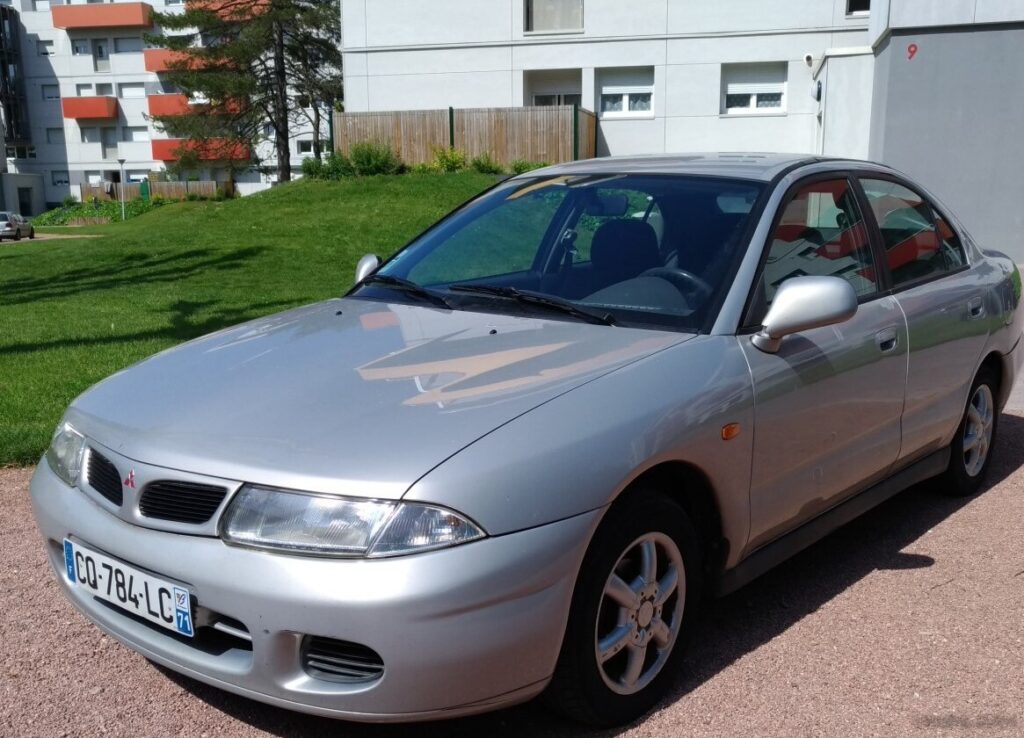
The Mitsubishi Carisma 1.6 i 16V, produced between 1999 and 2003, represented a key offering in Mitsubishi’s compact sedan lineup. Positioned as a mainstream, affordable option, it aimed to provide a balance of practicality, fuel efficiency, and reasonable performance. The Carisma, internally designated as the DQ platform, was Mitsubishi’s attempt to compete directly with established European and Japanese rivals in the C-segment. This particular 1.6-liter, 16-valve variant served as a core model, appealing to buyers seeking a dependable and economical family car. It was often seen as a step up from the base models, offering a more refined driving experience without the higher price tag of the more powerful trims.
Technical Specifications
| Brand | Mitsubishi |
| Model | Carisma |
| Generation | Carisma |
| Type (Engine) | 1.6 i 16V (103 Hp) |
| Start of production | 1999 year |
| End of production | 2003 year |
| Powertrain Architecture | Internal Combustion engine |
| Body type | Sedan |
| Seats | 5 |
| Doors | 4 |
| Fuel consumption (urban) | 10.1 l/100 km (23.3 US mpg, 28 UK mpg, 9.9 km/l) |
| Fuel consumption (extra urban) | 5.8 l/100 km (40.6 US mpg, 48.7 UK mpg, 17.2 km/l) |
| Fuel consumption (combined) | 7.4 l/100 km (31.8 US mpg, 38.2 UK mpg, 13.5 km/l) |
| Fuel Type | Petrol (Gasoline) |
| Acceleration 0 – 100 km/h | 12.4 sec |
| Acceleration 0 – 62 mph | 12.4 sec |
| Acceleration 0 – 60 mph | 11.8 sec |
| Maximum speed | 190 km/h (118.06 mph) |
| Weight-to-power ratio | 11.5 kg/Hp, 86.9 Hp/tonne |
| Weight-to-torque ratio | 8.4 kg/Nm, 119 Nm/tonne |
| Power | 103 Hp @ 6000 rpm |
| Power per litre | 64.5 Hp/l |
| Torque | 141 Nm @ 4500 rpm (104 lb.-ft. @ 4500 rpm) |
| Engine layout | Front, Transverse |
| Engine displacement | 1597 cm3 (97.45 cu. in.) |
| Number of cylinders | 4 |
| Engine configuration | Inline |
| Cylinder Bore | 81 mm (3.19 in.) |
| Piston Stroke | 77.5 mm (3.05 in.) |
| Compression ratio | 10:1 |
| Number of valves per cylinder | 4 |
| Fuel injection system | Multi-port manifold injection |
| Engine aspiration | Naturally aspirated engine |
| Valvetrain | DOHC |
| Kerb Weight | 1185 kg (2612.48 lbs.) |
| Max. weight | 1695 kg (3736.84 lbs.) |
| Max load | 510 kg (1124.36 lbs.) |
| Trunk (boot) space – minimum | 460 l (16.24 cu. ft.) |
| Fuel tank capacity | 60 l (15.85 US gal | 13.2 UK gal) |
| Length | 4475 mm (176.18 in.) |
| Width | 1710 mm (67.32 in.) |
| Height | 1405 mm (55.31 in.) |
| Wheelbase | 2550 mm (100.39 in.) |
| Front track | 1475 mm (58.07 in.) |
| Rear (Back) track | 1470 mm (57.87 in.) |
| Drivetrain Architecture | The Internal combustion engine (ICE) drives the front wheels of the vehicle. |
| Drive wheel | Front wheel drive |
| Number of gears and type of gearbox | 5 gears, manual transmission |
| Front suspension | Spring Strut |
| Rear suspension | Coil spring |
| Front brakes | Ventilated discs |
| Rear brakes | Disc |
| Assisting systems | ABS (Anti-lock braking system) |
| Steering type | Steering rack and pinion |
| Power steering | Hydraulic Steering |
| Tires size | 195/60 R15 |
Powertrain & Engine Architecture
At the heart of the Carisma 1.6 i 16V lies the Mitsubishi 4G18 engine. This 1.6-liter inline-four cylinder engine utilizes a dual overhead camshaft (DOHC) design. The 16 valves (four per cylinder) contribute to improved breathing and higher-end power delivery. Fuel delivery is managed by a multi-point fuel injection system, providing precise fuel metering for optimal combustion. The engine produces 103 horsepower at 6000 rpm and 141 Nm (104 lb-ft) of torque at 4500 rpm. The engine’s design prioritized fuel efficiency and smooth operation over outright performance. The Carisma 1.6 i 16V was exclusively offered with a 5-speed manual transmission. This transmission was chosen for its simplicity, reliability, and contribution to fuel economy. The gear ratios were tuned to provide adequate acceleration while maintaining reasonable engine speeds at highway cruising.
Driving Characteristics
The Carisma 1.6 i 16V offered a comfortable and predictable driving experience. Acceleration from a standstill to 60 mph took around 11.8 seconds, and it could reach a top speed of approximately 118 mph. While not particularly sporty, the engine provided sufficient power for everyday driving situations, including city commutes and highway overtaking. The 5-speed manual transmission allowed drivers to maintain control over engine speed and optimize fuel efficiency. Compared to the more powerful 2.0-liter variants, the 1.6-liter engine felt less strained during acceleration, but it lacked the same level of responsiveness. The suspension setup, featuring MacPherson struts at the front and a multi-link setup at the rear, provided a comfortable ride quality, absorbing bumps and imperfections in the road surface effectively.
Equipment & Trim Levels
The Carisma 1.6 i 16V typically came equipped with a reasonable level of standard features. These included power steering, central locking, electric front windows, and an AM/FM radio. Higher trim levels, often denoted by designations like ‘GLX’ or ‘GDI’, added features such as air conditioning, alloy wheels, and upgraded interior trim. Interior upholstery was typically cloth, with a focus on durability and practicality. Optional extras included a sunroof, upgraded audio systems, and metallic paint finishes. The dashboard layout was functional and straightforward, with clearly labeled controls and a user-friendly interface.
Chassis & Braking
The Carisma’s chassis was a typical monocoque construction, providing a balance of rigidity and weight. The front suspension utilized MacPherson struts, while the rear employed a multi-link setup. This combination aimed to deliver a comfortable ride and predictable handling. Braking duties were handled by ventilated discs at the front and solid discs at the rear, providing adequate stopping power for the vehicle’s weight and performance. An Anti-lock Braking System (ABS) was standard, enhancing safety by preventing wheel lockup during emergency braking.
Market Reception & Comparison
The Mitsubishi Carisma 1.6 i 16V was generally well-received by automotive critics as a practical and affordable family car. It was praised for its comfortable ride, fuel efficiency, and reliable engine. However, it was often criticized for its somewhat bland styling and lack of sporting pretensions. Compared to rivals like the Ford Focus, Volkswagen Golf, and Opel/Vauxhall Astra, the Carisma offered a competitive package, but it didn’t necessarily excel in any particular area. The 1.6-liter engine offered better fuel economy than the larger 2.0-liter variants, but it lacked the same level of performance. Reliability was generally good, although some owners reported minor issues with the electrical system.
Legacy
The Mitsubishi Carisma, while not a groundbreaking vehicle, established itself as a dependable and affordable option in the compact sedan segment. The 1.6-liter engine proved to be particularly durable, and many examples are still on the road today. In the used car market, the Carisma 1.6 i 16V represents a budget-friendly choice for buyers seeking a practical and reliable vehicle. While it may not offer the latest technology or the most exciting driving experience, it remains a testament to Mitsubishi’s commitment to building durable and dependable automobiles. Its simplicity and relatively low maintenance costs continue to appeal to those seeking a no-frills, economical mode of transportation.
