
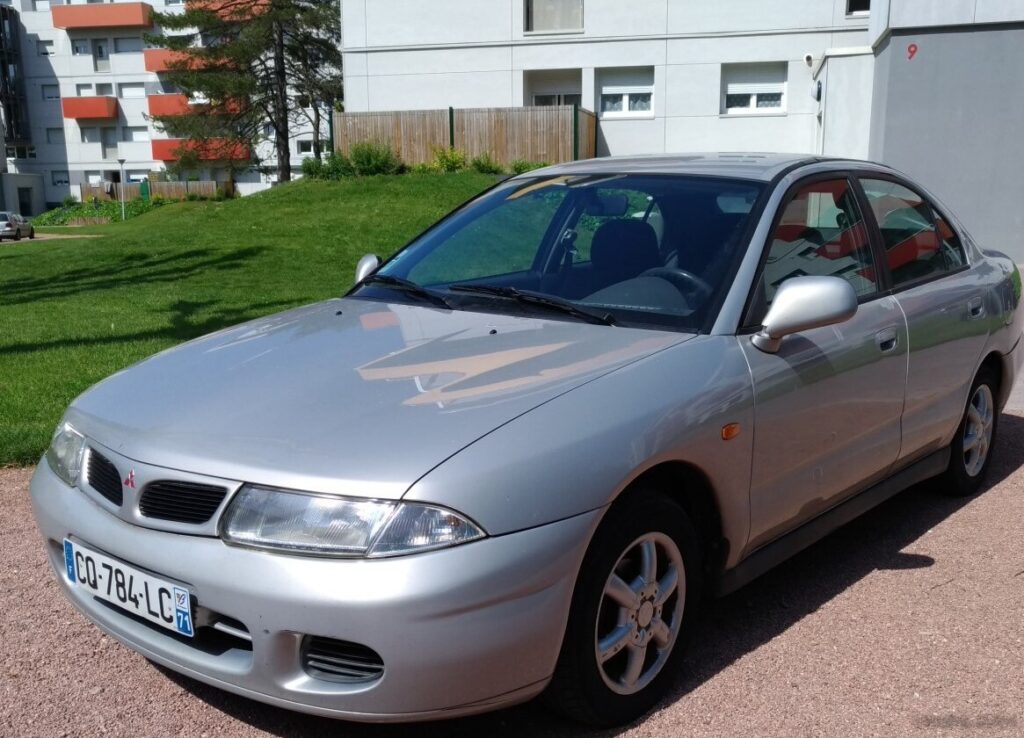
The Mitsubishi Carisma 1.8 16V GDI Automatic, produced between 2001 and 2003, represented a mid-range offering within the broader Carisma lineup. The Carisma, Mitsubishi’s attempt to establish a stronger foothold in the European compact sedan market, was built on the shared 1HX0/A3 platform developed in collaboration with Volvo (resulting in the similar Volvo S40/V40 models). This particular variant, combining the 1.8-liter GDI engine with a four-speed automatic transmission, aimed to provide a balance of performance and convenience for buyers seeking a comfortable and relatively efficient family car. It sat between the base 1.6-liter models and the more performance-oriented 2.0-liter versions in terms of price and capability.
Technical Specifications
| Brand | Mitsubishi |
| Model | Carisma |
| Generation | Carisma |
| Type (Engine) | 1.8 16V GDI (122 Hp) Automatic |
| Start of production | 2001 |
| End of production | 2003 |
| Powertrain Architecture | Internal Combustion engine |
| Body type | Sedan |
| Seats | 5 |
| Doors | 4 |
| Fuel consumption (urban) | 11.4 l/100 km (20.6 US mpg) |
| Fuel consumption (extra urban) | 6.3 l/100 km (37.3 US mpg) |
| Fuel consumption (combined) | 8.1 l/100 km (29 US mpg) |
| Fuel Type | Petrol (Gasoline) |
| Acceleration 0 – 100 km/h | 12.4 sec |
| Acceleration 0 – 62 mph | 12.4 sec |
| Acceleration 0 – 60 mph | 11.8 sec |
| Maximum speed | 200 km/h (124.27 mph) |
| Weight-to-power ratio | 10 kg/Hp |
| Weight-to-torque ratio | 7 kg/Nm |
| Power | 122 Hp @ 5500 rpm |
| Torque | 174 Nm @ 3750 rpm (128.34 lb.-ft. @ 3750 rpm) |
| Engine layout | Front, Transverse |
| Engine Model/Code | 4G93 |
| Engine displacement | 1834 cm3 (111.92 cu. in.) |
| Number of cylinders | 4 |
| Engine configuration | Inline |
| Cylinder Bore | 81 mm (3.19 in.) |
| Piston Stroke | 89 mm (3.5 in.) |
| Compression ratio | 11.6:1 |
| Number of valves per cylinder | 4 |
| Fuel injection system | Direct injection |
| Engine aspiration | Naturally aspirated engine |
| Valvetrain | DOHC |
| Engine oil capacity | 3.8 l (4.02 US qt | 3.34 UK qt) |
| Coolant capacity | 6.3 l (6.66 US qt | 5.54 UK qt) |
| Kerb Weight | 1215 kg (2678.62 lbs.) |
| Max. weight | 1725 kg (3802.97 lbs.) |
| Max load | 510 kg (1124.36 lbs.) |
| Trunk (boot) space – minimum | 460 l (16.24 cu. ft.) |
| Fuel tank capacity | 60 l (15.85 US gal | 13.2 UK gal) |
| Length | 4475 mm (176.18 in.) |
| Width | 1710 mm (67.32 in.) |
| Height | 1405 mm (55.31 in.) |
| Wheelbase | 2550 mm (100.39 in.) |
| Front track | 1475 mm (58.07 in.) |
| Rear track | 1470 mm (57.87 in.) |
| Drivetrain Architecture | Front wheel drive |
| Number of gears | 4 |
| Gearbox type | Automatic transmission |
| Front suspension | Spring Strut |
| Rear suspension | Coil spring |
| Front brakes | Ventilated discs |
| Rear brakes | Disc |
| Assisting systems | ABS (Anti-lock braking system) |
| Steering type | Steering rack and pinion |
| Power steering | Hydraulic Steering |
| Tires size | 195/60 R15 |
| Wheel rims size | 15 |
Powertrain & Engine Architecture
The heart of the Carisma 1.8 GDI Automatic is the 4G93 engine, a 1.8-liter, inline-four cylinder powerplant. “GDI” stands for Gasoline Direct Injection, a technology Mitsubishi pioneered and which was relatively advanced for its time. Unlike traditional multi-point fuel injection, GDI injects fuel directly into the combustion chamber, allowing for more precise fuel control, increased compression ratios, and improved fuel efficiency. The 4G93 features a double overhead camshaft (DOHC) valvetrain with four valves per cylinder, contributing to its respectable power output of 122 horsepower at 5500 rpm and 174 Nm (128 lb-ft) of torque at 3750 rpm. The engine’s 11.6:1 compression ratio further enhances its efficiency. The four-speed automatic transmission, while providing convenience, was a somewhat dated design by the early 2000s. It featured conventional hydraulic control and lacked the sophistication of newer electronically controlled transmissions.
Driving Characteristics
The 1.8 GDI Automatic Carisma offered a comfortable, if not particularly sporty, driving experience. Acceleration from 0-60 mph took around 11.8 seconds, and top speed was approximately 124 mph. The automatic transmission, while smooth in operation, did detract from the engine’s potential. Gear ratios were spaced to prioritize fuel economy and drivability over outright performance. Compared to the five-speed manual version of the same engine, the automatic felt noticeably slower, especially during overtaking maneuvers. The manual transmission allowed the engine to rev more freely and maintain momentum more effectively. The GDI engine itself was relatively refined, offering a decent amount of low-end torque for everyday driving, but it lacked the punch of the 2.0-liter variants.
Equipment & Trim Levels
The 1.8 GDI Automatic trim typically included features such as air conditioning, power windows, central locking, and an integrated stereo system. Interior upholstery was usually cloth, with options for upgraded materials available. Dashboard design was functional and straightforward, prioritizing usability over aesthetics. Optional extras included alloy wheels, a sunroof, and upgraded audio systems. Safety features, while adequate for the time, were relatively basic, consisting primarily of ABS brakes and driver/passenger airbags.
Chassis & Braking
The Carisma utilized a conventional front-wheel-drive layout with a MacPherson strut suspension at the front and a coil spring suspension at the rear. The suspension was tuned for comfort, providing a relatively smooth ride over most road surfaces. Braking duties were handled by ventilated discs at the front and solid discs at the rear. ABS was standard, providing enhanced braking control in emergency situations. The Carisma’s chassis was reasonably rigid, contributing to stable handling characteristics, although it wasn’t particularly engaging for enthusiastic drivers.
Market Reception & Comparison
The Carisma 1.8 GDI Automatic received mixed reviews from automotive critics. It was praised for its fuel efficiency, comfortable ride, and relatively spacious interior. However, it was often criticized for its lackluster performance, dated automatic transmission, and somewhat uninspired styling. Compared to rivals like the Ford Focus, Opel/Vauxhall Astra, and Volkswagen Golf, the Carisma often fell short in terms of driving dynamics and brand prestige. The 1.6-liter models offered better fuel economy but lacked sufficient power for many drivers, while the 2.0-liter versions provided more performance but at a higher price point.
Legacy
The Mitsubishi Carisma, while not a resounding success in the European market, offered a reliable and reasonably affordable option for buyers seeking a practical family sedan. The 4G93 GDI engine, when properly maintained, proved to be a durable and long-lasting unit. However, the GDI system could be susceptible to carbon buildup on the intake valves if not regularly serviced with fuel system cleaners. Today, the Carisma 1.8 GDI Automatic can be found on the used car market at very affordable prices. Its relatively simple mechanical design makes it a potentially attractive option for budget-conscious buyers or those seeking a classic Japanese car. Parts availability can be a concern, however, as the Carisma is no longer in production.
