
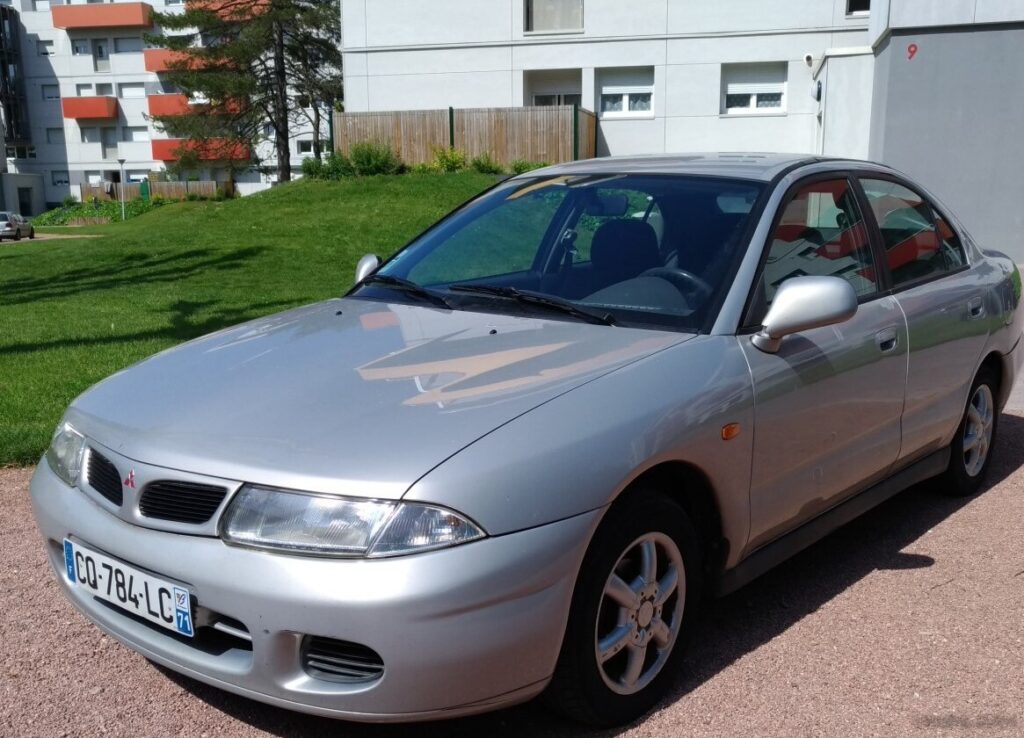
The Mitsubishi Carisma 1.8 16V GDI Automatic, produced between 1997 and 2003, represented a significant offering in the compact sedan segment, particularly within European markets. Positioned as a mid-range trim level, it aimed to balance performance and fuel efficiency with the convenience of an automatic transmission. The Carisma, internally designated as the DS/DT platform, was Mitsubishi’s attempt to create a globally competitive vehicle, sharing underpinnings with the Volvo S40 and V40 following Mitsubishi’s strategic partnership with Volvo. This variant, with its Gasoline Direct Injection (GDI) engine, was a key part of Mitsubishi’s push towards more advanced engine technology.
Technical Specifications
| Brand | Mitsubishi |
| Model | Carisma |
| Type | 1.8 16V GDI (125 Hp) Automatic |
| Start of production | 1997 |
| End of production | 2003 |
| Fuel consumption (urban) | 8.6 l/100 km (27.4 US mpg) |
| Fuel consumption (extra urban) | 5.2 l/100 km (45.2 US mpg) |
| Fuel Type | Petrol (Gasoline) |
| Acceleration 0 – 100 km/h | 9.4 sec |
| Acceleration 0 – 62 mph | 9.4 sec |
| Acceleration 0 – 60 mph | 8.9 sec |
| Maximum speed | 235 km/h (146.02 mph) |
| Kerb Weight | 1215 kg (2678.62 lbs) |
| Max. weight | 1685 kg (3714.79 lbs) |
| Engine Displacement | 1834 cm3 (111.92 cu. in.) |
| Power | 125 Hp @ 5500 rpm |
| Torque | 174 Nm @ 3750 rpm (128.34 lb.-ft. @ 3750 rpm) |
| Number of cylinders | 4 |
| Compression ratio | 12.5:1 |
| Fuel injection system | Direct injection |
| Number of gears | 4 |
| Gearbox type | Automatic transmission |
| Front brakes | Ventilated discs |
| Rear brakes | Drum |
| Trunk (boot) space – maximum | 430 l (15.19 cu. ft.) |
| Fuel tank capacity | 60 l (15.85 US gal) |
| Length | 4435 mm (174.61 in.) |
| Width | 1710 mm (67.32 in.) |
Powertrain & Engine Architecture
The heart of the Carisma 1.8 GDI Automatic is the 4G93 engine, a 1.8-liter inline-four cylinder powerplant. What set this engine apart was its Gasoline Direct Injection (GDI) system. Unlike traditional multi-point fuel injection, GDI injects fuel directly into the combustion chamber, allowing for more precise fuel control, higher compression ratios (12.5:1 in this case), and improved fuel efficiency. The 4G93 featured a double overhead camshaft (DOHC) valvetrain with four valves per cylinder, contributing to its respectable power output of 125 horsepower at 5500 rpm and 174 Nm (128.34 lb-ft) of torque at 3750 rpm. The engine’s design prioritized a balance between power and economy, making it suitable for everyday driving. The automatic transmission was a conventional four-speed unit, chosen for its ease of use and comfort, although it did impact acceleration times compared to the available five-speed manual.
Driving Characteristics
The Carisma 1.8 GDI Automatic offered a comfortable and refined driving experience. While not a sports sedan, the GDI engine provided adequate power for typical commuting and highway driving. Acceleration from 0 to 60 mph took approximately 8.9 seconds, and top speed was rated at 146 mph. The four-speed automatic transmission, while smooth, wasn’t particularly quick to downshift, resulting in a slightly less responsive feel compared to the manual transmission versions. The gear ratios were tuned for fuel efficiency, prioritizing cruising comfort over outright performance. The automatic transmission did detract slightly from the engine’s potential, as the manual version felt more engaging and offered quicker acceleration. However, for drivers prioritizing convenience, the automatic was a sensible choice.
Equipment & Trim Levels
The 1.8 GDI Automatic trim typically included features such as power windows, central locking, power steering, and an AM/FM radio with cassette player. Air conditioning was often standard, though sometimes offered as an option depending on the specific market. Interior upholstery was typically cloth, with a relatively simple and functional dashboard layout. Optional extras included alloy wheels, a sunroof, and upgraded audio systems. The Carisma aimed for a comfortable and well-equipped interior without venturing into luxury territory. The trim level sat comfortably in the middle of the Carisma range, offering more features than the base models but lacking the premium appointments of the higher-spec versions.
Chassis & Braking
The Carisma utilized a front-engine, front-wheel-drive layout. Suspension consisted of a MacPherson strut setup at the front and a coil spring arrangement at the rear. The braking system featured ventilated discs on the front wheels and drum brakes on the rear. Anti-lock Braking System (ABS) was standard, enhancing safety and control during emergency braking. The suspension was tuned for comfort, providing a relatively smooth ride over most road surfaces. The chassis was reasonably rigid, contributing to stable handling characteristics. The use of drum brakes on the rear was a cost-saving measure, and while adequate for normal driving, they didn’t offer the same stopping power as disc brakes.
Market Reception & Comparison
The Mitsubishi Carisma 1.8 GDI Automatic received generally positive reviews, praised for its fuel efficiency, comfortable ride, and well-equipped interior. Critics noted that the automatic transmission slightly dulled the engine’s performance, and some found the styling to be somewhat conservative. Compared to its rivals, such as the Ford Focus, Opel/Vauxhall Astra, and Volkswagen Golf, the Carisma offered a competitive package, particularly in terms of value for money. The GDI engine provided better fuel economy than many of its competitors, but the automatic transmission put it at a slight disadvantage in terms of acceleration. The 1.8L GDI Automatic was often seen as a good all-rounder, appealing to drivers who prioritized practicality and comfort over sporty handling.
Legacy
The Mitsubishi Carisma, while not a runaway sales success, established Mitsubishi as a credible player in the European compact sedan market. The 1.8 GDI engine, in particular, was a technological highlight, showcasing Mitsubishi’s commitment to fuel efficiency and advanced engine design. Today, the Carisma 1.8 GDI Automatic is a relatively affordable used car, and well-maintained examples can still provide reliable transportation. The GDI system, while innovative, can be prone to carbon buildup over time, requiring periodic cleaning to maintain optimal performance. However, with regular maintenance, the engine and transmission are generally durable. The Carisma remains a fondly remembered car for those who appreciated its blend of practicality, comfort, and fuel efficiency.
