
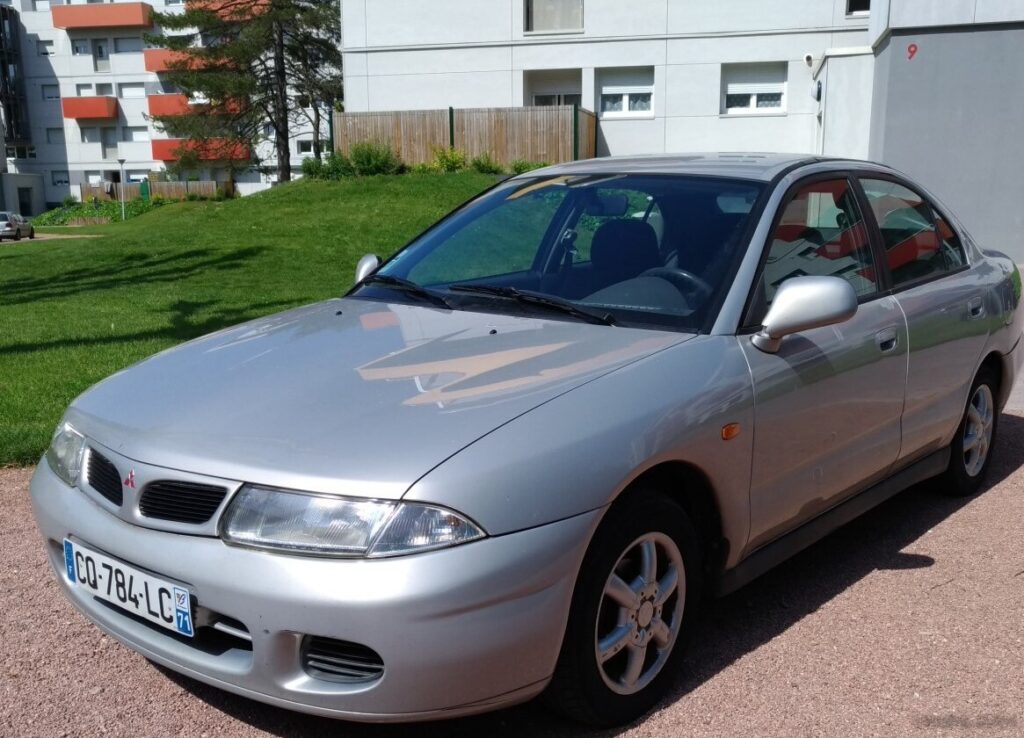
The Mitsubishi Carisma 1.9 DI-D, produced between 2001 and 2003, represented a significant offering in the compact sedan segment, particularly within European markets. Positioned as a fuel-efficient and practical option, the 1.9 DI-D variant utilized a direct-injection diesel engine to deliver a balance of performance and economy. It was part of the broader Carisma range (internally designated as the EQ platform), which aimed to provide a competitive alternative to established European and Japanese rivals like the Ford Focus, Opel/Vauxhall Astra, and Toyota Corolla. This specific engine and transmission combination aimed at buyers prioritizing low running costs and reasonable everyday performance.
Technical Specifications
| Brand | Mitsubishi |
| Model | Carisma |
| Generation | Carisma |
| Type (Engine) | 1.9 DI-D (102 Hp) |
| Start of production | 2001 |
| End of production | 2003 |
| Powertrain Architecture | Internal Combustion engine |
| Body type | Sedan |
| Seats | 5 |
| Doors | 4 |
| Fuel consumption (urban) | 7.3 l/100 km (32.2 US mpg) |
| Fuel consumption (extra urban) | 4.5 l/100 km (52.3 US mpg) |
| Fuel consumption (combined) | 5.5 l/100 km (42.8 US mpg) |
| Fuel Type | Diesel |
| Acceleration 0 – 100 km/h | 11.9 sec |
| Acceleration 0 – 62 mph | 11.9 sec |
| Acceleration 0 – 60 mph | 11.3 sec |
| Maximum speed | 190 km/h (118.06 mph) |
| Weight-to-power ratio | 12.4 kg/Hp |
| Weight-to-torque ratio | 5.9 kg/Nm |
| Power | 102 Hp @ 4000 rpm |
| Power per litre | 54.5 Hp/l |
| Torque | 215 Nm @ 1700 rpm (158.58 lb.-ft. @ 1700 rpm) |
| Engine layout | Front, Transverse |
| Engine Model/Code | F9Q1 |
| Engine displacement | 1870 cm3 (114.11 cu. in.) |
| Number of cylinders | 4 |
| Engine configuration | Inline |
| Cylinder Bore | 80 mm (3.15 in.) |
| Piston Stroke | 93 mm (3.66 in.) |
| Compression ratio | 18.3:1 |
| Number of valves per cylinder | 2 |
| Fuel injection system | Diesel Commonrail |
| Engine aspiration | Turbocharger, Intercooler |
| Valvetrain | OHC |
| Engine oil capacity | 5.06 l (5.35 US qt | 4.45 UK qt) |
| Coolant capacity | 6.3 l (6.66 US qt | 5.54 UK qt) |
| Kerb Weight | 1265 kg (2788.85 lbs.) |
| Max. weight | 1775 kg (3913.21 lbs.) |
| Max load | 510 kg (1124.36 lbs.) |
| Trunk (boot) space – minimum | 460 l (16.24 cu. ft.) |
| Fuel tank capacity | 60 l (15.85 US gal | 13.2 UK gal) |
| Length | 4475 mm (176.18 in.) |
| Width | 1710 mm (67.32 in.) |
| Height | 1405 mm (55.31 in.) |
| Wheelbase | 2550 mm (100.39 in.) |
| Front track | 1475 mm (58.07 in.) |
| Rear track | 1470 mm (57.87 in.) |
| Drivetrain Architecture | Front wheel drive |
| Number of gears | 5 |
| Gearbox type | Manual transmission |
| Front suspension | Spring Strut |
| Rear suspension | Coil spring |
| Front brakes | Ventilated discs |
| Rear brakes | Disc |
| Assisting systems | ABS (Anti-lock braking system) |
| Steering type | Steering rack and pinion |
| Power steering | Hydraulic Steering |
| Tires size | 195/60 R15 |
Powertrain & Engine Architecture
The heart of the Carisma 1.9 DI-D is the F9Q1 engine, a 1.9-liter inline-four cylinder diesel. This engine was developed jointly by Renault and PSA (Peugeot-Citroën) and was widely used across various European models. It features a common rail direct injection system, which delivers fuel directly into the combustion chamber at extremely high pressure, improving efficiency and reducing emissions. The engine utilizes an overhead camshaft (OHC) valvetrain with two valves per cylinder. A turbocharger with an intercooler is employed to boost power output and improve torque across the rev range. The 5-speed manual transmission was the standard offering for this variant, providing a balance between fuel economy and driver control. The engine’s design prioritized durability and low-end torque, making it well-suited for everyday driving conditions.
Driving Characteristics
The 102 horsepower and 215 Nm (158.58 lb-ft) of torque delivered by the 1.9 DI-D engine provided adequate, though not exhilarating, performance. Acceleration from 0-60 mph took around 11.3 seconds, and top speed was approximately 118 mph. Compared to higher-output versions of the Carisma, such as the 2.0-liter gasoline models, the DI-D felt less responsive, particularly at higher engine speeds. However, the strong low-end torque made it a capable cruiser and provided sufficient power for overtaking maneuvers. The manual transmission offered precise shifts, and the gear ratios were well-matched to the engine’s characteristics, maximizing fuel efficiency. The focus was on usability and economy rather than outright performance.
Equipment & Trim Levels
The 1.9 DI-D trim typically represented a mid-range offering within the Carisma lineup. Standard equipment generally included power steering, central locking, electric front windows, and an AM/FM radio. Air conditioning was often an optional extra. Interior upholstery was typically cloth, and the dashboard featured a functional, if somewhat basic, design. Higher trim levels added features like alloy wheels, upgraded audio systems, and climate control. Safety features included ABS brakes and driver/passenger airbags. The overall interior ambiance was geared towards practicality and durability rather than luxury.
Chassis & Braking
The Carisma 1.9 DI-D utilized a conventional front-wheel-drive chassis with a MacPherson strut suspension at the front and a coil spring suspension at the rear. The suspension setup was tuned for comfort and stability, providing a reasonably smooth ride on most road surfaces. The front brakes were ventilated discs, while the rear brakes were solid discs. The ABS system helped to maintain control during hard braking. The chassis was designed to provide a good balance between handling and ride quality, making it suitable for everyday driving. Stabilizer bars were included to reduce body roll during cornering.
Market Reception & Comparison
The Mitsubishi Carisma 1.9 DI-D was generally well-received by critics for its fuel efficiency and practicality. It offered a competitive alternative to other diesel-powered compact sedans in the European market. Fuel economy figures of around 42.8 US mpg combined were particularly attractive to buyers seeking to minimize running costs. Compared to the gasoline-powered Carisma variants, the DI-D offered significantly better fuel economy, but at the expense of some performance. Reliability was generally good, although some owners reported issues with the diesel particulate filter (DPF) in later years. The Carisma 1.9 DI-D provided a sensible and economical choice for buyers prioritizing value and practicality.
Legacy
The Mitsubishi Carisma 1.9 DI-D, while not a particularly iconic model, remains a reasonably popular choice in the used car market, particularly for those seeking an affordable and fuel-efficient vehicle. The F9Q1 engine is known for its durability, and with proper maintenance, it can provide many years of reliable service. However, potential buyers should be aware of the possibility of DPF issues and the need for regular servicing. The Carisma 1.9 DI-D represents a solid example of a practical and economical compact sedan from the early 2000s, offering a blend of fuel efficiency, reliability, and affordability.
