
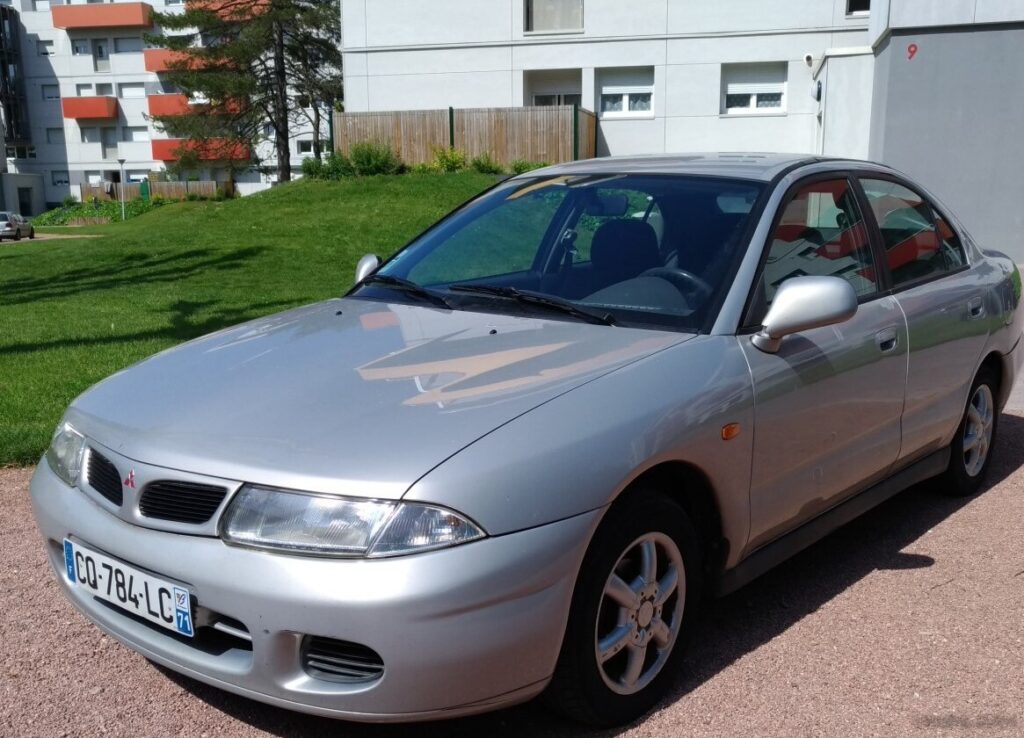
The Mitsubishi Carisma 1.9 DI-D, produced between 2001 and 2003, represented a significant offering in the compact sedan segment, particularly in European markets. Positioned as a fuel-efficient and practical option, the 1.9 DI-D variant utilized a direct-injection diesel engine to deliver a balance of performance and economy. It was part of the broader Carisma range (internally designated as the EQ platform), which aimed to provide a competitive alternative to established European and Japanese rivals like the Ford Focus, Opel/Vauxhall Astra, and Toyota Corolla. This specific trim level aimed at buyers prioritizing low running costs and reasonable performance over outright sportiness.
| Brand | Mitsubishi |
| Model | Carisma |
| Generation | Carisma |
| Type (Engine) | 1.9 DI-D (115 Hp) |
| Start of production | 2001 |
| End of production | 2003 |
| Powertrain Architecture | Internal Combustion engine |
| Body type | Sedan |
| Seats | 5 |
| Doors | 4 |
| Fuel consumption (urban) | 7.1 l/100 km (33.1 US mpg) |
| Fuel consumption (extra urban) | 4.4 l/100 km (53.5 US mpg) |
| Fuel consumption (combined) | 5.5 l/100 km (42.8 US mpg) |
| Fuel Type | Diesel |
| Acceleration 0 – 100 km/h | 10.4 sec |
| Acceleration 0 – 62 mph | 10.4 sec |
| Acceleration 0 – 60 mph | 9.9 sec |
| Maximum speed | 195 km/h (121.17 mph) |
| Weight-to-power ratio | 11 kg/Hp |
| Weight-to-torque ratio | 4.8 kg/Nm |
| Power | 115 Hp @ 4000 rpm |
| Torque | 265 Nm @ 1800 rpm (195.45 lb.-ft. @ 1800 rpm) |
| Engine layout | Front, Transverse |
| Engine Model/Code | F9Q2 |
| Engine displacement | 1870 cm3 (114.11 cu. in.) |
| Number of cylinders | 4 |
| Engine configuration | Inline |
| Cylinder Bore | 80 mm (3.15 in.) |
| Piston Stroke | 93 mm (3.66 in.) |
| Compression ratio | 18.3:1 |
| Number of valves per cylinder | 2 |
| Fuel injection system | Diesel Commonrail |
| Engine aspiration | Turbocharger, Intercooler |
| Valvetrain | OHC |
| Engine oil capacity | 5.06 l (5.35 US qt | 4.45 UK qt) |
| Coolant capacity | 6.3 l (6.66 US qt | 5.54 UK qt) |
| Kerb Weight | 1265 kg (2788.85 lbs.) |
| Max. weight | 1775 kg (3913.21 lbs.) |
| Max load | 510 kg (1124.36 lbs.) |
| Trunk (boot) space – minimum | 460 l (16.24 cu. ft.) |
| Fuel tank capacity | 60 l (15.85 US gal | 13.2 UK gal) |
| Length | 4475 mm (176.18 in.) |
| Width | 1710 mm (67.32 in.) |
| Height | 1405 mm (55.31 in.) |
| Wheelbase | 2550 mm (100.39 in.) |
| Front track | 1475 mm (58.07 in.) |
| Rear track | 1470 mm (57.87 in.) |
| Drivetrain Architecture | Front wheel drive |
| Number of gears | 5 |
| Gearbox type | Manual transmission |
| Front suspension | Spring Strut |
| Rear suspension | Coil spring |
| Front brakes | Ventilated discs |
| Rear brakes | Disc |
| Assisting systems | ABS (Anti-lock braking system) |
| Steering type | Steering rack and pinion |
| Power steering | Hydraulic Steering |
| Tires size | 195/60 R15 |
Powertrain & Engine Architecture
The heart of the Carisma 1.9 DI-D is the F9Q2 engine, a 1.9-liter inline-four cylinder diesel. This engine was developed jointly by Renault and PSA (Peugeot-Citroën) and was widely used across various European models. It features a common rail direct injection system, which delivers fuel directly into the combustion chamber at extremely high pressure, improving efficiency and reducing emissions. The engine utilizes an overhead camshaft (OHC) valvetrain with two valves per cylinder. A turbocharger with an intercooler is employed to boost power output and improve torque delivery. The 1.9 DI-D produces 115 horsepower at 4000 rpm and 265 Nm (195 lb-ft) of torque at a relatively low 1800 rpm. This torque curve provides good low-end grunt, making it suitable for everyday driving. The engine is transversely mounted in the front of the vehicle, driving the front wheels. The 5-speed manual transmission was the standard offering for this variant, providing a balance between fuel economy and driver control.
Driving Characteristics
The Carisma 1.9 DI-D with the manual transmission offers a practical and economical driving experience. While not particularly sporty, the engine’s torque output provides adequate acceleration for most situations. The 0-60 mph time of around 9.9 seconds and a top speed of 121 mph are respectable for a diesel-powered compact sedan of this era. The gear ratios are well-chosen to maximize fuel efficiency and provide smooth transitions. Compared to the gasoline-powered Carisma variants, the 1.9 DI-D offers significantly better fuel economy, but with a trade-off in outright performance. It also differs from higher-output diesel versions (if available in certain markets) in terms of acceleration and overall responsiveness. The steering is light and precise, making it easy to maneuver in urban environments. The suspension provides a comfortable ride, absorbing bumps and imperfections in the road surface effectively.
Equipment & Trim Levels
The 1.9 DI-D trim level typically included features such as power steering, central locking, electric front windows, and an immobilizer. Air conditioning was often an optional extra. Interior upholstery was typically cloth, with a functional and durable design. The dashboard layout is straightforward and easy to use, with clearly labeled controls. Higher trim levels might have included features like alloy wheels, a CD player, and upgraded interior trim. The Carisma generally aimed for a balance of practicality and affordability, so luxury features were not a primary focus.
Chassis & Braking
The Carisma 1.9 DI-D utilizes a MacPherson strut suspension system at the front and a coil spring suspension at the rear. This setup provides a good balance between ride comfort and handling. The front brakes are ventilated discs, offering good stopping power, while the rear brakes are solid discs. Anti-lock Braking System (ABS) is standard, enhancing safety by preventing wheel lockup during hard braking. The chassis is relatively lightweight, contributing to the car’s fuel efficiency and agility. Stabilizer bars are fitted to both the front and rear axles to reduce body roll during cornering.
Market Reception & Comparison
The Mitsubishi Carisma 1.9 DI-D was generally well-received by automotive critics as a practical and economical choice. Its fuel efficiency was a major selling point, particularly in Europe where diesel fuel was often cheaper than gasoline. Compared to its competitors, the Carisma offered a competitive level of equipment and a comfortable ride. However, some critics noted that the interior design was somewhat bland and that the engine, while efficient, lacked the refinement of some of its rivals. Reliability was generally considered to be good, although some owners reported issues with the common rail injection system over time.
Legacy
The Mitsubishi Carisma 1.9 DI-D has become a relatively affordable and reliable used car option. The F9Q2 engine, while requiring regular maintenance, is known for its durability. Common issues include wear and tear on the turbocharger and potential problems with the fuel injectors. However, parts availability is generally good, and the engine is relatively easy to work on. Today, the Carisma 1.9 DI-D represents a practical and economical choice for buyers seeking a reliable and fuel-efficient compact sedan. Its legacy lies in providing a solid and dependable transportation solution for a wide range of drivers.
