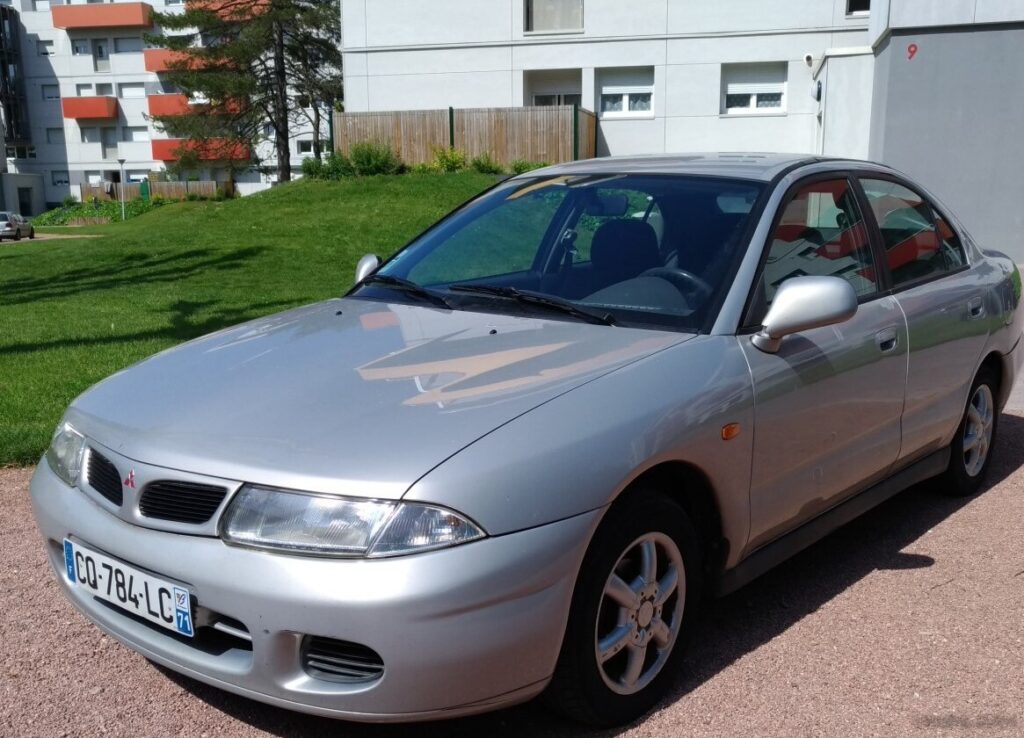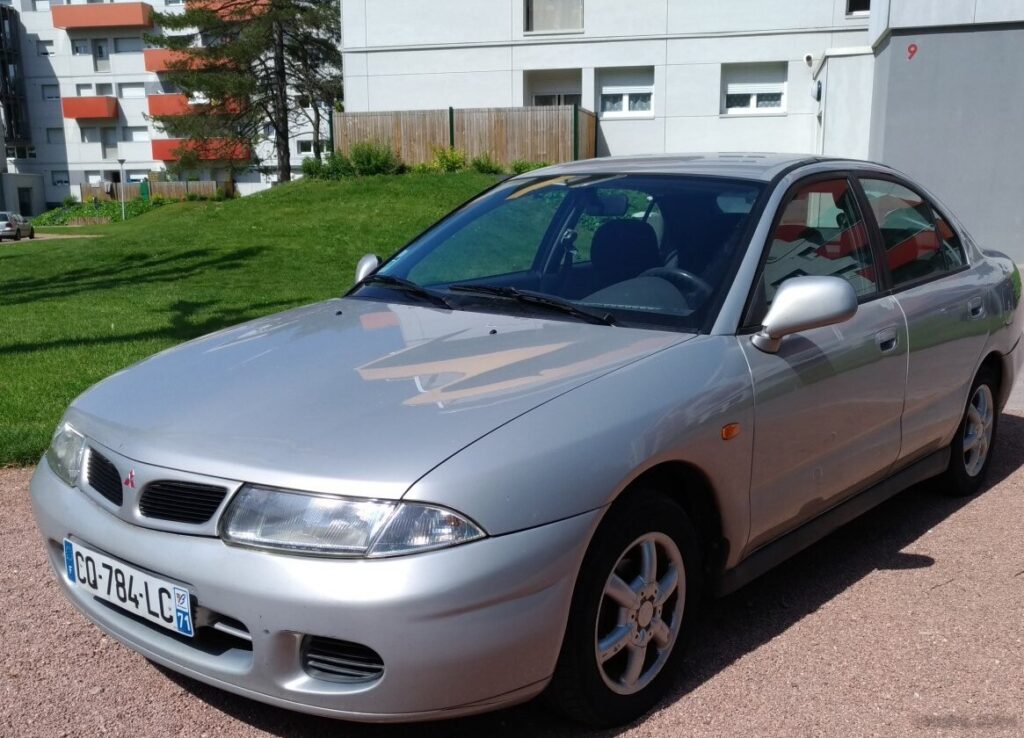
Technical Specifications
| Brand | Mitsubishi |
| Model | Carisma |
| Generation | Carisma Hatchback |
| Type (Engine) | 1.6 (90 Hp) |
| Start of production | 1996 |
| End of production | 2000 |
| Powertrain Architecture | Internal Combustion engine |
| Body type | Hatchback |
| Seats | 5 |
| Doors | 5 |
| Fuel consumption (urban) | 9.5 l/100 km (24.8 US mpg) |
| Fuel consumption (extra urban) | 6 l/100 km (39.2 US mpg) |
| Fuel consumption (combined) | 8 l/100 km (29.4 US mpg) |
| Fuel Type | Petrol (Gasoline) |
| Acceleration 0 – 100 km/h | 12 sec |
| Acceleration 0 – 62 mph | 12 sec |
| Acceleration 0 – 60 mph | 11.4 sec |
| Maximum speed | 180 km/h (111.85 mph) |
| Weight-to-power ratio | 12.3 kg/Hp |
| Weight-to-torque ratio | 8.1 kg/Nm |
| Power | 90 Hp @ 5500 rpm |
| Power per litre | 56.4 Hp/l |
| Torque | 137 Nm @ 4000 rpm (101.05 lb.-ft. @ 4000 rpm) |
| Engine layout | Front, Transverse |
| Engine displacement | 1597 cm3 (97.45 cu. in.) |
| Number of cylinders | 4 |
| Engine configuration | Inline |
| Cylinder Bore | 81 mm (3.19 in.) |
| Piston Stroke | 77.5 mm (3.05 in.) |
| Compression ratio | 10:1 |
| Number of valves per cylinder | 4 |
| Fuel injection system | Multi-port manifold injection |
| Engine aspiration | Naturally aspirated engine |
| Valvetrain | OHC |
| Kerb Weight | 1105 kg (2436.11 lbs.) |
| Max. weight | 1630 kg (3593.53 lbs.) |
| Max load | 525 kg (1157.43 lbs.) |
| Trunk (boot) space – minimum | 440 l (15.54 cu. ft.) |
| Trunk (boot) space – maximum | 660 l (23.31 cu. ft.) |
| Fuel tank capacity | 60 l (15.85 US gal) |
| Length | 4450 mm (175.2 in.) |
| Width | 1710 mm (67.32 in.) |
| Height | 1405 mm (55.31 in.) |
| Wheelbase | 2550 mm (100.39 in.) |
| Front track | 1455 mm (57.28 in.) |
| Rear (Back) track | 1475 mm (58.07 in.) |
| Drivetrain Architecture | The Internal combustion engine (ICE) drives the front wheels of the vehicle. |
| Drive wheel | Front wheel drive |
| Number of gears | 5 gears, manual transmission |
| Front suspension | Spring Strut |
| Rear suspension | Coil spring |
| Front brakes | Disc |
| Rear brakes | Disc |
| Assisting systems | ABS (Anti-lock braking system) |
| Steering type | Steering rack and pinion |
| Power steering | Hydraulic Steering |
| Tires size | 185/65 R14 |
| Wheel rims size | 14 |
The Mitsubishi Carisma 1.6, producing 90 horsepower, was a mainstay of the Carisma range, a compact hatchback produced between 1996 and 2000. Positioned as an entry-level to mid-range offering, it aimed to provide affordable and practical transportation within the increasingly competitive European C-segment. The Carisma, internally designated as the DX platform, represented Mitsubishi’s attempt to establish a stronger foothold in the European market, and was a collaborative effort with Chrysler (who also marketed a rebadged version as the Chrysler Neon). This particular 1.6-liter variant, often paired with a four-speed automatic transmission, was designed for buyers prioritizing ease of use and fuel efficiency over outright performance.
Powertrain & Engine Architecture
The Carisma 1.6 utilized the 4G18 engine, a 1.6-liter inline-four cylinder gasoline engine. This engine featured a single overhead camshaft (SOHC) valvetrain with four valves per cylinder. Fuel delivery was managed by a multi-point fuel injection system, providing adequate, though not exceptional, combustion control. The engine’s 10:1 compression ratio was typical for the era, balancing performance and fuel economy. When paired with the four-speed automatic transmission, the engine delivered power smoothly, but lacked the responsiveness of the five-speed manual version. The automatic transmission itself was a conventional hydraulic unit, prioritizing comfort over sporty driving dynamics. Engine codes varied slightly depending on the market, but were generally within the 4G18 family.
Driving Characteristics
The 90 horsepower and 101 lb-ft of torque produced by the 1.6-liter engine translated to modest performance. Acceleration from 0-60 mph took around 11.4 seconds, and top speed was limited to 112 mph. The automatic transmission, while providing ease of use, resulted in noticeable power loss compared to the manual counterpart. Gear ratios were optimized for fuel efficiency rather than spirited acceleration. In real-world driving, the Carisma 1.6 Automatic felt adequate for everyday commuting and urban driving, but struggled when fully loaded or attempting to overtake at highway speeds. The suspension, tuned for comfort, provided a reasonably smooth ride, but didn’t offer particularly engaging handling.
Equipment & Trim Levels
The 1.6-liter Carisma typically came with a base level of equipment, focusing on practicality. Standard features included power steering, central locking, electric front windows, and an AM/FM radio. Interior upholstery was typically cloth, with a simple, functional dashboard layout. Optional extras included air conditioning, alloy wheels, and a more advanced audio system. Higher trim levels, such as the GLX, added features like a sunroof, upgraded interior trim, and anti-lock brakes (ABS). The automatic transmission was often bundled with certain convenience packages.
Chassis & Braking
The Carisma’s chassis featured a MacPherson strut front suspension and a coil spring rear suspension. This setup provided a comfortable ride, but wasn’t particularly sporty. Braking duties were handled by disc brakes on all four wheels, offering adequate stopping power for the vehicle’s weight and performance. ABS was available as an option, and became standard on higher trim levels. The Carisma’s weight of around 2436 lbs was relatively light for its class, contributing to reasonable fuel economy.
Market Reception & Comparison
The Carisma 1.6 Automatic received mixed reviews. Critics praised its affordability, practicality, and comfortable ride, but criticized its lack of performance and somewhat bland styling. Compared to rivals like the Ford Focus, Opel/Vauxhall Astra, and Volkswagen Golf, the Carisma offered a competitive price point but lacked the refinement and driving dynamics of some of its competitors. The 1.9 TDI diesel and the 2.0-liter gasoline variants were generally considered more desirable by enthusiasts, offering superior performance and fuel economy. However, the 1.6 Automatic appealed to buyers seeking a simple, reliable, and affordable hatchback.
Legacy
The Mitsubishi Carisma, while not a groundbreaking vehicle, served as a solid and dependable compact hatchback. The 1.6-liter engine, when properly maintained, proved to be relatively reliable. Today, Carismas with this powertrain are relatively affordable on the used car market, making them attractive options for budget-conscious buyers. However, finding well-maintained examples can be challenging, and parts availability may be limited in some regions. The Carisma’s legacy lies in its role as a stepping stone for Mitsubishi in the European market, and a testament to the enduring appeal of practical, affordable transportation.