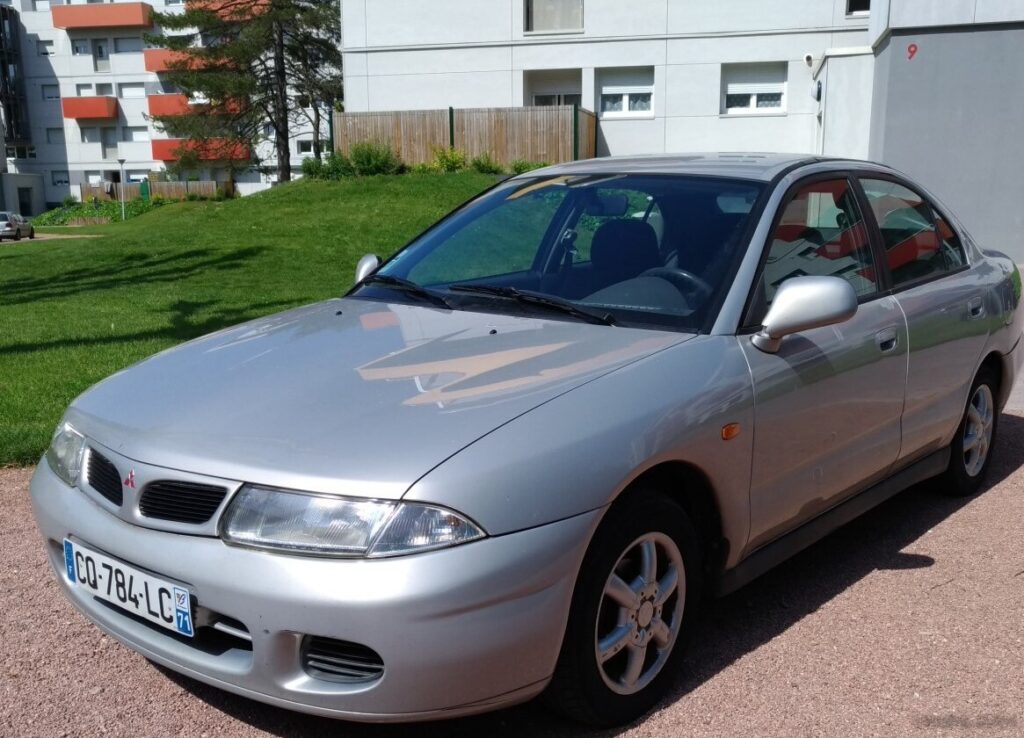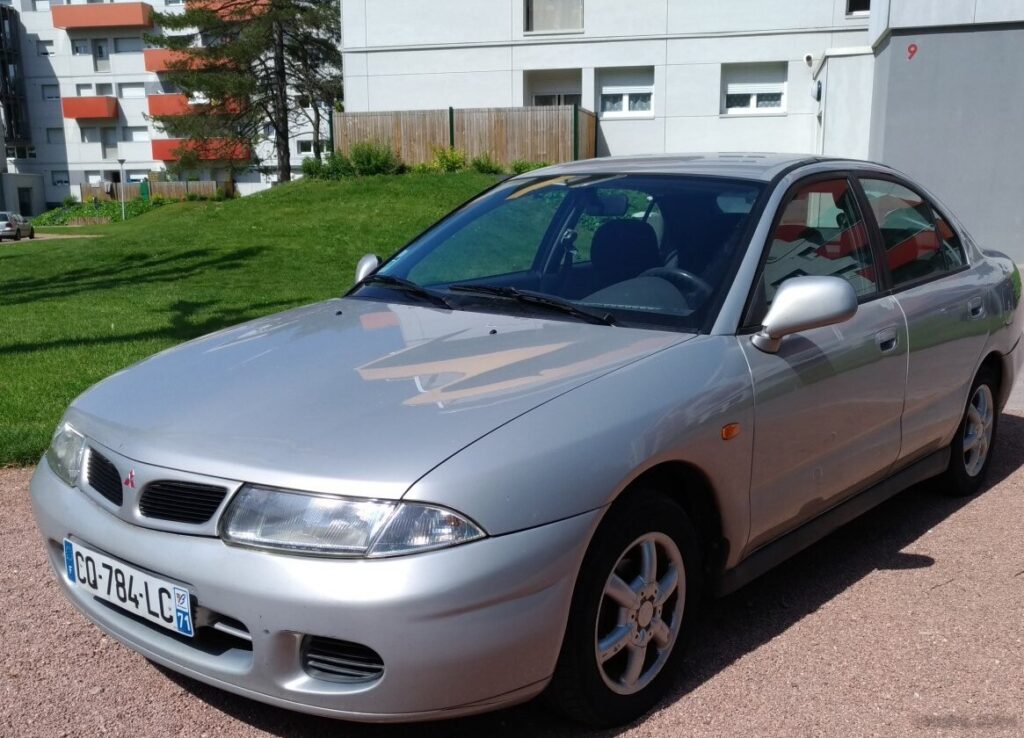
The Mitsubishi Carisma 1.6 i 16V, produced between 2000 and 2003, represented a key offering in Mitsubishi’s European lineup. Positioned as a mainstream compact hatchback, the Carisma aimed to provide a practical and affordable option within the competitive C-segment. This particular 1.6-liter, 103 horsepower variant served as a core model, appealing to buyers prioritizing fuel efficiency and everyday usability over outright performance. It was part of the first generation Carisma (internally designated as the EQ platform), which was a collaborative effort with Chrysler, sharing many components with the Chrysler Neon and Dodge Stratus.
Technical Specifications
| Brand | Mitsubishi |
| Model | Carisma |
| Generation | Carisma Hatchback |
| Type (Engine) | 1.6 i 16V (103 Hp) |
| Start of production | 2000 year |
| End of production | 2003 year |
| Powertrain Architecture | Internal Combustion engine |
| Body type | Hatchback |
| Seats | 5 |
| Doors | 5 |
| Fuel consumption (urban) | 10.1 l/100 km (23.3 US mpg, 28 UK mpg, 9.9 km/l) |
| Fuel consumption (extra urban) | 5.8 l/100 km (40.6 US mpg, 48.7 UK mpg, 17.2 km/l) |
| Fuel consumption (combined) | 7.4 l/100 km (31.8 US mpg, 38.2 UK mpg, 13.5 km/l) |
| Fuel Type | Petrol (Gasoline) |
| Acceleration 0 – 100 km/h | 12.4 sec |
| Acceleration 0 – 62 mph | 12.4 sec |
| Acceleration 0 – 60 mph | 11.8 sec |
| Maximum speed | 190 km/h (118.06 mph) |
| Weight-to-power ratio | 11.7 kg/Hp, 85.5 Hp/tonne |
| Weight-to-torque ratio | 8.5 kg/Nm, 117 Nm/tonne |
| Power | 103 Hp @ 6000 rpm |
| Power per litre | 64.5 Hp/l |
| Torque | 141 Nm @ 4500 rpm (104 lb.-ft. @ 4500 rpm) |
| Engine layout | Front, Transverse |
| Engine Model/Code | 4G92 |
| Engine displacement | 1597 cm3 (97.45 cu. in.) |
| Number of cylinders | 4 |
| Engine configuration | Inline |
| Cylinder Bore | 81 mm (3.19 in.) |
| Piston Stroke | 77.5 mm (3.05 in.) |
| Compression ratio | 10:1 |
| Number of valves per cylinder | 4 |
| Fuel injection system | Multi-port manifold injection |
| Engine aspiration | Naturally aspirated engine |
| Valvetrain | DOHC |
| Engine oil capacity | 3.8 l (4.02 US qt | 3.34 UK qt) |
| Coolant capacity | 6.3 l (6.66 US qt | 5.54 UK qt) |
| Kerb Weight | 1205 kg (2656.57 lbs.) |
| Max. weight | 1715 kg (3780.93 lbs.) |
| Max load | 510 kg (1124.36 lbs.) |
| Trunk (boot) space – minimum | 430 l (15.19 cu. ft.) |
| Trunk (boot) space – maximum | 1150 l (40.61 cu. ft.) |
| Fuel tank capacity | 60 l (15.85 US gal | 13.2 UK gal) |
| Length | 4475 mm (176.18 in.) |
| Width | 1710 mm (67.32 in.) |
| Height | 1405 mm (55.31 in.) |
| Wheelbase | 2550 mm (100.39 in.) |
| Front track | 1475 mm (58.07 in.) |
| Rear track | 1470 mm (57.87 in.) |
| Drivetrain Architecture | Front wheel drive |
| Number of gears | 5 gears, manual transmission |
| Front suspension | Spring Strut |
| Rear suspension | Coil spring |
| Front brakes | Ventilated discs |
| Rear brakes | Disc |
| Assisting systems | ABS (Anti-lock braking system) |
| Steering type | Steering rack and pinion |
| Power steering | Hydraulic Steering |
| Tires size | 195/60 R15 |
Powertrain & Engine Architecture
The Carisma 1.6 i 16V was powered by Mitsubishi’s 4G92 engine, a 1.6-liter inline-four cylinder gasoline engine. This engine featured a double overhead camshaft (DOHC) valvetrain with four valves per cylinder, contributing to its relatively efficient breathing. Fuel delivery was handled by a multi-point fuel injection system. The 4G92 engine was known for its durability and relatively simple design, making it a cost-effective choice for Mitsubishi. The engine produced 103 horsepower at 6000 rpm and 141 Nm (104 lb-ft) of torque at 4500 rpm. This power was transmitted to the front wheels through a five-speed manual transmission. While an automatic transmission was offered in some Carisma models, the 1.6L engine was most commonly paired with the manual gearbox in the US market.
Driving Characteristics
The 1.6-liter Carisma offered a balanced, if not particularly exciting, driving experience. Acceleration from 0 to 60 mph took around 11.8 seconds, and top speed was approximately 118 mph. The five-speed manual transmission provided adequate control, but the engine’s modest torque output meant that frequent downshifts were necessary for spirited driving or when navigating hilly terrain. Compared to the more powerful 2.0-liter variants, the 1.6L felt noticeably less responsive. However, it excelled in urban environments and on the highway, offering sufficient power for everyday commuting and long-distance travel. The suspension provided a comfortable ride, absorbing bumps and imperfections in the road effectively.
Equipment & Trim Levels
The Carisma 1.6 i 16V typically came equipped with a reasonable level of standard features. These included power steering, central locking, electric front windows, and an AM/FM radio. Higher trim levels, such as the GLX, added features like alloy wheels, air conditioning, and a more sophisticated audio system. Interior upholstery was typically cloth, with a functional and durable design. Optional extras included a sunroof, upgraded audio systems, and metallic paint finishes.
Chassis & Braking
The Carisma utilized a front-wheel-drive layout with a MacPherson strut front suspension and a coil spring rear suspension. This setup provided a good balance between ride comfort and handling. Braking duties were handled by ventilated discs on the front wheels and solid discs on the rear. Anti-lock Braking System (ABS) was standard, enhancing safety and control during emergency braking situations. The Carisma’s chassis was designed to provide a stable and predictable driving experience, prioritizing comfort and practicality over sporty handling.
Market Reception & Comparison
The Mitsubishi Carisma 1.6 i 16V was generally well-received by automotive critics as a practical and affordable family hatchback. It was praised for its comfortable ride, spacious interior, and fuel efficiency. However, it was often criticized for its somewhat bland styling and lack of driving excitement compared to rivals like the Ford Focus and Volkswagen Golf. Fuel economy was a strong point, with combined figures around 31.8 US mpg. Reliability was generally good, although some owners reported minor issues with the electrical system. Compared to the higher-spec Carisma models, the 1.6L offered a more economical entry point into the range, appealing to budget-conscious buyers.
Legacy
The Mitsubishi Carisma, while not a groundbreaking vehicle, established itself as a solid and dependable compact hatchback. The 1.6 i 16V variant, in particular, remains a relatively affordable and practical option in the used car market. The 4G92 engine is known for its longevity and relatively low maintenance costs. While not as sought-after as some of its more performance-oriented siblings, the Carisma 1.6 i 16V continues to provide reliable transportation for those seeking a no-frills, economical hatchback.