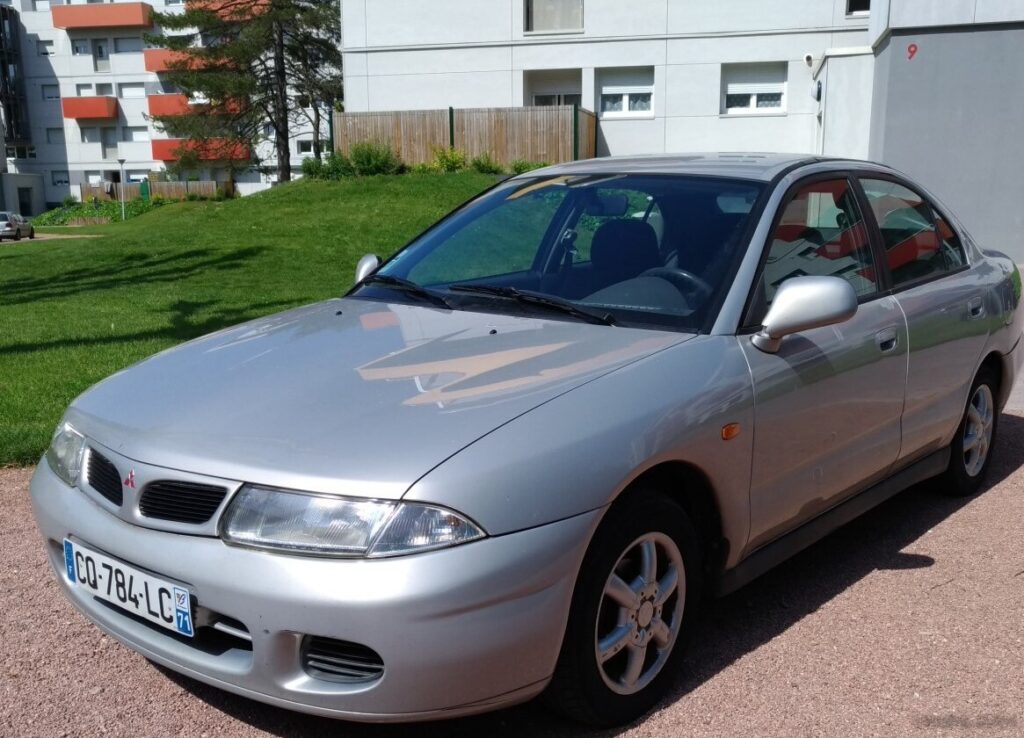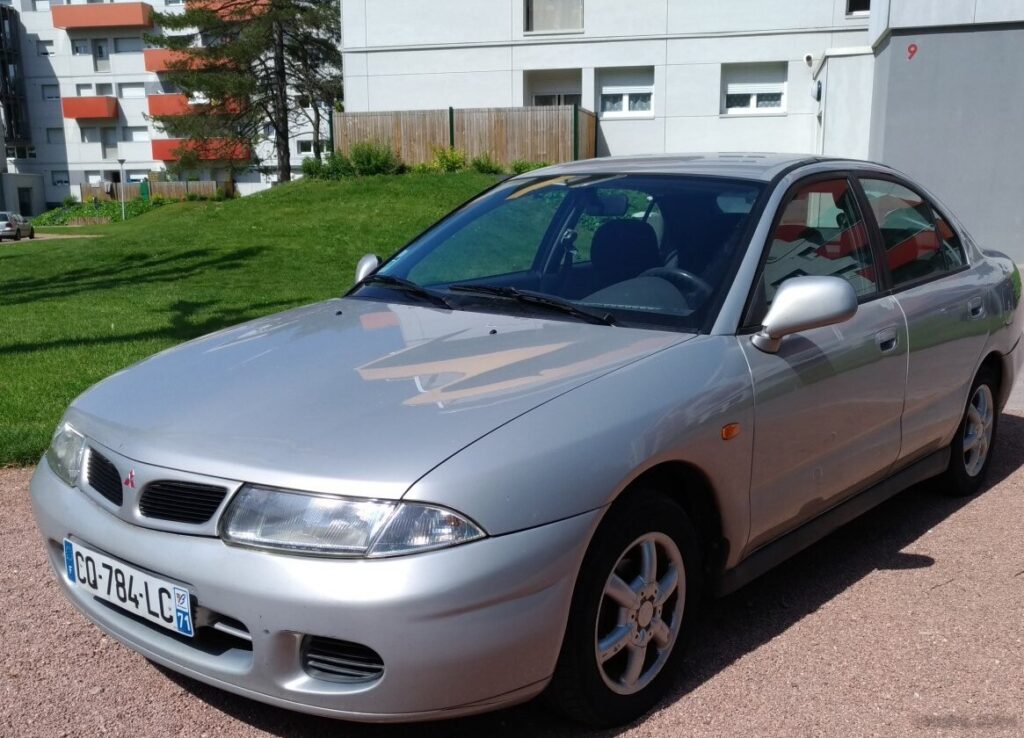
The Mitsubishi Carisma 1.6 i 16V Automatic, produced between 2000 and 2003, represented a mainstream offering within the Carisma range. Positioned as a comfortable and practical family hatchback, it aimed to provide affordable transportation with the convenience of an automatic transmission. The Carisma, internally designated as the DQ platform, was Mitsubishi’s attempt to compete directly with established European rivals like the Ford Focus and Opel/Vauxhall Astra. This particular variant, with its 1.6-liter engine and four-speed automatic gearbox, served as a mid-range option, bridging the gap between the base models and the more performance-oriented trims.
Technical Specifications
| Brand | Mitsubishi |
| Model | Carisma |
| Generation | Carisma Hatchback |
| Type (Engine) | 1.6 i 16V (103 Hp) Automatic |
| Start of production | 2000 year |
| End of production | 2003 year |
| Powertrain Architecture | Internal Combustion engine |
| Body type | Hatchback |
| Seats | 5 |
| Doors | 5 |
| Fuel consumption (urban) | 11.3 l/100 km (20.8 US mpg, 25 UK mpg, 8.8 km/l) |
| Fuel consumption (extra urban) | 6.7 l/100 km (35.1 US mpg, 42.2 UK mpg, 14.9 km/l) |
| Fuel consumption (combined) | 8.4 l/100 km (28 US mpg, 33.6 UK mpg, 11.9 km/l) |
| Fuel Type | Petrol (Gasoline) |
| Acceleration 0 – 100 km/h | 15.1 sec |
| Acceleration 0 – 62 mph | 15.1 sec |
| Acceleration 0 – 60 mph | 14.3 sec |
| Maximum speed | 185 km/h (114.95 mph) |
| Weight-to-power ratio | 11.7 kg/Hp, 85.5 Hp/tonne |
| Weight-to-torque ratio | 8.5 kg/Nm, 117 Nm/tonne |
| Power | 103 Hp @ 6000 rpm |
| Power per litre | 64.5 Hp/l |
| Torque | 141 Nm @ 4500 rpm (104 lb.-ft. @ 4500 rpm) |
| Engine layout | Front, Transverse |
| Engine Model/Code | 4G92 |
| Engine displacement | 1597 cm3 (97.45 cu. in.) |
| Number of cylinders | 4 |
| Engine configuration | Inline |
| Cylinder Bore | 81 mm (3.19 in.) |
| Piston Stroke | 77.5 mm (3.05 in.) |
| Compression ratio | 10:1 |
| Number of valves per cylinder | 4 |
| Fuel injection system | Multi-port manifold injection |
| Engine aspiration | Naturally aspirated engine |
| Valvetrain | DOHC |
| Engine oil capacity | 3.8 l (4.02 US qt | 3.34 UK qt) |
| Coolant capacity | 6.3 l (6.66 US qt | 5.54 UK qt) |
| Kerb Weight | 1205 kg (2656.57 lbs.) |
| Max. weight | 1715 kg (3780.93 lbs.) |
| Max load | 510 kg (1124.36 lbs.) |
| Trunk (boot) space – minimum | 430 l (15.19 cu. ft.) |
| Trunk (boot) space – maximum | 1150 l (40.61 cu. ft.) |
| Fuel tank capacity | 60 l (15.85 US gal | 13.2 UK gal) |
| Length | 4475 mm (176.18 in.) |
| Width | 1710 mm (67.32 in.) |
| Height | 1405 mm (55.31 in.) |
| Wheelbase | 2550 mm (100.39 in.) |
| Front track | 1475 mm (58.07 in.) |
| Rear track | 1470 mm (57.87 in.) |
| Drivetrain Architecture | Front wheel drive |
| Number of gears | 4 |
| Gearbox type | Automatic transmission |
| Front suspension | Spring Strut |
| Rear suspension | Coil spring |
| Front brakes | Ventilated discs |
| Rear brakes | Disc |
| Assisting systems | ABS (Anti-lock braking system) |
| Steering type | Steering rack and pinion |
| Power steering | Hydraulic Steering |
| Tires size | 195/60 R15 |
| Wheel rims size | 14 |
Powertrain & Engine Architecture
The heart of the Carisma 1.6 i 16V Automatic is the 4G92 engine, a 1.6-liter inline-four cylinder powerplant. This engine, a staple in Mitsubishi’s lineup for many years, features a double overhead camshaft (DOHC) valvetrain with four valves per cylinder, contributing to its relatively efficient breathing. Fuel delivery is managed by a multi-point fuel injection system. The 4G92 is a non-interference engine, meaning that even with a broken timing belt, the valves and pistons will not collide, reducing the risk of catastrophic engine damage. Paired with this engine is a four-speed automatic transmission, offering smooth, if not particularly sporty, gear changes. This transmission was chosen for its affordability and ease of use, prioritizing comfort over outright performance. The automatic transmission lacks the manual control options found in some contemporary vehicles.
Driving Characteristics
The 103 horsepower and 141 Nm (104 lb-ft) of torque produced by the 1.6-liter engine, when channeled through the four-speed automatic, resulted in a comfortable but unhurried driving experience. Acceleration from 0 to 60 mph took around 14.3 seconds, and top speed was approximately 115 mph. The automatic transmission’s gear ratios were geared towards fuel efficiency and smooth cruising rather than rapid acceleration. Compared to the manual transmission version of the same engine, the automatic suffered a slight performance penalty due to the transmission’s inherent losses. It also felt noticeably slower than the higher-output 1.8-liter and 2.0-liter variants available in the Carisma range. However, the automatic provided a more relaxed driving experience, particularly in urban traffic.
Equipment & Trim Levels
The 1.6 i 16V Automatic trim typically included features such as power steering, central locking, electric front windows, and an AM/FM radio. Air conditioning was often an optional extra. Interior upholstery was generally cloth, with a relatively simple dashboard layout. Higher trim levels offered upgrades like alloy wheels, a sunroof, and upgraded audio systems. Safety features included ABS (Anti-lock Braking System) as standard, but airbags were often limited to the driver and front passenger.
Chassis & Braking
The Carisma’s chassis utilized a MacPherson strut front suspension and a coil spring rear suspension. The front brakes were ventilated discs, providing adequate stopping power, while the rear brakes were solid discs. The suspension setup prioritized ride comfort over sporty handling, resulting in a relatively soft and forgiving ride. Stabilizer bars were fitted to both the front and rear axles to reduce body roll during cornering, but the overall handling characteristics were geared towards everyday usability rather than enthusiastic driving.
Market Reception & Comparison
The Carisma 1.6 i 16V Automatic was generally well-received as a practical and affordable family car. Critics praised its comfortable ride and spacious interior, but noted its lack of outright performance compared to some rivals. Fuel economy was considered reasonable for its class, averaging around 28 US mpg in combined driving. Compared to the more powerful Carisma variants, the 1.6-liter automatic offered lower running costs but sacrificed performance. The 1.8-liter version, while more expensive, provided a noticeable improvement in acceleration and overall driving enjoyment. The 1.9 TDI diesel offered superior fuel economy but at the cost of refinement.
Legacy
The Mitsubishi Carisma, while not a groundbreaking vehicle, proved to be a reliable and durable family car. The 4G92 engine, in particular, is known for its longevity and relatively simple maintenance requirements. Today, well-maintained examples of the Carisma 1.6 i 16V Automatic can still be found on the used car market, often at very affordable prices. While not a collector’s item, it represents a solid and dependable option for those seeking a budget-friendly hatchback. Common issues include wear and tear on suspension components and potential for corrosion, particularly in regions with harsh winters. The automatic transmission, if properly serviced, is generally reliable, but can be expensive to repair if major issues arise.