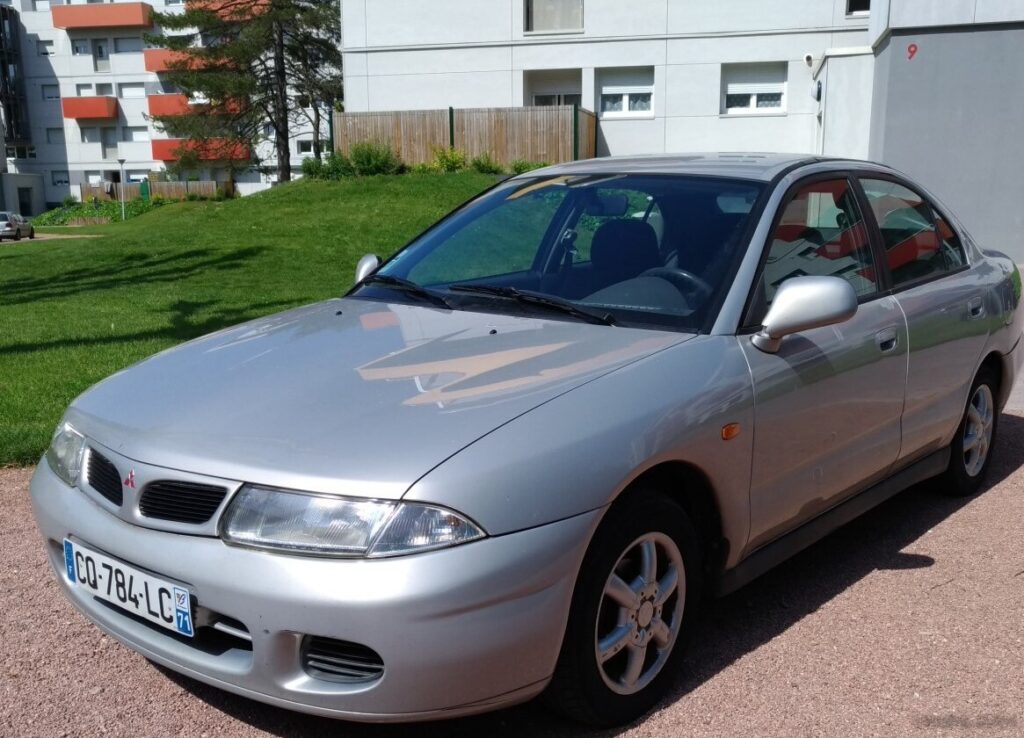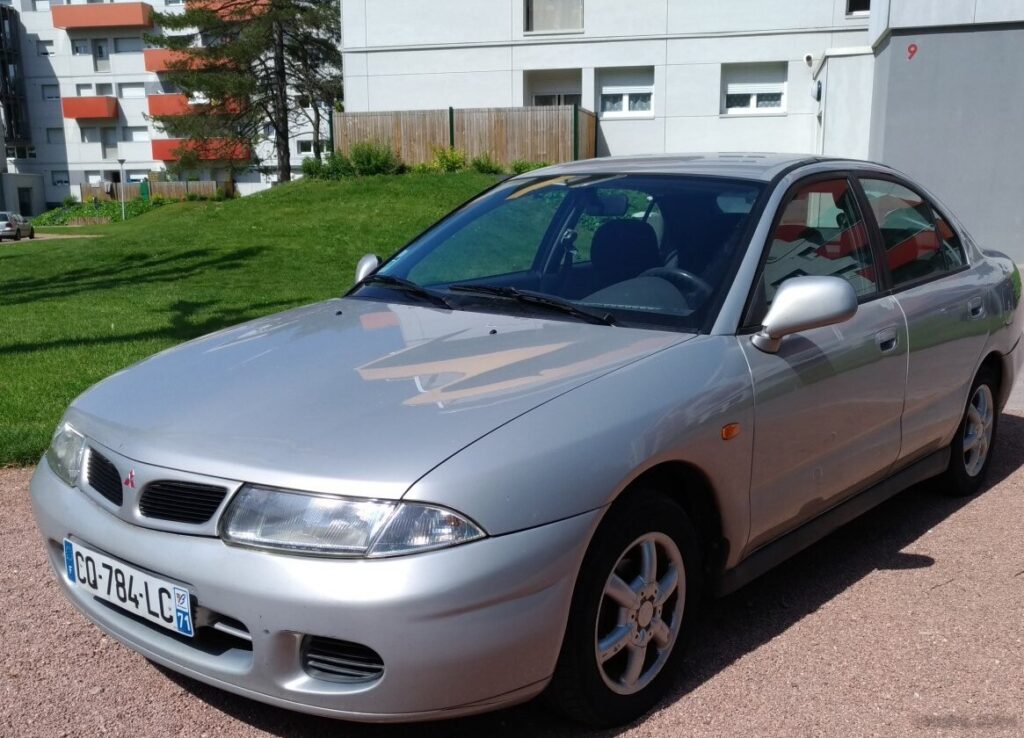
The Mitsubishi Carisma 1.8 16V hatchback, produced between 1996 and 2000, represented a significant step forward for Mitsubishi’s presence in the European compact car market. Positioned as a mid-range offering within the Carisma lineup – which also included 1.6L and 1.8L engines with varying levels of equipment – the 1.8 16V aimed to balance performance with affordability. It was built on the shared 1HX0/A3 platform developed jointly with Volvo, and served as a replacement for the aging Mitsubishi Galant. The Carisma was intended to be a more modern and competitive vehicle, offering a blend of practicality, comfort, and a relatively sporty driving experience for its class.
Technical Specifications
| Brand | Mitsubishi |
| Model | Carisma |
| Generation | Carisma Hatchback |
| Type (Engine) | 1.8 16V (116 Hp) |
| Start of production | 1996 |
| End of production | 2000 |
| Powertrain Architecture | Internal Combustion engine |
| Body type | Hatchback |
| Seats | 5 |
| Doors | 5 |
| Fuel consumption (urban) | 8.7 l/100 km (27 US mpg, 32.5 UK mpg, 11.5 km/l) |
| Fuel consumption (extra urban) | 5.4 l/100 km (43.6 US mpg, 52.3 UK mpg, 18.5 km/l) |
| Fuel consumption (combined) | 6.7 l/100 km (35.1 US mpg, 42.2 UK mpg, 14.9 km/l) |
| Fuel Type | Petrol (Gasoline) |
| Acceleration 0 – 100 km/h | 10.2 sec |
| Acceleration 0 – 62 mph | 10.2 sec |
| Acceleration 0 – 60 mph | 9.7 sec |
| Maximum speed | 200 km/h (124.27 mph) |
| Weight-to-power ratio | 9.7 kg/Hp, 102.7 Hp/tonne |
| Weight-to-torque ratio | 7 kg/Nm, 143.4 Nm/tonne |
| Power | 116 Hp @ 5500 rpm |
| Power per litre | 63.2 Hp/l |
| Torque | 162 Nm @ 4500 rpm (119.49 lb.-ft. @ 4500 rpm) |
| Engine layout | Front, Transverse |
| Engine displacement | 1834 cm3 (111.92 cu. in.) |
| Number of cylinders | 4 |
| Engine configuration | Inline |
| Cylinder Bore | 81 mm (3.19 in.) |
| Piston Stroke | 89 mm (3.5 in.) |
| Compression ratio | 10:1 |
| Number of valves per cylinder | 4 |
| Fuel injection system | Multi-port manifold injection |
| Engine aspiration | Naturally aspirated engine |
| Valvetrain | OHC |
| Kerb Weight | 1130 kg (2491.22 lbs.) |
| Max. weight | 1660 kg (3659.67 lbs.) |
| Max load | 530 kg (1168.45 lbs.) |
| Trunk (boot) space – minimum | 430 l (15.19 cu. ft.) |
| Trunk (boot) space – maximum | 660 l (23.31 cu. ft.) |
| Fuel tank capacity | 60 l (15.85 US gal | 13.2 UK gal) |
| Length | 4445 mm (175 in.) |
| Width | 1710 mm (67.32 in.) |
| Height | 1405 mm (55.31 in.) |
| Wheelbase | 2550 mm (100.39 in.) |
| Front track | 1455 mm (57.28 in.) |
| Rear (Back) track | 1475 mm (58.07 in.) |
| Drivetrain Architecture | The Internal combustion engine (ICE) drives the front wheels of the vehicle. |
| Drive wheel | Front wheel drive |
| Number of gears and type of gearbox | 5 gears, manual transmission |
| Front suspension | Spring Strut |
| Rear suspension | Coil spring |
| Front brakes | Disc |
| Rear brakes | Disc |
| Assisting systems | ABS (Anti-lock braking system) |
| Steering type | Steering rack and pinion |
| Power steering | Hydraulic Steering |
| Tires size | 185/65 R14 |
Powertrain & Engine Architecture
The heart of the Carisma 1.8 16V was the 4G93 engine, a 1.8-liter (1834 cc) inline-four cylinder gasoline engine. This engine featured a single overhead camshaft (SOHC) design with four valves per cylinder, hence the “16V” designation. It utilized a multi-port fuel injection system, delivering fuel directly into the intake ports for improved combustion efficiency. The 4G93 engine was known for its relatively smooth operation and decent power output for its displacement. The engine produced 116 horsepower at 5500 rpm and 162 Nm (119.49 lb-ft) of torque at 4500 rpm. The five-speed manual transmission was the standard offering, providing a direct connection between the engine and the front wheels. The transmission was chosen for its durability and relatively precise shift feel.
Driving Characteristics
The Carisma 1.8 16V offered a reasonably engaging driving experience for a car in its class. While not a performance car, the 116 hp engine provided adequate power for everyday driving and even some spirited acceleration. The 0-60 mph time of around 9.7 seconds was respectable for the mid-1990s. The five-speed manual transmission allowed drivers to keep the engine in its optimal power band, resulting in responsive acceleration. Compared to the base 1.6L models, the 1.8 16V offered a noticeable improvement in performance, particularly when overtaking or climbing hills. However, it didn’t possess the outright punch of higher-performance variants available in other markets, such as the turbocharged models. The steering was light and precise, making the Carisma easy to maneuver in urban environments. The suspension provided a comfortable ride, absorbing bumps and imperfections in the road surface effectively.
Equipment & Trim Levels
The Carisma 1.8 16V typically came equipped with a reasonable level of standard features. These included power steering, central locking, electric front windows, and an adjustable steering column. Interior upholstery was typically cloth, with a relatively simple and functional dashboard layout. Optional extras included air conditioning, alloy wheels, a sunroof, and a CD player. Trim levels varied depending on the market, but generally, the 1.8 16V was positioned as a mid-range model, offering a good balance of features and affordability. Higher trim levels added more luxurious appointments, such as leather upholstery and upgraded audio systems.
Chassis & Braking
The Carisma featured a MacPherson strut front suspension and a coil spring rear suspension. This setup provided a good balance of ride comfort and handling. The front brakes were ventilated discs, while the rear brakes were solid discs, providing adequate stopping power for the vehicle’s weight and performance. Anti-lock Braking System (ABS) was standard, enhancing safety by preventing wheel lockup during hard braking. The chassis was relatively lightweight, contributing to the Carisma’s nimble handling characteristics. Stabilizer bars were fitted to both the front and rear axles to reduce body roll during cornering.
Market Reception & Comparison
The Mitsubishi Carisma 1.8 16V was generally well-received by automotive critics. It was praised for its comfortable ride, spacious interior, and decent performance. However, some critics noted that the styling was somewhat conservative compared to its rivals. In terms of fuel economy, the 1.8 16V offered a combined figure of around 35.1 US mpg, which was competitive for its class. Compared to the 1.6L models, the 1.8 16V offered a noticeable improvement in performance, but at the expense of slightly higher fuel consumption. Reliability was generally good, although some owners reported minor issues with the electrical system.
Legacy
The Mitsubishi Carisma, while not a groundbreaking vehicle, proved to be a solid and reliable family car. The 1.8 16V engine, in particular, has a reputation for durability and longevity. Today, well-maintained examples of the Carisma 1.8 16V are becoming increasingly sought after by enthusiasts and collectors. The powertrain is known to be relatively trouble-free, making it a practical choice for those looking for an affordable and reliable used car. While not as iconic as some of its rivals, the Carisma remains a fondly remembered vehicle from the 1990s, representing a period of innovation and growth for Mitsubishi in the European market.