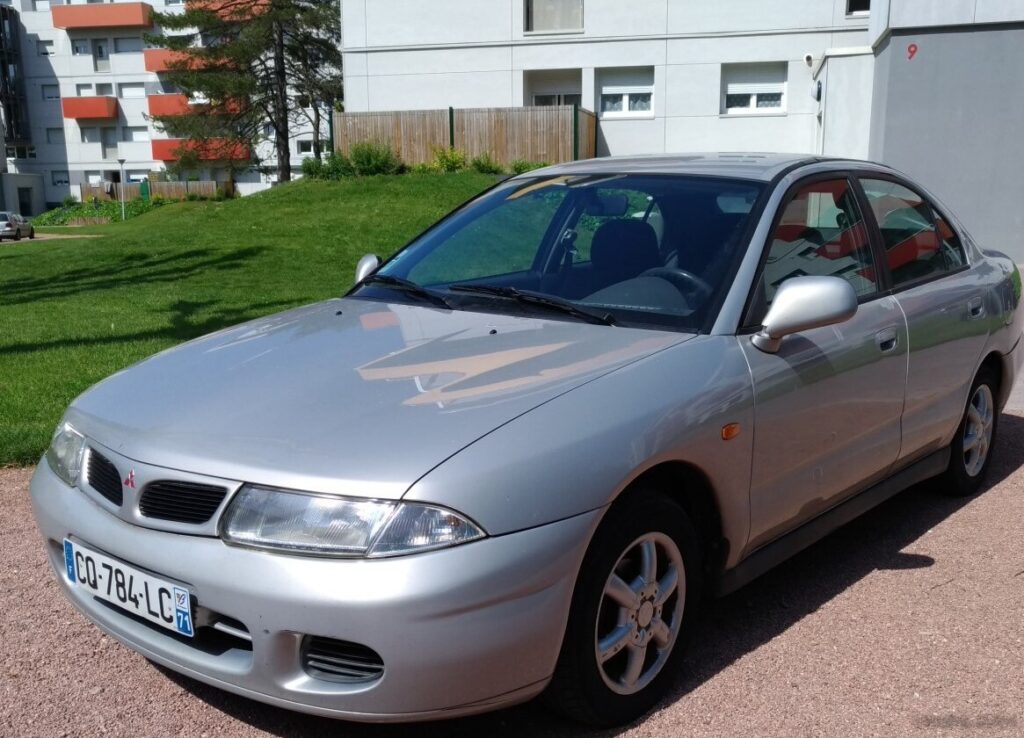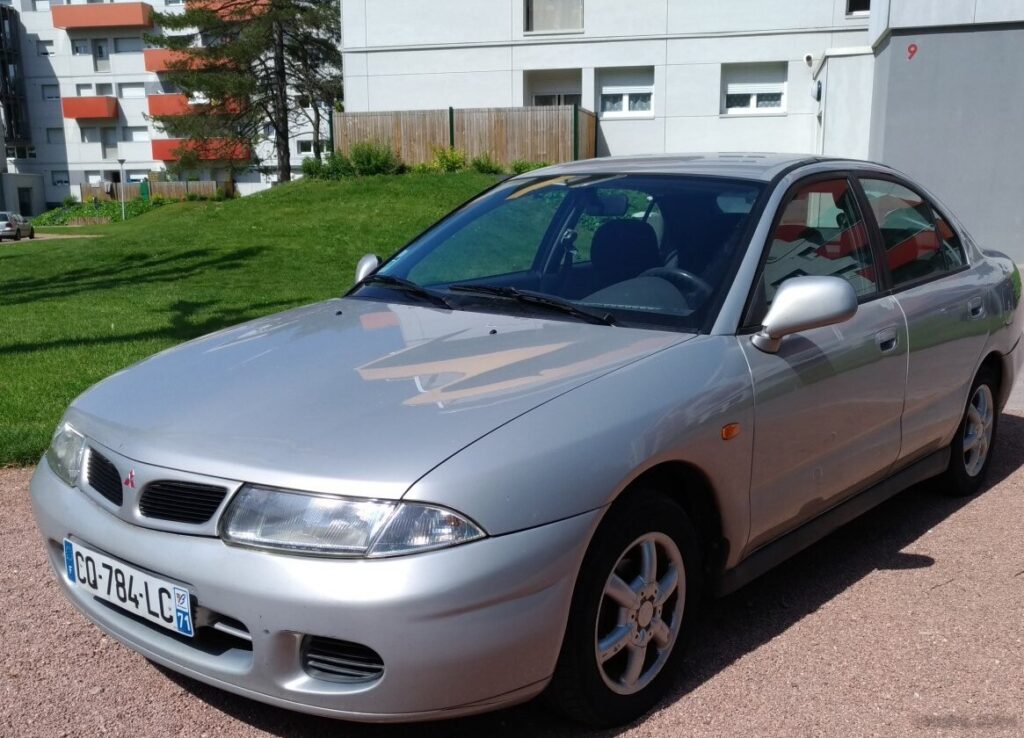
The Mitsubishi Carisma 1.8 16V Automatic, produced between 1996 and 2000, represented a mid-range offering within the Carisma hatchback lineup. Positioned as a comfortable and practical family vehicle, it aimed to bridge the gap between the more economical base models and the sportier, higher-performance variants. The Carisma, internally designated as the DS/DH series, was Mitsubishi’s attempt to establish a stronger foothold in the competitive European compact car segment, sharing its platform (1HX0/A3) with the Volvo S40 and V40 following Mitsubishi’s strategic alliance with Volvo. This particular 1.8L engine and four-speed automatic transmission combination was geared towards buyers prioritizing ease of driving and refinement over outright performance.
Technical Specifications
| Brand | Mitsubishi |
| Model | Carisma |
| Generation | Carisma Hatchback |
| Type (Engine) | 1.8 16V (116 Hp) Automatic |
| Start of production | 1996 |
| End of production | 2000 |
| Powertrain Architecture | Internal Combustion engine |
| Body type | Hatchback |
| Seats | 5 |
| Doors | 5 |
| Fuel consumption (urban) | 9.7 l/100 km (24.2 US mpg) |
| Fuel consumption (extra urban) | 5.7 l/100 km (41.3 US mpg) |
| Fuel consumption (combined) | 7.1 l/100 km (33.1 US mpg) |
| Fuel Type | Petrol (Gasoline) |
| Acceleration 0 – 100 km/h | 12 sec |
| Acceleration 0 – 62 mph | 12 sec |
| Acceleration 0 – 60 mph | 11.4 sec |
| Maximum speed | 200 km/h (124.27 mph) |
| Weight-to-power ratio | 9.7 kg/Hp |
| Weight-to-torque ratio | 7 kg/Nm |
| Power | 116 Hp @ 5500 rpm |
| Torque | 162 Nm @ 4500 rpm (119.49 lb.-ft. @ 4500 rpm) |
| Engine layout | Front, Transverse |
| Engine displacement | 1834 cm3 (111.92 cu. in.) |
| Number of cylinders | 4 |
| Engine configuration | Inline |
| Cylinder Bore | 81 mm (3.19 in.) |
| Piston Stroke | 89 mm (3.5 in.) |
| Compression ratio | 10:1 |
| Number of valves per cylinder | 4 |
| Fuel injection system | Multi-port manifold injection |
| Engine aspiration | Naturally aspirated engine |
| Valvetrain | OHC |
| Kerb Weight | 1130 kg (2491.22 lbs.) |
| Max. weight | 1660 kg (3659.67 lbs.) |
| Max load | 530 kg (1168.45 lbs.) |
| Trunk (boot) space – minimum | 430 l (15.19 cu. ft.) |
| Trunk (boot) space – maximum | 660 l (23.31 cu. ft.) |
| Fuel tank capacity | 60 l (15.85 US gal | 13.2 UK gal) |
| Length | 4445 mm (175 in.) |
| Width | 1710 mm (67.32 in.) |
| Height | 1405 mm (55.31 in.) |
| Wheelbase | 2550 mm (100.39 in.) |
| Front track | 1455 mm (57.28 in.) |
| Rear (Back) track | 1475 mm (58.07 in.) |
| Drivetrain Architecture | The Internal combustion engine (ICE) drives the front wheels of the vehicle. |
| Drive wheel | Front wheel drive |
| Number of gears and type of gearbox | 4 gears, automatic transmission |
| Front suspension | Spring Strut |
| Rear suspension | Coil spring |
| Front brakes | Disc |
| Rear brakes | Disc |
| Assisting systems | ABS (Anti-lock braking system) |
| Steering type | Steering rack and pinion |
| Power steering | Hydraulic Steering |
| Tires size | 185/65 R14 |
| Wheel rims size | 14 |
INTRODUCTION
The Mitsubishi Carisma, launched in 1995 as a replacement for the Galant, was a significant model for Mitsubishi in Europe. The hatchback version, introduced shortly after the sedan, aimed to provide a modern and well-equipped package in the increasingly competitive C-segment. The 1.8 16V Automatic variant, produced from 1996 to 2000, was a popular choice for buyers seeking a balance between performance and convenience. It slotted into the middle of the Carisma range, offering more power than the 1.6L models but lacking the sportiness of the 2.0L variants. The Carisma was intended to be a more refined and technologically advanced offering than its predecessor, and the automatic transmission option was a key part of that strategy.
Powertrain & Engine Architecture
The heart of the Carisma 1.8 16V Automatic is the 4G93 engine, a 1.8-liter (1834 cc) inline-four cylinder gasoline engine. This engine utilizes a single overhead camshaft (SOHC) valvetrain with four valves per cylinder, hence the “16V” designation. The engine employs multi-point fuel injection, delivering fuel directly to each intake port for improved efficiency and responsiveness. The 4G93 engine is known for its relative reliability and straightforward design. Paired with this engine is a four-speed automatic transmission. While not the most modern transmission by today’s standards, it provided smooth and effortless gear changes, contributing to the Carisma’s comfortable driving experience. The transmission control unit (TCU) manages the shifting based on throttle position and vehicle speed. The engine code for this variant is often found as 4G93, and variations may exist depending on the specific market.
Driving Characteristics
The 116 horsepower and 162 Nm (119.49 lb-ft) of torque produced by the 1.8L engine, when coupled with the four-speed automatic, resulted in a respectable, though not exhilarating, driving experience. Acceleration from 0 to 60 mph took around 11.4 seconds, and the top speed was approximately 124 mph. The automatic transmission, while smooth, did slightly diminish the engine’s performance compared to the five-speed manual version. Gear ratios were tuned for comfortable cruising rather than aggressive acceleration. The automatic transmission tended to hold onto gears longer, prioritizing fuel economy over immediate responsiveness. Compared to the higher-output 2.0L models, the 1.8L Automatic felt noticeably less powerful, particularly when overtaking or climbing hills. However, it offered a more relaxed and user-friendly driving experience, especially in urban traffic.
Equipment & Trim Levels
The Carisma 1.8 16V Automatic typically came equipped with a reasonable level of standard features. These included power steering, central locking, electric front windows, and an AM/FM radio. Higher trim levels, often denoted by suffixes like “GLX” or “GDI”, added features such as alloy wheels, air conditioning, a sunroof, and upgraded interior trim. Interior upholstery was typically cloth, with options for more premium materials on higher-spec models. The dashboard layout was functional and straightforward, with easy-to-read gauges and logically placed controls. Optional extras included a CD player, rear electric windows, and upgraded sound systems.
Chassis & Braking
The Carisma utilized a front-wheel-drive layout with a MacPherson strut suspension at the front and a coil spring suspension at the rear. This setup provided a comfortable ride quality, absorbing bumps and imperfections in the road effectively. The 1.8L Automatic models typically featured disc brakes on all four wheels, providing adequate stopping power. An Anti-lock Braking System (ABS) was standard equipment, enhancing safety by preventing wheel lockup during hard braking. Stabilizer bars were fitted to both the front and rear axles to reduce body roll during cornering. The steering was rack and pinion, providing precise and responsive handling.
Market Reception & Comparison
The Mitsubishi Carisma 1.8 16V Automatic was generally well-received by automotive critics as a practical and comfortable family car. It was praised for its spacious interior, smooth ride, and reliable engine. However, some critics noted that the automatic transmission could feel sluggish at times, and the overall driving experience lacked the excitement of some of its rivals. Compared to other cars in its class, such as the Ford Focus and Volkswagen Golf, the Carisma offered a competitive level of equipment and value for money. Fuel economy was respectable, averaging around 33.1 US mpg in combined driving. Reliability was generally good, although some owners reported minor issues with the electrical system.
Legacy
The Mitsubishi Carisma, while not a runaway sales success, established Mitsubishi as a credible player in the European compact car market. The 1.8 16V Automatic powertrain proved to be relatively durable and reliable, and many examples are still on the road today. In the used car market, these models are often sought after by buyers looking for an affordable and practical family vehicle. Maintenance costs are generally reasonable, and parts availability is still good. While the Carisma has been superseded by newer models, it remains a fondly remembered car for those who appreciate its blend of comfort, practicality, and reliability.