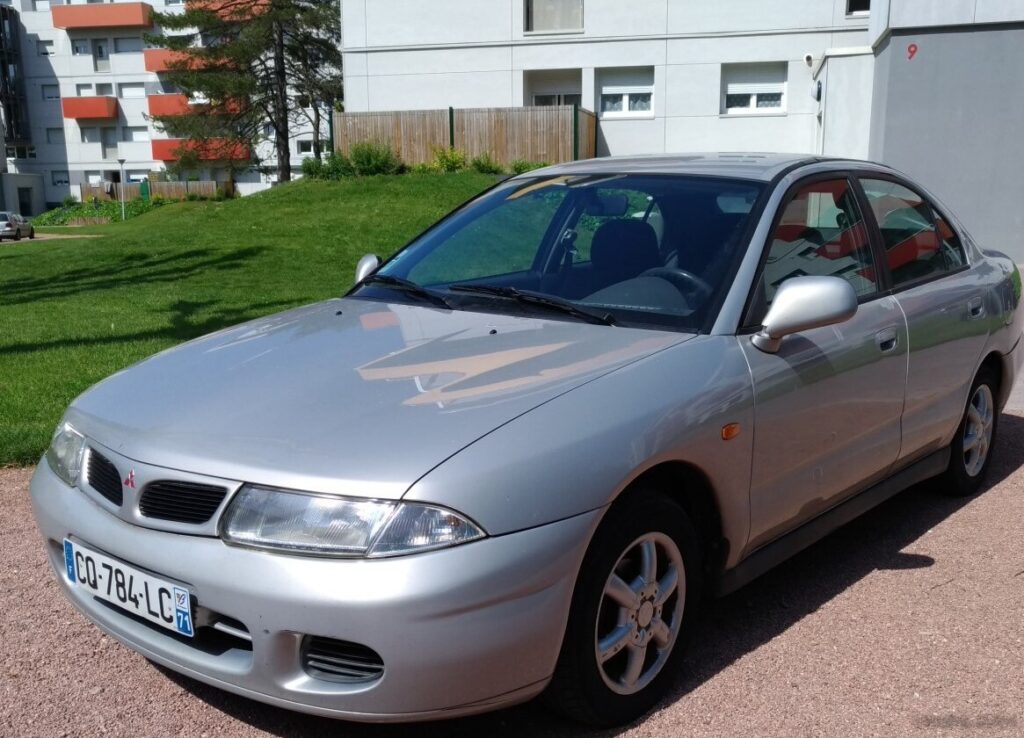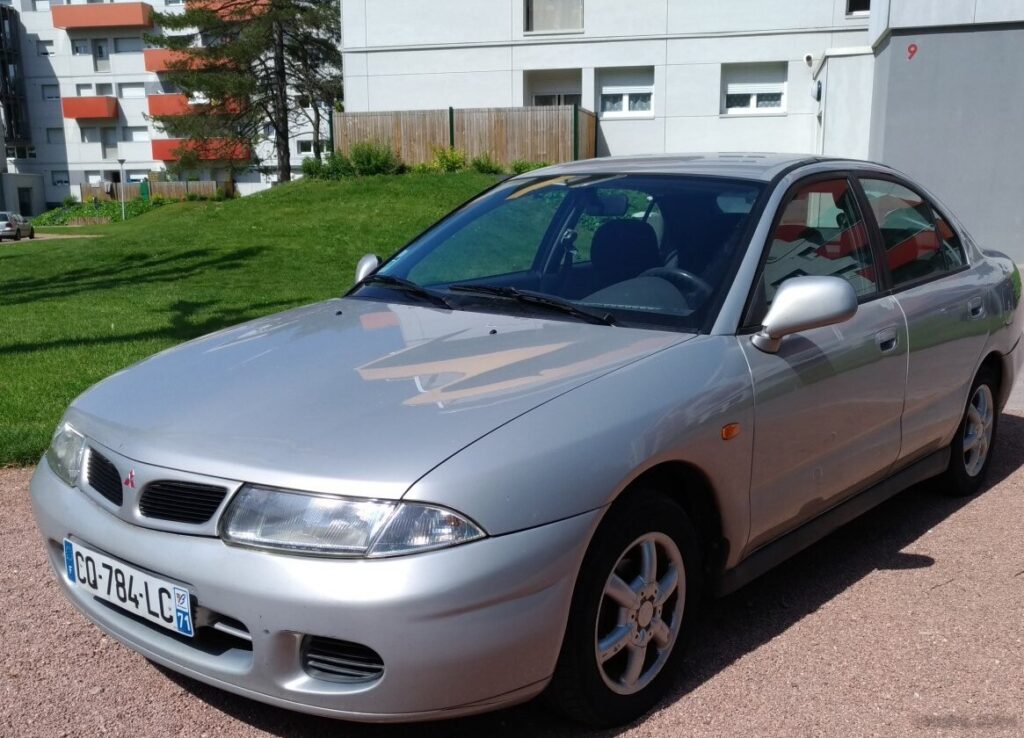
The Mitsubishi Carisma 1.8 16V hatchback, produced between 1995 and 2000, represented Mitsubishi’s entry into the competitive European compact car segment. Positioned as a more sophisticated alternative to the earlier Colt and Mirage models, the Carisma aimed to offer a blend of practicality, comfort, and performance. This particular 1.8-liter, 16-valve variant, delivering 140 horsepower, occupied a mid-range position within the Carisma lineup, offering a step up in performance from the base 1.3 and 1.6-liter engines, but remaining more accessible than the later 2.0-liter models. The Carisma was a significant model for Mitsubishi, designed to appeal to a broader European audience and compete directly with established rivals like the Ford Focus, Opel/Vauxhall Astra, and Volkswagen Golf.
Technical Specifications
| Brand | Mitsubishi |
| Model | Carisma |
| Generation | Carisma Hatchback |
| Type (Engine) | 1.8 16V (140 Hp) |
| Start of production | 1995 |
| End of production | 2000 |
| Powertrain Architecture | Internal Combustion engine |
| Body type | Hatchback |
| Seats | 5 |
| Doors | 5 |
| Fuel consumption (urban) | 9 l/100 km (26.1 US mpg, 31.4 UK mpg, 11.1 km/l) |
| Fuel consumption (extra urban) | 5.2 l/100 km (45.2 US mpg, 54.3 UK mpg, 19.2 km/l) |
| Fuel consumption (combined) | 6.7 l/100 km (35.1 US mpg, 42.2 UK mpg, 14.9 km/l) |
| Fuel Type | Petrol (Gasoline) |
| Acceleration 0 – 100 km/h | 9.2 sec |
| Acceleration 0 – 62 mph | 9.2 sec |
| Acceleration 0 – 60 mph | 8.7 sec |
| Maximum speed | 215 km/h (133.59 mph) |
| Weight-to-power ratio | 8.4 kg/Hp, 119.1 Hp/tonne |
| Weight-to-torque ratio | 7 kg/Nm, 142.1 Nm/tonne |
| Power | 140 Hp @ 6500 rpm |
| Power per litre | 76.3 Hp/l |
| Torque | 167 Nm @ 5000 rpm (123.17 lb.-ft. @ 5000 rpm) |
| Engine layout | Front, Transverse |
| Engine displacement | 1834 cm3 (111.92 cu. in.) |
| Number of cylinders | 4 |
| Engine configuration | Inline |
| Cylinder Bore | 81 mm (3.19 in.) |
| Piston Stroke | 89 mm (3.5 in.) |
| Compression ratio | 10.5:1 |
| Number of valves per cylinder | 4 |
| Fuel injection system | Multi-port manifold injection |
| Engine aspiration | Naturally aspirated engine |
| Valvetrain | DOHC |
| Kerb Weight | 1175 kg (2590.43 lbs.) |
| Max. weight | 1685 kg (3714.79 lbs.) |
| Max load | 510 kg (1124.36 lbs.) |
| Trunk (boot) space – minimum | 430 l (15.19 cu. ft.) |
| Trunk (boot) space – maximum | 660 l (23.31 cu. ft.) |
| Fuel tank capacity | 60 l (15.85 US gal | 13.2 UK gal) |
| Length | 4445 mm (175 in.) |
| Width | 1710 mm (67.32 in.) |
| Height | 1405 mm (55.31 in.) |
| Wheelbase | 2550 mm (100.39 in.) |
| Front track | 1455 mm (57.28 in.) |
| Rear (Back) track | 1475 mm (58.07 in.) |
| Drivetrain Architecture | The Internal combustion engine (ICE) drives the front wheels of the vehicle. |
| Drive wheel | Front wheel drive |
| Number of gears and type of gearbox | 5 gears, manual transmission |
| Front suspension | Spring Strut |
| Rear suspension | Coil spring |
| Front brakes | Disc |
| Rear brakes | Disc |
| Assisting systems | ABS (Anti-lock braking system) |
| Steering type | Steering rack and pinion |
| Power steering | Hydraulic Steering |
| Tires size | 195/60 R14 |
Powertrain & Engine Architecture
The heart of the Carisma 1.8 16V is the 4G93 engine, a 1.8-liter inline-four cylinder powerplant. This engine utilizes a double overhead camshaft (DOHC) design with four valves per cylinder, contributing to its relatively high output for its displacement. The 4G93 featured multi-point fuel injection, delivering fuel directly to each intake port for improved combustion efficiency and power delivery. The engine’s 10.5:1 compression ratio was a typical value for naturally aspirated gasoline engines of the era, balancing performance and fuel economy. The 5-speed manual transmission was the standard offering, providing a direct connection between the engine and the front wheels. The transmission was chosen for its durability and relatively precise shift feel, although it wasn’t particularly sporty in its gearing.
Driving Characteristics
The Carisma 1.8 16V offered a reasonably engaging driving experience for its class. With 140 horsepower on tap, acceleration from 0 to 60 mph took around 8.7 seconds, making it competitive with other similarly sized hatchbacks. The engine provided a linear power delivery, with usable torque available from around 3000 rpm. While not a particularly high-revving engine, it felt responsive and capable for everyday driving and overtaking maneuvers. The 5-speed manual transmission allowed drivers to keep the engine in its sweet spot, maximizing performance. Compared to the lower-powered 1.3 and 1.6-liter versions, the 1.8 offered a noticeable improvement in both acceleration and overall drivability. However, it didn’t possess the outright performance of the later 2.0-liter models.
Equipment & Trim Levels
The Carisma 1.8 16V typically came equipped with a reasonable level of standard features. These included power steering, central locking, electric front windows, and an adjustable steering column. Interior upholstery was generally cloth, with a functional and straightforward dashboard layout. Optional extras included air conditioning, alloy wheels, a sunroof, and a CD player. Trim levels varied slightly depending on the market, but the 1.8 16V generally represented a step up in terms of interior appointments compared to the base models.
Chassis & Braking
The Carisma utilized a MacPherson strut front suspension and a coil spring rear suspension. This setup provided a comfortable ride quality, absorbing bumps and imperfections in the road surface effectively. The Carisma 1.8 16V was equipped with disc brakes on all four wheels, providing adequate stopping power for its weight and performance. An Anti-lock Braking System (ABS) was standard, enhancing safety by preventing wheel lockup during hard braking. The chassis was designed to provide a balance between handling and comfort, leaning more towards the comfort side of the spectrum.
Market Reception & Comparison
The Mitsubishi Carisma 1.8 16V was generally well-received by automotive critics. It was praised for its comfortable ride, spacious interior, and relatively strong engine performance. However, some critics noted that the styling was somewhat conservative and lacked the visual flair of some of its rivals. Compared to the 1.6-liter version, the 1.8 offered a significant improvement in performance, making it a more appealing option for drivers who prioritized driving enjoyment. Fuel economy was respectable, averaging around 35 mpg in combined driving. Reliability was generally good, although some owners reported minor issues with electrical components.
Legacy
The Mitsubishi Carisma, while not a groundbreaking model, established Mitsubishi as a credible player in the European compact car market. The 1.8 16V engine proved to be a durable and reliable unit, and examples are still found on the road today. In the used car market, the Carisma 1.8 16V represents a relatively affordable and practical option for those seeking a comfortable and reliable hatchback. While it may not offer the same level of refinement or technology as more modern vehicles, it remains a capable and enjoyable car for everyday use. The Carisma paved the way for Mitsubishi’s later successes in the European market, and its influence can be seen in subsequent models like the Lancer.