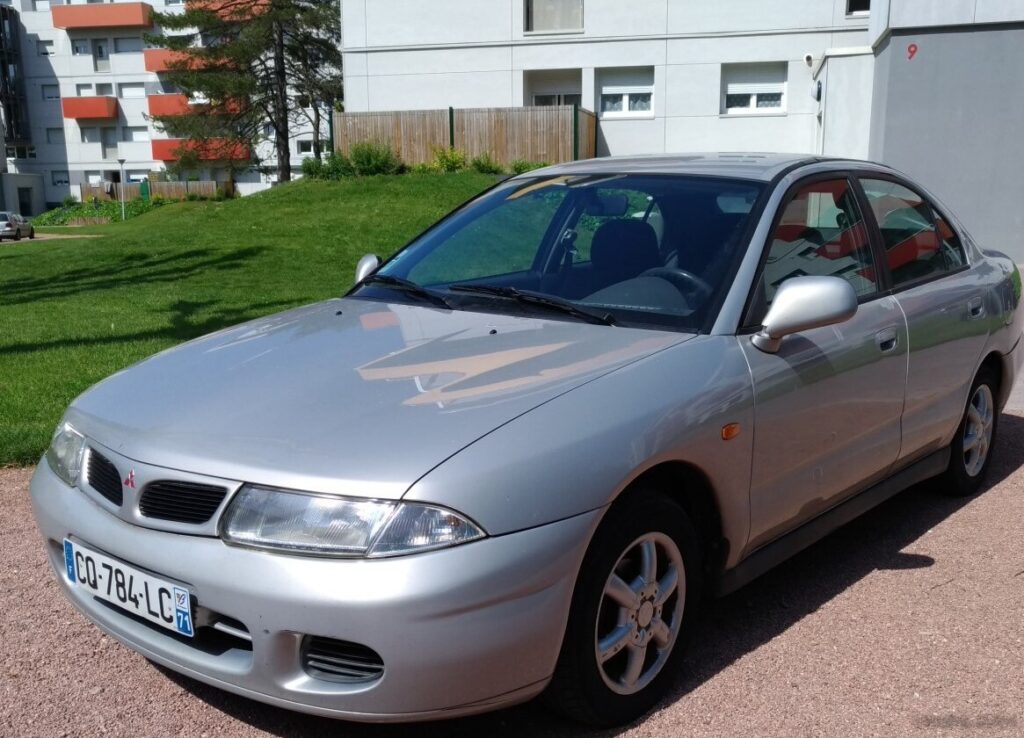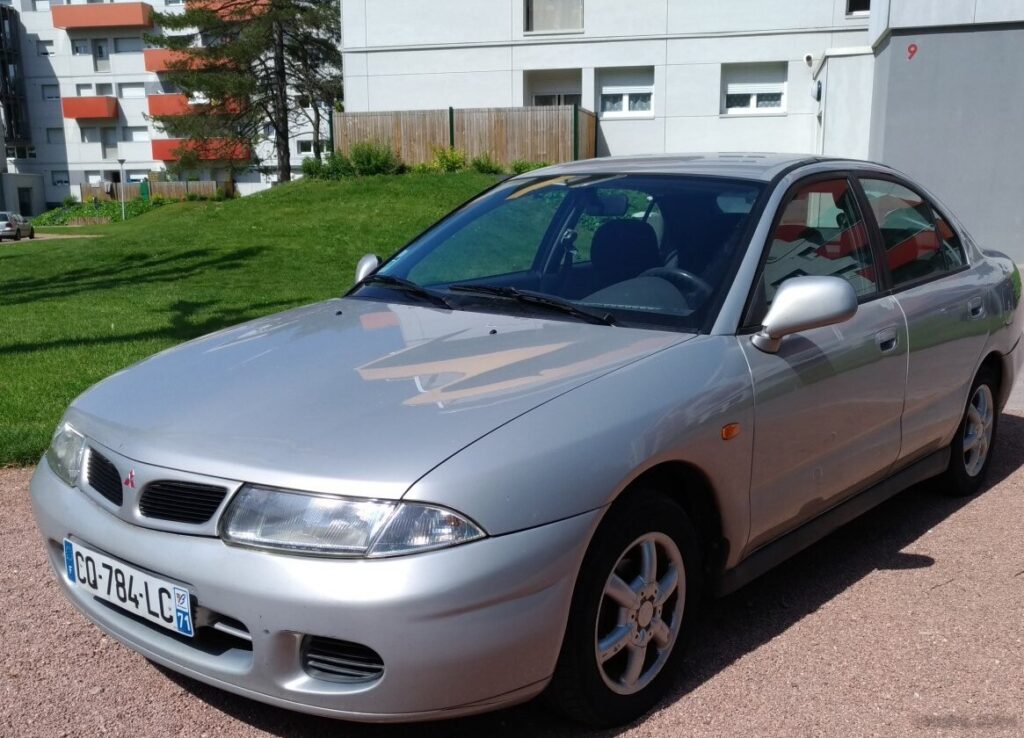
The Mitsubishi Carisma 1.8 16V GDI, produced between 2001 and 2003, represented a mid-cycle refinement of Mitsubishi’s compact offering. Positioned as a slightly more upscale and performance-oriented variant within the Carisma hatchback range, it aimed to bridge the gap between the base models and the more sporting trims. The Carisma, itself a successor to the Galant, was primarily aimed at the European market, offering a blend of practicality, comfort, and relatively modern technology for its time. This particular 1.8L GDI engine and five-speed manual transmission combination was a popular choice, offering a balance between fuel efficiency and respectable performance.
Technical Specifications
| Brand | Mitsubishi |
| Model | Carisma |
| Generation | Carisma Hatchback |
| Type (Engine) | 1.8 16V GDI (122 Hp) |
| Start of production | 2001 |
| End of production | 2003 |
| Powertrain Architecture | Internal Combustion engine |
| Body type | Hatchback |
| Seats | 5 |
| Doors | 5 |
| Fuel consumption (urban) | 9.2 l/100 km (25.6 US mpg) |
| Fuel consumption (extra urban) | 5.7 l/100 km (41.3 US mpg) |
| Fuel consumption (combined) | 7 l/100 km (33.6 US mpg) |
| Fuel Type | Petrol (Gasoline) |
| Acceleration 0 – 100 km/h | 10.4 sec |
| Acceleration 0 – 62 mph | 10.4 sec |
| Acceleration 0 – 60 mph | 9.9 sec |
| Maximum speed | 200 km/h (124.27 mph) |
| Weight-to-power ratio | 10.3 kg/Hp |
| Weight-to-torque ratio | 7.2 kg/Nm |
| Power | 122 Hp @ 5500 rpm |
| Power per litre | 66.5 Hp/l |
| Torque | 174 Nm @ 3750 rpm (128.34 lb.-ft. @ 3750 rpm) |
| Engine layout | Front, Transverse |
| Engine Model/Code | 4G93 |
| Engine displacement | 1834 cm3 (111.92 cu. in.) |
| Number of cylinders | 4 |
| Engine configuration | Inline |
| Cylinder Bore | 81 mm (3.19 in.) |
| Piston Stroke | 89 mm (3.5 in.) |
| Compression ratio | 11.6:1 |
| Number of valves per cylinder | 4 |
| Fuel injection system | Direct injection |
| Engine aspiration | Naturally aspirated engine |
| Valvetrain | DOHC |
| Engine oil capacity | 3.8 l (4.02 US qt | 3.34 UK qt) |
| Coolant capacity | 6.3 l (6.66 US qt | 5.54 UK qt) |
| Kerb Weight | 1260 kg (2777.82 lbs.) |
| Max. weight | 1750 kg (3858.09 lbs.) |
| Max load | 490 kg (1080.27 lbs.) |
| Trunk (boot) space – minimum | 430 l (15.19 cu. ft.) |
| Trunk (boot) space – maximum | 1050 l (37.08 cu. ft.) |
| Fuel tank capacity | 60 l (15.85 US gal | 13.2 UK gal) |
| Length | 4475 mm (176.18 in.) |
| Width | 1710 mm (67.32 in.) |
| Height | 1405 mm (55.31 in.) |
| Wheelbase | 2550 mm (100.39 in.) |
| Front track | 1475 mm (58.07 in.) |
| Rear track | 1470 mm (57.87 in.) |
| Drivetrain Architecture | Front wheel drive |
| Number of gears | 5 |
| Gearbox type | Manual transmission |
| Front suspension | Spring Strut |
| Rear suspension | Coil spring |
| Front brakes | Ventilated discs |
| Rear brakes | Disc |
| Assisting systems | ABS (Anti-lock braking system) |
| Steering type | Steering rack and pinion |
| Power steering | Hydraulic Steering |
| Tires size | 195/60 R15 |
Powertrain & Engine Architecture
The heart of the Carisma 1.8 GDI is the 4G93 engine, a 1.8-liter, inline-four cylinder powerplant. What sets this engine apart is its Gasoline Direct Injection (GDI) system. Unlike traditional multi-point fuel injection, GDI injects fuel directly into the combustion chamber, allowing for more precise fuel control, higher compression ratios, and improved fuel efficiency. The 4G93 GDI utilizes a sophisticated electronic control unit (ECU) to manage fuel delivery and ignition timing. The engine features a double overhead camshaft (DOHC) valvetrain with four valves per cylinder, contributing to its relatively high output for its displacement. The five-speed manual transmission offered precise shifts and helped to maximize the engine’s potential. The transmission’s gear ratios were tuned for a balance of acceleration and highway cruising efficiency.
Driving Characteristics
The 1.8 GDI with a manual transmission provided a noticeably more engaging driving experience than the base-model Carismas. While not a sports car, the 122 horsepower and 174 Nm (128 lb-ft) of torque offered brisk acceleration, with a 0-60 mph time of around 9.9 seconds. The GDI system contributed to a responsive throttle and a linear power delivery. The five-speed manual allowed drivers to keep the engine in its optimal power band, enhancing performance. Compared to the automatic transmission option, the manual provided better control and fuel economy. The chassis felt well-balanced, and the suspension offered a comfortable ride without excessive body roll. Steering was precise and provided adequate feedback.
Equipment & Trim Levels
The 1.8 GDI typically came with a reasonable level of standard equipment. This included power windows, central locking, power steering, and an anti-lock braking system (ABS). Interior upholstery was generally cloth, with a functional and straightforward dashboard layout. Optional extras could include air conditioning, an upgraded audio system, and alloy wheels. The trim level often dictated the availability of these options, with higher trims offering more standard features. The Carisma aimed for a comfortable and practical interior, rather than a luxurious one.
Chassis & Braking
The Carisma’s chassis utilized a MacPherson strut front suspension and a coil spring rear suspension. This setup provided a good balance between ride comfort and handling. The front brakes were ventilated discs, offering good stopping power, while the rear brakes were solid discs. ABS was standard, enhancing safety by preventing wheel lockup during hard braking. The Carisma’s suspension was tuned for everyday driving conditions, prioritizing comfort over outright sportiness. Stabilizer bars were fitted to both the front and rear axles to reduce body roll during cornering.
Market Reception & Comparison
The Mitsubishi Carisma 1.8 GDI was generally well-received by automotive critics. It was praised for its fuel efficiency, responsive engine, and comfortable ride. However, some critics noted that the interior design was somewhat bland and lacked the visual appeal of some competitors. Compared to other 1.8-liter engines of the time, the GDI offered a noticeable advantage in fuel economy and power output. Against rivals like the Ford Focus or Volkswagen Golf, the Carisma offered a competitive package, particularly in terms of value for money. The 1.8 GDI was a step up from the lower-powered 1.6L models, offering a more enjoyable driving experience, but it didn’t quite match the performance of the more expensive and less common 2.0L variants.
Legacy
The Mitsubishi Carisma, while not a groundbreaking vehicle, established Mitsubishi as a credible player in the European compact car market. The 4G93 GDI engine proved to be relatively reliable, although the direct injection system did require regular maintenance to prevent carbon buildup. Today, well-maintained examples of the Carisma 1.8 GDI are becoming increasingly sought after by enthusiasts and collectors. The engine’s fuel efficiency and respectable performance continue to make it a viable option for those seeking an affordable and practical used car. Parts availability can be a challenge, but the Carisma’s relatively simple mechanical design makes it a rewarding vehicle to own and maintain for those willing to put in the effort.