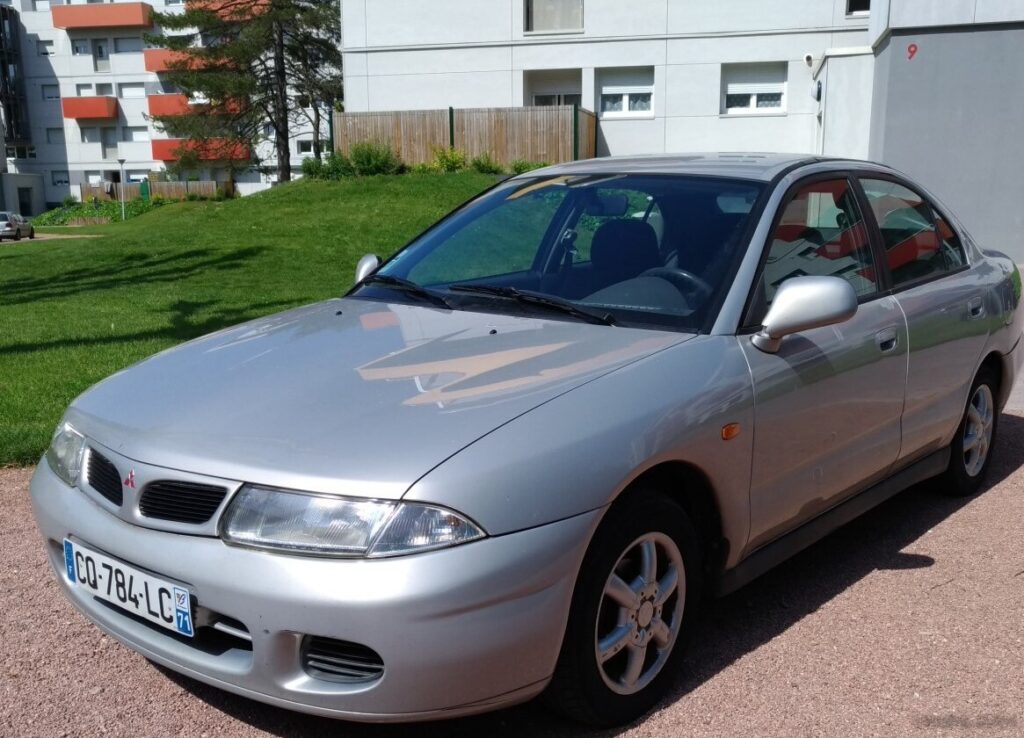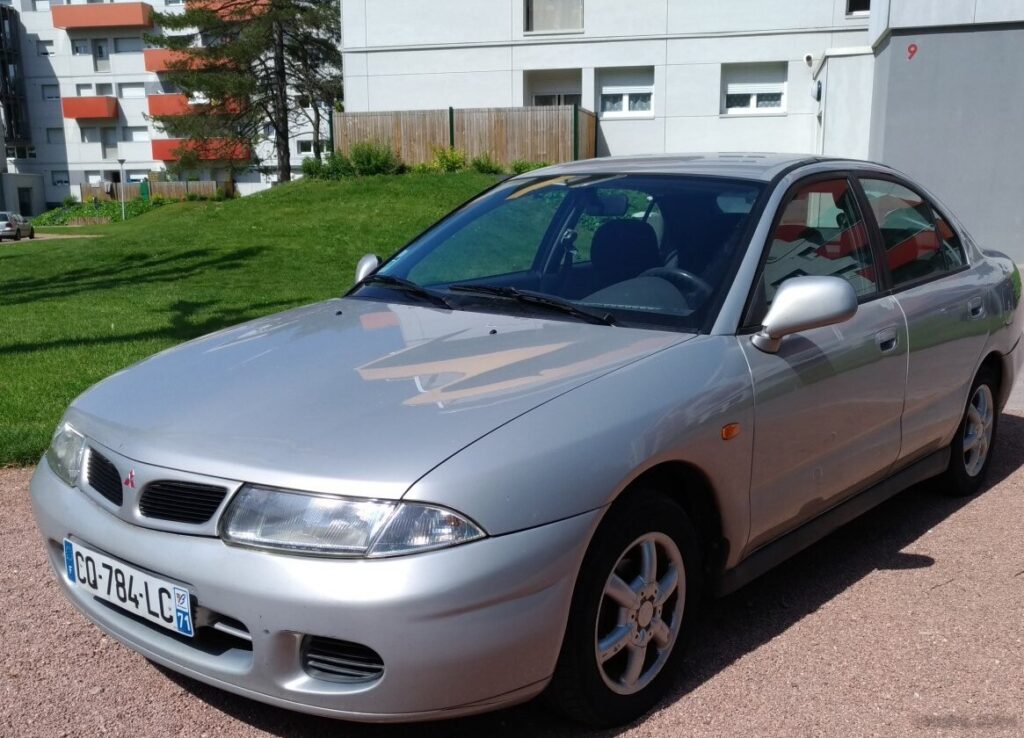
The Mitsubishi Carisma Hatchback 1.8 16V GDI Automatic, produced between 1997 and 2000, represented a significant offering in Mitsubishi’s European lineup. Positioned as a mid-range trim within the broader Carisma range, it aimed to provide a balance of performance, fuel efficiency, and comfort for family car buyers. The Carisma, internally designated as the DX2 series, was a collaborative effort with Chrysler (then DaimlerChrysler), sharing its platform with the Chrysler Neon and the later Dodge Stratus. This particular variant, with its 1.8-liter GDI engine and four-speed automatic transmission, was designed to appeal to drivers seeking a refined and convenient driving experience without sacrificing too much in terms of power.
Technical Specifications
| Brand | Mitsubishi |
| Model | Carisma |
| Generation | Carisma Hatchback |
| Type (Engine) | 1.8 16V GDI (125 Hp) Automatic |
| Start of production | 1997 |
| End of production | 2000 |
| Powertrain Architecture | Internal Combustion engine |
| Body type | Hatchback |
| Seats | 5 |
| Doors | 5 |
| Fuel Type | Petrol (Gasoline) |
| Acceleration 0 – 100 km/h | 9.4 sec |
| Acceleration 0 – 62 mph | 9.4 sec |
| Acceleration 0 – 60 mph | 8.9 sec |
| Maximum speed | 205 km/h (127.38 mph) |
| Weight-to-power ratio | 9.7 kg/Hp, 102.9 Hp/tonne |
| Weight-to-torque ratio | 7 kg/Nm, 143.2 Nm/tonne |
| Power | 125 Hp @ 5500 rpm |
| Power per litre | 68.2 Hp/l |
| Torque | 174 Nm @ 3750 rpm (128.34 lb.-ft. @ 3750 rpm) |
| Engine layout | Front, Transverse |
| Engine displacement | 1834 cm3 (111.92 cu. in.) |
| Number of cylinders | 4 |
| Engine configuration | Inline |
| Cylinder Bore | 81 mm (3.19 in.) |
| Piston Stroke | 89 mm (3.5 in.) |
| Compression ratio | 12.5:1 |
| Number of valves per cylinder | 4 |
| Fuel injection system | Direct injection |
| Engine aspiration | Naturally aspirated engine |
| Valvetrain | DOHC |
| Kerb Weight | 1215 kg (2678.62 lbs.) |
| Max. weight | 1685 kg (3714.79 lbs.) |
| Max load | 470 kg (1036.17 lbs.) |
| Trunk (boot) space – minimum | 430 l (15.19 cu. ft.) |
| Trunk (boot) space – maximum | 660 l (23.31 cu. ft.) |
| Fuel tank capacity | 60 l (15.85 US gal | 13.2 UK gal) |
| Length | 4445 mm (175 in.) |
| Width | 1710 mm (67.32 in.) |
| Height | 1405 mm (55.31 in.) |
| Wheelbase | 2550 mm (100.39 in.) |
| Front track | 1455 mm (57.28 in.) |
| Rear (Back) track | 1475 mm (58.07 in.) |
| Drivetrain Architecture | The Internal combustion engine (ICE) drives the front wheels of the vehicle. |
| Drive wheel | Front wheel drive |
| Number of gears and type of gearbox | 4 gears, automatic transmission |
| Front suspension | Spring Strut |
| Rear suspension | Coil spring |
| Front brakes | Ventilated discs |
| Rear brakes | Drum |
| Assisting systems | ABS (Anti-lock braking system) |
| Steering type | Steering rack and pinion |
| Power steering | Hydraulic Steering |
| Tires size | 185/65 R14 |
| Wheel rims size | 14 |
Powertrain & Engine Architecture
The heart of this Carisma variant is the 4G93 1.8-liter inline-four engine, notable for its GDI (Gasoline Direct Injection) technology. This system, relatively advanced for its time, injected fuel directly into the combustion chamber, allowing for more precise fuel control, increased power output, and improved fuel economy compared to traditional multi-point fuel injection. The engine featured a double overhead camshaft (DOHC) valvetrain with four valves per cylinder, contributing to its respectable power output of 125 horsepower at 5500 rpm and 174 Nm (128.34 lb-ft) of torque at 3750 rpm. The high 12.5:1 compression ratio was a key element in maximizing efficiency. Paired with this engine was a four-speed automatic transmission, offering smooth shifts but lacking the responsiveness of a manual gearbox. The transmission was chosen to provide ease of use, catering to a broader audience who prioritized comfort over sporty driving dynamics.
Driving Characteristics
The 1.8 GDI Automatic Carisma offered a comfortable and generally refined driving experience. Acceleration to 60 mph took around 8.9 seconds, which was adequate for everyday driving but not particularly brisk. The automatic transmission, while smooth, did exhibit some hesitation during quick acceleration, and the engine felt somewhat strained when pushed hard. The gear ratios were tuned for fuel efficiency rather than outright performance. Compared to the manual transmission version of the same engine, the automatic suffered a slight performance penalty. The higher-output 2.0-liter variants, particularly those with a manual gearbox, offered significantly more engaging driving dynamics, but at the cost of fuel economy and a higher price point.
Equipment & Trim Levels
The 1.8 16V GDI Automatic trim typically included features such as power steering, central locking, electric front windows, and an AM/FM radio. Air conditioning was often standard, though sometimes offered as an option depending on the specific market. Interior upholstery was typically cloth, with a relatively simple dashboard layout. Optional extras included alloy wheels, a sunroof, and upgraded audio systems. The trim level aimed to provide a good balance of features for the price, appealing to families and commuters who wanted a comfortable and well-equipped vehicle without the expense of the higher-spec models.
Chassis & Braking
The Carisma utilized a front-wheel-drive layout with a MacPherson strut suspension at the front and a coil spring suspension at the rear. The braking system consisted of ventilated discs on the front wheels and drum brakes on the rear. ABS (Anti-lock Braking System) was standard, enhancing safety. The suspension setup provided a comfortable ride, absorbing bumps and imperfections in the road reasonably well. However, it wasn’t particularly sporty, with noticeable body roll during cornering. The drum brakes on the rear were a cost-saving measure, and while adequate for normal driving, they lacked the stopping power of disc brakes.
Market Reception & Comparison
The Mitsubishi Carisma 1.8 GDI Automatic was generally well-received by automotive critics as a practical and reliable family car. However, the automatic transmission was sometimes criticized for its lack of responsiveness. Fuel economy was a strong point, thanks to the GDI technology, and the car offered a good level of standard equipment for its price. Compared to rivals like the Ford Focus, Opel/Vauxhall Astra, and Volkswagen Golf, the Carisma offered a competitive package, though it didn’t necessarily excel in any one area. The 1.9 TDI diesel variants of the Carisma were particularly popular in Europe due to their superior fuel economy and torque, while the 2.0-liter petrol models appealed to drivers who prioritized performance.
Legacy
The Mitsubishi Carisma, while not a groundbreaking vehicle, proved to be a solid and dependable family car. The 1.8 GDI engine, when properly maintained, is known for its longevity. However, the GDI system can be susceptible to carbon buildup over time, requiring periodic cleaning to maintain optimal performance. In the used car market, the Carisma 1.8 GDI Automatic represents a relatively affordable and practical option for those seeking a comfortable and reliable hatchback. Parts availability is generally good, and maintenance costs are reasonable. While it may not offer the same level of refinement or technology as more modern vehicles, it remains a capable and dependable choice for everyday transportation.