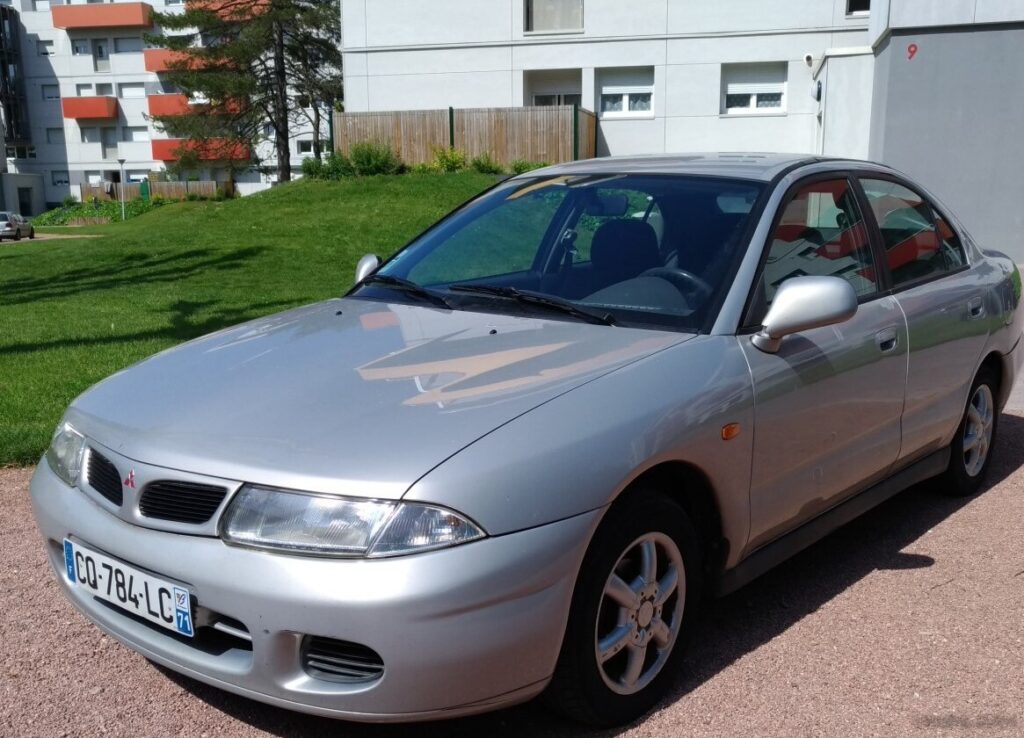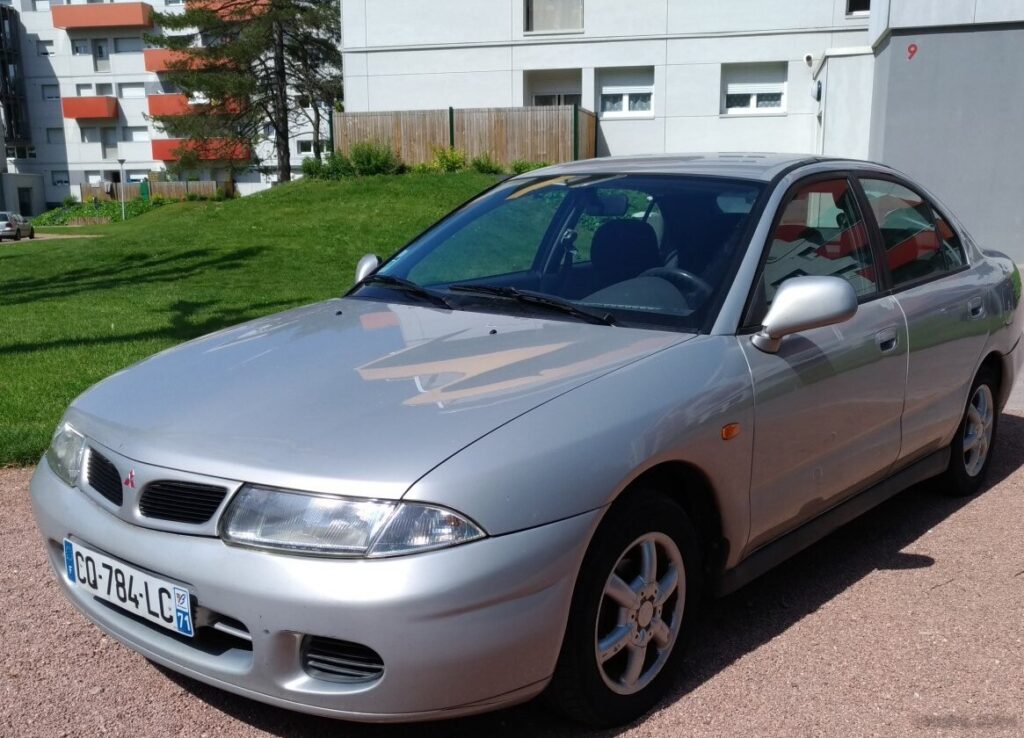
The Mitsubishi Carisma 1.9 TD, produced between 1996 and 2000, represented a significant offering in the European compact car segment. Positioned as an affordable and economical option, this variant utilized a turbocharged diesel engine paired with a five-speed manual transmission. It served as a practical choice for buyers prioritizing fuel efficiency and low running costs, fitting into the lower to mid-range of the Carisma lineup. The Carisma itself was Mitsubishi’s replacement for the Colt, aiming to provide a more modern and spacious alternative within the competitive C-segment.
Technical Specifications
| Brand | Mitsubishi |
| Model | Carisma |
| Generation | Carisma Hatchback |
| Type (Engine) | 1.9 TD (90 Hp) |
| Start of production | 1996 |
| End of production | 2000 |
| Powertrain Architecture | Internal Combustion engine |
| Body type | Hatchback |
| Seats | 5 |
| Doors | 5 |
| Fuel consumption (urban) | 8 l/100 km (29.4 US mpg) |
| Fuel consumption (extra urban) | 4.8 l/100 km (49 US mpg) |
| Fuel Type | Diesel |
| Acceleration 0 – 100 km/h | 13.2 sec |
| Acceleration 0 – 62 mph | 13.2 sec |
| Acceleration 0 – 60 mph | 12.5 sec |
| Maximum speed | 180 km/h (111.85 mph) |
| Weight-to-power ratio | 12.8 kg/Hp |
| Weight-to-torque ratio | 6.5 kg/Nm |
| Power | 90 Hp @ 4250 rpm |
| Power per litre | 48.1 Hp/l |
| Torque | 176 Nm @ 2250 rpm (129.81 lb.-ft. @ 2250 rpm) |
| Engine layout | Front, Transverse |
| Engine Model/Code | F8QT |
| Engine displacement | 1870 cm3 (114.11 cu. in.) |
| Number of cylinders | 4 |
| Engine configuration | Inline |
| Cylinder Bore | 80 mm (3.15 in.) |
| Piston Stroke | 93 mm (3.66 in.) |
| Compression ratio | 20.5:1 |
| Number of valves per cylinder | 2 |
| Fuel injection system | Precombustion chamber injection |
| Engine aspiration | Turbocharger |
| Valvetrain | OHC |
| Engine oil capacity | 5.1 l (5.39 US qt | 4.49 UK qt) |
| Kerb Weight | 1150 kg (2535.32 lbs.) |
| Max. weight | 1675 kg (3692.74 lbs.) |
| Max load | 525 kg (1157.43 lbs.) |
| Trunk (boot) space – minimum | 430 l (15.19 cu. ft.) |
| Trunk (boot) space – maximum | 660 l (23.31 cu. ft.) |
| Fuel tank capacity | 60 l (15.85 US gal | 13.2 UK gal) |
| Length | 4445 mm (175 in.) |
| Width | 1710 mm (67.32 in.) |
| Height | 1405 mm (55.31 in.) |
| Wheelbase | 2550 mm (100.39 in.) |
| Front track | 1455 mm (57.28 in.) |
| Rear (Back) track | 1475 mm (58.07 in.) |
| Drivetrain Architecture | The Internal combustion engine (ICE) drives the front wheels of the vehicle. |
| Drive wheel | Front wheel drive |
| Number of gears and type of gearbox | 5 gears, manual transmission |
| Front suspension | Spring Strut |
| Rear suspension | Coil spring |
| Front brakes | Ventilated discs |
| Rear brakes | Drum |
| Assisting systems | ABS (Anti-lock braking system) |
| Steering type | Steering rack and pinion |
| Power steering | Hydraulic Steering |
| Tires size | 175/65 R14 |
Introduction
The Mitsubishi Carisma, launched in 1995, was intended to replace the aging Colt and provide Mitsubishi with a competitive offering in the increasingly popular C-segment. The 1.9 TD variant, introduced in 1996, quickly became a popular choice for European buyers seeking a fuel-efficient and reliable family hatchback. Built on the Mitsubishi GS platform, the Carisma aimed to offer a blend of practicality, comfort, and affordability. The 1.9 TD model specifically targeted those prioritizing economy and torque for everyday driving, rather than outright performance.
Powertrain & Engine Architecture
The heart of the Carisma 1.9 TD is the F8QT engine, a 1.9-liter inline-four cylinder diesel engine. This engine utilizes a precombustion chamber injection system, a common technology for diesel engines of that era. This system involves injecting fuel into a precombustion chamber, which then ignites the main combustion chamber, resulting in more complete combustion and reduced emissions. The engine is turbocharged, which significantly boosts power and torque output. The turbocharger provides 90 horsepower at 4250 rpm and 176 Nm (129.81 lb-ft) of torque at 2250 rpm. The five-speed manual transmission was the standard offering for this variant, providing a balance between fuel efficiency and drivability. The engine’s overhead camshaft (OHC) configuration contributes to its relatively compact size and efficient operation.
Driving Characteristics
The Carisma 1.9 TD, with its 90 horsepower and 176 Nm of torque, offered a practical and usable driving experience. Acceleration was not its strong suit, with a 0-100 km/h (0-62 mph) time of around 13.2 seconds. However, the engine’s torque delivery made it well-suited for everyday driving, providing ample power for overtaking and navigating hills. Compared to the higher-output gasoline variants, the 1.9 TD prioritized fuel economy and low-end grunt over outright speed. The five-speed manual transmission allowed drivers to effectively manage the engine’s powerband, while the gear ratios were optimized for fuel efficiency and relaxed cruising. The steering was light and precise, making the Carisma easy to maneuver in urban environments.
Equipment & Trim Levels
The Carisma 1.9 TD typically came with a reasonable level of standard equipment, reflecting its position as a mainstream family hatchback. Standard features generally included power steering, central locking, electric front windows, and an adjustable steering column. Interior upholstery was typically cloth, with a functional and durable design. Optional extras included air conditioning, alloy wheels, and a radio/cassette player. Higher trim levels offered additional features such as upgraded upholstery, a sunroof, and more sophisticated audio systems. The dashboard layout was straightforward and user-friendly, with clearly labeled controls and a functional instrument cluster.
Chassis & Braking
The Carisma 1.9 TD featured a conventional chassis layout with a front-wheel-drive configuration. The front suspension utilized a MacPherson strut setup, while the rear suspension employed a coil spring arrangement. This setup provided a comfortable ride quality, although it wasn’t particularly sporty. The braking system consisted of ventilated discs on the front wheels and drum brakes on the rear wheels. Anti-lock Braking System (ABS) was standard, enhancing safety and stability during emergency braking. The Carisma’s suspension was tuned to prioritize comfort and stability over handling precision, making it a suitable choice for everyday driving.
Market Reception & Comparison
The Mitsubishi Carisma 1.9 TD was generally well-received by automotive critics as a practical and economical family car. It was praised for its fuel efficiency, comfortable ride, and spacious interior. However, some critics noted its lack of outright performance and somewhat uninspired styling. Compared to other diesel-powered hatchbacks of the time, such as the Volkswagen Golf TDI and the Ford Focus TDCi, the Carisma 1.9 TD offered a competitive level of fuel economy and reliability at a more affordable price point. The Golf TDI was often considered more refined and offered better handling, while the Focus TDCi provided a more modern interior. However, the Carisma 1.9 TD represented a compelling value proposition for buyers seeking a practical and economical diesel hatchback.
Legacy
The Mitsubishi Carisma 1.9 TD has proven to be a relatively reliable and durable vehicle, with many examples still on the road today. The F8QT engine is known for its robustness and longevity, provided it has been properly maintained. Common issues include turbocharger wear and potential problems with the precombustion chamber injection system. However, these issues are generally manageable with regular servicing and preventative maintenance. In the used car market, the Carisma 1.9 TD remains an affordable and practical option for buyers seeking a fuel-efficient and reliable family hatchback. Its simplicity and durability make it a popular choice for those looking for a no-frills, dependable vehicle.