
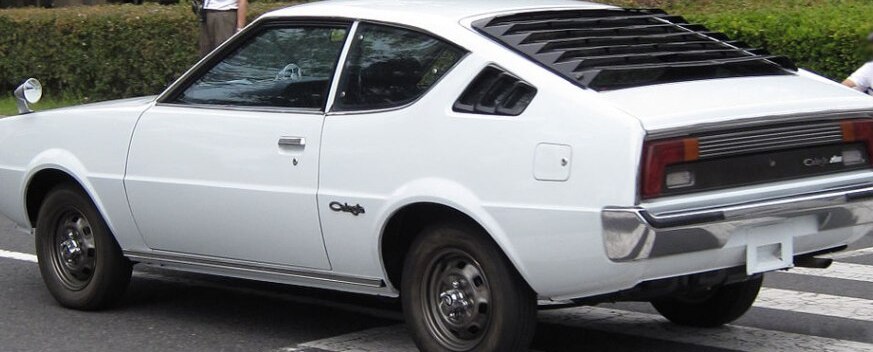
The Mitsubishi Celeste (A7_), specifically the 2.0 GSR (A78) variant producing 105 horsepower, represents a pivotal moment in Mitsubishi’s foray into the sporty coupe market. Produced between 1979 and 1981, this model occupied a unique position within the Celeste lineup, offering a balance between performance and affordability. The A7_ series Celeste, available as both a coupe and a hatchback (though the hatchback was less common in many markets), aimed to compete with established rivals like the Toyota Celica and Honda Prelude. This particular 2.0 GSR trim served as a mid-range offering, bridging the gap between the base models and the potentially more powerful, but less frequently seen, higher-spec versions.
Technical Specifications
| Brand | Mitsubishi |
| Model | Celeste |
| Generation | Celeste (A7_) |
| Type (Engine) | 2.0 GSR (A78) (105 Hp) |
| Start of production | 1979 |
| End of production | 1981 |
| Powertrain Architecture | Internal Combustion engine |
| Body type | Coupe, Hatchback |
| Fuel Type | Petrol (Gasoline) |
| Power | 105 Hp |
| Engine aspiration | Naturally aspirated engine |
Powertrain & Engine Architecture
The heart of the Celeste 2.0 GSR is the 4G61 inline-four cylinder engine, displacing 1997cc (approximately 2.0 liters). This engine, a staple in Mitsubishi’s lineup during the late 1970s and early 1980s, featured a cast iron block and an aluminum cylinder head. The ‘A78’ designation specifically refers to the engine configuration paired with the automatic transmission. The 4G61 utilized a single overhead camshaft (SOHC) valvetrain, operating two valves per cylinder. Fuel delivery was managed by a Mikuni-Solex carburetor, a common setup for the era, providing adequate but not particularly sophisticated fuel atomization. While not boasting the performance of contemporary fuel-injected engines, the carburetor offered relative simplicity and ease of maintenance. The engine produced 105 horsepower at 5,200 rpm and approximately 134 lb-ft of torque at 3,000 rpm. The automatic transmission was a three-speed unit, designed for smooth operation rather than outright acceleration. It was a typical torque-converter automatic of the period, prioritizing comfort over efficiency.
Driving Characteristics
The driving experience in the Celeste 2.0 GSR with the automatic transmission is best described as comfortable and relaxed. The three-speed automatic, while not offering the responsiveness of a manual gearbox, provided smooth shifts and made the car easy to drive in urban environments. Acceleration was adequate for the time, with a 0-60 mph time estimated around 11-12 seconds. However, compared to the five-speed manual versions of the 2.0 GSR, the automatic suffered a noticeable performance deficit. The automatic transmission’s gear ratios were geared towards fuel economy and cruising comfort, rather than maximizing acceleration. The Celeste’s suspension, consisting of MacPherson struts in the front and a solid axle with leaf springs in the rear, provided a reasonably comfortable ride, though it wasn’t particularly sporty. Handling was predictable, but body roll was noticeable during cornering. The steering, while not overly heavy, lacked the precision found in some of its European competitors.
Equipment & Trim Levels
The 2.0 GSR trim level positioned the Celeste as a well-equipped vehicle for its time. Standard features typically included cloth upholstery, a basic AM/FM radio, and a steering wheel. The interior design was functional and straightforward, reflecting the automotive aesthetics of the late 1970s. Optional extras included upgraded audio systems, air conditioning, and power windows. The GSR trim also featured some cosmetic enhancements over the base models, such as a more prominent front spoiler and upgraded wheel covers. Interior trim colors varied, but typically included shades of brown, beige, and dark blue. The dashboard layout was simple, with clearly marked gauges for speed, fuel level, and engine temperature. The overall interior ambiance was one of practicality and durability, rather than luxury.
Chassis & Braking
The Celeste A7_ utilized a body-on-frame construction, a common practice for coupes of that era. This contributed to the car’s relatively lightweight construction, but also compromised its structural rigidity compared to unibody designs. The front suspension employed MacPherson struts, providing a reasonable level of ride comfort and handling. The rear suspension utilized a solid axle with leaf springs, a more cost-effective but less sophisticated design. Braking duties were handled by disc brakes in the front and drum brakes in the rear. The braking system was adequate for normal driving conditions, but lacked the stopping power of more modern systems. Power steering was not standard on all models, and many Celeste 2.0 GSRs were equipped with manual steering, requiring more effort at low speeds. Stabilizer bars were typically fitted to the front suspension to reduce body roll during cornering.
Market Reception & Comparison
The Mitsubishi Celeste 2.0 GSR was generally well-received by automotive critics as a stylish and affordable coupe. However, the automatic transmission version was often criticized for its lack of performance compared to the manual transmission models. Fuel economy was considered average for the time, with figures around 22-25 mpg in combined driving. Reliability was generally good, with the 4G61 engine proving to be a durable and long-lasting unit. Compared to its rivals, such as the Toyota Celica and Honda Prelude, the Celeste offered a slightly more affordable price point, but lacked the same level of refinement and performance. The Celica, in particular, was often praised for its sharper handling and more modern styling. The Celeste’s strength lay in its practicality, affordability, and relatively simple mechanical design.
Legacy
The Mitsubishi Celeste A7_ series, and the 2.0 GSR variant in particular, holds a nostalgic place in the hearts of many automotive enthusiasts. The 4G61 engine, in its various iterations, became a popular choice for engine swaps and modifications due to its robustness and readily available parts. Today, well-maintained examples of the Celeste 2.0 GSR are becoming increasingly collectible, particularly those with low mileage and original features. The automatic transmission version, while not as sought after as the manual, remains a viable option for those seeking a classic coupe that is easy to drive and maintain. The Celeste represents a significant chapter in Mitsubishi’s history, demonstrating the company’s ability to produce stylish and affordable vehicles that appealed to a broad range of buyers. Its simple design and durable powertrain contribute to its continued presence on roads and in the hands of enthusiasts decades after its production ended.
