
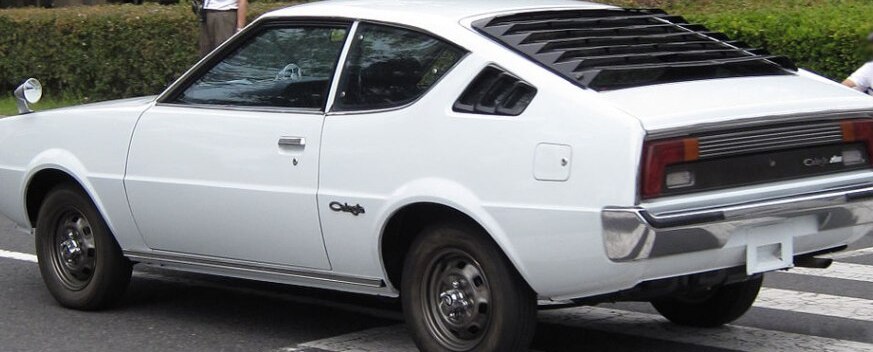
The Mitsubishi Celeste (A7_), specifically the 2.0 GSR (A78) variant producing 90 horsepower, represents an interesting chapter in Mitsubishi’s early foray into the sporty coupe market. Produced between 1975 and 1981, the A7_ Celeste was a relatively compact and affordable vehicle aimed at providing a stylish and reasonably performant option for buyers, particularly in Japan and export markets. This 2.0 GSR trim occupied a mid-range position within the Celeste lineup, offering a balance between performance and economy, sitting below the more powerful GT variants and above the base models. The Celeste, in general, was notable for its Galant-based underpinnings and its attempt to blend European styling cues with Japanese engineering.
Technical Specifications
| Brand | Mitsubishi |
| Model | Celeste |
| Generation | Celeste (A7_) |
| Type (Engine) | 2.0 GSR (A78) (90 Hp) |
| Start of production | 1975 |
| End of production | 1981 |
| Powertrain Architecture | Internal Combustion Engine |
| Body type | Coupe, Hatchback |
| Fuel Type | Petrol (Gasoline) |
| Power | 90 Hp |
| Engine Aspiration | Naturally Aspirated |
Powertrain & Engine Architecture
The heart of the 2.0 GSR Celeste is the 4G61 2.0-liter inline-four cylinder engine. This engine, while not a high-performance unit in its 90 horsepower guise, was a robust and relatively simple design. It featured a single overhead camshaft (SOHC) valvetrain, operating two valves per cylinder. Fuel delivery was managed by a Mikuni-Solex carburetor, a common setup for Japanese vehicles of that era. The A78 designation indicates a specific tuning of the 4G61, prioritizing drivability and fuel efficiency over outright power. The engine’s bore and stroke measured 85 mm x 88 mm, resulting in a displacement of 1991 cc. The transmission paired with this engine was a three-speed automatic, a popular choice for buyers seeking convenience, though it did impact acceleration compared to the available five-speed manual. The automatic transmission was designed for smooth shifts, but lacked the responsiveness of more modern units.
Driving Characteristics
The 2.0 GSR automatic Celeste offered a comfortable, if not particularly exhilarating, driving experience. The 90 horsepower output, coupled with the three-speed automatic, resulted in modest acceleration. Zero to sixty mph times were likely in the 12-14 second range, depending on vehicle condition and load. The automatic transmission’s gear ratios were geared towards fuel economy and relaxed cruising, rather than aggressive performance. Compared to the five-speed manual versions of the 2.0 GSR, the automatic suffered a noticeable performance deficit. The manual transmission allowed the engine to rev more freely and provided more control over gear selection. However, the automatic offered a smoother and more convenient driving experience, particularly in urban environments. The Celeste’s suspension, while basic, provided a reasonably comfortable ride, absorbing bumps and imperfections in the road surface adequately. Handling was predictable, but not particularly sporty, with a tendency towards understeer when pushed hard.
Equipment & Trim Levels
The 2.0 GSR trim level represented a step up in terms of equipment compared to the base Celeste models. Standard features typically included cloth upholstery, a basic AM/FM radio, and a steering wheel. The interior design was functional and relatively uncluttered, reflecting the car’s affordable positioning. Optional extras available for the 2.0 GSR included air conditioning, upgraded audio systems, and power windows. The dashboard layout was straightforward, with clearly marked gauges for speed, fuel level, and engine temperature. The GSR trim also often featured a slightly more refined interior trim compared to the base models, with improved materials and detailing. Exterior features included chrome bumpers, distinctive wheel covers, and a generally more polished appearance than the lower trims.
Chassis & Braking
The Celeste A7_ was built on a unibody chassis, providing a good balance of strength and weight. The front suspension utilized independent MacPherson struts, while the rear suspension employed a solid axle with leaf springs. This suspension setup was common for vehicles of this era and provided a reasonable compromise between ride comfort and handling. Braking on the 2.0 GSR Celeste typically consisted of disc brakes on the front wheels and drum brakes on the rear wheels. This configuration was adequate for the car’s weight and performance, but lacked the stopping power of fully disc brake systems. The steering was a recirculating ball system, providing a relatively heavy but precise feel. Stabilizer bars were often included, particularly on the GSR trim, to reduce body roll during cornering.
Market Reception & Comparison
The Mitsubishi Celeste A7_ received generally positive reviews, particularly for its styling and value for money. Critics praised its European-inspired design and its relatively affordable price point. However, the 90 horsepower 2.0 GSR automatic variant was often seen as a compromise, lacking the performance of the GT models and the fuel efficiency of the smaller-engined versions. Compared to rivals such as the Toyota Celica and Honda Accord, the Celeste offered a slightly more distinctive styling and a more comfortable ride. However, it often lagged behind in terms of performance and refinement. Fuel economy for the 2.0 GSR automatic was typically in the range of 22-28 mpg, depending on driving conditions. Reliability was generally good, with the 4G61 engine proving to be a durable and long-lasting unit.
Legacy
The Mitsubishi Celeste A7_ holds a modest but significant place in automotive history. It represents Mitsubishi’s early attempts to establish itself as a maker of stylish and affordable coupes. While not a groundbreaking vehicle, the Celeste offered a compelling package for buyers seeking a practical and reasonably sporty car. Today, the 2.0 GSR Celeste is becoming increasingly collectible, particularly well-maintained examples. The 4G61 engine is known for its durability, and parts availability remains relatively good. However, finding pristine examples can be challenging, as many vehicles have suffered from age-related wear and tear. The Celeste’s simple mechanical design makes it relatively easy to maintain and repair, appealing to enthusiasts who enjoy working on classic cars. The 2.0 GSR automatic variant, while not the most desirable trim level, offers a unique blend of comfort and affordability, making it an interesting option for collectors and enthusiasts alike.
