
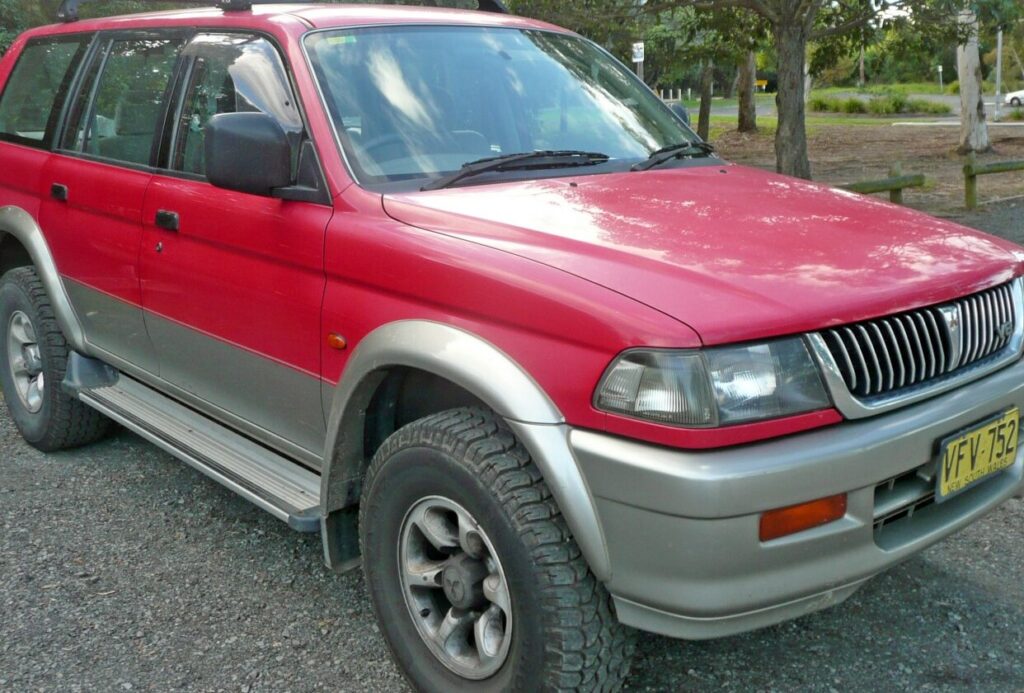
The Mitsubishi Challenger (W) 3.0 i V6 24V, producing 185 horsepower, was a mid-size SUV produced by Mitsubishi Motors from 1996 to 2001. Positioned as a capable and comfortable family vehicle, the Challenger (W) aimed to compete with established SUVs in both domestic Japanese and export markets. This particular variant, featuring the 6G72 3.0-liter V6 engine paired with a four-speed automatic transmission, represented a balance between performance and ease of use within the Challenger lineup. It was a popular choice for buyers seeking a robust SUV without the complexity or cost of more advanced features found in higher trim levels.
Technical Specifications
| Brand | Mitsubishi |
| Model | Challenger |
| Generation | Challenger (W) |
| Type (Engine) | 3.0 i V6 24V (185 Hp) |
| Start of production | 1996 |
| End of production | 2001 |
| Powertrain Architecture | Internal Combustion engine |
| Body type | SUV |
| Seats | 5 |
| Doors | 5 |
| Fuel consumption (urban) | 16 l/100 km (14.7 US mpg, 17.7 UK mpg, 6.3 km/l) |
| Fuel consumption (extra urban) | 10 l/100 km (23.5 US mpg, 28.2 UK mpg, 10 km/l) |
| Fuel Type | Petrol (Gasoline) |
| Maximum speed | 170 km/h (105.63 mph) |
| Weight-to-power ratio | 9.9 kg/Hp, 101.1 Hp/tonne |
| Weight-to-torque ratio | 6.9 kg/Nm, 144.8 Nm/tonne |
| Power | 185 Hp @ 5500 rpm |
| Power per litre | 62.2 Hp/l |
| Torque | 265 Nm @ 4500 rpm (195.45 lb.-ft. @ 4500 rpm) |
| Engine layout | Front, Longitudinal |
| Engine displacement | 2972 cm3 (181.36 cu. in.) |
| Number of cylinders | 6 |
| Engine configuration | V-engine |
| Cylinder Bore | 91.1 mm (3.59 in.) |
| Piston Stroke | 76 mm (2.99 in.) |
| Compression ratio | 9:1 |
| Number of valves per cylinder | 4 |
| Fuel injection system | Multi-port manifold injection |
| Engine aspiration | Naturally aspirated engine |
| Kerb Weight | 1830 kg (4034.46 lbs.) |
| Fuel tank capacity | 74 l (19.55 US gal | 16.28 UK gal) |
| Length | 4530 mm (178.35 in.) |
| Width | 1775 mm (69.88 in.) |
| Height | 1730 mm (68.11 in.) |
| Wheelbase | 2725 mm (107.28 in.) |
| Front track | 1465 mm (57.68 in.) |
| Rear track | 1480 mm (58.27 in.) |
| Drive wheel | All wheel drive (4×4) |
| Number of gears and type of gearbox | 4 gears, automatic transmission |
| Front suspension | Torsion |
| Rear suspension | Coil spring |
| Front brakes | Ventilated discs |
| Rear brakes | Disc |
| Assisting systems | ABS (Anti-lock braking system) |
| Steering type | Steering rack and pinion |
| Power steering | Hydraulic Steering |
| Tires size | 265/70 R15 |
Powertrain & Engine Architecture
The heart of this Challenger variant is the 6G72 3.0-liter V6 engine. This engine, a member of Mitsubishi’s robust 6G7 series, features a 60-degree V-angle and a cast iron block with an aluminum cylinder head. The 24-valve configuration (four valves per cylinder) utilizes a single overhead camshaft (SOHC) design for each bank. Fuel delivery is managed by a multi-point fuel injection system, providing precise fuel metering for optimal combustion. The 6G72 is known for its relatively simple design and durability, making it a reliable powerplant. The four-speed automatic transmission, while not the most modern, was chosen for its smooth operation and ease of use, catering to a broader range of drivers. It’s a conventional hydraulic automatic, lacking the electronic controls found in later transmissions.
Driving Characteristics
The 185 hp and 195 lb-ft of torque delivered by the 3.0L V6 and automatic transmission combination provided adequate, though not exhilarating, performance. Acceleration from 0-60 mph was estimated to be around 10-11 seconds. The automatic transmission’s gear ratios were tuned for comfortable cruising and everyday drivability rather than outright speed. Compared to the five-speed manual transmission option available on other Challenger models, the automatic resulted in a noticeable decrease in responsiveness and fuel efficiency. The 4×4 system, typically part-time selectable, offered improved traction in adverse conditions, making the Challenger a capable vehicle for light off-road use and inclement weather. The automatic transmission did somewhat diminish the off-road capability, as precise engine braking was more difficult to achieve.
Equipment & Trim Levels
The 3.0 i V6 Automatic Challenger typically came with a reasonable level of standard equipment. This included power windows and locks, air conditioning, and a basic audio system. Interior upholstery was generally cloth, with options for upgraded materials available. Dashboard configuration was functional and straightforward, prioritizing usability over aesthetic flair. Optional extras could include a sunroof, upgraded audio systems, and alloy wheels. This trim level was generally positioned as a mid-range offering, bridging the gap between the base models and the more luxurious, fully-equipped Challengers.
Chassis & Braking
The Challenger (W) utilized a body-on-frame construction, providing a robust and durable platform. Front suspension consisted of torsion bars, while the rear employed coil springs. This setup offered a comfortable ride, though it wasn’t particularly sporty. Braking duties were handled by ventilated discs at the front and solid discs at the rear. An Anti-lock Braking System (ABS) was standard, enhancing safety by preventing wheel lockup during hard braking. The steering system was a rack-and-pinion setup with hydraulic power assistance, providing reasonably precise steering feel.
Market Reception & Comparison
The Mitsubishi Challenger (W) 3.0 i V6 Automatic received generally positive reviews for its practicality, reliability, and comfortable ride. Critics noted that the automatic transmission dulled the engine’s performance somewhat, and fuel economy wasn’t particularly impressive compared to some competitors. However, the combination of a spacious interior, capable 4×4 system, and reasonable price point made it an attractive option for families and individuals seeking a versatile SUV. Compared to the 2.4-liter four-cylinder models, the 3.0L V6 offered a significant power boost, while the higher-end trims with more luxurious features came at a premium.
Legacy
The Mitsubishi Challenger (W) 3.0 i V6 Automatic has proven to be a relatively reliable vehicle in the used car market. The 6G72 engine is known for its longevity, and the automatic transmission, while not cutting-edge, is generally durable. Common maintenance items include regular fluid changes and timing belt replacements. Today, these Challengers are often sought after by enthusiasts looking for a capable and affordable SUV with a reputation for dependability. While not a collector’s item, well-maintained examples continue to provide reliable transportation and a comfortable driving experience.
