
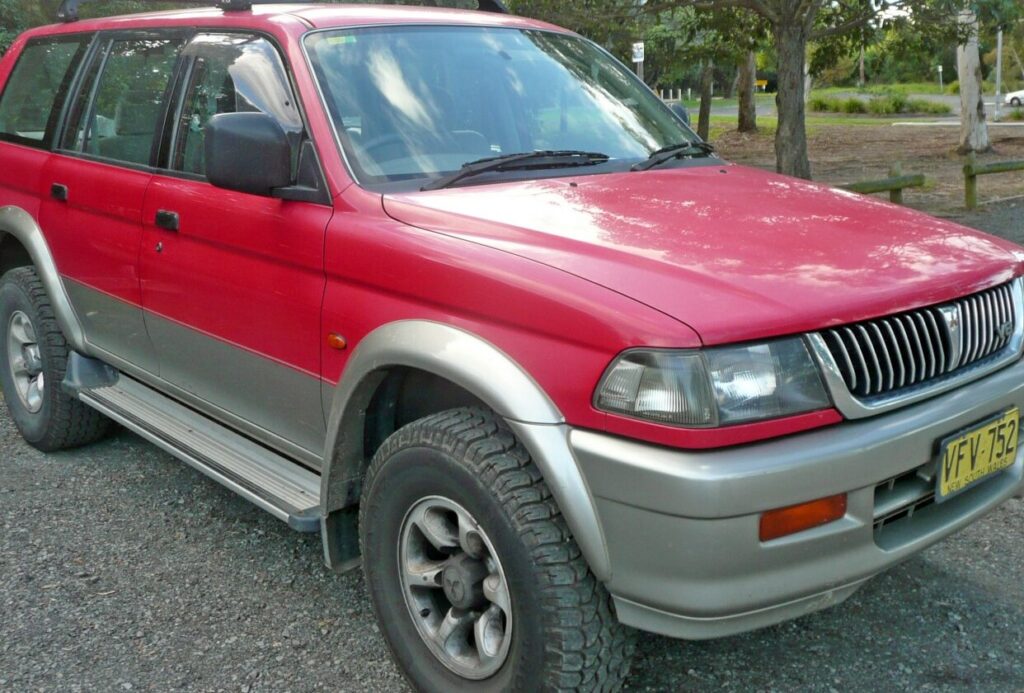
The Mitsubishi Challenger (W) 3.5 i V6 24V GDI, produced between 1996 and 2001, represents a significant offering from Mitsubishi in the mid-size SUV segment. This variant, equipped with the potent 6G72 engine and a five-speed automatic transmission, was positioned as a premium option within the Challenger lineup, appealing to buyers seeking a blend of performance, capability, and comfort. The Challenger (W) series, built on the robust Mitsubishi Pajero platform, aimed to provide a versatile vehicle suitable for both on-road driving and moderate off-road excursions. It was primarily marketed in Australia, New Zealand, and parts of Asia, where demand for capable SUVs was strong.
Technical Specifications
| Brand | Mitsubishi |
| Model | Challenger |
| Generation | Challenger (W) |
| Type (Engine) | 3.5 i V6 24V GDI (245 Hp) |
| Start of production | 1996 |
| End of production | 2001 |
| Powertrain Architecture | Internal Combustion engine |
| Body type | SUV |
| Seats | 5 |
| Doors | 5 |
| Fuel consumption (urban) | 17 l/100 km (13.8 US mpg, 16.6 UK mpg, 5.9 km/l) |
| Fuel consumption (extra urban) | 10 l/100 km (23.5 US mpg, 28.2 UK mpg, 10 km/l) |
| Fuel Type | Petrol (Gasoline) |
| Acceleration 0 – 100 km/h | 10 sec |
| Acceleration 0 – 62 mph | 10 sec |
| Acceleration 0 – 60 mph | 9.5 sec |
| Maximum speed | 190 km/h (118.06 mph) |
| Weight-to-power ratio | 8 kg/Hp, 125.6 Hp/tonne |
| Weight-to-torque ratio | 5.7 kg/Nm, 175.9 Nm/tonne |
| Power | 245 Hp @ 5500 rpm |
| Power per litre | 70.1 Hp/l |
| Torque | 343 Nm @ 2500 rpm (252.98 lb.-ft. @ 2500 rpm) |
| Engine layout | Front, Longitudinal |
| Engine displacement | 3497 cm3 (213.4 cu. in.) |
| Number of cylinders | 6 |
| Engine configuration | V-engine |
| Cylinder Bore | 93 mm (3.66 in.) |
| Piston Stroke | 85.8 mm (3.38 in.) |
| Compression ratio | 10.4:1 |
| Number of valves per cylinder | 4 |
| Fuel injection system | Direct injection |
| Engine aspiration | Naturally aspirated engine |
| Valvetrain | DOHC |
| Kerb Weight | 1950 kg (4299.01 lbs.) |
| Fuel tank capacity | 74 l (19.55 US gal, 16.28 UK gal) |
| Length | 4530 mm (178.35 in.) |
| Width | 1775 mm (69.88 in.) |
| Height | 1730 mm (68.11 in.) |
| Wheelbase | 2725 mm (107.28 in.) |
| Front track | 1465 mm (57.68 in.) |
| Rear track | 1480 mm (58.27 in.) |
| Drive wheel | All wheel drive (4×4) |
| Number of gears and type of gearbox | 5 gears, automatic transmission |
| Front suspension | Torsion |
| Rear suspension | Coil spring |
| Front brakes | Ventilated discs |
| Rear brakes | Disc |
| Assisting systems | ABS (Anti-lock braking system) |
| Steering type | Steering rack and pinion |
| Power steering | Hydraulic Steering |
| Tires size | 265/70 R15 |
Powertrain & Engine Architecture
The heart of the Challenger (W) 3.5 i V6 is the 6G72 engine, a 3.5-liter naturally aspirated V6. This engine is notable for its GDI (Gasoline Direct Injection) technology, which improves fuel efficiency and power output compared to traditional port fuel injection systems. The 6G72 features a 60-degree V-angle, four valves per cylinder (DOHC), and a robust cast iron block with an aluminum cylinder head. The direct injection system precisely meters fuel directly into the combustion chamber, allowing for more complete combustion and reduced emissions. The five-speed automatic transmission, typically an Aisin-Warner unit, was chosen for its smoothness and reliability. While not offering the sporty engagement of a manual transmission, it provided convenient operation for everyday driving and off-road situations. The transmission’s gear ratios were tuned for a balance of acceleration and fuel economy, prioritizing usability over outright performance.
Driving Characteristics
The 3.5-liter V6, producing 245 horsepower and 343 Nm (253 lb-ft) of torque, delivered respectable performance for its time. Acceleration from 0-60 mph was achieved in around 9.5 seconds, making it competitive with other mid-size SUVs. The automatic transmission, while smooth, did exhibit some typical characteristics of older automatic gearboxes, such as a slight delay in downshifts. Compared to the lower-powered 2.4-liter four-cylinder versions of the Challenger, the 3.5 V6 offered a significantly more effortless driving experience, particularly when fully loaded or tackling inclines. It also provided a more refined and quieter cabin experience. While not as fuel-efficient as the four-cylinder models (urban fuel consumption of 17 l/100km), the V6 offered a compelling trade-off for those prioritizing power and refinement.
Equipment & Trim Levels
The 3.5 i V6 GDI variant of the Challenger (W) typically came well-equipped, reflecting its position as a premium trim level. Standard features often included air conditioning, power windows and locks, a decent audio system, and alloy wheels. Higher-spec models could be optioned with leather upholstery, a sunroof, and upgraded audio systems. The interior design was functional and durable, prioritizing practicality over luxury. The dashboard layout was straightforward, with easy-to-use controls. Safety features, while not as comprehensive as modern SUVs, included ABS brakes and a robust chassis construction.
Chassis & Braking
The Challenger (W) utilized a body-on-frame construction, providing a sturdy and durable platform. The front suspension employed torsion bars, while the rear featured coil springs. This setup offered a comfortable ride quality, although it wasn’t as sophisticated as independent suspension systems found in some competitors. The braking system consisted of ventilated discs at the front and solid discs at the rear, providing adequate stopping power for the vehicle’s weight. The ABS system enhanced braking performance in slippery conditions. The Challenger’s all-wheel-drive system, typically a part-time 4WD system, provided enhanced traction on loose surfaces.
Market Reception & Comparison
The Mitsubishi Challenger (W) 3.5 i V6 GDI was generally well-received by automotive critics for its robust engine, comfortable ride, and capable all-wheel-drive system. However, some reviewers noted the relatively high fuel consumption and the somewhat dated interior design. Compared to rivals like the Toyota Prado and Nissan Patrol, the Challenger offered a more affordable entry point while still providing a good level of capability. The 3.5 V6 variant was often seen as a sweet spot in the lineup, offering a significant performance upgrade over the base models without the higher price tag of the top-of-the-line trims.
Legacy
The Mitsubishi Challenger (W) 3.5 i V6 GDI has proven to be a relatively reliable vehicle, with the 6G72 engine being known for its durability. However, like any vehicle of this age, regular maintenance is crucial to prevent issues. Common concerns include potential oil leaks, timing belt replacement (a critical maintenance item), and wear and tear on suspension components. In the used car market, these Challengers are often sought after by enthusiasts and those looking for a capable and affordable SUV. While not as popular as some of its competitors, the Challenger (W) 3.5 i V6 GDI remains a respected and capable vehicle, offering a unique blend of performance, practicality, and value.
