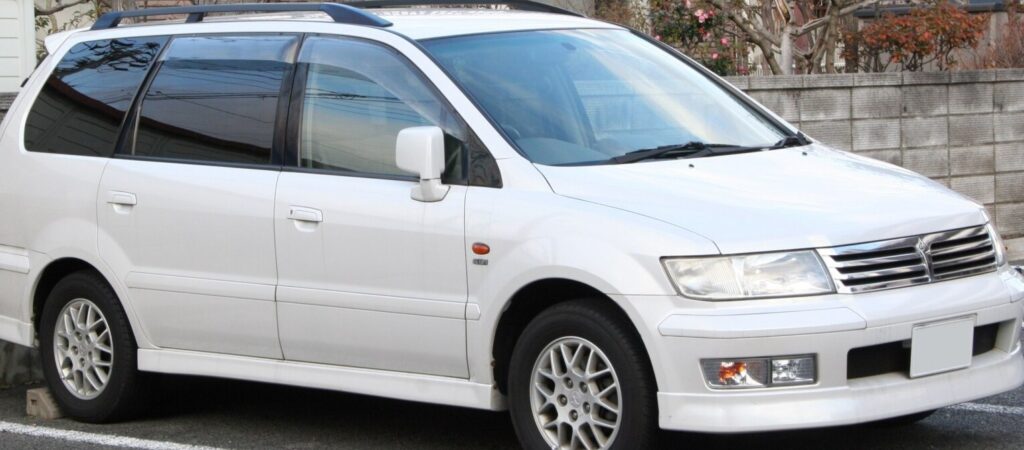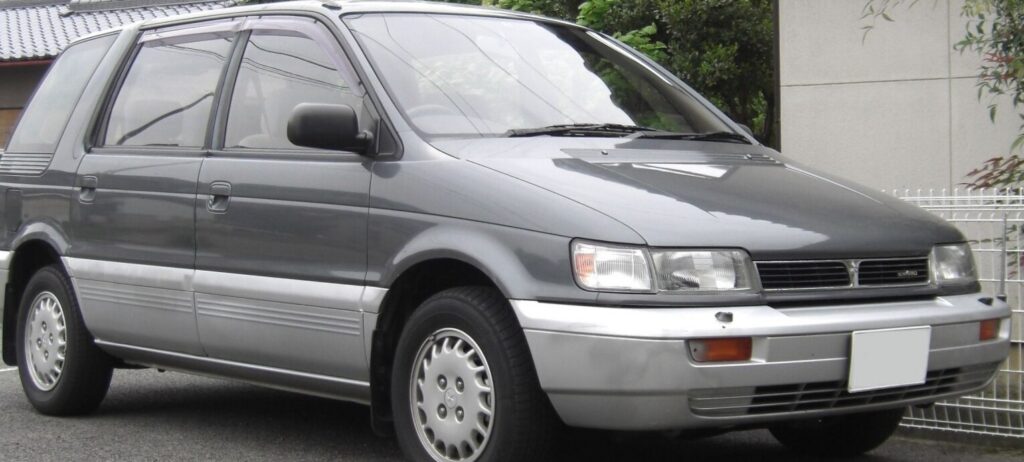
The Mitsubishi Chariot, specifically the E-N33W series produced between 1991 and 1997, represented Mitsubishi’s entry into the increasingly popular compact MPV (Multi-Purpose Vehicle) segment. This generation of Chariot, sold primarily in Japan and select export markets, aimed to provide family-oriented transportation with a focus on practicality and space. The 2.0 i 16V 4WD MX variant, equipped with a 135 horsepower engine, occupied a mid-range position within the Chariot lineup, offering a balance between performance, fuel economy, and available features. It was designed to appeal to buyers needing all-wheel drive capability for varied weather conditions or occasional off-pavement use.
Technical Specifications
| Brand | Mitsubishi |
| Model | Chariot |
| Generation | Chariot (E-N33W) |
| Type | 2.0 i 16V 4WD MX (135 Hp) |
| Start of production | 1991 |
| End of production | 1997 |
| Powertrain Architecture | Internal Combustion engine |
| Body type | Minivan |
| Seats | 7 |
| Doors | 4 |
| Fuel consumption (combined) | 7.2 l/100 km (32.7 US mpg, 39.2 UK mpg, 13.9 km/l) |
| Fuel Type | Petrol (Gasoline) |
| Maximum speed | 180 km/h (111.85 mph) |
| Weight-to-power ratio | 10.4 kg/Hp, 96.4 Hp/tonne |
| Weight-to-torque ratio | 8 kg/Nm, 125.7 Nm/tonne |
| Power | 135 Hp @ 5750 rpm |
| Power per litre | 67.6 Hp/l |
| Torque | 176 Nm @ 4500 rpm (129.81 lb.-ft. @ 4500 rpm) |
| Engine layout | Front, Transverse |
| Engine displacement | 1998 cm3 (121.93 cu. in.) |
| Number of cylinders | 4 |
| Engine configuration | Inline |
| Cylinder Bore | 82.7 mm (3.26 in.) |
| Piston Stroke | 93 mm (3.66 in.) |
| Compression ratio | 10.3:1 |
| Number of valves per cylinder | 4 |
| Fuel injection system | Multi-port manifold injection |
| Engine aspiration | Naturally aspirated engine |
| Valvetrain | DOHC |
| Kerb Weight | 1400 kg (3086.47 lbs.) |
| Trunk (boot) space – minimum | 128 l (4.52 cu. ft.) |
| Trunk (boot) space – maximum | 1385 l (48.91 cu. ft.) |
| Fuel tank capacity | 60 l (15.85 US gal | 13.2 UK gal) |
| Length | 4515 mm (177.76 in.) |
| Width | 1695 mm (66.73 in.) |
| Height | 1595 mm (62.8 in.) |
| Wheelbase | 2720 mm (107.09 in.) |
| Front track | 1455 mm (57.28 in.) |
| Rear (Back) track | 1460 mm (57.48 in.) |
| Drive wheel | All wheel drive (4×4) |
| Number of gears and type of gearbox | 5 gears, manual transmission |
| Front suspension | Spring Strut |
| Rear suspension | Coil spring |
| Front brakes | Ventilated discs |
| Rear brakes | Drum |
| Assisting systems | ABS (Anti-lock braking system) |
| Steering type | Steering rack and pinion |
| Power steering | Hydraulic Steering |
| Tires size | 185/70 R14 H |
Powertrain & Engine Architecture
The heart of the Chariot 2.0 i 16V MX is the 4G63 inline-four cylinder engine. This engine, a staple in many Mitsubishi vehicles of the era, is a 16-valve, naturally aspirated powerplant. The “16V” designation refers to the four valves per cylinder (two intake and two exhaust), contributing to improved breathing and higher-end power. The engine utilizes a multi-port fuel injection system, delivering fuel directly to each intake port for precise fuel metering and efficient combustion. The 4G63 in this application features a 10.3:1 compression ratio. The engine’s durability and relatively simple design made it a reliable unit. The five-speed manual transmission was the standard offering for this trim, providing drivers with full control over gear selection. The transmission was chosen to complement the engine’s power band and provide a reasonably engaging driving experience.
Driving Characteristics
The 135 horsepower and 129.81 lb-ft of torque offered by the 2.0-liter engine in the Chariot 4WD MX provided adequate, though not exhilarating, performance. Acceleration was respectable for a family vehicle of its size, and the all-wheel-drive system provided enhanced traction in slippery conditions. Compared to the base model Chariots with smaller engines, the 2.0-liter offered a noticeable improvement in both acceleration and highway cruising ability. The five-speed manual transmission allowed drivers to keep the engine in its optimal power range, maximizing performance. However, it wasn’t a particularly sporty vehicle; the focus was on comfortable and practical transportation. The gear ratios were tuned for everyday usability rather than outright speed.
Equipment & Trim Levels
The “MX” trim level represented a mid-range offering in the Chariot lineup. Standard features typically included power windows, power steering, and an AM/FM radio. The interior was typically finished with durable cloth upholstery. Optional extras could include air conditioning, upgraded audio systems, and alloy wheels. The Chariot’s interior was designed with family use in mind, offering flexible seating configurations and ample storage space. The seven-seat configuration, while somewhat cramped in the third row, provided the ability to transport larger families or groups.
Chassis & Braking
The Chariot E-N33W utilized a relatively conventional chassis design, featuring a front strut suspension and a rear coil spring suspension. This setup provided a comfortable ride quality, although handling was not particularly sharp. The all-wheel-drive system added to the vehicle’s weight, but also improved stability and traction. Braking duties were handled by ventilated discs on the front wheels and drum brakes on the rear. An Anti-lock Braking System (ABS) was included as a standard safety feature, enhancing braking performance and control, especially on slippery surfaces.
Market Reception & Comparison
The Mitsubishi Chariot was generally well-received in its target markets, particularly in Japan where compact MPVs were highly popular. Critics praised its spacious interior, practical features, and available all-wheel-drive system. Compared to other MPVs of the time, such as the Toyota Estima (Previa) or Honda Odyssey, the Chariot offered a more affordable entry point. However, it lacked some of the refinement and advanced features of its more expensive competitors. Fuel economy was considered average for its class, and reliability was generally good, although some owners reported minor issues with the electrical system.
Legacy
The Mitsubishi Chariot E-N33W, and the 2.0 i 16V 4WD MX variant specifically, holds a respectable position in the used car market today, particularly among enthusiasts seeking a practical and reliable family vehicle. The 4G63 engine is known for its durability and relative ease of maintenance. While finding parts may become increasingly challenging as the vehicle ages, the engine’s widespread use in other Mitsubishi models ensures a reasonable supply of aftermarket components. The Chariot’s all-wheel-drive system continues to be a desirable feature for buyers in regions with inclement weather. Overall, the Chariot represents a solid and dependable choice for those seeking a classic Japanese MPV.