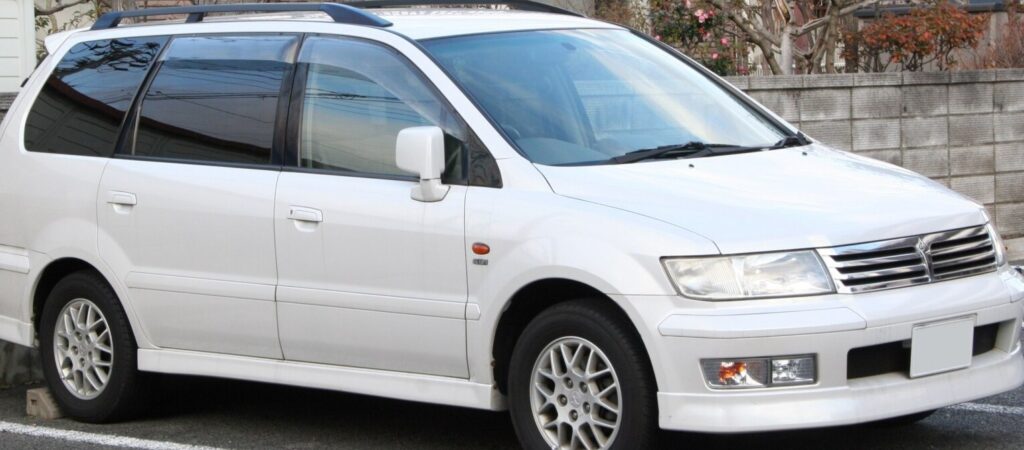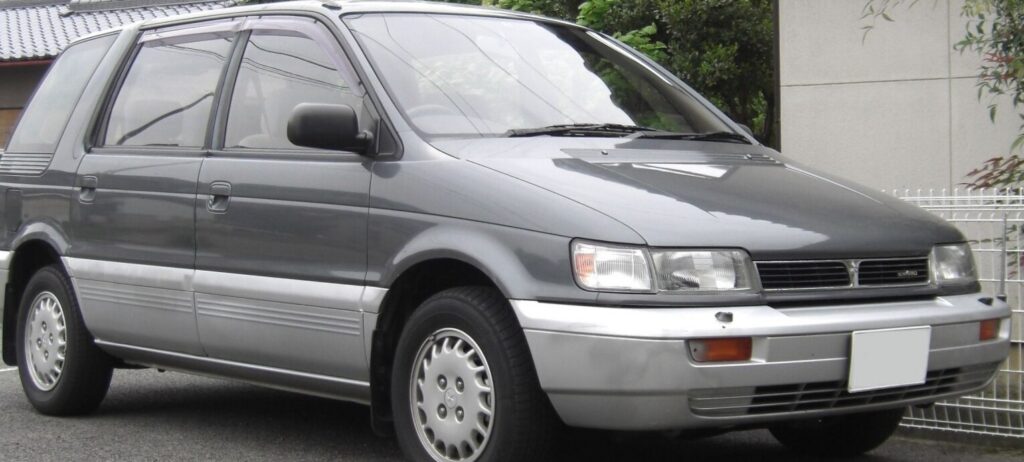
The Mitsubishi Chariot, specifically the E-N33W generation produced between 1991 and 1997, represented Mitsubishi’s entry into the increasingly popular multi-purpose vehicle (MPV) segment. This particular variant, the 2.0 i 16V 4WD MX with a four-speed automatic transmission and producing 135 horsepower, was positioned as a well-equipped, all-weather option within the Chariot lineup. The E-N33W Chariot was primarily marketed in Japan and various export markets, offering a practical and spacious alternative to larger, more expensive vans and station wagons. It was built on the 1HX0 platform, shared with other Mitsubishi models of the era.
Technical Specifications
| Brand | Mitsubishi |
| Model | Chariot |
| Generation | Chariot (E-N33W) |
| Type | 2.0 i 16V 4WD MX (135 Hp) Automatic |
| Start of production | 1991 |
| End of production | 1997 |
| Powertrain Architecture | Internal Combustion engine |
| Body type | Minivan |
| Seats | 7 |
| Doors | 4 |
| Fuel consumption (combined) | 7.2 l/100 km (32.7 US mpg, 39.2 UK mpg, 13.9 km/l) |
| Fuel Type | Petrol (Gasoline) |
| Maximum speed | 180 km/h (111.85 mph) |
| Weight-to-power ratio | 10.4 kg/Hp, 96.4 Hp/tonne |
| Weight-to-torque ratio | 8 kg/Nm, 125.7 Nm/tonne |
| Power | 135 Hp @ 5750 rpm |
| Power per litre | 67.6 Hp/l |
| Torque | 176 Nm @ 4500 rpm (129.81 lb.-ft. @ 4500 rpm) |
| Engine layout | Front, Transverse |
| Engine displacement | 1998 cm3 (121.93 cu. in.) |
| Number of cylinders | 4 |
| Engine configuration | Inline |
| Cylinder Bore | 82.7 mm (3.26 in.) |
| Piston Stroke | 93 mm (3.66 in.) |
| Compression ratio | 10.3:1 |
| Number of valves per cylinder | 4 |
| Fuel injection system | Multi-port manifold injection |
| Engine aspiration | Naturally aspirated engine |
| Valvetrain | DOHC |
| Kerb Weight | 1400 kg (3086.47 lbs.) |
| Trunk (boot) space – minimum | 128 l (4.52 cu. ft.) |
| Trunk (boot) space – maximum | 1385 l (48.91 cu. ft.) |
| Fuel tank capacity | 60 l (15.85 US gal | 13.2 UK gal) |
| Length | 4515 mm (177.76 in.) |
| Width | 1695 mm (66.73 in.) |
| Height | 1595 mm (62.8 in.) |
| Wheelbase | 2720 mm (107.09 in.) |
| Front track | 1455 mm (57.28 in.) |
| Rear (Back) track | 1460 mm (57.48 in.) |
| Drive wheel | All wheel drive (4×4) |
| Number of gears and type of gearbox | 4 gears, automatic transmission |
| Front suspension | Spring Strut |
| Rear suspension | Coil spring |
| Front brakes | Ventilated discs |
| Rear brakes | Drum |
| Assisting systems | ABS (Anti-lock braking system) |
| Steering type | Steering rack and pinion |
| Power steering | Hydraulic Steering |
| Tires size | 185/70 R14 H |
| Wheel rims size | 14 |
Powertrain & Engine Architecture
The heart of the Chariot 2.0 i MX is the 4G63 inline-four cylinder engine. This 1998cc (121.93 cu. in.) engine features a double overhead camshaft (DOHC) valvetrain with four valves per cylinder, contributing to its relatively high output for its displacement. The engine utilizes a multi-port fuel injection system, ensuring precise fuel delivery for improved efficiency and performance. The 4G63 is a robust and well-regarded engine, known for its durability and potential for modification, though this particular iteration was tuned for smooth operation rather than outright power. The four-speed automatic transmission, while providing convenience, was a conventional hydraulic unit, lacking the sophistication of later electronically controlled transmissions. It was chosen to provide a comfortable driving experience, prioritizing ease of use over sporty responsiveness.
Driving Characteristics
The 135 horsepower and 176 Nm (129.81 lb.-ft.) of torque delivered by the 2.0L engine, coupled with the four-speed automatic, resulted in adequate, but not exhilarating, performance. Acceleration was respectable for its class, but noticeably slower than the manual transmission versions or those equipped with the more powerful 2.4L engine. The automatic transmission’s gear ratios were geared towards fuel economy and smooth cruising, rather than quick acceleration. In real-world driving, the Chariot 2.0 i MX felt comfortable and capable on the highway, but could struggle when fully loaded or tackling steep inclines. The all-wheel-drive system provided enhanced traction in adverse weather conditions, making it a practical choice for regions with snow or rain.
Equipment & Trim Levels
The “MX” trim level represented a mid-range offering within the Chariot lineup. Standard features typically included power windows, power steering, air conditioning, and an upgraded interior trim. The interior usually featured cloth upholstery, and a basic audio system. Optional extras could include alloy wheels, a sunroof, and more advanced audio systems. The Chariot was designed with family practicality in mind, offering a flexible seating arrangement with the ability to fold or remove the rear seats to maximize cargo space. The dashboard layout was functional and straightforward, prioritizing ease of use over aesthetic flair.
Chassis & Braking
The Chariot E-N33W utilized a conventional chassis layout with a MacPherson strut front suspension and a coil spring rear suspension. This setup provided a comfortable ride, but wasn’t particularly sporty. The front brakes were ventilated discs, offering good stopping power, while the rear brakes were drums, a cost-saving measure common in this class of vehicle. Anti-lock braking system (ABS) was included as a standard safety feature, enhancing braking performance and stability, especially on slippery surfaces. The steering was rack and pinion with hydraulic power assistance, providing light and easy steering feel.
Market Reception & Comparison
The Mitsubishi Chariot 2.0 i 16V 4WD MX was generally well-received as a practical and reliable family vehicle. Critics praised its spacious interior, comfortable ride, and all-weather capability. However, the automatic transmission was sometimes criticized for its lack of responsiveness compared to the manual gearbox. Compared to other trims, the 2.0L automatic offered a balance between performance and fuel economy. The 1.8L versions were more affordable but lacked the power for comfortable highway cruising, while the 2.4L models offered more performance but at a higher price point and with increased fuel consumption. Fuel economy was rated at 7.2 l/100 km (32.7 US mpg), which was competitive for its class at the time.
Legacy
The Mitsubishi Chariot E-N33W, and specifically the 2.0 i 16V 4WD MX variant, has proven to be a relatively durable and reliable vehicle. The 4G63 engine is known for its longevity, and with proper maintenance, can withstand high mileage. In the used car market, these Chariots are often sought after for their practicality and affordability. While not a performance icon, the Chariot 2.0 i MX represents a solid and dependable choice for those seeking a spacious and capable MPV from the early 1990s. Parts availability can be a concern in some regions, but the 4G63 engine’s widespread use in other Mitsubishi models helps to ensure a reasonable supply of components.