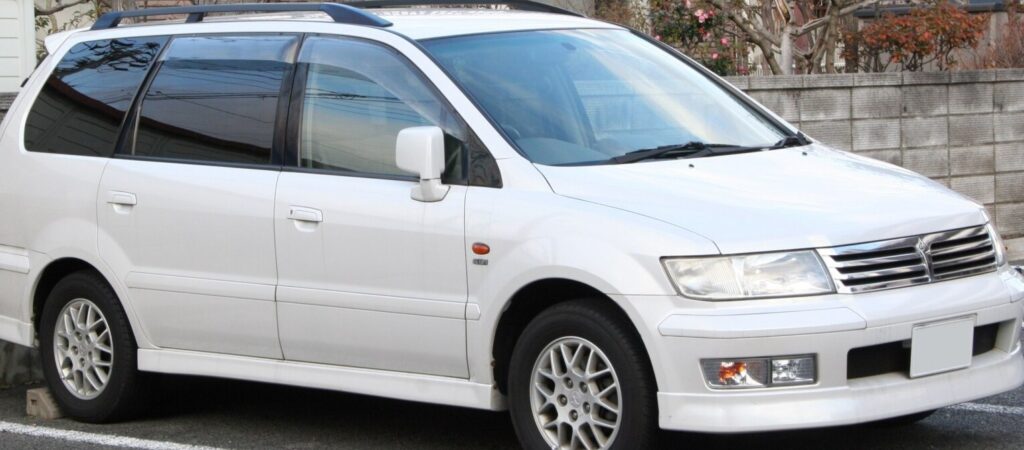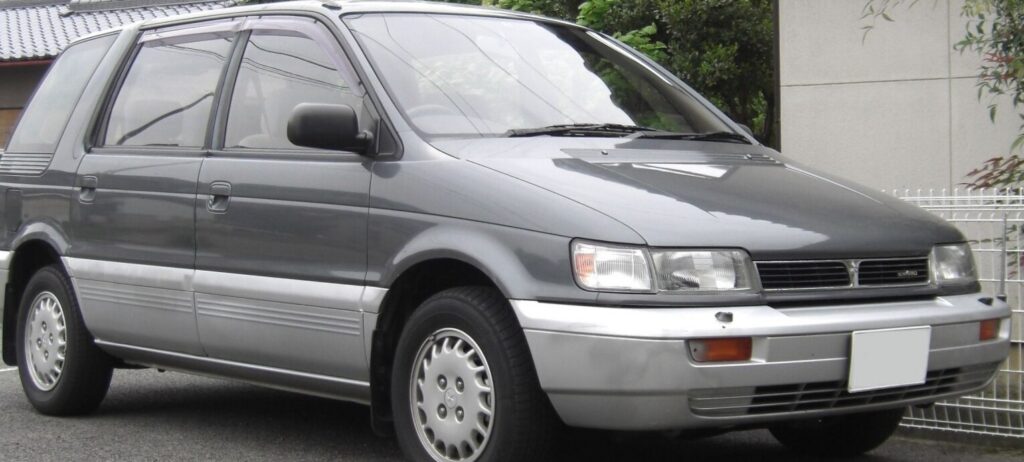
The Mitsubishi Chariot, specifically the E-N33W series produced between 1991 and 1997, represented Mitsubishi’s entry into the increasingly popular compact minivan segment. The 2.4 i 16V Super MX variant, equipped with a 2.4-liter inline-four engine producing 145 horsepower, was positioned as a relatively upscale offering within the Chariot lineup. It aimed to balance practicality with a degree of performance and comfort, appealing to families seeking a versatile vehicle. The Chariot was primarily marketed in Japan and various export markets, including Australia and parts of Europe, though it saw limited official sales in the United States.
Technical Specifications
| Brand | Mitsubishi |
| Model | Chariot |
| Generation | Chariot (E-N33W) |
| Type | 2.4 i 16V Super MX (145 Hp) |
| Start of production | 1991 |
| End of production | 1997 |
| Powertrain Architecture | Internal Combustion engine |
| Body type | Minivan |
| Seats | 7 |
| Doors | 4 |
| Fuel consumption (combined) | 8.1 l/100 km (29 US mpg, 34.9 UK mpg, 12.3 km/l) |
| Fuel Type | Petrol (Gasoline) |
| Weight-to-power ratio | 9.4 kg/Hp, 105.8 Hp/tonne |
| Weight-to-torque ratio | 6.7 kg/Nm, 150.4 Nm/tonne |
| Power | 145 Hp @ 5500 rpm |
| Power per litre | 61.7 Hp/l |
| Torque | 206 Nm @ 2750 rpm (151.94 lb.-ft. @ 2750 rpm) |
| Engine layout | Front, Transverse |
| Engine displacement | 2351 cm3 (143.47 cu. in.) |
| Number of cylinders | 4 |
| Engine configuration | Inline |
| Cylinder Bore | 86.5 mm (3.41 in.) |
| Piston Stroke | 100 mm (3.94 in.) |
| Compression ratio | 9.5:1 |
| Number of valves per cylinder | 4 |
| Fuel injection system | Multi-port manifold injection |
| Engine aspiration | Naturally aspirated engine |
| Valvetrain | OHC |
| Kerb Weight | 1370 kg (3020.33 lbs.) |
| Trunk (boot) space – minimum | 128 l (4.52 cu. ft.) |
| Trunk (boot) space – maximum | 1385 l (48.91 cu. ft.) |
| Fuel tank capacity | 60 l (15.85 US gal | 13.2 UK gal) |
| Length | 4515 mm (177.76 in.) |
| Width | 1695 mm (66.73 in.) |
| Height | 1580 mm (62.2 in.) |
| Wheelbase | 2720 mm (107.09 in.) |
| Front track | 1460 mm (57.48 in.) |
| Rear (Back) track | 1460 mm (57.48 in.) |
| Drivetrain Architecture | The Internal combustion engine (ICE) drives the front wheels of the vehicle. |
| Drive wheel | Front wheel drive |
| Number of gears and type of gearbox | 4 gears, automatic transmission |
| Front suspension | Spring Strut |
| Rear suspension | Coil spring |
| Front brakes | Ventilated discs |
| Rear brakes | Drum |
| Steering type | Steering rack and pinion |
| Power steering | Hydraulic Steering |
| Tires size | 205/65 R14 H |
Powertrain & Engine Architecture
The heart of the 2.4 i 16V Super MX is the Mitsubishi 4G63 engine, a 2.4-liter (2351 cc) inline-four cylinder powerplant. This engine utilizes a single overhead camshaft (SOHC) valvetrain with four valves per cylinder, contributing to its relatively high output for its displacement. The engine employs multi-port fuel injection, a common feature for the time, ensuring efficient fuel delivery. The 4G63 is known for its robustness and relatively simple design, making it a reliable engine when properly maintained. Paired with this engine is a four-speed automatic transmission. While not offering the most modern gear ratios, this transmission was designed for smooth operation and ease of use, aligning with the target demographic of family-oriented buyers. The transmission’s shift points were calibrated for comfortable cruising and adequate acceleration, prioritizing drivability over outright performance.
Driving Characteristics
The 145 horsepower and 206 Nm (152 lb-ft) of torque delivered by the 2.4-liter engine provided adequate, though not exhilarating, performance for the Chariot. Compared to the base engine options, the Super MX offered a noticeable improvement in acceleration and highway passing power. However, it didn’t match the responsiveness of the manual transmission variants. The automatic transmission, while convenient, did introduce some power loss and a less direct driving experience. The Chariot’s weight of 1370 kg (3020 lbs) meant that the power-to-weight ratio wasn’t particularly impressive, resulting in a 0-60 mph time estimated around 11-12 seconds. The focus was on providing a comfortable and practical driving experience rather than sporty handling.
Equipment & Trim Levels
The Super MX trim level generally included features such as power windows, power locks, and air conditioning as standard equipment. Interior upholstery typically consisted of cloth seats, with higher-grade fabrics available as options. The dashboard layout was functional and straightforward, prioritizing ease of use. Optional extras could include a sunroof, upgraded audio system, and alloy wheels. The Super MX was often positioned as a step up from the base models, offering a more refined interior and a more comprehensive list of standard features.
Chassis & Braking
The Chariot E-N33W utilized a front-engine, front-wheel-drive layout. Suspension consisted of a MacPherson strut setup at the front and a coil spring arrangement at the rear. This configuration provided a reasonable balance between ride comfort and handling. Braking duties were handled by ventilated discs at the front and drum brakes at the rear. While adequate for everyday driving, the drum brakes on the rear limited overall braking performance compared to all-disc setups. Steering was rack-and-pinion with hydraulic power assistance, providing relatively light and easy steering feel.
Market Reception & Comparison
The Mitsubishi Chariot 2.4 i 16V Super MX was generally well-received as a practical and reliable family vehicle. Critics praised its spacious interior, comfortable ride, and relatively fuel-efficient engine. However, some reviewers noted that the automatic transmission detracted from the overall driving experience and that the styling was somewhat conservative. Compared to other minivans available at the time, such as the Toyota Previa or Honda Odyssey (not widely available in all markets), the Chariot offered a more affordable option with a focus on practicality. The 1.8L variants were more fuel efficient but lacked the power of the 2.4L, while diesel versions offered better economy but were slower and noisier.
Legacy
The Mitsubishi Chariot, particularly the E-N33W generation, has developed a reputation for reliability, especially the 4G63 engine. Well-maintained examples are still found on the road today, often serving as affordable and practical transportation. The 4G63 engine itself has become a popular choice for engine swaps and modifications due to its inherent strength and potential for performance upgrades. In the used car market, the 2.4 i 16V Super MX variant commands a slightly higher price than the base models, reflecting its increased performance and better equipped interior. While not a particularly iconic vehicle, the Chariot played a significant role in establishing Mitsubishi as a competitor in the compact minivan segment.