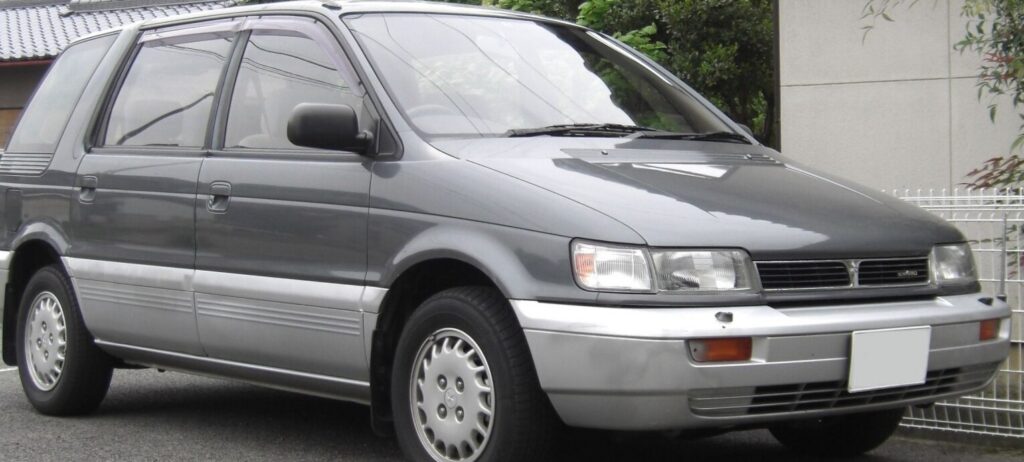
The Mitsubishi Chariot Grandis (N11) 2.3 i 16V GDI SE, produced between 1997 and 2003, represented a significant offering in Mitsubishi’s minivan lineup. Positioned as a mid-to-upper trim level within the N11 generation, this variant combined a 2.4-liter gasoline engine with a four-speed automatic transmission, aiming to provide a balance of performance and convenience for family transportation. The Grandis, sold primarily in Japan and select export markets, was designed to compete with other seven-passenger MPVs, offering a spacious interior and a range of features geared towards comfort and practicality. It was a key model for Mitsubishi during a period of expansion in the minivan segment.
Technical Specifications
| Brand | Mitsubishi |
| Model | Chariot |
| Generation | Chariot Grandis (N11) |
| Type | 2.3 i 16V GDI SE (165 Hp) |
| Start of production | 1997 |
| End of production | 2003 |
| Powertrain Architecture | Internal Combustion engine |
| Body type | Minivan |
| Seats | 7 |
| Doors | 5 |
| Fuel consumption (extra urban) | 8.47 l/100 km (27.8 US mpg, 33.4 UK mpg, 11.8 km/l) |
| Fuel Type | Petrol (Gasoline) |
| Weight-to-power ratio | 9.6 kg/Hp, 104.4 Hp/tonne |
| Weight-to-torque ratio | 6.9 kg/Nm, 145.6 Nm/tonne |
| Power | 165 Hp @ 5700 rpm |
| Power per litre | 70.2 Hp/l |
| Torque | 230 Nm @ 3500 rpm (169.64 lb.-ft. @ 3500 rpm) |
| Engine layout | Front, Transverse |
| Engine displacement | 2350 cm3 (143.41 cu. in.) |
| Number of cylinders | 4 |
| Engine configuration | Inline |
| Cylinder Bore | 86.5 mm (3.41 in.) |
| Piston Stroke | 100 mm (3.94 in.) |
| Compression ratio | 10.8:1 |
| Number of valves per cylinder | 4 |
| Fuel injection system | Direct injection |
| Engine aspiration | Naturally aspirated engine |
| Kerb Weight | 1580 kg (3483.3 lbs.) |
| Max. weight | 1965 kg (4332.08 lbs.) |
| Max load | 385 kg (848.78 lbs.) |
| Fuel tank capacity | 63 l (16.64 US gal | 13.86 UK gal) |
| Length | 4585 mm (180.51 in.) |
| Width | 1775 mm (69.88 in.) |
| Height | 1690 mm (66.54 in.) |
| Wheelbase | 2780 mm (109.45 in.) |
| Front track | 1500 mm (59.06 in.) |
| Rear track | 1535 mm (60.43 in.) |
| Drivetrain Architecture | Front wheel drive |
| Number of gears | 4 |
| Gearbox type | Automatic transmission |
| Front suspension | Spring Strut |
| Rear suspension | Coil spring |
| Front brakes | Ventilated discs |
| Rear brakes | Drum |
| Assisting systems | ABS (Anti-lock braking system) |
| Steering type | Steering rack and pinion |
| Power steering | Hydraulic Steering |
| Tires size | 205/65 R15 |
Powertrain & Engine Architecture
The heart of the Chariot Grandis 2.3 i GDI SE is the 4G63 engine, a 2.3-liter (2350 cc) inline-four cylinder powerplant. This engine utilizes Mitsubishi’s GDI (Gasoline Direct Injection) technology, a key feature that set it apart from many competitors at the time. GDI allows for more precise fuel delivery, resulting in improved fuel efficiency and increased power output. The engine boasts a compression ratio of 10.8:1 and is equipped with four valves per cylinder, contributing to its responsive nature. The 4G63 in this application produces 165 horsepower at 5700 rpm and 230 Nm (169.64 lb-ft) of torque at 3500 rpm. The engine’s transverse mounting and front-wheel-drive configuration were standard for this class of vehicle. The four-speed automatic transmission, while providing convenience, was a relatively conventional unit for the late 1990s and early 2000s. It wasn’t known for particularly quick shifts, but it was generally reliable.
Driving Characteristics
The 2.3-liter GDI engine paired with the four-speed automatic transmission delivered adequate, but not exhilarating, performance. Acceleration was sufficient for everyday driving and highway merging, but it wasn’t a particularly sporty vehicle. The automatic transmission’s gear ratios were tuned for fuel economy and smooth operation rather than aggressive acceleration. Compared to the manual transmission versions of the Chariot Grandis, the automatic suffered a noticeable performance deficit. The manual offered quicker acceleration and a more engaging driving experience. However, the automatic provided a more relaxed and convenient driving experience, particularly in urban traffic. The weight of the vehicle, around 1580 kg (3483.3 lbs), also contributed to the somewhat subdued performance.
Equipment & Trim Levels
The “SE” designation indicated a relatively well-equipped trim level. Standard features typically included air conditioning, power windows and locks, a basic audio system, and cloth upholstery. Higher-end options, depending on the market, could include alloy wheels, a sunroof, upgraded audio systems, and woodgrain interior trim. The Chariot Grandis was designed with family comfort in mind, and the SE trim offered a reasonable level of amenities for its price point. The seven-seat configuration was standard, with the rear seats typically folding flat to maximize cargo space.
Chassis & Braking
The Chariot Grandis utilized a conventional chassis design with a MacPherson strut suspension in the front and a coil spring suspension in the rear. The front brakes were ventilated discs, providing adequate stopping power, while the rear brakes were drums, a cost-saving measure common in this segment. Anti-lock braking system (ABS) was standard, enhancing safety. The steering was rack and pinion with hydraulic power assistance, offering reasonable precision and ease of use. The suspension was tuned for comfort, prioritizing a smooth ride over sporty handling. The 205/65 R15 tires were a typical size for this class of vehicle, balancing ride comfort and grip.
Market Reception & Comparison
The Mitsubishi Chariot Grandis 2.3 i GDI SE received generally positive reviews, particularly for its spacious interior, comfortable ride, and fuel-efficient GDI engine. Critics noted that the automatic transmission could feel somewhat sluggish, and the overall driving experience wasn’t particularly exciting. Compared to other minivans in its class, such as the Toyota Previa or Honda Odyssey, the Chariot Grandis offered a competitive level of features and value. Fuel economy was a strong point, thanks to the GDI technology, and the vehicle proved to be relatively reliable. However, it didn’t achieve the same level of popularity as some of its more established competitors.
Legacy
The Mitsubishi Chariot Grandis, and specifically the 2.3 i GDI SE variant, has developed a reputation for reasonable reliability, particularly the engine itself. The GDI system, while advanced for its time, has proven to be durable with proper maintenance. However, like any older vehicle, it’s susceptible to age-related issues such as corrosion and wear and tear on suspension components. In the used car market, the Chariot Grandis represents an affordable and practical option for those seeking a spacious seven-passenger vehicle. While it may not offer the latest technology or the most refined driving experience, it remains a viable choice for budget-conscious buyers. Parts availability can be a concern in some markets, but the 4G63 engine is well-known and supported by a robust aftermarket.