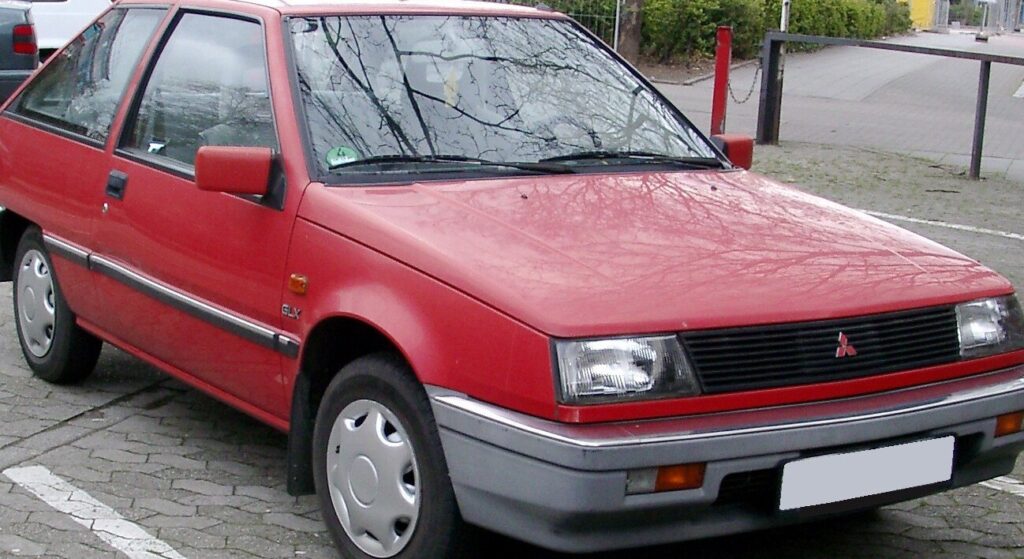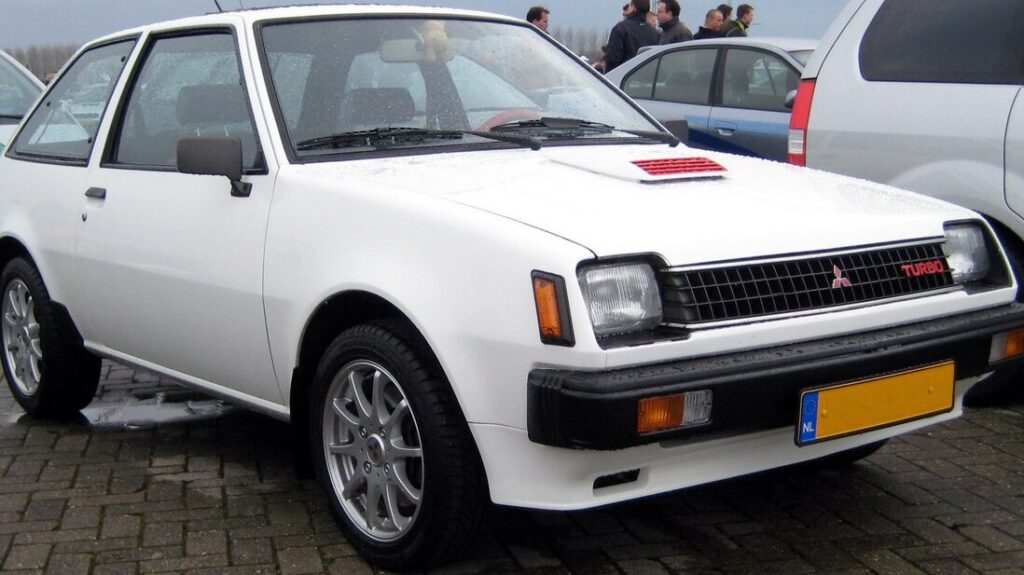
The Mitsubishi Colt I, specifically the 1.2 GL (A151A) variant producing 55 horsepower, represents an entry-level offering within the first generation Colt range (A150 series) produced between 1978 and 1984. This model played a crucial role in Mitsubishi’s expansion into the European small car market, offering affordable and economical transportation during a period of rising fuel costs. The Colt I was a significant departure for Mitsubishi, representing their first serious attempt at a front-wheel-drive, transversely-mounted engine hatchback designed to compete with established European and Japanese rivals like the Fiat 127, Renault 5, and Honda Civic. The 1.2 GL, being the base trim, was aimed at budget-conscious buyers prioritizing fuel efficiency and practicality over outright performance.
Technical Specifications
| Brand | Mitsubishi |
| Model | Colt |
| Generation | Colt I (A150) |
| Type (Engine) | 1.2 GL (A151A) (55 Hp) |
| Start of Production | 1978 |
| End of Production | 1984 |
| Powertrain Architecture | Internal Combustion Engine |
| Body Type | Hatchback |
| Fuel Type | Petrol (Gasoline) |
| Power | 55 Hp |
| Engine Aspiration | Naturally Aspirated |
Powertrain & Engine Architecture
The 1.2 GL variant of the Mitsubishi Colt I was powered by the 1235 cc 4G12 engine. This engine was a simple, inline-four cylinder unit featuring a single overhead camshaft (SOHC) and two valves per cylinder. Fuel delivery was managed by a Mikuni/Solex carburetor, a common setup for vehicles of this era and price point. The 4G12 engine, while not particularly powerful, was known for its reliability and relatively low maintenance requirements. It produced 55 horsepower at 6000 rpm and approximately 68 lb-ft of torque at 3000 rpm. The engine block was cast iron, contributing to its durability, while the cylinder head was aluminum, helping to reduce weight. The transmission paired with the 1.2 GL was a four-speed manual gearbox. An optional three-speed automatic transmission was available, but less common in this base trim level. The automatic, while offering convenience, further reduced the car’s already modest acceleration.
Driving Characteristics
The driving experience in the 1.2 GL was characterized by its light steering and nimble handling, typical of small, front-wheel-drive hatchbacks. However, the 55 horsepower engine meant that performance was decidedly modest. Acceleration was slow, particularly when fully loaded or climbing hills. The four-speed manual transmission allowed drivers to make the most of the available power, but even with careful gear selection, overtaking maneuvers required planning. The automatic transmission, while providing ease of use, significantly hampered acceleration. Top speed was around 87 mph, but cruising at highway speeds required the engine to work hard. The suspension, consisting of MacPherson struts at the front and a twist-beam axle at the rear, provided a comfortable ride on most road surfaces, although it wasn’t particularly sporty. The car’s light weight (around 1,650 lbs) helped to mitigate the lack of power to some extent.
Equipment & Trim Levels
The 1.2 GL represented the base trim level for the Colt I. As such, it was equipped with fairly basic features. Standard equipment included cloth upholstery, vinyl floor covering, and simple steel wheels with hubcaps. The dashboard was functional but lacked any significant ornamentation. A basic AM radio was often included, but power windows, central locking, and air conditioning were not typically offered on this trim. The interior was designed for practicality and durability rather than luxury. Optional extras included a sunroof, upgraded seat upholstery, and a more sophisticated radio. The exterior featured black plastic bumpers and minimal chrome trim. The overall aesthetic was understated and functional, reflecting the car’s budget-oriented positioning.
Chassis & Braking
The Mitsubishi Colt I utilized a monocoque chassis construction, providing a good balance of strength and weight. The front suspension employed MacPherson struts with coil springs and an anti-roll bar, while the rear suspension featured a twist-beam axle with coil springs. This setup provided a reasonably comfortable ride and predictable handling. The braking system consisted of disc brakes at the front and drum brakes at the rear. The brakes were adequate for the car’s weight and performance, but lacked the stopping power of more modern systems. Steering was rack and pinion, providing light and precise control. The relatively small turning circle made the Colt I easy to maneuver in urban environments.
Market Reception & Comparison
The Mitsubishi Colt I 1.2 GL was generally well-received as an affordable and reliable small car. Critics praised its fuel efficiency and nimble handling, but noted its lack of power. Compared to its rivals, such as the Fiat 127 and Renault 5, the Colt I offered a similar level of practicality and economy. However, it often lagged behind in terms of performance and refinement. The 1.2 GL was positioned as a direct competitor to the base models of these rivals. The slightly larger engine displacement compared to some competitors was seen as a positive, offering a bit more flexibility for highway driving. Fuel economy was a key selling point, averaging around 45-50 mpg in real-world conditions. Reliability was also a strong suit, with the 4G12 engine proving to be durable and relatively trouble-free.
Legacy
The Mitsubishi Colt I, and particularly the 1.2 GL variant, established Mitsubishi as a credible player in the European small car market. While not a groundbreaking vehicle in terms of technology or performance, it offered a practical and affordable transportation solution for a wide range of buyers. The 4G12 engine became a mainstay in Mitsubishi’s lineup for many years, powering a variety of other models. Today, the Colt I is a relatively rare sight on the roads, but it has gained a following among classic car enthusiasts. The 1.2 GL, being the most common variant, is generally the most affordable to acquire. Parts availability can be a challenge, but the engine’s simplicity and durability mean that it can often be kept running with basic maintenance. The Colt I represents a significant milestone in Mitsubishi’s history, marking their successful entry into the competitive European automotive landscape.