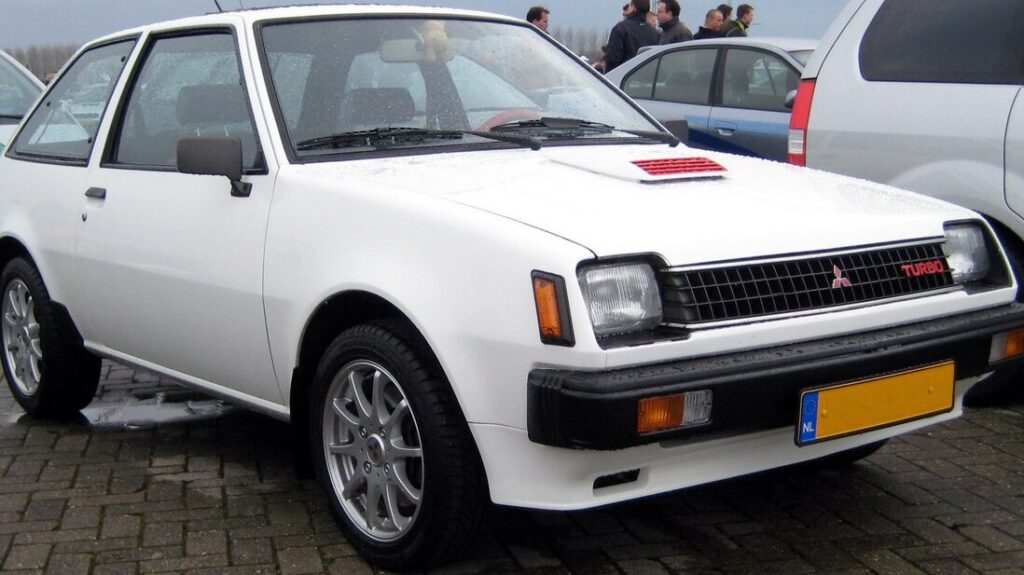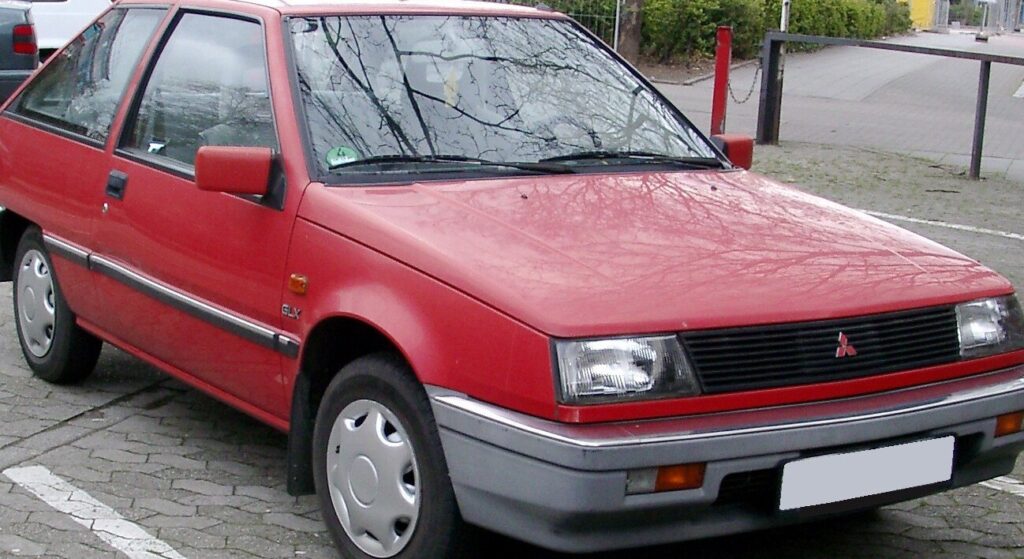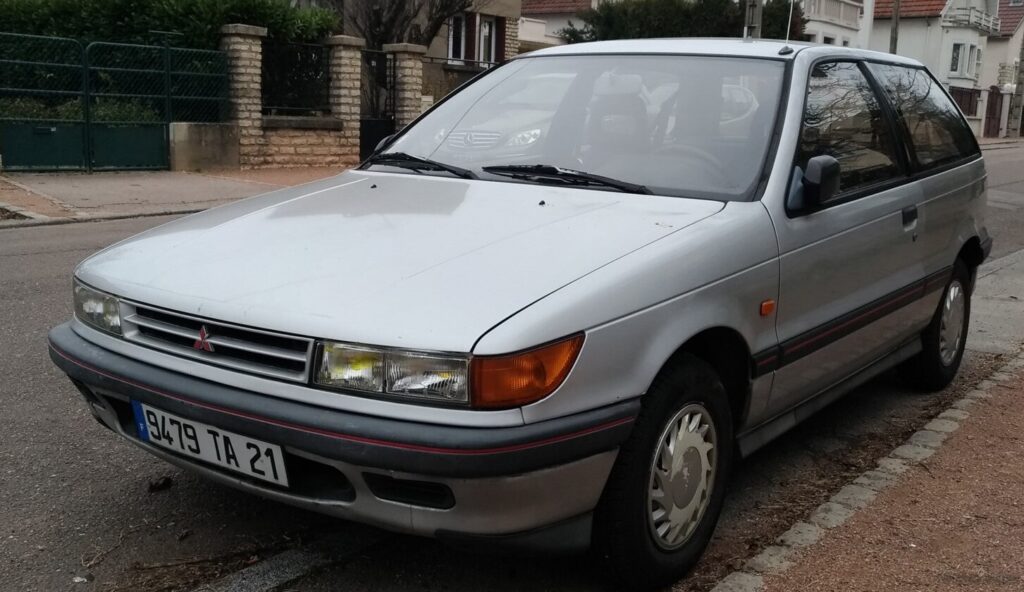
The Mitsubishi Colt III (C50) 1.3 12V (C51A), equipped with a 75 horsepower engine and automatic transmission, was a key variant in Mitsubishi’s European and Asian lineup from 1990 to 1992. Positioned as an entry-level offering within the C50 series, it provided affordable transportation with the convenience of an automatic gearbox. This model represented Mitsubishi’s attempt to cater to a broader market segment seeking ease of use and fuel efficiency in a compact hatchback package. The C50 Colt was built upon the shared platform with the Mirage and Proton Savvy, offering a relatively modern design for its time.
Technical Specifications
| Brand | Mitsubishi |
| Model | Colt |
| Generation | Colt III (C50) |
| Type (Engine) | 1.3 12V (C51A) (75 Hp) Automatic |
| Start of production | 1990 |
| End of production | 1992 |
| Powertrain Architecture | Internal Combustion engine |
| Body type | Hatchback |
| Seats | 5 |
| Doors | 3 |
| Fuel Type | Petrol (Gasoline) |
| Acceleration 0 – 100 km/h | 12.3 sec |
| Acceleration 0 – 62 mph | 12.3 sec |
| Acceleration 0 – 60 mph | 11.7 sec |
| Maximum speed | 163 km/h (101.28 mph) |
| Weight-to-power ratio | 11.3 kg/Hp, 88.2 Hp/tonne |
| Weight-to-torque ratio | 8.3 kg/Nm, 120 Nm/tonne |
| Power | 75 Hp @ 6000 rpm |
| Power per litre | 57.7 Hp/l |
| Torque | 102 Nm @ 4000 rpm (75.23 lb.-ft. @ 4000 rpm) |
| Engine layout | Front, Transverse |
| Engine Model/Code | 4G13 |
| Engine displacement | 1299 cm3 (79.27 cu. in.) |
| Number of cylinders | 4 |
| Engine configuration | Inline |
| Cylinder Bore | 71 mm (2.8 in.) |
| Piston Stroke | 82 mm (3.23 in.) |
| Compression ratio | 9.5:1 |
| Number of valves per cylinder | 3 |
| Fuel injection system | Single-point injection |
| Engine aspiration | Naturally aspirated engine |
| Valvetrain | OHC |
| Engine oil capacity | 3.3 l (3.49 US qt | 2.9 UK qt) |
| Kerb Weight | 850 kg (1873.93 lbs.) |
| Max. weight | 1465 kg (3229.77 lbs.) |
| Max load | 615 kg (1355.84 lbs.) |
| Trunk (boot) space – minimum | 222 l (7.84 cu. ft.) |
| Trunk (boot) space – maximum | 1050 l (37.08 cu. ft.) |
| Fuel tank capacity | 50 l (13.21 US gal | 11 UK gal) |
| Length | 3950 mm (155.51 in.) |
| Width | 1670 mm (65.75 in.) |
| Height | 1380 mm (54.33 in.) |
| Wheelbase | 2385 mm (93.9 in.) |
| Front track | 1430 mm (56.3 in.) |
| Rear (Back) track | 1430 mm (56.3 in.) |
| Drivetrain Architecture | The Internal combustion engine (ICE) drives the front wheels of the vehicle. |
| Drive wheel | Front wheel drive |
| Number of gears and type of gearbox | 3 gears, automatic transmission |
| Front suspension | Coil spring |
| Rear suspension | Coil spring |
| Front brakes | Disc |
| Rear brakes | Drum |
| Assisting systems | ABS (Anti-lock braking system) |
| Steering type | Steering rack and pinion |
| Tires size | 155/80 R13; 175/70 R13 |
Powertrain & Engine Architecture
The heart of the C51A Colt was the 4G13 engine, a 1.3-liter inline-four cylinder gasoline engine. This engine featured a single overhead camshaft (OHC) design and utilized a single-point fuel injection system. The 12-valve configuration (three valves per cylinder) was a relatively common setup for engines of this era, balancing cost-effectiveness with reasonable performance. The 4G13 produced 75 horsepower at 6000 rpm and 102 Nm (75.23 lb-ft) of torque at 4000 rpm. The automatic transmission was a three-speed unit, designed for smooth, if not particularly sporty, operation. This transmission was chosen to appeal to drivers prioritizing convenience over performance. The engine’s relatively simple design made it relatively easy to maintain, a key consideration for budget-conscious buyers.
Driving Characteristics
The 1.3L automatic Colt offered a comfortable, but uninspiring, driving experience. Acceleration was modest, taking around 12.3 seconds to reach 62 mph (100 km/h). The three-speed automatic transmission, while providing ease of use, resulted in noticeable gear changes and a lack of responsiveness compared to the available five-speed manual transmission. The gear ratios were optimized for fuel economy rather than outright performance. Compared to the more powerful 1.6-liter variants, the 1.3 automatic felt noticeably slower, particularly when fully loaded or tackling inclines. However, for urban driving and commuting, the 1.3L engine provided sufficient power and a relaxed driving experience.
Equipment & Trim Levels
The 1.3 12V Automatic Colt typically came with a basic level of equipment. Standard features generally included cloth upholstery, a basic stereo system, and manual windows and door locks. Air conditioning was often an optional extra, as were power steering and alloy wheels. The interior design was functional and straightforward, prioritizing practicality over luxury. Trim levels were relatively limited, with the focus being on providing an affordable and reliable vehicle. The dashboard layout was simple and easy to use, with clearly marked controls.
Chassis & Braking
The Colt III utilized a front-engine, front-wheel-drive layout. Suspension consisted of coil springs all around, providing a reasonably comfortable ride. The front brakes were discs, while the rear brakes were drums – a common configuration for vehicles in this price range during the early 1990s. An anti-lock braking system (ABS) was available as an option, enhancing safety. The chassis was designed to provide a balance between handling and ride comfort, although it wasn’t particularly sporty. Stabilizer bars were relatively thin, contributing to a noticeable degree of body roll during cornering.
Market Reception & Comparison
The Mitsubishi Colt III 1.3 Automatic was generally well-received as an affordable and practical city car. Critics praised its fuel efficiency and ease of use, but noted its lack of performance compared to other variants. Compared to the 1.6-liter models, the 1.3 automatic offered significantly less power and a slower driving experience. However, it was more economical to run and appealed to drivers who prioritized convenience and low running costs. The 1.9 TDI diesel versions, available in some markets, offered superior fuel economy but lacked the refinement of the gasoline engine. The automatic transmission, while convenient, was often criticized for its sluggishness.
Legacy
The Mitsubishi Colt III 1.3 12V Automatic, while not a performance icon, remains a relatively reliable and affordable classic car. The 4G13 engine is known for its durability, and parts availability is generally good. In the used car market, these models are often sought after by first-time car owners or those looking for a simple and inexpensive vehicle. While not particularly collectible, well-maintained examples are becoming increasingly rare. The powertrain, while dated by modern standards, proved to be robust and capable of handling everyday use. The Colt III, in its various forms, helped establish Mitsubishi as a reputable manufacturer of compact cars in Europe and Asia.