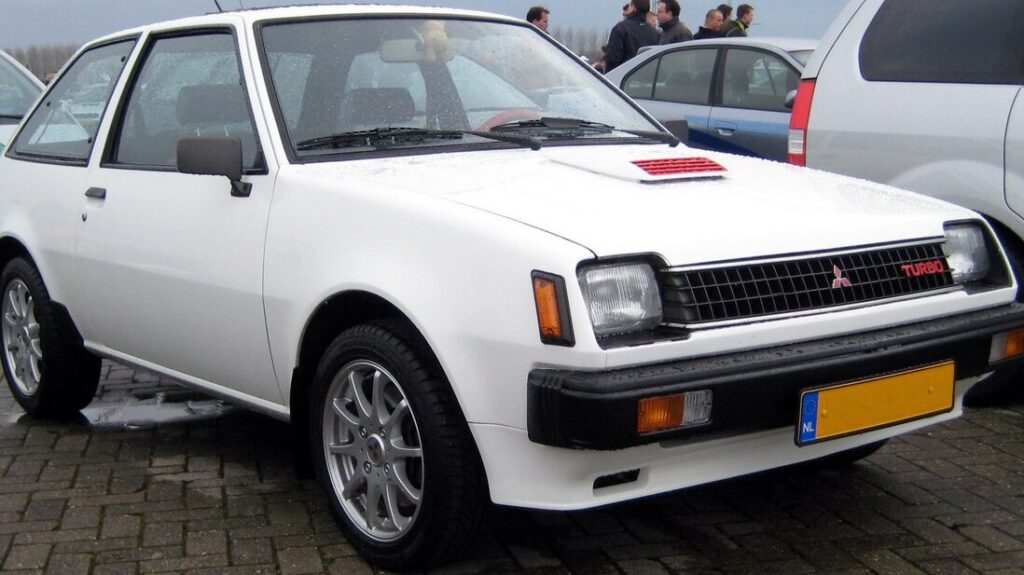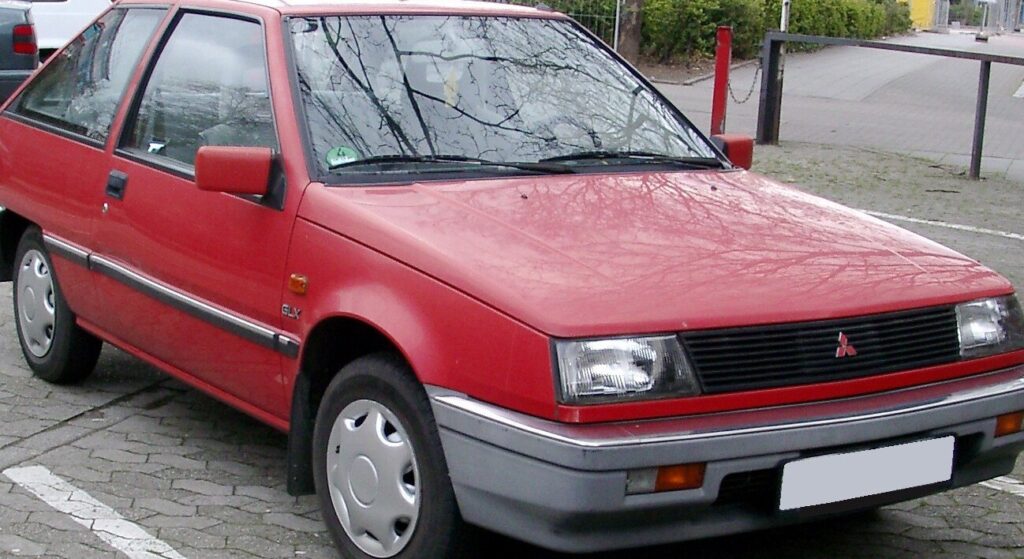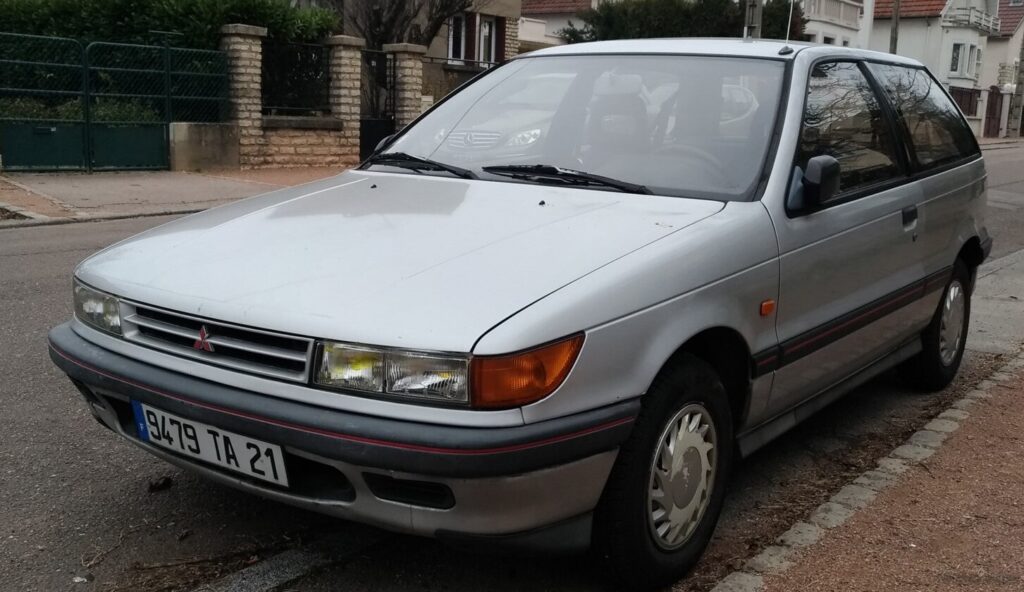
The Mitsubishi Colt III (C50) 1.5 (C52A) CAT, producing 90 horsepower, was a mainstay of Mitsubishi’s European lineup from 1990 to 1992. Positioned as an entry-level offering within the C50 series, it provided affordable transportation in the competitive subcompact hatchback segment. This variant played a crucial role in establishing the Colt as a practical and economical choice for first-time buyers and city dwellers. The C50 Colt represented Mitsubishi’s attempt to capture a larger share of the European small car market, offering a blend of Japanese reliability and relatively modern features.
Technical Specifications
| Brand | Mitsubishi |
| Model | Colt |
| Generation | Colt III (C50) |
| Type (Engine) | 1.5 (C52A) CAT (90 Hp) |
| Start of production | 1990 |
| End of production | 1992 |
| Powertrain Architecture | Internal Combustion engine |
| Body type | Hatchback |
| Seats | 5 |
| Doors | 3 |
| Fuel consumption (urban) | 8.6 l/100 km (27.4 US mpg, 32.8 UK mpg, 11.6 km/l) |
| Fuel consumption (extra urban) | 5.2 l/100 km (45.2 US mpg, 54.3 UK mpg, 19.2 km/l) |
| Fuel consumption (combined) | 7 l/100 km (33.6 US mpg, 40.4 UK mpg, 14.3 km/l) |
| Fuel Type | Petrol (Gasoline) |
| Acceleration 0 – 100 km/h | 11.7 sec |
| Acceleration 0 – 62 mph | 11.7 sec |
| Acceleration 0 – 60 mph | 11.1 sec |
| Maximum speed | 170 km/h (105.63 mph) |
| Weight-to-power ratio | 9.9 kg/Hp, 101.1 Hp/tonne |
| Weight-to-torque ratio | 7.1 kg/Nm, 141.6 Nm/tonne |
| Power | 90 Hp @ 6000 rpm |
| Power per litre | 61.3 Hp/l |
| Torque | 126 Nm @ 3000 rpm (92.93 lb.-ft. @ 3000 rpm) |
| Engine layout | Front, Transverse |
| Engine Model/Code | 4G15 |
| Engine displacement | 1468 cm3 (89.58 cu. in.) |
| Number of cylinders | 4 |
| Engine configuration | Inline |
| Cylinder Bore | 75.5 mm (2.97 in.) |
| Piston Stroke | 82 mm (3.23 in.) |
| Compression ratio | 9.2:1 |
| Number of valves per cylinder | 3 |
| Fuel injection system | Single-point injection |
| Engine aspiration | Naturally aspirated engine |
| Valvetrain | OHC |
| Kerb Weight | 890 kg (1962.11 lbs.) |
| Max. weight | 1035 kg (2281.78 lbs.) |
| Max load | 145 kg (319.67 lbs.) |
| Trunk (boot) space – minimum | 222 l (7.84 cu. ft.) |
| Trunk (boot) space – maximum | 1050 l (37.08 cu. ft.) |
| Fuel tank capacity | 50 l (13.21 US gal | 11 UK gal) |
| Length | 3950 mm (155.51 in.) |
| Width | 1670 mm (65.75 in.) |
| Height | 1380 mm (54.33 in.) |
| Wheelbase | 2385 mm (93.9 in.) |
| Front track | 1430 mm (56.3 in.) |
| Rear (Back) track | 1430 mm (56.3 in.) |
| Drivetrain Architecture | The Internal combustion engine (ICE) drives the front wheels of the vehicle. |
| Drive wheel | Front wheel drive |
| Number of gears and type of gearbox | 5 gears, manual transmission |
| Front suspension | Coil spring |
| Rear suspension | Coil spring |
| Front brakes | Disc |
| Rear brakes | Drum |
| Assisting systems | ABS (Anti-lock braking system) |
| Steering type | Steering rack and pinion |
| Tires size | 175/70 R13 |
INTRODUCTION
The Mitsubishi Colt III, launched in 1990, represented a significant update to Mitsubishi’s popular supermini. The C50 chassis code designates this generation, which was sold primarily in Europe. The 1.5 (C52A) CAT variant, equipped with a 1.5-liter engine producing 90 horsepower, served as a core model in the range. It was designed to appeal to buyers seeking a practical, reliable, and affordable hatchback. The “CAT” designation indicated the presence of a catalytic converter, reflecting increasing environmental regulations in Europe at the time. This model competed directly with vehicles like the Ford Fiesta, Opel Corsa, and Peugeot 205.
Powertrain & Engine Architecture
The heart of the Colt III 1.5 CAT is the 4G15 engine, a 1.5-liter inline-four cylinder gasoline engine. This engine utilizes a single-point fuel injection system, a common technology for the era, delivering fuel to the intake manifold rather than directly into the cylinders. The engine features an overhead camshaft (OHC) valvetrain with three valves per cylinder (two intake, one exhaust), a design intended to improve breathing and efficiency. The 4G15 produces 90 horsepower at 6000 rpm and 126 Nm (93 lb-ft) of torque at 3000 rpm. The engine’s compression ratio is 9.2:1. The 5-speed manual transmission was standard, providing a balance between fuel economy and drivability. The transmission’s gear ratios were tuned for everyday use, prioritizing acceleration in lower gears and comfortable cruising at highway speeds.
Driving Characteristics
The 90 hp 1.5-liter engine in the Colt III provided adequate, though not exhilarating, performance. Acceleration from 0 to 60 mph took approximately 11.1 seconds, and the top speed was around 105.63 mph. Compared to higher-spec Colt models equipped with larger engines, the 1.5 felt noticeably less powerful, particularly when fully loaded or climbing hills. However, the engine was smooth and relatively refined for its class. The 5-speed manual transmission offered precise shifts, and the clutch was light and easy to operate. The car’s relatively light weight (890 kg or 1962 lbs) helped to mitigate the lack of outright power. The suspension provided a comfortable ride, absorbing bumps and imperfections in the road well, but it wasn’t particularly sporty. Steering was light and accurate, making the Colt easy to maneuver in urban environments.
Equipment & Trim Levels
The Colt III 1.5 CAT was typically equipped with a modest level of standard features. These generally included cloth upholstery, a basic instrument cluster, and manual windows and door locks. Power steering was often included, but air conditioning and central locking were usually optional extras. Interior trim was functional and durable, prioritizing practicality over luxury. Depending on the market, optional extras could include a radio/cassette player, upgraded seat fabrics, and alloy wheels. The overall interior design was simple and uncluttered, reflecting the car’s affordable positioning.
Chassis & Braking
The Colt III utilized a front-engine, front-wheel-drive layout. The suspension consisted of coil springs and dampers all around, providing a comfortable ride. The front brakes were disc brakes, offering good stopping power, while the rear brakes were drum brakes, a cost-saving measure common in this segment. Anti-lock braking system (ABS) was available as an option, enhancing safety. The steering system employed a rack and pinion setup, providing precise and responsive steering. Tire size was typically 175/70 R13.
Market Reception & Comparison
The Mitsubishi Colt III 1.5 CAT was generally well-received by automotive critics as a practical and economical choice. It was praised for its reliability, fuel efficiency, and comfortable ride. However, it was often criticized for its lack of power and somewhat basic interior. Compared to the higher-spec Colt models, such as those with the 1.6-liter engine, the 1.5 offered less performance but at a lower price point. Fuel economy was a strong point, with combined fuel consumption averaging around 33.6 US mpg. Reliability was generally good, with the 4G15 engine proving to be durable and long-lasting.
Legacy
The Mitsubishi Colt III 1.5 CAT remains a relatively common sight on European roads today, testament to its durability and reliability. The 4G15 engine is known for its longevity, and parts availability is generally good. While not a particularly collectible car, well-maintained examples are sought after by enthusiasts looking for a classic, affordable, and reliable hatchback. The Colt III helped establish Mitsubishi as a credible player in the European small car market, paving the way for future models. The 1.5-liter engine, while not the most powerful in the lineup, provided a good balance of performance and economy for everyday driving, making it a popular choice for many years.