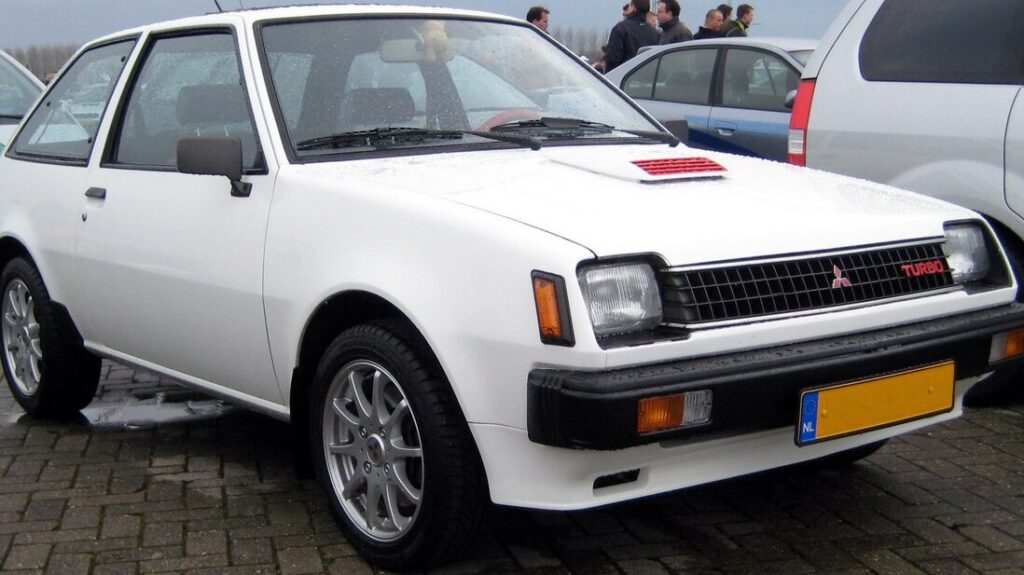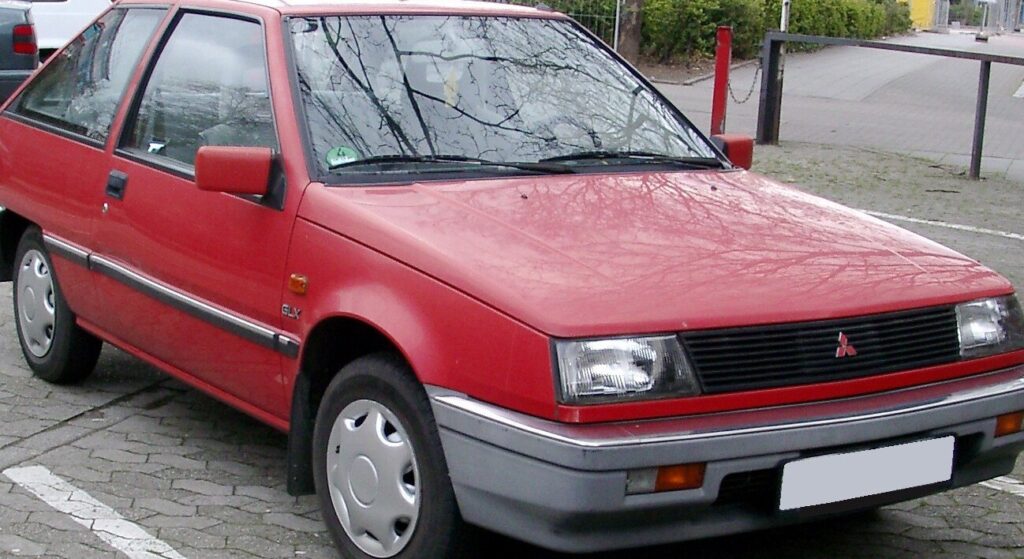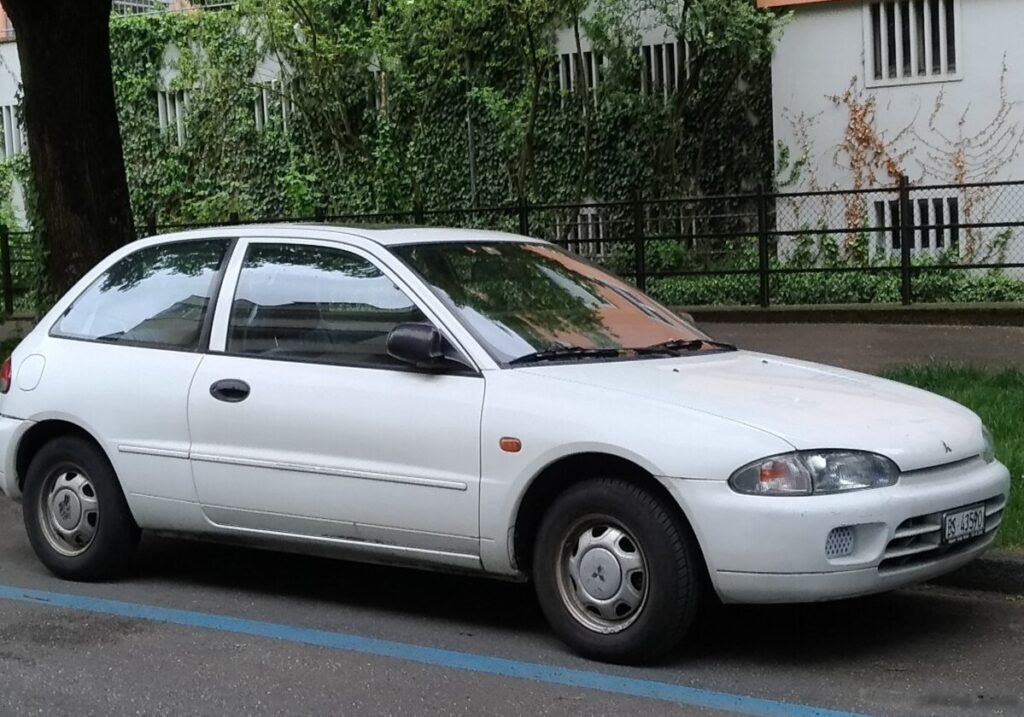
The Mitsubishi Colt IV (CAO) 1.6, produced between 1994 and 1996, represented a significant iteration in Mitsubishi’s long-running Colt subcompact hatchback series. This generation, designated CAO, was primarily aimed at the European market, offering a practical and affordable transportation solution. The 1.6-liter, 90 horsepower variant occupied a middle ground within the Colt IV lineup, positioned above the base 1.3-liter models and below the more performance-oriented versions. It was designed to balance fuel efficiency with acceptable performance for everyday driving, appealing to a broad customer base seeking a reliable and economical vehicle.
Technical Specifications
| Brand | Mitsubishi |
| Model | Colt |
| Generation | Colt IV (CAO) |
| Type (Engine) | 1.6 (90 Hp) |
| Start of production | 1994 |
| End of production | 1996 |
| Powertrain Architecture | Internal Combustion engine |
| Body type | Hatchback |
| Seats | 5 |
| Doors | 3 |
| Fuel consumption (combined) | 6.9 l/100 km (34.1 US mpg, 40.9 UK mpg, 14.5 km/l) |
| Fuel Type | Petrol (Gasoline) |
| Acceleration 0 – 100 km/h | 10.5 sec |
| Acceleration 0 – 62 mph | 10.5 sec |
| Acceleration 0 – 60 mph | 10 sec |
| Maximum speed | 185 km/h (114.95 mph) |
| Weight-to-power ratio | 11.7 kg/Hp, 85.7 Hp/tonne |
| Weight-to-torque ratio | 7.7 kg/Nm, 130.5 Nm/tonne |
| Power | 90 Hp @ 5500 rpm |
| Power per litre | 56.4 Hp/l |
| Torque | 137 Nm @ 4000 rpm (101.05 lb.-ft. @ 4000 rpm) |
| Engine layout | Front, Transverse |
| Engine displacement | 1597 cm3 (97.45 cu. in.) |
| Number of cylinders | 4 |
| Engine configuration | Inline |
| Cylinder Bore | 81 mm (3.19 in.) |
| Piston Stroke | 77.5 mm (3.05 in.) |
| Compression ratio | 10:1 |
| Number of valves per cylinder | 4 |
| Fuel injection system | Multi-port manifold injection |
| Engine aspiration | Naturally aspirated engine |
| Valvetrain | OHC |
| Kerb Weight | 1050 kg (2314.85 lbs.) |
| Max. weight | 1480 kg (3262.84 lbs.) |
| Max load | 430 kg (947.99 lbs.) |
| Trunk (boot) space – minimum | 240 l (8.48 cu. ft.) |
| Trunk (boot) space – maximum | 1070 l (37.79 cu. ft.) |
| Fuel tank capacity | 50 l (13.21 US gal | 11 UK gal) |
| Length | 3880 mm (152.76 in.) |
| Width | 1680 mm (66.14 in.) |
| Height | 1365 mm (53.74 in.) |
| Wheelbase | 2415 mm (95.08 in.) |
| Front track | 1450 mm (57.09 in.) |
| Rear (Back) track | 1460 mm (57.48 in.) |
| Drivetrain Architecture | The Internal combustion engine (ICE) drives the front wheels of the vehicle. |
| Drive wheel | Front wheel drive |
| Number of gears and type of gearbox | 5 gears, manual transmission |
| Front suspension | Wishbone |
| Rear suspension | Several levers and rods |
| Front brakes | Ventilated discs |
| Rear brakes | Drum |
| Assisting systems | ABS (Anti-lock braking system) |
| Steering type | Steering rack and pinion |
| Power steering | Hydraulic Steering |
| Tires size | 175/70 R13 |
Powertrain & Engine Architecture
The heart of the Colt IV 1.6 was the 4G15 engine, a 1.6-liter inline-four cylinder gasoline engine. This engine utilized a single overhead camshaft (SOHC) valvetrain, operating four valves per cylinder. Fuel delivery was managed by a multi-port fuel injection system, contributing to improved fuel efficiency and smoother operation compared to earlier carburetor-equipped models. The engine produced 90 horsepower at 5500 rpm and 137 Nm (101 lb-ft) of torque at 4000 rpm. The engine’s design prioritized reliability and ease of maintenance, making it a popular choice for budget-conscious buyers. The transmission was a five-speed manual, offering a reasonable balance between fuel economy and driver control. While an automatic transmission was available on some Colt IV models, it wasn’t commonly paired with the 1.6-liter engine.
Driving Characteristics
The 1.6-liter engine provided adequate, though not exhilarating, performance. Acceleration from 0 to 60 mph took around 10 seconds, and the top speed was approximately 115 mph. The five-speed manual transmission allowed drivers to keep the engine in its optimal power band, providing reasonable responsiveness for overtaking and merging. Compared to the smaller 1.3-liter engine, the 1.6 offered noticeably more power and torque, making it more suitable for highway driving and carrying a full load of passengers. However, it didn’t possess the sporty character of higher-performance variants, such as those equipped with the 1.8-liter engine. The suspension was tuned for comfort, providing a relatively smooth ride, but handling was not particularly sharp.
Equipment & Trim Levels
The Colt IV 1.6 typically came with a modest level of standard equipment. This included power steering, central locking, and basic instrumentation. Interior upholstery was typically cloth, and the dashboard featured a functional, if somewhat basic, design. Optional extras included power windows, a sunroof, and upgraded audio systems. The trim level of the 1.6 often fell in the mid-range of the Colt IV lineup, offering a step up in comfort and performance compared to the base models without the added cost of the more luxurious trims.
Chassis & Braking
The Colt IV utilized a front-wheel-drive layout with a relatively simple suspension system. The front suspension consisted of wishbones, while the rear suspension employed a multi-link setup. Braking duties were handled by ventilated discs at the front and drum brakes at the rear. Anti-lock braking system (ABS) was available as an option, enhancing safety by preventing wheel lockup during hard braking. The chassis was designed to provide a balance between rigidity and weight, contributing to the car’s overall handling characteristics.
Market Reception & Comparison
The Mitsubishi Colt IV 1.6 was generally well-received by automotive critics as a practical and affordable small car. It was praised for its fuel efficiency, reliability, and ease of driving. However, some critics noted its lack of refinement and somewhat uninspired styling. Compared to rivals such as the Ford Fiesta and Opel Corsa, the Colt IV offered a competitive package, particularly in terms of value for money. The 1.6-liter engine provided a noticeable improvement in performance over the base 1.3-liter models, making it a more appealing option for drivers who frequently traveled on highways or carried passengers. Fuel economy was comparable to other vehicles in its class.
Legacy
The Mitsubishi Colt IV 1.6 has proven to be a relatively reliable vehicle over the long term. The 4G15 engine is known for its durability and relatively low maintenance costs. Today, these cars are increasingly sought after by enthusiasts and collectors, particularly those looking for a classic Japanese hatchback. While finding well-maintained examples can be challenging, the Colt IV 1.6 remains a testament to Mitsubishi’s commitment to building practical and dependable vehicles. Its simple design and readily available parts make it a relatively easy car to maintain and repair, ensuring its continued presence on the roads for years to come.