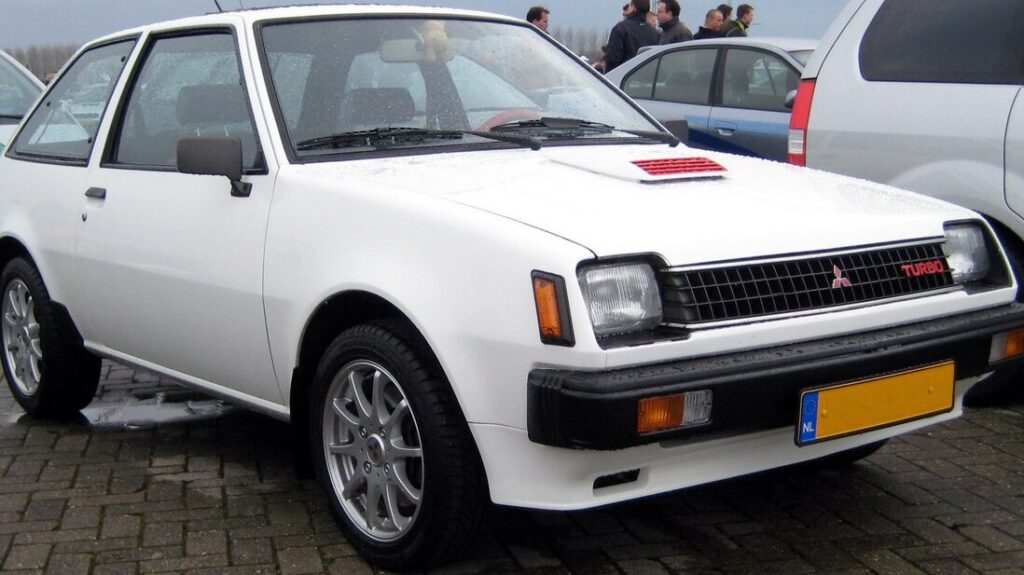
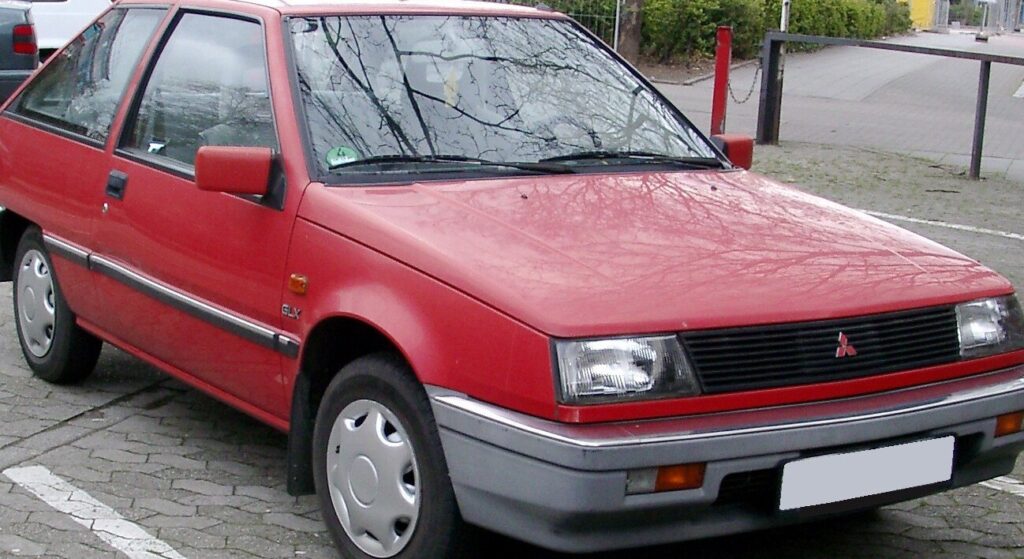
The Mitsubishi Colt Lancer 1.6 (82 hp) represents an early iteration of Mitsubishi’s popular compact sedan, produced between 1978 and 1979 as part of the A7_ generation. This model served as a foundational offering within the Colt Lancer lineup, aimed at providing affordable and reliable transportation during a period of increasing fuel costs and demand for smaller vehicles. While not the most powerful or feature-rich version of the Lancer, the 1.6-liter variant played a crucial role in establishing the model’s presence in various international markets, particularly in regions where fuel efficiency and practicality were prioritized. It was a direct competitor to other subcompacts of the era, such as the Toyota Corolla and Datsun Sunny.
Technical Specifications
| Brand | Mitsubishi |
| Model | Colt Lancer |
| Generation | Colt Lancer (A7_) |
| Type (Engine) | 1.6 (82 Hp) |
| Start of production | 1978 |
| End of production | 1979 |
| Powertrain Architecture | Internal Combustion engine |
| Body type | Sedan |
| Fuel Type | Petrol (Gasoline) |
| Power | 82 Hp |
| Engine aspiration | Naturally aspirated engine |
Powertrain & Engine Architecture
The heart of the Colt Lancer 1.6 was a 1.6-liter, naturally aspirated four-cylinder engine. While specific engine codes varied depending on the market, this engine generally featured a single overhead camshaft (SOHC) configuration. The engine’s design prioritized simplicity and durability over outright performance. Fuel delivery was managed by a carburetor, a common feature for vehicles of this era, rather than fuel injection. This carburetor system, while less precise than modern fuel injection, contributed to the engine’s relative ease of maintenance. The engine produced 82 horsepower, which was considered adequate for a vehicle of its size and weight. The engine’s bore and stroke dimensions were typical for the time, aiming for a balance between torque and responsiveness. The transmission paired with this engine was typically a three- or four-speed automatic, although manual transmission options were also available. The automatic transmission was designed for smooth, comfortable shifts, prioritizing ease of use over sporty performance.
Driving Characteristics
The driving experience in the Colt Lancer 1.6 Automatic was characterized by its smooth and predictable nature. Acceleration was modest, with the 82 horsepower engine providing sufficient power for everyday driving situations, but not excelling in quick overtaking maneuvers. The automatic transmission contributed to a relaxed driving style, with gear changes being relatively seamless. Compared to the manual transmission versions of the Lancer, the automatic offered greater convenience, particularly in urban traffic. However, it did come at the cost of some performance and fuel economy. The gear ratios were tuned for fuel efficiency and comfortable cruising, rather than aggressive acceleration. The overall driving feel was one of practicality and reliability, rather than excitement. The suspension was tuned for comfort, absorbing bumps and imperfections in the road reasonably well, although it wasn’t particularly sporty or engaging.
Equipment & Trim Levels
The Colt Lancer 1.6, positioned as an entry-level model, typically came with a fairly basic level of standard equipment. Interior upholstery was generally vinyl or a durable cloth material. The dashboard layout was functional and straightforward, with basic instrumentation including a speedometer, fuel gauge, and temperature gauge. Features like a radio were often optional extras. Power steering and air conditioning were generally not standard on this trim level, but could be added as options. The exterior trim was relatively simple, with basic chrome accents and steel wheels with hubcaps. The focus was on providing a functional and affordable vehicle, rather than luxury or advanced features. Higher trim levels of the Colt Lancer, such as those equipped with larger engines or more luxurious interiors, offered additional features like upgraded upholstery, more comprehensive instrumentation, and exterior enhancements.
Chassis & Braking
The Colt Lancer 1.6 utilized a relatively conventional chassis design for the late 1970s. It featured a body-on-frame construction, which was common for vehicles of this era. The suspension consisted of independent front suspension with coil springs and a solid rear axle with leaf springs. This suspension setup provided a comfortable ride, but wasn’t particularly sophisticated in terms of handling. The braking system typically consisted of drum brakes on all four wheels, which was standard for many vehicles in this price range at the time. While adequate for normal driving conditions, the drum brakes lacked the stopping power and fade resistance of disc brakes. A stabilizer bar was often included in the front suspension to reduce body roll during cornering, but it wasn’t always standard equipment on the base 1.6 model.
Market Reception & Comparison
The Mitsubishi Colt Lancer 1.6 Automatic received generally positive reviews for its affordability, reliability, and fuel efficiency. Critics noted that it wasn’t the most exciting or powerful vehicle in its class, but it provided a practical and dependable transportation solution. Compared to other trims in the Lancer lineup, such as the 1.8-liter or 2.0-liter versions, the 1.6-liter model offered lower performance but better fuel economy. It was often seen as a good choice for drivers who prioritized practicality and affordability over sporty performance. In terms of reliability, the Colt Lancer 1.6 proved to be a durable and long-lasting vehicle, with relatively few major mechanical issues. Fuel economy was competitive for the time, making it an attractive option for drivers concerned about rising fuel costs.
Legacy
The Mitsubishi Colt Lancer 1.6 (A7_) holds a significant place in Mitsubishi’s history as a foundational model that helped establish the brand in various international markets. While not a particularly rare or collectible vehicle today, it remains a popular choice among enthusiasts who appreciate its simplicity, reliability, and affordability. The powertrain, while relatively basic by modern standards, proved to be durable and long-lasting. Parts availability can be a challenge, as the vehicle is now several decades old, but many components are still available through specialist suppliers or used parts networks. In the used car market, the Colt Lancer 1.6 is typically valued for its affordability and potential as a restoration project. It represents a snapshot of automotive engineering from the late 1970s, offering a glimpse into a time when simplicity and reliability were highly valued in vehicle design.