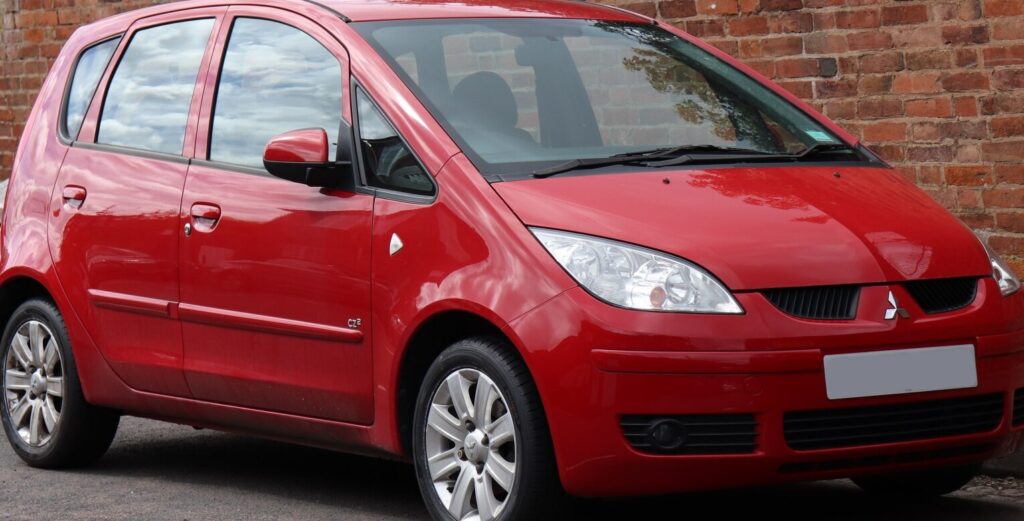
The Mitsubishi Colt VI (Z30) 1.3 i 16V, produced between 2004 and 2008, represented an entry-level offering within the sixth generation of the Colt hatchback. Positioned as a practical and affordable city car, this variant aimed to provide economical transportation for a broad demographic. It was primarily sold in the European market, where the Colt competed with vehicles like the Renault Clio, Peugeot 206, and Ford Fiesta. This specific engine and transmission combination – the 1.3-liter 16-valve engine paired with a five-speed manual transmission – was a mainstay of the Colt VI lineup, offering a balance between fuel efficiency and acceptable performance.
Technical Specifications
| Brand | Mitsubishi |
| Model | Colt |
| Generation | Colt VI (Z30) |
| Type (Engine) | 1.3 i 16V (95 Hp) |
| Start of production | 2004 |
| End of production | 2008 |
| Powertrain Architecture | Internal Combustion engine |
| Body type | Hatchback |
| Seats | 5 |
| Doors | 5 |
| Fuel consumption (urban) | 7.4 l/100 km (31.8 US mpg) |
| Fuel consumption (extra urban) | 4.8 l/100 km (49 US mpg) |
| Fuel consumption (combined) | 5.8 l/100 km (40.6 US mpg) |
| Fuel Type | Petrol (Gasoline) |
| Acceleration 0 – 100 km/h | 11.1 sec |
| Acceleration 0 – 62 mph | 11.1 sec |
| Acceleration 0 – 60 mph | 10.5 sec |
| Maximum speed | 180 km/h (111.85 mph) |
| Weight-to-power ratio | 10.2 kg/Hp |
| Weight-to-torque ratio | 7.8 kg/Nm |
| Power | 95 Hp @ 6000 rpm |
| Torque | 125 Nm @ 4000 rpm (92.2 lb.-ft. @ 4000 rpm) |
| Engine layout | Front, Transverse |
| Engine Model/Code | M 135.930 |
| Engine displacement | 1332 cm3 (81.28 cu. in.) |
| Number of cylinders | 4 |
| Engine configuration | Inline |
| Cylinder Bore | 75 mm (2.95 in.) |
| Piston Stroke | 75.4 mm (2.97 in.) |
| Compression ratio | 10.5:1 |
| Number of valves per cylinder | 4 |
| Fuel injection system | Multi-port manifold injection |
| Engine aspiration | Naturally aspirated engine |
| Valvetrain | DOHC |
| Engine oil capacity | 4.2 l (4.44 US qt | 3.7 UK qt) |
| Coolant capacity | 4.6 l (4.86 US qt | 4.05 UK qt) |
| Kerb Weight | 970 kg (2138.48 lbs.) |
| Max. weight | 1460 kg (3218.75 lbs.) |
| Max load | 490 kg (1080.27 lbs.) |
| Trunk (boot) space – minimum | 500 l (17.66 cu. ft.) |
| Fuel tank capacity | 47 l (12.42 US gal | 10.34 UK gal) |
| Length | 3870 mm (152.36 in.) |
| Width | 1695 mm (66.73 in.) |
| Height | 1550 mm (61.02 in.) |
| Wheelbase | 2500 mm (98.43 in.) |
| Front track | 1460 mm (57.48 in.) |
| Rear track | 1445 mm (56.89 in.) |
| Drivetrain | Front wheel drive |
| Number of gears | 5 |
| Gearbox type | Manual transmission |
| Front suspension | Spring Strut |
| Rear suspension | Torsion |
| Front brakes | Ventilated discs |
| Rear brakes | Drum |
| Assisting systems | ABS (Anti-lock braking system) |
| Steering type | Steering rack and pinion |
| Power steering | Electric Steering |
| Tires size | 175/65 R14 |
| Wheel rims size | 5.5J x 14 |
Powertrain & Engine Architecture
The heart of the Colt VI 1.3 i 16V is the Mitsubishi 4G13 engine, specifically the M 135.930 variant. This 1.3-liter inline-four engine features a double overhead camshaft (DOHC) valvetrain and four valves per cylinder, contributing to its relatively high output for its displacement. The engine utilizes a multi-point fuel injection system, delivering fuel directly to each intake port. This setup, while not cutting-edge at the time, provided reliable and efficient operation. The engine’s 16-valve configuration and relatively high compression ratio of 10.5:1 helped it produce 95 horsepower at 6000 rpm and 125 Nm (92.2 lb-ft) of torque at 4000 rpm. The five-speed manual transmission was a standard feature, offering a reasonably direct driving experience. The transmission’s gear ratios were tuned for fuel economy and everyday usability rather than outright performance.
Driving Characteristics
The 1.3-liter engine, while adequate for urban driving, wasn’t known for its blistering acceleration. The 0-60 mph time of around 10.5 seconds reflects this. However, the engine was willing to rev, and the five-speed manual transmission allowed drivers to keep it in the optimal power band. Compared to the more powerful 1.5-liter variants, the 1.3 i 16V felt noticeably slower, particularly when fully loaded or tackling inclines. The manual transmission provided a more engaging driving experience than the optional automatic transmission available on other Colt models. The car’s relatively light weight (970 kg or 2138 lbs) helped to mitigate the engine’s modest power output, making it feel reasonably nimble in city traffic.
Equipment & Trim Levels
The 1.3 i 16V typically came with a fairly basic level of equipment, reflecting its position as an entry-level model. Standard features generally included power steering, central locking, electric front windows, and an ABS anti-lock braking system. Air conditioning was often an optional extra. Interior upholstery was typically cloth, and the dashboard featured a simple, functional design. Higher trim levels offered upgrades such as alloy wheels, a CD player, and more premium interior materials. The focus was on providing a practical and affordable package rather than luxury.
Chassis & Braking
The Colt VI utilized a relatively simple chassis design. Front suspension consisted of MacPherson strut springs, while the rear employed a torsion beam setup. This configuration provided a comfortable ride quality, although it wasn’t particularly sporty. The front brakes were ventilated discs, offering adequate stopping power, while the rear brakes were drums. This combination was typical for cars in this price range at the time. The electric power steering provided light and easy steering, making it ideal for maneuvering in tight urban environments.
Market Reception & Comparison
The Mitsubishi Colt VI 1.3 i 16V was generally well-received as a practical and economical city car. Critics praised its fuel efficiency and affordability, but noted its lack of outright performance. Compared to other trims in the Colt lineup, such as the 1.5-liter variants, the 1.3 i 16V offered lower running costs but less excitement. Its fuel economy of around 40.6 US mpg combined was a significant selling point, particularly in Europe where fuel prices were high. Reliability was generally good, although some owners reported minor issues with the engine’s cooling system.
Legacy
The Mitsubishi Colt VI 1.3 i 16V remains a relatively common sight on used car markets today. The 4G13 engine is known for its durability and relatively low maintenance costs, making it a popular choice for budget-conscious buyers. While not a particularly exciting car, it represents a solid and reliable option for those seeking affordable transportation. Parts availability is generally good, and the car’s simple design makes it relatively easy to repair. The Colt VI 1.3 i 16V serves as a testament to Mitsubishi’s ability to produce practical and dependable vehicles that offer good value for money.