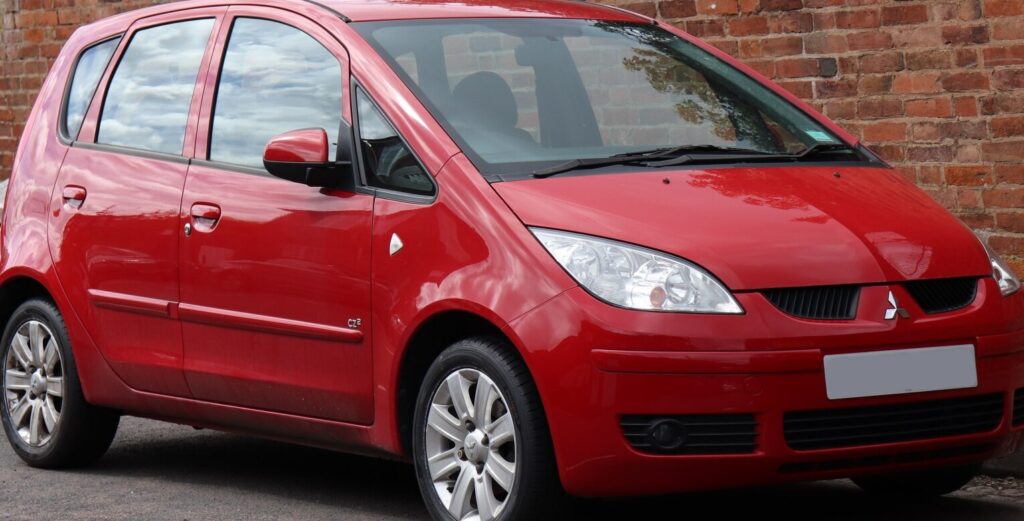
The Mitsubishi Colt VI (Z30) 1.5 12V DI-D Automatic, produced between 2004 and 2008, represented a key offering in Mitsubishi’s European subcompact hatchback lineup. Positioned as an economy-focused variant, it aimed to provide fuel efficiency and practicality for urban drivers. This model utilized a direct-injection diesel engine paired with a conventional automatic transmission, a relatively uncommon combination in this segment at the time. The Z30 Colt was a significant departure from its predecessors, sharing its platform with the Smart Fortwo and Renault Twingo, marking a period of collaboration between the Renault-Nissan-Mitsubishi Alliance.
Technical Specifications
| Brand | Mitsubishi |
| Model | Colt |
| Generation | Colt VI (Z30) |
| Type (Engine) | 1.5 12V DI-D (95 Hp) Automatic |
| Start of production | 2004 |
| End of production | 2008 |
| Powertrain Architecture | Internal Combustion engine |
| Body type | Hatchback |
| Seats | 5 |
| Doors | 5 |
| Fuel consumption (urban) | 5.5 l/100 km (42.8 US mpg, 51.4 UK mpg, 18.2 km/l) |
| Fuel consumption (extra urban) | 3.8 l/100 km (61.9 US mpg, 74.3 UK mpg, 26.3 km/l) |
| Fuel consumption (combined) | 4.4 l/100 km (53.5 US mpg, 64.2 UK mpg, 22.7 km/l) |
| Fuel Type | Diesel |
| Acceleration 0 – 100 km/h | 11.3 sec |
| Acceleration 0 – 62 mph | 11.3 sec |
| Acceleration 0 – 60 mph | 10.7 sec |
| Maximum speed | 180 km/h (111.85 mph) |
| Weight-to-power ratio | 11.4 kg/Hp, 87.6 Hp/tonne |
| Weight-to-torque ratio | 5.2 kg/Nm, 193.5 Nm/tonne |
| Power | 95 Hp @ 4000 rpm |
| Power per litre | 63.6 Hp/l |
| Torque | 210 Nm @ 1800 rpm (154.89 lb.-ft. @ 1800 rpm) |
| Engine layout | Front, Transverse |
| Engine Model/Code | OM 639.939 |
| Engine displacement | 1493 cm3 (91.11 cu. in.) |
| Number of cylinders | 3 |
| Engine configuration | Inline |
| Cylinder Bore | 83 mm (3.27 in.) |
| Piston Stroke | 92 mm (3.62 in.) |
| Compression ratio | 18:1 |
| Number of valves per cylinder | 4 |
| Fuel injection system | Diesel Commonrail |
| Engine aspiration | Turbocharger, Intercooler |
| Valvetrain | DOHC |
| Engine oil capacity | 5.5 l (5.81 US qt | 4.84 UK qt) |
| Coolant capacity | 6.6 l (6.97 US qt | 5.81 UK qt) |
| Kerb Weight | 1085 kg (2392.02 lbs.) |
| Max. weight | 1570 kg (3461.26 lbs.) |
| Max load | 485 kg (1069.24 lbs.) |
| Trunk (boot) space – minimum | 500 l (17.66 cu. ft.) |
| Fuel tank capacity | 47 l (12.42 US gal | 10.34 UK gal) |
| Length | 3870 mm (152.36 in.) |
| Width | 1695 mm (66.73 in.) |
| Height | 1550 mm (61.02 in.) |
| Wheelbase | 2500 mm (98.43 in.) |
| Front track | 1460 mm (57.48 in.) |
| Rear track | 1445 mm (56.89 in.) |
| Drivetrain Architecture | Front wheel drive |
| Number of gears | 6 |
| Gearbox type | Automatic transmission |
| Front suspension | Spring Strut |
| Rear suspension | Torsion |
| Front brakes | Ventilated discs |
| Rear brakes | Disc |
| Assisting systems | ABS (Anti-lock braking system) |
| Steering type | Steering rack and pinion |
| Power steering | Electric Steering |
| Tires size | 175/65 R14 |
| Wheel rims size | 5.5J x 14 |
Powertrain & Engine Architecture
The heart of the Colt VI 1.5 DI-D Automatic is the OM 639.939, a 1.5-liter inline three-cylinder diesel engine. This engine, developed in collaboration with Mercedes-Benz, features direct injection and a turbocharger with an intercooler. The common rail diesel injection system delivers fuel at extremely high pressure, optimizing combustion efficiency and reducing emissions. The engine utilizes a double overhead camshaft (DOHC) valvetrain with four valves per cylinder, enhancing breathing and contributing to its relatively high output for its size. The automatic transmission is a conventional six-speed unit, offering smooth shifts but lacking the efficiency of more modern continuously variable transmissions (CVTs) or dual-clutch gearboxes. This transmission was chosen for its ease of use and suitability for urban driving conditions.
Driving Characteristics
The 95 horsepower and 210 Nm (155 lb-ft) of torque produced by the 1.5 DI-D engine, when coupled with the automatic transmission, resulted in a driving experience focused on fuel economy rather than outright performance. Acceleration from 0 to 60 mph took around 10.7 seconds, and top speed was limited to 112 mph. The automatic transmission, while convenient, did detract from the engine’s responsiveness. Gear changes were not particularly quick, and the transmission sometimes hesitated during overtaking maneuvers. Compared to the manual transmission versions of the same engine, the automatic variant felt noticeably slower. However, the engine’s strong low-end torque made it well-suited for city driving, providing adequate power for navigating traffic and climbing hills.
Equipment & Trim Levels
The 1.5 DI-D Automatic trim typically included air conditioning, power steering, electric front windows, and a basic audio system. Safety features included ABS brakes and driver/passenger airbags. Higher trim levels, often denoted by suffixes like ‘GLX’ or ‘CZ2’, added features such as alloy wheels, remote central locking, and upgraded interior trim. Interior upholstery was typically cloth, with a functional but basic dashboard layout. Optional extras included a sunroof, upgraded audio systems, and parking sensors.
Chassis & Braking
The Colt VI utilized a front-wheel-drive layout with a simple torsion beam rear suspension. The front suspension employed MacPherson struts. This setup prioritized cost-effectiveness and compactness over sophisticated handling. The braking system consisted of ventilated discs on the front wheels and solid discs on the rear, providing adequate stopping power for the vehicle’s weight and performance. The electric power steering offered light and easy steering, making it ideal for maneuvering in tight spaces.
Market Reception & Comparison
The Mitsubishi Colt VI 1.5 DI-D Automatic was generally well-received for its fuel efficiency and practicality. Critics praised its low running costs and suitability for urban environments. However, the automatic transmission was often criticized for its lack of responsiveness and impact on fuel economy compared to the manual version. Compared to other subcompact hatchbacks of the time, such as the Ford Fiesta or Renault Clio, the Colt offered a competitive fuel economy but lacked the same level of driving refinement. The 1.5 DI-D engine was considered reliable, but the automatic transmission required regular servicing to ensure smooth operation.
Legacy
The Mitsubishi Colt VI 1.5 DI-D Automatic, while not a performance standout, remains a popular choice in the used car market due to its affordability and fuel efficiency. The OM 639 engine is known for its durability, and with proper maintenance, can provide many years of reliable service. However, potential buyers should be aware of the potential for issues with the automatic transmission, particularly if it has not been regularly serviced. The Colt VI represents a unique chapter in Mitsubishi’s history, showcasing the benefits and challenges of cross-platform development within the Renault-Nissan-Mitsubishi Alliance.