
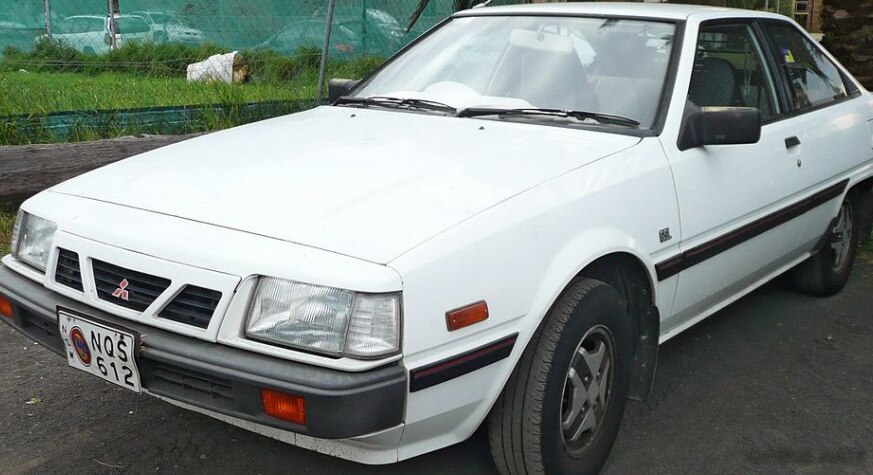
The Mitsubishi Cordia, specifically the A21_A generation produced between 1983 and 1985, represented Mitsubishi’s foray into the affordable, sporty coupe market. The 1.6 Turbo (A212A) variant, producing 116 horsepower, occupied a middle ground within the Cordia lineup, offering a performance boost over the naturally aspirated models while remaining more accessible than potential future, higher-performance trims. Positioned as a competitor to vehicles like the Honda Prelude and Toyota Celica, the Cordia aimed to provide a stylish and relatively modern driving experience at a competitive price point. This generation Cordia was built on Mitsubishi’s A21 platform, sharing some components with the Tredia sedan.
Technical Specifications
| Brand | Mitsubishi |
| Model | Cordia |
| Generation | Cordia (A21_A) |
| Type (Engine) | 1.6 Turbo (A212A) (116 Hp) |
| Start of Production | 1983 |
| End of Production | 1985 |
| Powertrain Architecture | Internal Combustion Engine |
| Body Type | Coupe |
| Fuel Type | Petrol (Gasoline) |
| Power | 116 Hp |
| Engine Aspiration | Turbocharger |
Powertrain & Engine Architecture
The heart of the Cordia 1.6 Turbo was the A212A engine, a 1.6-liter inline-four cylinder gasoline engine equipped with a turbocharger. This engine utilized a single overhead camshaft (SOHC) valvetrain, operating with two valves per cylinder. The turbocharger was a key feature, significantly boosting power output compared to the naturally aspirated 1.6-liter engine available in other Cordia models. Mitsubishi employed a relatively small turbocharger to minimize turbo lag and provide a more responsive driving experience. Fuel delivery was managed by a carburetor, a common setup for the time, though not as sophisticated as fuel injection systems becoming increasingly prevalent. The engine’s block was cast iron, providing durability, while the cylinder head was aluminum, contributing to weight reduction. The A212A engine produced 116 horsepower at approximately 5,200 rpm and 109 lb-ft of torque at 3,000 rpm. The transmission was a three-speed automatic, designed for ease of use and comfort rather than outright performance. While a five-speed manual transmission was offered on other Cordia trims, it wasn’t typically paired with the 1.6 Turbo engine.
Driving Characteristics
The Cordia 1.6 Turbo with the automatic transmission offered a comfortable, if not particularly exhilarating, driving experience. The turbocharger provided a noticeable boost in acceleration, especially when merging onto highways or overtaking other vehicles. However, the three-speed automatic transmission limited the engine’s ability to stay within its optimal power band. Gear ratios were geared towards fuel economy and smooth cruising, rather than aggressive acceleration. Compared to the five-speed manual versions of the Cordia, the automatic felt somewhat sluggish, particularly in situations requiring quick downshifts. The suspension, while adequate for everyday driving, wasn’t particularly sporty. It prioritized ride comfort over sharp handling. Steering was light and responsive, making the Cordia easy to maneuver in urban environments. The turbocharger did introduce a degree of turbo lag, a characteristic of early turbocharger systems, but it was generally manageable. Overall, the driving experience was best described as refined and comfortable, suitable for daily commuting and leisurely drives.
Equipment & Trim Levels
The Cordia 1.6 Turbo typically came with a reasonable level of standard equipment for its price point in the early 1980s. Standard features generally included cloth upholstery, a basic AM/FM radio, and power steering. Air conditioning was often an optional extra, as were features like power windows and upgraded sound systems. Interior trim was relatively simple, with a focus on functionality rather than luxury. The dashboard layout was straightforward, with clearly labeled controls. The Cordia 1.6 Turbo didn’t have a distinct sub-trim level; it was generally offered as a single specification. However, buyers could customize their vehicles with various optional extras. Exterior features typically included body-colored bumpers and steel wheels with hubcaps. Higher-end Cordia models, such as those with the larger 2.0-liter engine, offered more luxurious features like leather upholstery and alloy wheels.
Chassis & Braking
The Cordia A21_A utilized a front-engine, front-wheel-drive layout. The suspension consisted of MacPherson struts in the front and a semi-independent torsion beam setup in the rear. This suspension configuration provided a reasonable balance between ride comfort and handling. Braking duties were handled by disc brakes in the front and drum brakes in the rear. While the front discs provided adequate stopping power, the rear drums were less effective, particularly under heavy braking. The Cordia’s chassis was relatively lightweight, contributing to its decent fuel economy and manageable handling. Stabilizer bars were included in both the front and rear suspension to reduce body roll during cornering. The steering system was a rack-and-pinion setup, providing precise and responsive steering feel.
Market Reception & Comparison
The Mitsubishi Cordia 1.6 Turbo was generally well-received by automotive critics as an affordable and stylish coupe. It was praised for its turbocharged engine, which provided a noticeable performance boost over the naturally aspirated models. However, the three-speed automatic transmission was often criticized for limiting the engine’s potential. Compared to other coupes in its class, such as the Honda Prelude and Toyota Celica, the Cordia offered a competitive level of performance and features at a lower price point. The Prelude and Celica were often considered more refined and better handling, but they also came with a higher price tag. Fuel economy for the Cordia 1.6 Turbo was reasonable for the time, averaging around 25-30 mpg in combined driving. Reliability was generally good, although some owners reported issues with the turbocharger and carburetor. The Cordia 1.6 Turbo appealed to buyers who wanted a sporty-looking coupe with a bit of extra power, but didn’t want to spend a lot of money.
Legacy
The Mitsubishi Cordia, particularly the A21_A generation, holds a nostalgic place for many automotive enthusiasts. While not a groundbreaking vehicle, it represented Mitsubishi’s ambition to compete in the global coupe market. The 1.6 Turbo variant, while not the most powerful Cordia available, offered a good balance of performance and affordability. Today, finding a well-maintained Cordia 1.6 Turbo can be challenging. Parts availability can be limited, and many examples have succumbed to rust or neglect. However, the Cordia remains a relatively affordable classic car, appealing to collectors and enthusiasts who appreciate its unique styling and turbocharged engine. The A212A engine, while not known for exceptional longevity, is generally considered reliable if properly maintained. The Cordia’s legacy lies in its contribution to Mitsubishi’s growing reputation as a manufacturer of stylish and affordable vehicles.
