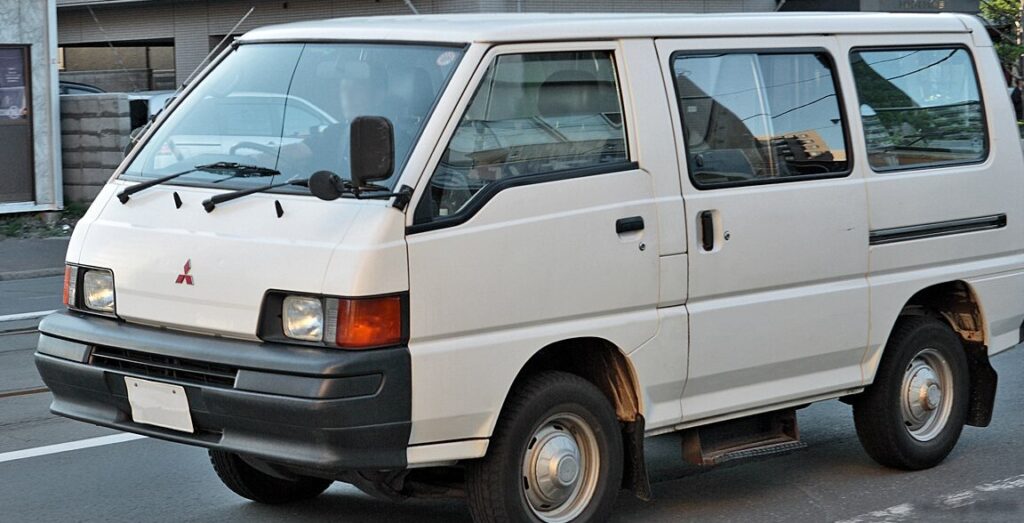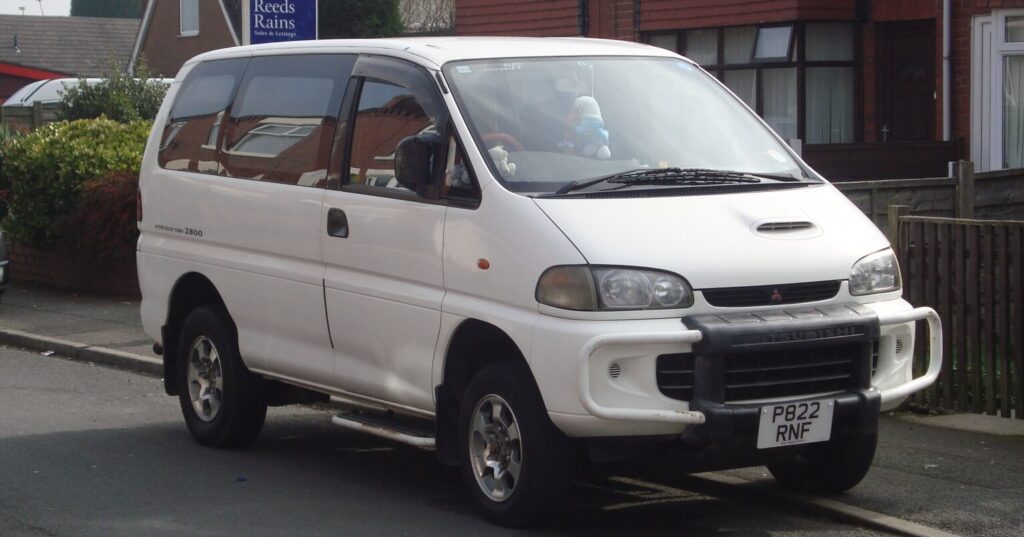
The Mitsubishi Delica L400, produced from 1993 to 1999, represents a significant iteration in the long-running Delica line of vans. This generation, known for its robust build and versatile interior, was primarily aimed at the Japanese domestic market (JDM) as a practical people carrier and light commercial vehicle. While not officially sold in large numbers in the United States during this period, the L400 has gained a cult following among enthusiasts for its unique blend of functionality, durability, and increasingly, its off-road potential. The 2.4-liter (122 hp) variant occupied a middle ground in the L400 lineup, offering a balance between affordability, fuel economy, and acceptable performance for everyday use. This configuration was typically paired with either a 5-speed manual or a 4-speed automatic transmission, the latter being the focus of this article.
Technical Specifications
| Brand | Mitsubishi |
| Model | Delica |
| Generation | Delica (L400) |
| Type (Engine) | 2.4 (122 Hp) |
| Start of production | 1993 |
| End of production | 1999 |
| Powertrain Architecture | Internal Combustion engine |
| Body type | Minivan |
| Seats | 8 |
| Doors | 4 |
| Fuel Type | Petrol (Gasoline) |
| Maximum speed | 150 km/h (93.21 mph) |
| Weight-to-power ratio | 13.6 kg/Hp, 73.5 Hp/tonne |
| Weight-to-torque ratio | 8.7 kg/Nm, 114.5 Nm/tonne |
| Power | 122 Hp @ 5250 rpm |
| Power per litre | 51.9 Hp/l |
| Torque | 190 Nm @ 2500 rpm (140.14 lb.-ft. @ 2500 rpm) |
| Engine layout | Front, Longitudinal |
| Engine displacement | 2350 cm3 (143.41 cu. in.) |
| Number of cylinders | 4 |
| Engine configuration | Inline |
| Number of valves per cylinder | 4 |
| Fuel injection system | Multi-port manifold injection |
| Engine aspiration | Naturally aspirated engine |
| Kerb Weight | 1660 kg (3659.67 lbs) |
| Max. weight | 2125 kg (4684.82 lbs) |
| Max load | 465 kg (1025.15 lbs) |
| Fuel tank capacity | 66 l (17.44 US gal | 14.52 UK gal) |
| Length | 4655 mm (183.27 in) |
| Width | 1695 mm (66.73 in) |
| Height | 1960 mm (77.17 in) |
| Wheelbase | 2800 mm (110.24 in) |
| Front track | 1445 mm (56.89 in) |
| Rear (Back) track | 1420 mm (55.91 in) |
| Drivetrain Architecture | The Internal combustion engine (ICE) drives the front wheels of the vehicle. |
| Drive wheel | Front wheel drive |
| Number of gears and type of gearbox | 5 gears, manual transmission |
| Front suspension | Torsion |
| Rear suspension | Coil spring |
| Front brakes | Ventilated discs |
| Rear brakes | Drum |
| Tires size | 195/80 R14 |
Powertrain & Engine Architecture
The heart of the Delica L400 2.4 is the 4G63 inline-four cylinder engine. This engine, a staple in various Mitsubishi vehicles of the era, is a naturally aspirated, multi-port fuel-injected powerplant. The 4G63 in this application produces 122 horsepower at 5250 rpm and 190 Nm (140 lb-ft) of torque at 2500 rpm. The engine features a single overhead camshaft (SOHC) design with four valves per cylinder. The 4-speed automatic transmission, while providing ease of use, is a relatively conventional unit. It’s known for its durability but isn’t particularly sophisticated in terms of shift programming or fuel efficiency compared to more modern automatic transmissions. The transmission is electronically controlled, but lacks the advanced features found in later designs.
Driving Characteristics
The 2.4-liter engine paired with the 4-speed automatic delivers adequate, but not exhilarating, performance. Acceleration is best described as leisurely, and overtaking requires careful planning. The automatic transmission’s gear ratios are geared towards fuel economy and smooth cruising rather than spirited driving. Compared to the 5-speed manual version, the automatic noticeably reduces responsiveness. The manual transmission offered a more engaging driving experience and slightly improved fuel economy. The 2.4L automatic Delica is noticeably slower than versions equipped with the larger 2.8-liter engine, which offered significantly more power and torque. However, the 2.4L provides a smoother and more relaxed driving experience, particularly in urban environments.
Equipment & Trim Levels
The 2.4-liter Delica L400 typically came with a fairly basic level of equipment, reflecting its positioning as a practical family vehicle. Standard features generally included power steering, air conditioning, and a basic audio system. Interior upholstery was typically cloth, and the dashboard featured a functional, if somewhat spartan, design. Higher trim levels offered options such as power windows, central locking, and upgraded audio systems. Many Delicas were also equipped with a rear air conditioning unit, a particularly desirable feature in warmer climates. The interior layout prioritized space and practicality, with seating for up to eight passengers depending on the configuration.
Chassis & Braking
The Delica L400 utilizes a body-on-frame construction, contributing to its robust nature and durability. The front suspension consists of torsion bars, while the rear utilizes coil springs. This setup provides a comfortable ride, although it’s not particularly sporty. The braking system features ventilated discs on the front wheels and drum brakes on the rear. While adequate for normal driving conditions, the rear drum brakes can feel less effective under heavy braking. The vehicle’s relatively high center of gravity and body-on-frame construction contribute to noticeable body roll during cornering.
Market Reception & Comparison
The Delica L400 2.4 (122 hp) automatic was generally well-received in Japan as a practical and reliable family vehicle. Critics praised its spacious interior, durability, and relatively low running costs. However, the automatic transmission was sometimes criticized for its lack of responsiveness and its impact on fuel economy. Compared to the manual transmission version, the automatic offered less driver engagement and slightly lower fuel efficiency. The larger 2.8-liter engine was favored by those who prioritized performance, while the 2.4-liter appealed to buyers seeking a more economical and relaxed driving experience. The Delica’s main competitors included other Japanese vans such as the Toyota HiAce and Nissan Serena.
Legacy
The Mitsubishi Delica L400 2.4 (122 hp) automatic has proven to be a remarkably durable vehicle. Many examples are still on the road today, testament to the quality of its construction and the reliability of the 4G63 engine. In the used car market, these Delicas are often sought after by enthusiasts for their unique character and potential for modification. The 4G63 engine is known for its tunability, and many owners have upgraded their Delicas with aftermarket performance parts. While maintenance costs can increase with age, the availability of spare parts remains relatively good, particularly in Japan and Australia. The Delica L400 continues to hold a special place in the hearts of many owners, representing a blend of practicality, durability, and a distinctive Japanese aesthetic.