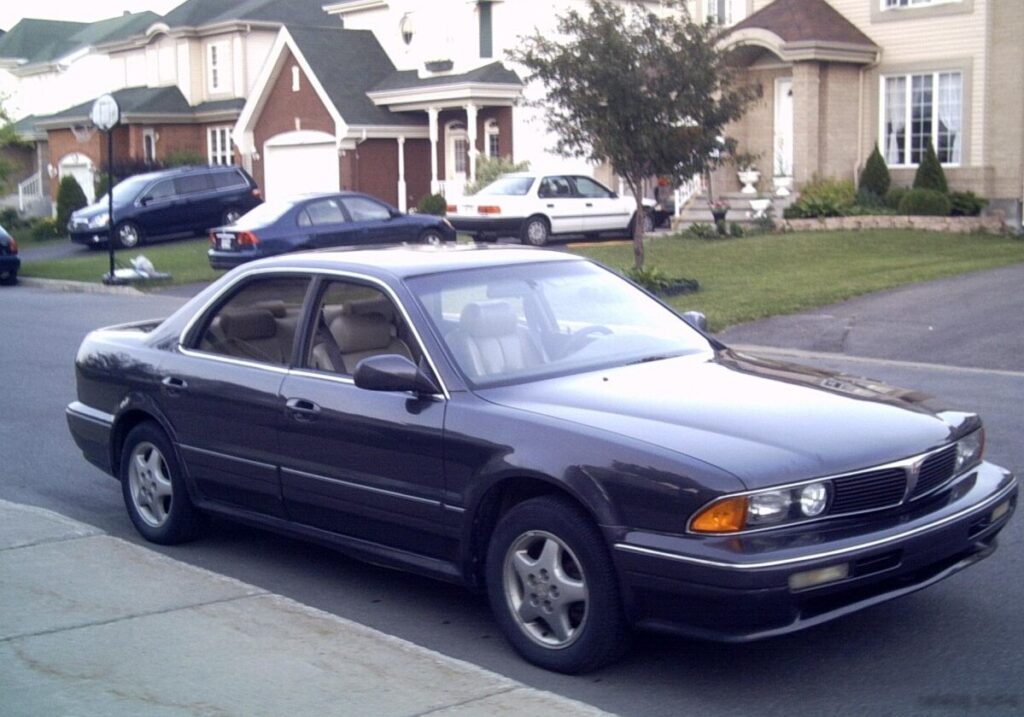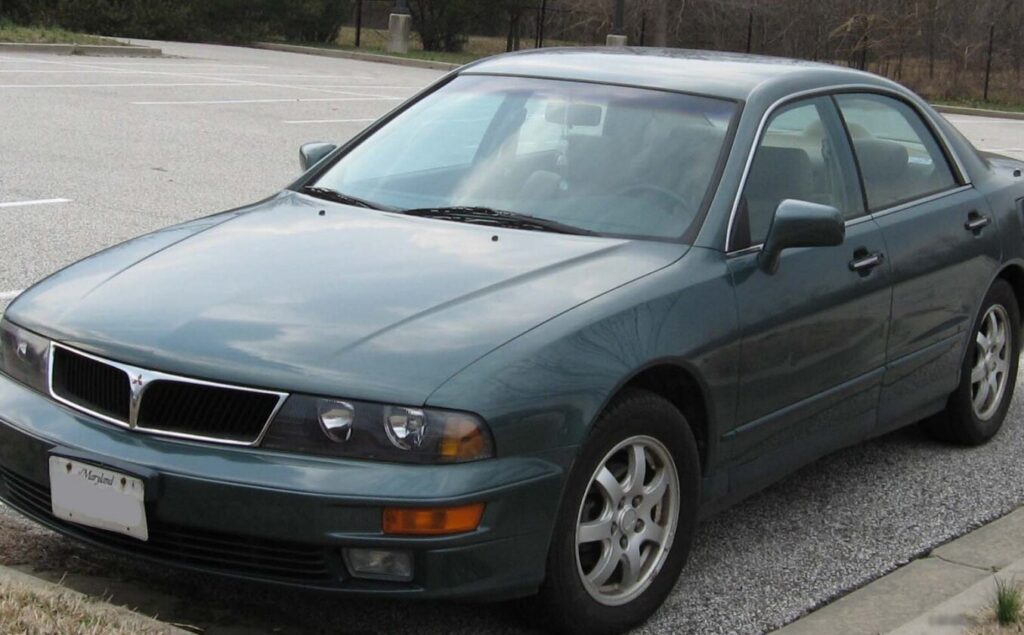
The Mitsubishi Diamante II, produced from January 1995 to October 2002, represented Mitsubishi’s flagship sedan during that period. Positioned as a comfortable and well-equipped offering in the mid-size luxury segment, the Diamante II aimed to compete with established Japanese and American brands. The 2.5 i V6 24V GDI variant, equipped with a 2.5-liter V6 engine and a five-speed automatic transmission, was a key model within the Diamante II lineup, offering a balance of performance and refinement. It served as a step up from the base 2.4-liter engine, targeting buyers seeking a more powerful and sophisticated driving experience.
Technical Specifications
| Brand | Mitsubishi |
| Model | Diamante |
| Generation | Diamante II |
| Type (Engine) | 2.5 i V6 24V GDI (200 Hp) |
| Start of production | January, 1995 |
| End of production | October, 2002 |
| Powertrain Architecture | Internal Combustion engine |
| Body type | Sedan |
| Seats | 5 |
| Doors | 4 |
| Fuel Type | Petrol (Gasoline) |
| Maximum speed | 180 km/h (111.85 mph) |
| Weight-to-power ratio | 7.4 kg/Hp, 135.1 Hp/tonne |
| Weight-to-torque ratio | 5.9 kg/Nm, 168.9 Nm/tonne |
| Power | 200 Hp @ 6000 rpm |
| Power per litre | 80.1 Hp/l |
| Torque | 250 Nm @ 3500 rpm (184.39 lb.-ft. @ 3500 rpm) |
| Engine layout | Front, Transverse |
| Engine displacement | 2497 cm3 (152.38 cu. in.) |
| Number of cylinders | 6 |
| Engine configuration | V-engine |
| Cylinder Bore | 83.5 mm (3.29 in.) |
| Piston Stroke | 76 mm (2.99 in.) |
| Compression ratio | 10.5:1 |
| Number of valves per cylinder | 4 |
| Fuel injection system | Direct injection |
| Engine aspiration | Naturally aspirated engine |
| Valvetrain | DOHC |
| Kerb Weight | 1480 kg (3262.84 lbs.) |
| Max. weight | 1755 kg (3869.11 lbs.) |
| Max load | 275 kg (606.27 lbs.) |
| Trunk (boot) space – minimum | 418 l (14.76 cu. ft.) |
| Fuel tank capacity | 72 l (19.02 US gal | 15.84 UK gal) |
| Length | 4805 mm (189.17 in.) |
| Width | 1785 mm (70.28 in.) |
| Height | 1435 mm (56.5 in.) |
| Wheelbase | 2720 mm (107.09 in.) |
| Front track | 1545 mm (60.83 in.) |
| Rear (Back) track | 1535 mm (60.43 in.) |
| Drivetrain Architecture | The Internal combustion engine (ICE) drives the front wheels of the vehicle. |
| Drive wheel | Front wheel drive |
| Number of gears and type of gearbox | 5 gears, automatic transmission |
| Front suspension | Coil spring |
| Rear suspension | Coil spring |
| Front brakes | Ventilated discs |
| Rear brakes | Ventilated discs |
| Assisting systems | ABS (Anti-lock braking system) |
| Steering type | Steering rack and pinion |
| Power steering | Hydraulic Steering |
| Tires size | 205/65 R15 S |
Powertrain & Engine Architecture
The heart of the Diamante II 2.5 i V6 GDI was the 6A13 engine, a 2.5-liter (2497 cc) naturally aspirated V6. This engine utilized Mitsubishi’s GDI (Gasoline Direct Injection) technology, a significant advancement at the time. GDI allowed for precise fuel delivery directly into the combustion chamber, resulting in improved fuel efficiency and increased power output compared to traditional port fuel injection systems. The engine featured a double overhead camshaft (DOHC) valvetrain with four valves per cylinder, contributing to its strong breathing characteristics. The 6A13 produced 200 horsepower at 6000 rpm and 250 Nm (184 lb-ft) of torque at 3500 rpm. The five-speed automatic transmission, while providing smooth shifts, was geared more towards comfort and fuel economy than outright performance. It lacked the sportiness of some contemporary automatic transmissions.
Driving Characteristics
The Diamante II 2.5 i V6 Automatic offered a comfortable and refined driving experience. Acceleration was adequate for everyday driving, with the GDI engine providing a noticeable improvement over the base 2.4-liter engine. However, it wasn’t a particularly sporty car. The automatic transmission, while smooth, could feel somewhat hesitant during quick acceleration, and the gear ratios were optimized for cruising rather than aggressive driving. Compared to the manual transmission versions, the automatic sacrificed some responsiveness. The Diamante II prioritized ride comfort, and the suspension effectively absorbed bumps and imperfections in the road. Steering was light and precise, making it easy to maneuver in city traffic.
Equipment & Trim Levels
The 2.5 i V6 GDI trim typically included a generous array of standard features. These often included power windows, power locks, power mirrors, air conditioning, a premium sound system, and alloy wheels. Interior upholstery was typically cloth, with leather options available. Higher trim levels could add features like a sunroof, upgraded audio systems, and woodgrain interior trim. The Diamante II was designed to offer a luxurious experience, and the interior materials and build quality were generally considered to be above average for its class.
Chassis & Braking
The Diamante II utilized a front-engine, front-wheel-drive layout. Suspension consisted of coil springs all around, providing a comfortable ride. The front suspension incorporated stabilizer bars to reduce body roll during cornering. Braking duties were handled by ventilated disc brakes on all four wheels, providing adequate stopping power. An Anti-lock Braking System (ABS) was standard, enhancing safety. The chassis was designed to prioritize comfort and refinement over sporty handling, resulting in a relatively soft and compliant ride.
Market Reception & Comparison
The Diamante II 2.5 i V6 GDI was generally well-received by automotive critics. It was praised for its comfortable ride, spacious interior, and refined engine. The GDI technology was seen as a significant advantage, offering improved fuel economy without sacrificing performance. However, some critics noted that the automatic transmission could be slow to respond, and the car lacked the sporty handling of some of its competitors. Compared to the base 2.4-liter Diamante, the 2.5 i V6 GDI offered a substantial performance upgrade, justifying its higher price tag. Compared to other mid-size sedans like the Honda Accord or Toyota Camry, the Diamante II offered a more luxurious and refined experience, but it often came at a slightly higher cost.
Legacy
The Mitsubishi Diamante II, while not a massive sales success, remains a fondly remembered sedan for those who appreciate its blend of comfort, refinement, and technology. The 6A13 GDI engine proved to be relatively reliable, although like any engine, it required regular maintenance. The GDI system, while innovative, could be susceptible to carbon buildup over time if proper fuel additives weren’t used. Today, the Diamante II 2.5 i V6 GDI can be found on the used car market at affordable prices. It represents a unique and often overlooked option for buyers seeking a comfortable and well-equipped mid-size sedan with a touch of Japanese engineering flair. Parts availability can be a concern, as the car is no longer in production, but dedicated Mitsubishi enthusiasts continue to support the model through online forums and parts networks.