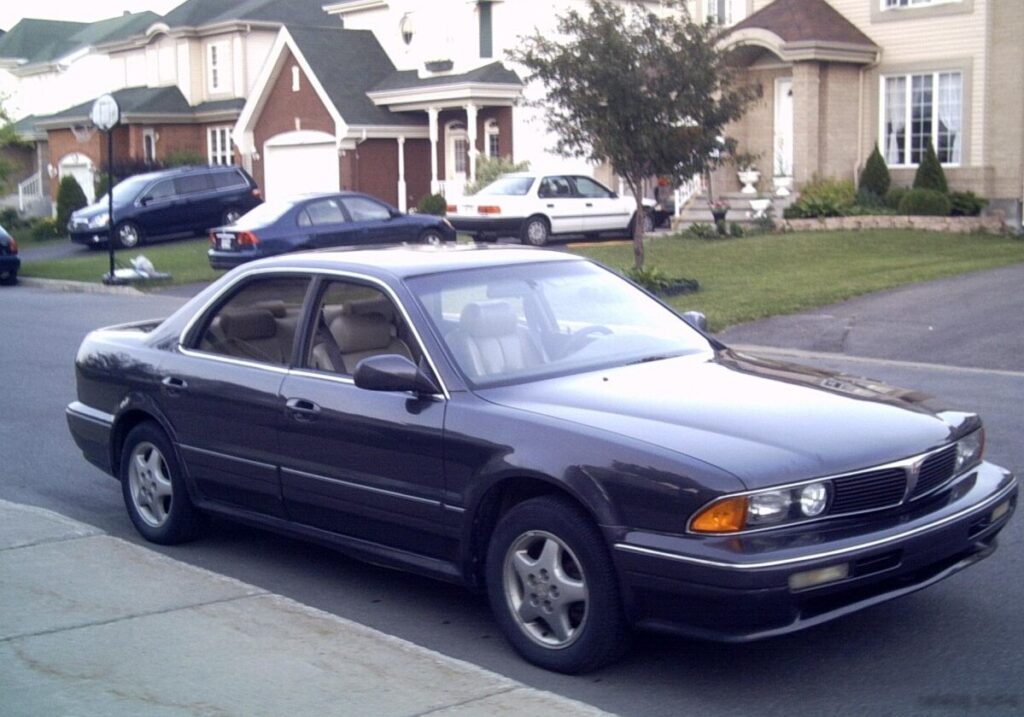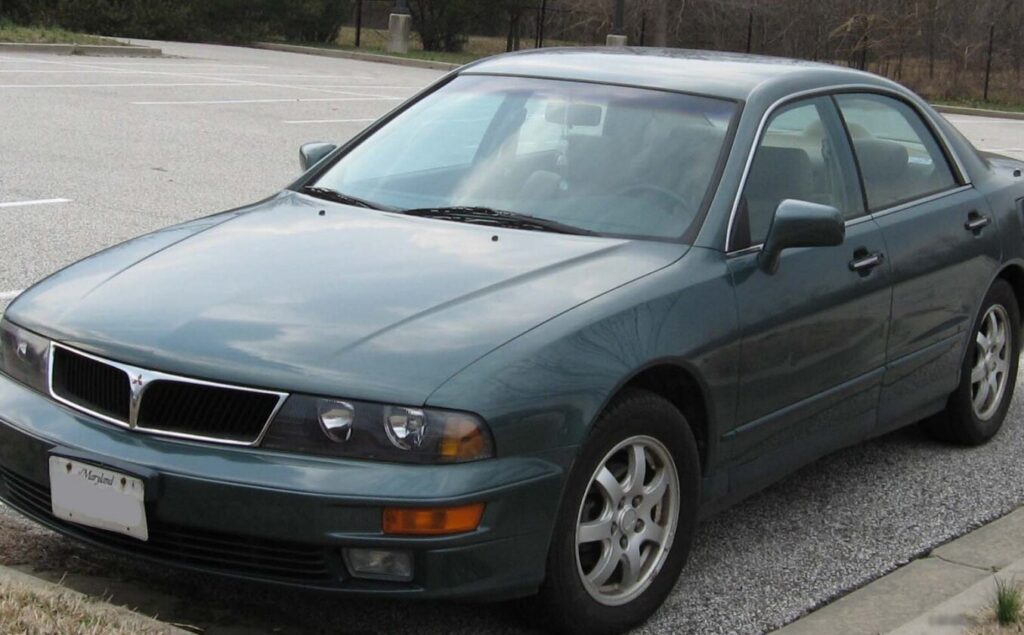
The Mitsubishi Diamante II, specifically the 3.0 i V6 24V GDI variant producing 240 horsepower, represented a significant step forward for Mitsubishi’s flagship sedan. Produced from August 1997 to October 2002, this second generation Diamante (known as the Emerald in some markets) aimed to compete with established luxury sedans from Japan, America, and Europe. It was built on the DS platform, sharing components with other Mitsubishi models of the era, but distinguished itself through its advanced GDI engine technology and focus on comfortable, refined motoring. This particular 3.0L V6 trim sat at the top of the Diamante II lineup, offering the most power and a more premium experience compared to the lower-displacement four-cylinder options.
Technical Specifications
| Brand | Mitsubishi |
| Model | Diamante |
| Generation | Diamante II |
| Type (Engine) | 3.0 i V6 24V GDI (240 Hp) |
| Start of production | August, 1997 |
| End of production | October, 2002 |
| Powertrain Architecture | Internal Combustion engine |
| Body type | Sedan |
| Seats | 5 |
| Doors | 4 |
| Fuel consumption (urban) | 14 l/100 km (16.8 US mpg) |
| Fuel consumption (extra urban) | 8 l/100 km (29.4 US mpg) |
| Fuel Type | Petrol (Gasoline) |
| Weight-to-power ratio | 6.5 kg/Hp |
| Weight-to-torque ratio | 5.1 kg/Nm |
| Power | 240 Hp @ 5750 rpm |
| Power per litre | 80.8 Hp/l |
| Torque | 304 Nm @ 3500 rpm (224.22 lb.-ft. @ 3500 rpm) |
| Engine layout | Front, Transverse |
| Engine displacement | 2972 cm3 (181.36 cu. in.) |
| Number of cylinders | 6 |
| Engine configuration | V-engine |
| Cylinder Bore | 91.1 mm (3.59 in.) |
| Piston Stroke | 76 mm (2.99 in.) |
| Compression ratio | 11:1 |
| Number of valves per cylinder | 4 |
| Fuel injection system | Direct injection |
| Engine aspiration | Naturally aspirated engine |
| Valvetrain | DOHC |
| Kerb Weight | 1550 kg (3417.17 lbs.) |
| Trunk (boot) space | 418 l (14.76 cu. ft.) |
| Fuel tank capacity | 72 l (19.02 US gal) |
| Length | 4805 mm (189.17 in.) |
| Width | 1785 mm (70.28 in.) |
| Height | 1435 mm (56.5 in.) |
| Wheelbase | 2720 mm (107.09 in.) |
| Front track | 1545 mm (60.83 in.) |
| Rear track | 1535 mm (60.43 in.) |
| Drivetrain Architecture | Front wheel drive |
| Number of gears | 5 |
| Gearbox type | Automatic transmission |
| Front suspension | Coil spring |
| Rear suspension | Coil spring |
| Front brakes | Ventilated discs |
| Rear brakes | Ventilated discs |
| Assisting systems | ABS (Anti-lock braking system) |
| Steering type | Steering rack and pinion |
| Power steering | Hydraulic Steering |
| Tires size | 215/60 R16 |
Powertrain & Engine Architecture
The heart of the Diamante II 3.0 GDI was the 6A13 engine, a 2.972-liter (181.36 cubic inches) SOHC 24-valve V6. What set this engine apart was Mitsubishi’s Gasoline Direct Injection (GDI) technology. GDI allowed for precise fuel delivery directly into the combustion chamber, resulting in improved fuel efficiency and increased power output compared to traditional port fuel injection systems. The 6A13 produced 240 horsepower at 5750 rpm and 304 Nm (224.22 lb-ft) of torque at 3500 rpm. The engine featured a cast iron block and aluminum cylinder heads. The five-speed automatic transmission was specifically tuned to handle the V6’s power and provide smooth shifts. While a manual transmission was offered on some Diamante models, it wasn’t available with the 3.0L GDI engine.
Driving Characteristics
The Diamante II 3.0 GDI offered a comfortable and refined driving experience. The automatic transmission, while not particularly sporty, provided smooth and predictable gear changes. Acceleration was brisk, with the engine delivering ample power for highway merging and passing maneuvers. The GDI system contributed to a noticeable improvement in fuel economy compared to older, non-direct injection engines. However, the Diamante wasn’t designed to be a performance car. Its focus was on providing a quiet, comfortable ride, and it excelled in that regard. Compared to the four-cylinder Diamante models, the 3.0 GDI offered a significant boost in performance, but it came at the cost of slightly increased fuel consumption.
Equipment & Trim Levels
The 3.0 GDI trim was the most luxurious offering in the Diamante II range. Standard features typically included leather upholstery, power-adjustable front seats, a premium sound system, automatic climate control, and alloy wheels. Optional extras could include a sunroof, navigation system, and upgraded interior trim. The interior design was generally conservative, focusing on functionality and comfort rather than flashy styling. The Diamante aimed to provide a similar level of luxury and features as its competitors, such as the Toyota Camry and Honda Accord, but with a more distinctive Japanese aesthetic.
Chassis & Braking
The Diamante II utilized a front-engine, front-wheel-drive layout. Suspension consisted of coil springs and independent struts in the front, and coil springs with a multi-link setup in the rear. This configuration provided a comfortable ride and decent handling characteristics. Braking duties were handled by ventilated disc brakes on all four wheels, supplemented by an Anti-lock Braking System (ABS) for improved stopping power and control. The steering was a rack-and-pinion system with hydraulic power assistance, providing a light and responsive feel.
Market Reception & Comparison
The Diamante II 3.0 GDI received generally positive reviews from automotive critics. It was praised for its smooth engine, comfortable ride, and well-equipped interior. However, some critics noted that its styling was somewhat conservative and that it lacked the sporty handling of some of its competitors. Compared to other trims in the Diamante lineup, the 3.0 GDI offered a significant performance advantage, but it also carried a higher price tag. Fuel economy was respectable for a V6 engine of its size, but it wasn’t class-leading. Reliability was generally good, although some owners reported minor issues with the GDI fuel injection system.
Legacy
The Mitsubishi Diamante II 3.0 GDI represents a high point in Mitsubishi’s sedan offerings. The GDI engine technology was a significant innovation, and the Diamante provided a comfortable and refined driving experience. Today, the Diamante II is becoming increasingly rare, and well-maintained examples are sought after by collectors and enthusiasts. The 6A13 engine, while generally reliable, can require specialized maintenance due to the GDI system. Parts availability can be a challenge, but dedicated Mitsubishi enthusiasts have established networks for sourcing components. The Diamante II 3.0 GDI remains a testament to Mitsubishi’s engineering prowess and its commitment to providing a luxurious and technologically advanced driving experience.