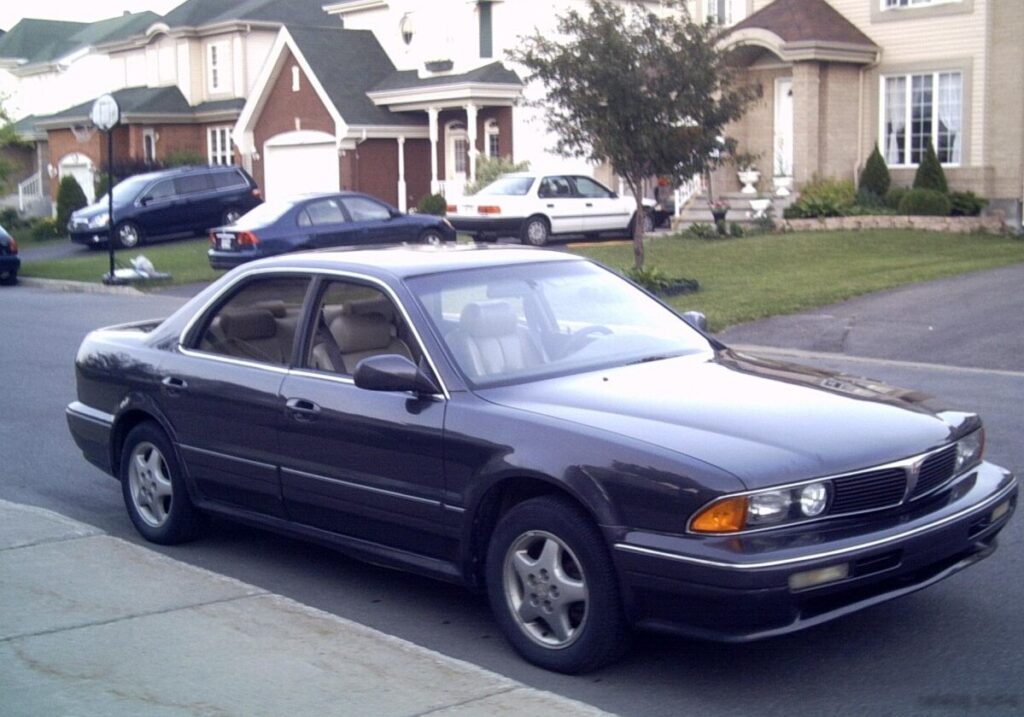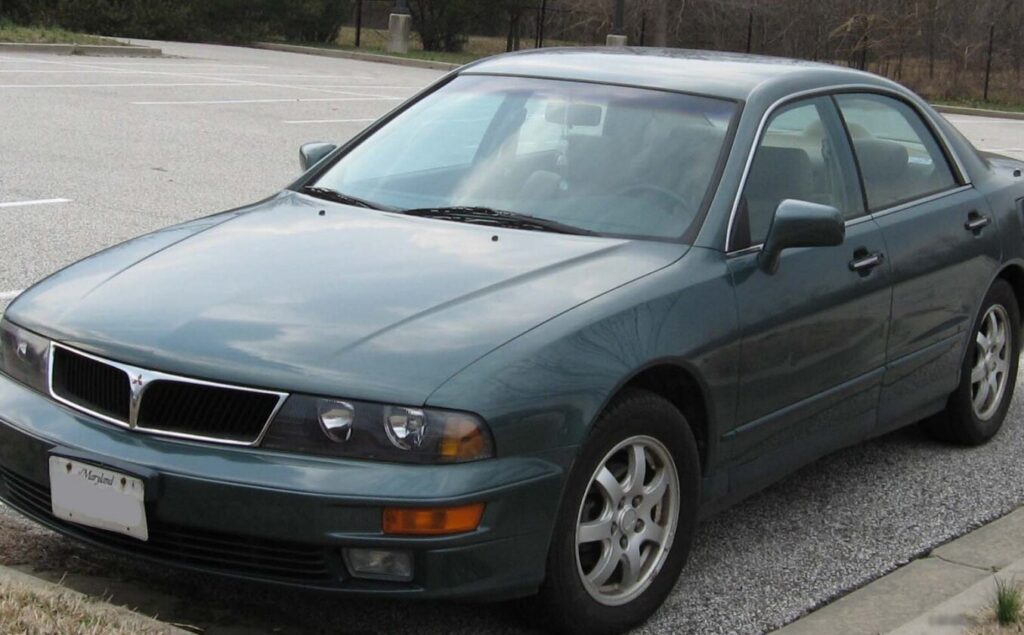
The Mitsubishi Diamante II, specifically the 3.0 i V6 24V GDI 4WD variant producing 240 horsepower, was a flagship sedan produced by Mitsubishi from August 1997 to October 2002. Positioned as a premium offering within the Diamante (also known as the 800 series) range, this model represented Mitsubishi’s attempt to compete with established luxury sedans from Japanese and European manufacturers. It was primarily sold in Japan and export markets, including North America, where it aimed to offer a blend of performance, technology, and comfort. The Diamante II was built on the DS platform, a front-engine, rear-wheel-drive architecture that allowed for a spacious interior and a relatively sophisticated driving experience.
Technical Specifications
| Brand | Mitsubishi |
| Model | Diamante |
| Generation | Diamante II |
| Type (Engine) | 3.0 i V6 24V GDI 4WD (240 Hp) |
| Start of production | August, 1997 |
| End of production | October, 2002 |
| Powertrain Architecture | Internal Combustion engine |
| Body type | Sedan |
| Seats | 5 |
| Doors | 4 |
| Fuel consumption (urban) | 14 l/100 km (16.8 US mpg, 20.2 UK mpg, 7.1 km/l) |
| Fuel consumption (extra urban) | 8 l/100 km (29.4 US mpg, 35.3 UK mpg, 12.5 km/l) |
| Fuel Type | Petrol (Gasoline) |
| Weight-to-power ratio | 7 kg/Hp, 142.9 Hp/tonne |
| Weight-to-torque ratio | 5.5 kg/Nm, 181 Nm/tonne |
| Power | 240 Hp @ 5750 rpm |
| Power per litre | 80.8 Hp/l |
| Torque | 304 Nm @ 3500 rpm (224.22 lb.-ft. @ 3500 rpm) |
| Engine layout | Front, Transverse |
| Engine displacement | 2972 cm3 (181.36 cu. in.) |
| Number of cylinders | 6 |
| Engine configuration | V-engine |
| Cylinder Bore | 91.1 mm (3.59 in.) |
| Piston Stroke | 76 mm (2.99 in.) |
| Compression ratio | 11:1 |
| Number of valves per cylinder | 4 |
| Fuel injection system | Direct injection |
| Engine aspiration | Naturally aspirated engine |
| Valvetrain | DOHC |
| Kerb Weight | 1680 kg (3703.77 lbs.) |
| Trunk (boot) space – minimum | 418 l (14.76 cu. ft.) |
| Fuel tank capacity | 70 l (18.49 US gal | 15.4 UK gal) |
| Length | 4805 mm (189.17 in.) |
| Width | 1785 mm (70.28 in.) |
| Height | 1435 mm (56.5 in.) |
| Wheelbase | 2720 mm (107.09 in.) |
| Front track | 1545 mm (60.83 in.) |
| Rear (Back) track | 1535 mm (60.43 in.) |
| Drive wheel | All wheel drive (4×4) |
| Number of gears and type of gearbox | 5 gears, automatic transmission |
| Front suspension | Coil spring |
| Rear suspension | Coil spring |
| Front brakes | Ventilated discs |
| Rear brakes | Ventilated discs |
| Assisting systems | ABS (Anti-lock braking system) |
| Steering type | Steering rack and pinion |
| Power steering | Hydraulic Steering |
| Tires size | 215/60 R16 |
Powertrain & Engine Architecture
The heart of the Diamante II 3.0 GDI was the 6A13 engine, a 2.97-liter (181.36 cubic inches) SOHC 24-valve V6. What set this engine apart was its use of Mitsubishi’s GDI (Gasoline Direct Injection) technology. GDI allowed for precise fuel delivery directly into the combustion chamber, resulting in improved fuel efficiency and increased power output compared to traditional port fuel injection systems. The engine produced 240 horsepower at 5750 rpm and 304 Nm (224.22 lb-ft) of torque at 3500 rpm. The engine featured a cast iron block and aluminum cylinder heads. The five-speed automatic transmission was specifically tuned to handle the engine’s torque output and provide smooth shifts. The 4WD system was a viscous coupling type, providing all-wheel drive capability for enhanced traction in various weather conditions.
Driving Characteristics
The 3.0L GDI engine paired with the automatic transmission delivered a comfortable and refined driving experience. While not overtly sporty, the Diamante II offered brisk acceleration, making it capable of highway passing maneuvers with ease. The automatic transmission, while smooth, wasn’t particularly quick to downshift, and lacked the responsiveness of a manual gearbox. The all-wheel-drive system provided confident handling in inclement weather, but added to the vehicle’s overall weight. Compared to the base 2.5L engine, the 3.0L GDI offered a significant performance upgrade, and felt noticeably more powerful. The gear ratios were optimized for cruising, prioritizing fuel economy over outright acceleration.
Equipment & Trim Levels
The 3.0 i V6 GDI 4WD trim was generally the highest specification level available for the Diamante II. Standard features typically included leather upholstery, power-adjustable front seats, a premium sound system, automatic climate control, power windows and locks, and alloy wheels. Optional extras could include a navigation system, sunroof, and upgraded audio components. The interior design was focused on providing a luxurious and comfortable environment, with woodgrain trim and a well-appointed dashboard. Safety features included ABS brakes and dual front airbags.
Chassis & Braking
The Diamante II utilized a traditional MacPherson strut front suspension and a multi-link rear suspension. This setup provided a comfortable ride quality, absorbing bumps and irregularities in the road surface effectively. The chassis was designed to balance ride comfort with handling stability. Braking duties were handled by ventilated disc brakes on all four wheels, providing adequate stopping power. The ABS system helped to prevent wheel lockup during hard braking, enhancing safety. Stabilizer bars were fitted to both the front and rear axles to reduce body roll during cornering.
Market Reception & Comparison
The Diamante II 3.0 GDI 4WD was generally well-received by automotive critics, who praised its refined engine, comfortable ride, and spacious interior. However, it faced stiff competition from established luxury sedans from Toyota (Crown, Aristo), Nissan (Cima), and Honda (Inspire/Vigor). Fuel economy, while improved by the GDI system, was still relatively high compared to some competitors. Reliability was generally good, but some owners reported issues with the GDI fuel injection system, which could be more complex and expensive to repair than traditional fuel injection systems. Compared to the lower-spec 2.5L Diamante, the 3.0 GDI offered a substantial performance boost, but came at a higher price point.
Legacy
The Mitsubishi Diamante II, while not a massive sales success, represented a significant effort by Mitsubishi to establish itself in the premium sedan segment. The 3.0L GDI engine was a technological showcase for Mitsubishi’s engineering capabilities, demonstrating the benefits of direct fuel injection. Today, the Diamante II is a relatively rare sight on the roads, and well-maintained examples are becoming increasingly collectible. The GDI engine, while offering performance benefits, can require specialized maintenance, and finding qualified technicians can be a challenge. Overall, the Diamante II 3.0 GDI 4WD remains a comfortable and capable sedan that offers a unique blend of Japanese engineering and luxury features.