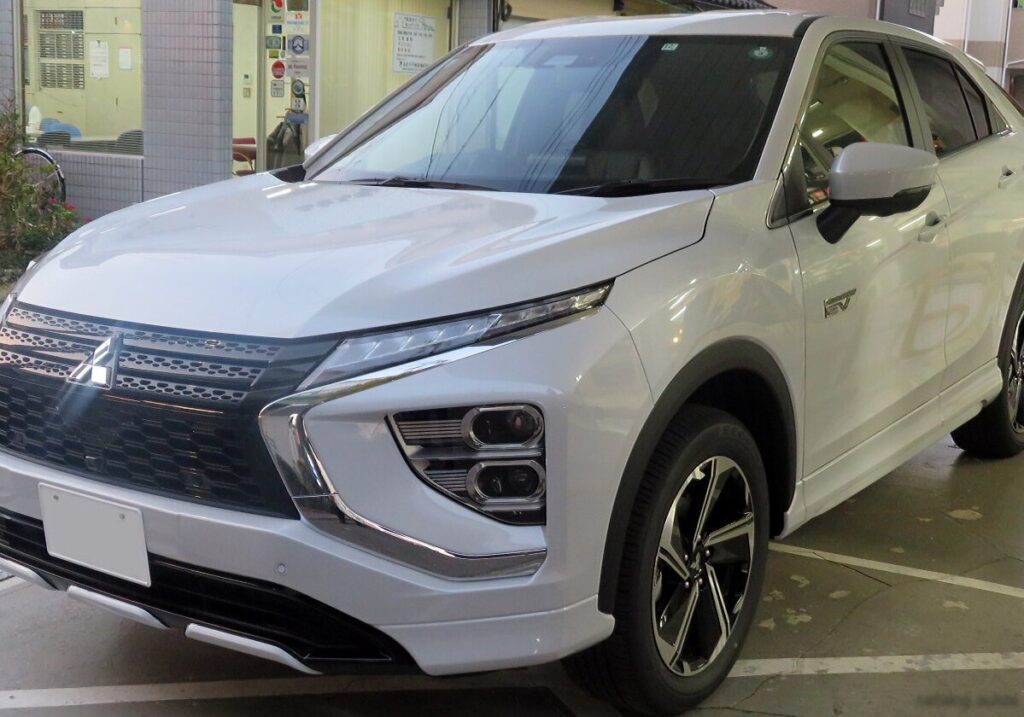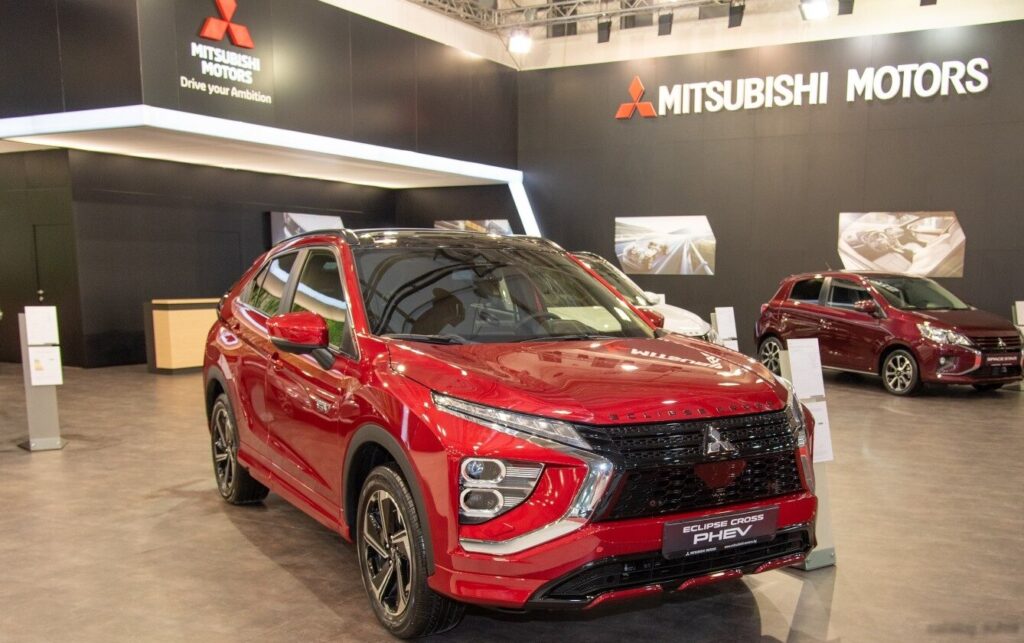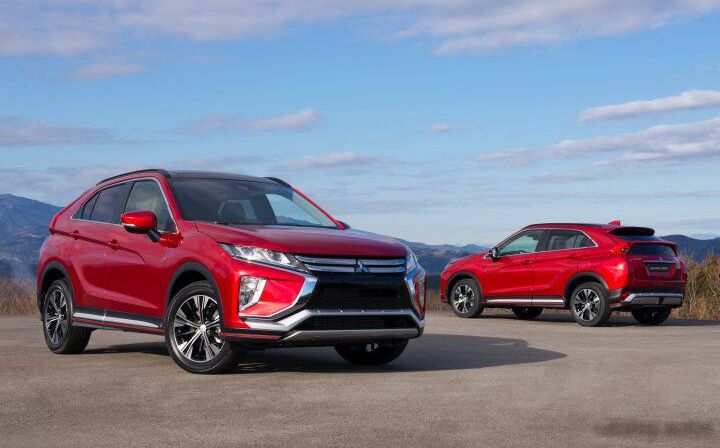
The Mitsubishi Eclipse Cross 1.5 MIVEC (152 Hp) AWC CVT represents Mitsubishi’s entry into the highly competitive compact SUV segment. Introduced for the 2019 model year and continuing through 2021, this variant was a key component of the first generation Eclipse Cross (internally designated as the GK series). Positioned as a mainstream offering within the lineup, it aimed to provide a balance of fuel efficiency, technology, and all-weather capability through Mitsubishi’s Super All-Wheel Control (S-AWC) system. The Eclipse Cross was primarily marketed towards buyers seeking a stylish and practical SUV with available all-wheel drive, targeting a demographic that valued versatility and modern features.
Technical Specifications
| Brand | Mitsubishi |
| Model | Eclipse Cross |
| Generation | Eclipse Cross I |
| Type (Engine) | 1.5 MIVEC (152 Hp) AWC CVT |
| Start of production | 2019 |
| End of production | 2021 |
| Powertrain Architecture | Internal Combustion engine |
| Body type | SUV |
| Seats | 5 |
| Doors | 5 |
| Fuel consumption (urban) | 9.4 l/100 km (25 US mpg) |
| Fuel consumption (extra urban) | 8.4-9.0 l/100 km (28 – 26.1 US mpg) |
| Fuel consumption (combined) | 9.0-9.4 l/100 km (26.1 – 25 US mpg) |
| Fuel Type | Petrol (Gasoline) |
| Weight-to-power ratio | 10.3 kg/Hp |
| Weight-to-torque ratio | 6.3 kg/Nm |
| Power | 152 Hp |
| Power per litre | 101.4 Hp/l |
| Torque | 249 Nm (183.65 lb.-ft.) |
| Maximum engine speed | 6000 rpm |
| Engine layout | Front, Transverse |
| Engine Model/Code | 4B40 |
| Engine displacement | 1499 cm3 (91.47 cu. in.) |
| Number of cylinders | 4 |
| Engine configuration | Inline |
| Cylinder Bore | 75 mm (2.95 in.) |
| Piston Stroke | 84.8 mm (3.34 in.) |
| Compression ratio | 10:1 |
| Number of valves per cylinder | 4 |
| Fuel injection system | Direct injection |
| Engine aspiration | Turbocharger, Intercooler |
| Engine oil capacity | 4.3 l (4.54 US qt | 3.78 UK qt) |
| Coolant capacity | 6 l (6.34 US qt | 5.28 UK qt) |
| Kerb Weight | 1565-1595 kg (3450.23 – 3516.37 lbs.) |
| Max. weight | 2100 kg (4629.71 lbs.) |
| Max load | 505-535 kg (1113.33 – 1179.47 lbs.) |
| Trunk (boot) space – minimum | 640 l (22.6 cu. ft.) |
| Trunk (boot) space – maximum | 1385 l (48.91 cu. ft.) |
| Fuel tank capacity | 60 l (15.85 US gal | 13.2 UK gal) |
| Permitted trailer load with brakes (12%) | 680 kg (1499.14 lbs.) |
| Permitted towbar download | 68 kg (149.91 lbs.) |
| Length | 4404 mm (173.39 in.) |
| Width | 1806 mm (71.1 in.) |
| Height | 1689 mm (66.5 in.) |
| Wheelbase | 2670 mm (105.12 in.) |
| Front track | 1539 mm (60.59 in.) |
| Rear (Back) track | 1539 mm (60.59 in.) |
| Ride height (ground clearance) | 216 mm (8.5 in.) |
| Minimum turning circle (turning diameter) | 10.6 m (34.78 ft.) |
| Drive wheel | All wheel drive (4×4) |
| Number of gears and type of gearbox | 8 gears, automatic transmission CVT |
| Front suspension | Independent, type McPherson with coil spring and anti-roll bar |
| Rear suspension | Independent multi-link spring suspension with stabilizer |
| Front brakes | Ventilated discs, 295 mm |
| Rear brakes | Disc, 302 mm |
| Assisting systems | ABS (Anti-lock braking system) |
| Steering type | Steering rack and pinion |
| Power steering | Electric Steering |
| Tires size | 225/55 R18 |
| Wheel rims size | 7J x 18 |
Powertrain & Engine Architecture
The heart of the Eclipse Cross 1.5 MIVEC is the 4B40 1.5-liter inline-four cylinder engine. This engine utilizes Mitsubishi’s MIVEC (Mitsubishi Innovative Valve timing and lift Electronic Control) technology, which optimizes valve timing and lift for improved efficiency and performance across the engine’s operating range. The 4B40 features direct fuel injection and is coupled with a single-scroll turbocharger and intercooler to boost power output. The engine produces 152 horsepower and 249 Nm (183.65 lb-ft) of torque. The engine is transversely mounted in the front of the vehicle. The engine is paired with a continuously variable transmission (CVT) featuring eight programmed “steps” designed to mimic the feel of a traditional automatic transmission. This CVT is specifically tuned for smooth operation and fuel efficiency.
Driving Characteristics
The 1.5-liter MIVEC engine with the CVT delivers adequate performance for everyday driving. Acceleration is linear, though not particularly brisk. The CVT effectively manages the engine’s powerband, providing smooth and seamless gear changes. Compared to potential higher-output variants (which were not offered in the US market for this generation), this configuration prioritizes fuel economy over outright speed. The S-AWC system provides enhanced traction and stability, particularly in inclement weather conditions, making it a confident handler. The programmed “steps” in the CVT help to reduce the typical “rubber band” feel often associated with CVTs, but it still lacks the responsiveness of a traditional automatic or manual transmission.
Equipment & Trim Levels
The 1.5 MIVEC AWC CVT Eclipse Cross typically came standard with features such as a 7-inch touchscreen infotainment system with Apple CarPlay and Android Auto compatibility, a rearview camera, automatic climate control, and keyless entry. Higher trim levels added features like a larger 8-inch touchscreen, premium audio systems, leather upholstery, heated front seats, and a power driver’s seat. Safety features included forward collision mitigation, lane departure warning, and automatic high beams. Interior upholstery was typically cloth on base models, with leather options available on higher trims. Dashboard configurations were consistent across the range, featuring a modern and functional design.
Chassis & Braking
The Eclipse Cross utilizes a MacPherson strut front suspension and a multi-link rear suspension, providing a comfortable ride quality. Stabilizer bars are fitted to both the front and rear axles to reduce body roll during cornering. Braking duties are handled by ventilated discs at the front and solid discs at the rear. The S-AWC system incorporates active yaw control and stability control to enhance handling and traction. The vehicle’s relatively modest weight (1565-1595 kg / 3450-3516 lbs) contributes to its manageable handling characteristics.
Market Reception & Comparison
The Mitsubishi Eclipse Cross 1.5 MIVEC AWC CVT received mixed reviews from automotive critics. While praised for its stylish design, spacious interior, and standard safety features, some reviewers found the engine performance to be underwhelming and the CVT to be less engaging than traditional transmissions. Fuel economy was generally considered competitive within the compact SUV segment. Compared to rivals like the Honda CR-V and Toyota RAV4, the Eclipse Cross offered a more affordable price point and standard all-wheel drive, but lacked the refinement and performance of those established competitors.
Legacy
The 1.5 MIVEC engine and CVT combination in the Eclipse Cross has proven to be generally reliable, with few widespread reports of major mechanical issues. However, like all turbocharged engines, regular maintenance, including oil changes and inspection of the turbocharger and intercooler, is crucial for long-term durability. On the used car market, the Eclipse Cross 1.5 MIVEC AWC CVT represents a relatively affordable option for buyers seeking a compact SUV with all-wheel drive. Its modern features and comfortable ride make it a practical choice for daily commuting and family transportation. While not a performance standout, its blend of efficiency, technology, and capability has secured its place as a viable contender in the crowded compact SUV landscape.