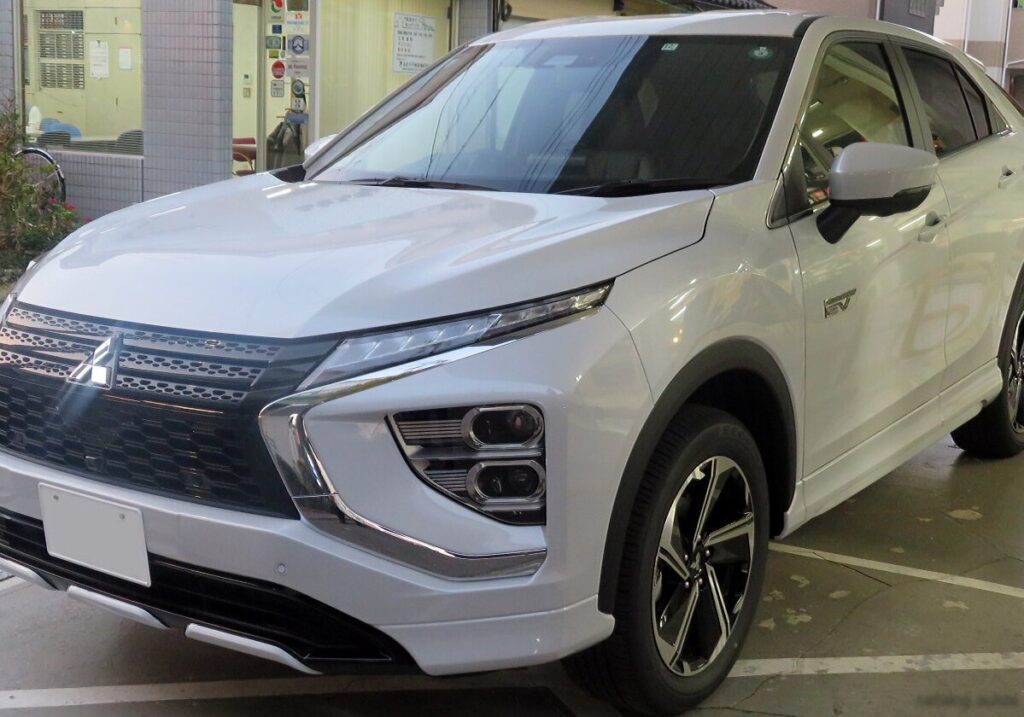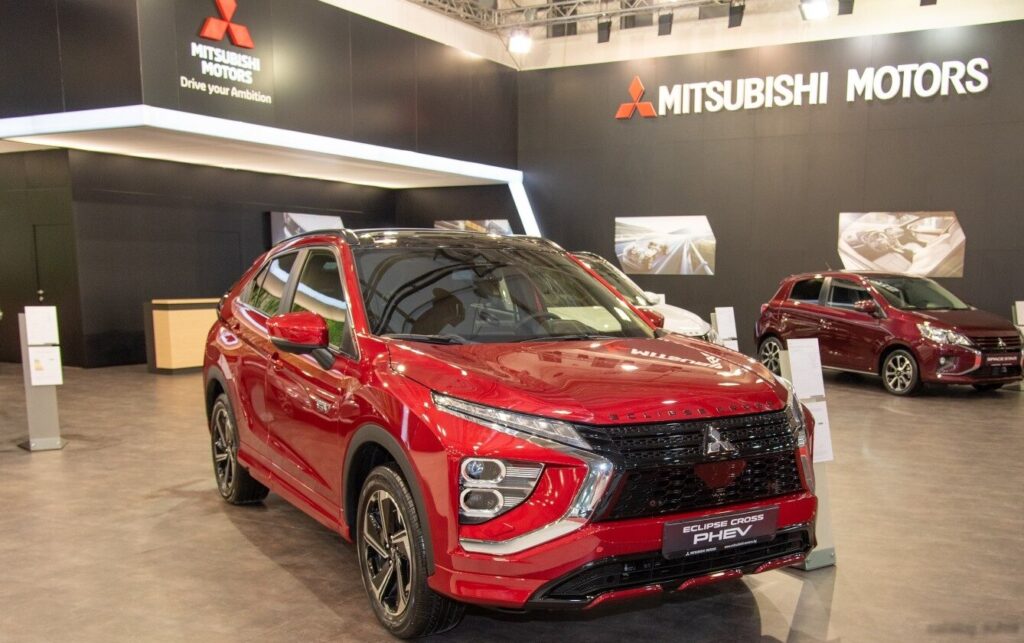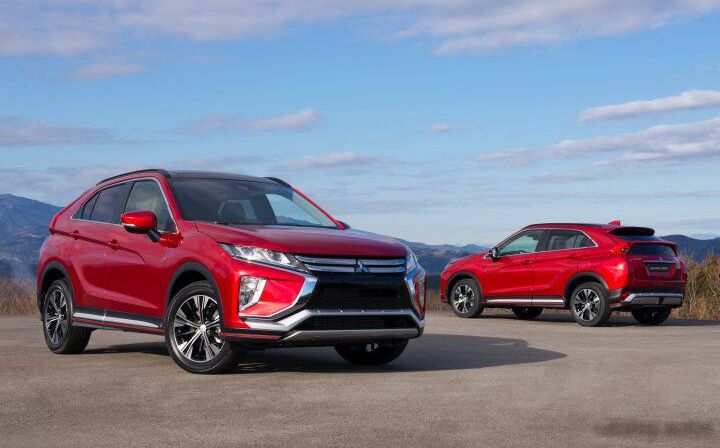
The Mitsubishi Eclipse Cross 1.5 T-MIVEC with a Continuously Variable Transmission (CVT) was a key offering in Mitsubishi’s compact SUV lineup from 2018 to 2021. Positioned as a mid-range trim, it aimed to balance fuel efficiency with adequate performance for everyday driving. This variant represented Mitsubishi’s attempt to capture a larger share of the increasingly competitive CUV market, particularly appealing to buyers seeking a modern-looking, feature-rich vehicle without the higher price tag of the top-tier trims. It was primarily marketed in global markets, including North America, Europe, and Asia, with slight variations in standard equipment depending on the region.
Technical Specifications
| Brand | Mitsubishi |
| Model | Eclipse Cross |
| Generation | Eclipse Cross I |
| Type (Engine) | 1.5 T-MIVEC (163 Hp) CVT |
| Start of production | 2018 |
| End of production | 2021 |
| Powertrain Architecture | Internal Combustion engine |
| Body type | SUV |
| Seats | 5 |
| Doors | 5 |
| Fuel consumption (urban) | 8 l/100 km (29.4 US mpg) |
| Fuel consumption (extra urban) | 6 l/100 km (39.2 US mpg) |
| Fuel consumption (combined) | 6.7 l/100 km (35.1 US mpg) |
| CO2 emissions | 154 g/km |
| Fuel Type | Petrol (Gasoline) |
| Acceleration 0 – 100 km/h | 9.3 sec |
| Acceleration 0 – 62 mph | 9.3 sec |
| Acceleration 0 – 60 mph | 8.8 sec |
| Maximum speed | 200 km/h (124.27 mph) |
| Emission standard | Euro 6 |
| Weight-to-power ratio | 9.7 kg/Hp |
| Weight-to-torque ratio | 6.3 kg/Nm |
| Power | 163 Hp @ 5500 rpm |
| Torque | 250 Nm @ 1800-4500 rpm (184.39 lb.-ft.) |
| Engine layout | Front, Transverse |
| Engine Model/Code | 4B40 |
| Engine displacement | 1499 cm3 (91.47 cu. in.) |
| Number of cylinders | 4 |
| Engine configuration | Inline |
| Cylinder Bore | 75 mm (2.95 in.) |
| Piston Stroke | 84.8 mm (3.34 in.) |
| Compression ratio | 10:1 |
| Number of valves per cylinder | 4 |
| Fuel injection system | Direct injection |
| Engine aspiration | Turbocharger, Intercooler |
| Valvetrain | DOHC |
| Engine oil capacity | 4.3 l (4.54 US qt | 3.78 UK qt) |
| Coolant capacity | 6 l (6.34 US qt | 5.28 UK qt) |
| Kerb Weight | 1575 kg (3472.28 lbs.) |
| Max. weight | 2150 kg (4739.94 lbs.) |
| Max load | 575 kg (1267.66 lbs.) |
| Trunk (boot) space – minimum | 378 l (13.35 cu. ft.) |
| Trunk (boot) space – maximum | 1159 l (40.93 cu. ft.) |
| Fuel tank capacity | 63 l (16.64 US gal | 13.86 UK gal) |
| Max. roof load | 50 kg (110.23 lbs.) |
| Permitted trailer load with brakes (12%) | 1600 kg (3527.4 lbs.) |
| Permitted trailer load without brakes | 750 kg (1653.47 lbs.) |
| Permitted towbar download | 80 kg (176.37 lbs.) |
| Length | 4405 mm (173.43 in.) |
| Width | 1805 mm (71.06 in.) |
| Width including mirrors | 2166 mm (85.28 in.) |
| Height | 1685 mm (66.34 in.) |
| Wheelbase | 2670 mm (105.12 in.) |
| Front track | 1545 mm (60.83 in.) |
| Rear track | 1545 mm (60.83 in.) |
| Front overhang | 955 mm (37.6 in.) |
| Rear overhang | 780 mm (30.71 in.) |
| Ride height (ground clearance) | 183 mm (7.2 in.) |
| Minimum turning circle | 10.6 m (34.78 ft.) |
| Drivetrain Architecture | Front wheel drive |
| Number of gears and type of gearbox | 8 gears, automatic transmission CVT |
| Front suspension | Independent type McPherson |
| Rear suspension | Independent multi-link suspension |
| Front brakes | Ventilated discs |
| Rear brakes | Disc |
| Assisting systems | ABS (Anti-lock braking system) |
| Steering type | Steering rack and pinion |
| Power steering | Electric Steering |
| Tires size | 225/55 R18 |
| Wheel rims size | 7.0J x 18 |
INTRODUCTION
The Mitsubishi Eclipse Cross 1.5 T-MIVEC CVT, launched in 2018, was part of the first generation (Eclipse Cross I) of this compact SUV. Built on Mitsubishi’s GS platform, it aimed to provide a stylish and practical option in the crowded CUV segment. This particular variant, powered by the 1.5-liter turbocharged engine and paired with a CVT, was designed to appeal to buyers prioritizing fuel economy and ease of driving over outright performance. It slotted into the lineup between the base model and the higher-spec trims, offering a balance of features and price.
Powertrain & Engine Architecture
At the heart of the Eclipse Cross 1.5 T-MIVEC is the 4B40 engine, a 1.5-liter inline-four cylinder gasoline engine. This engine utilizes Mitsubishi’s MIVEC (Mitsubishi Innovative Valve timing Electronic Control) technology, which optimizes valve timing for improved efficiency and power delivery. The engine employs direct fuel injection, enhancing combustion efficiency and reducing emissions. A single scroll turbocharger with an intercooler further boosts power output. The engine produces 163 horsepower at 5500 rpm and 250 Nm (184 lb-ft) of torque between 1800 and 4500 rpm. The CVT (Continuously Variable Transmission) was chosen for its smooth operation and fuel-saving capabilities. Unlike traditional automatic transmissions with fixed gear ratios, a CVT provides a virtually infinite number of ratios within its range, allowing the engine to operate at its most efficient point.
Driving Characteristics
The 1.5 T-MIVEC CVT powertrain delivers adequate performance for daily commuting and highway driving. Acceleration from 0-60 mph takes approximately 8.8 seconds, and 0-100 km/h in 9.3 seconds. While not particularly sporty, the engine provides sufficient torque for merging onto highways and overtaking slower vehicles. The CVT, while smooth, can sometimes exhibit a “rubber band” effect, where engine revs rise quickly but don’t immediately translate into proportional acceleration. This is a common characteristic of CVTs. Compared to a manual transmission version (not widely available in all markets), the CVT prioritizes fuel efficiency over driver engagement. Higher-output versions of the Eclipse Cross, if offered in a given market, would provide noticeably quicker acceleration and a more dynamic driving experience.
Equipment & Trim Levels
The 1.5 T-MIVEC CVT trim typically included standard features such as automatic climate control, a touchscreen infotainment system with Apple CarPlay and Android Auto compatibility, rearview camera, and a suite of safety features including ABS, stability control, and multiple airbags. Interior upholstery was generally cloth, with options for leather upgrades on higher sub-trims. Optional extras often included a panoramic sunroof, upgraded audio system, and advanced driver-assistance systems like blind-spot monitoring and lane departure warning. The dashboard layout was modern and functional, with a focus on ease of use.
Chassis & Braking
The Eclipse Cross features a front-wheel-drive layout as standard, with all-wheel drive available as an option. The front suspension utilizes independent McPherson struts, while the rear suspension employs an independent multi-link setup. This configuration provides a comfortable ride and decent handling characteristics. Braking duties are handled by ventilated discs at the front and solid discs at the rear. ABS (Anti-lock Braking System) is standard, enhancing braking performance and stability. The vehicle’s weight of around 1575 kg (3472 lbs) contributes to its relatively stable handling, but also impacts acceleration and fuel economy.
Market Reception & Comparison
The Mitsubishi Eclipse Cross 1.5 T-MIVEC CVT received mixed reviews from automotive critics. While praised for its stylish design, comfortable interior, and fuel efficiency (around 35.1 US mpg combined), some reviewers criticized its somewhat lackluster performance and the CVT’s tendency to exhibit the “rubber band” effect. Compared to competitors like the Honda HR-V, Mazda CX-5, and Toyota C-HR, the Eclipse Cross offered a competitive price point but often lagged behind in terms of driving dynamics and overall refinement. Fuel economy was generally comparable to other similarly sized CUVs with turbocharged engines.
Legacy
The Mitsubishi Eclipse Cross 1.5 T-MIVEC CVT has proven to be a reasonably reliable powertrain in the used car market. The 4B40 engine, while turbocharged, is generally considered durable with proper maintenance. The CVT, however, requires regular fluid changes to ensure longevity. Common issues reported by owners include occasional software glitches with the infotainment system and minor trim-related problems. Overall, the Eclipse Cross 1.5 T-MIVEC CVT represents a practical and affordable option for buyers seeking a compact SUV with decent fuel economy and a modern feature set. Its value proposition in the used car market remains strong, particularly for those prioritizing affordability and practicality over outright performance.