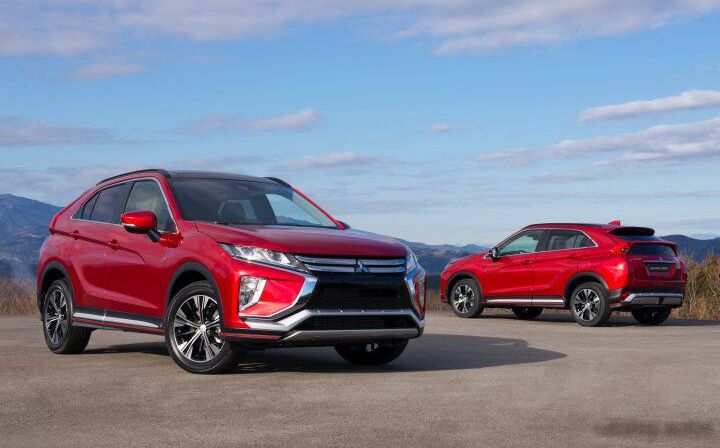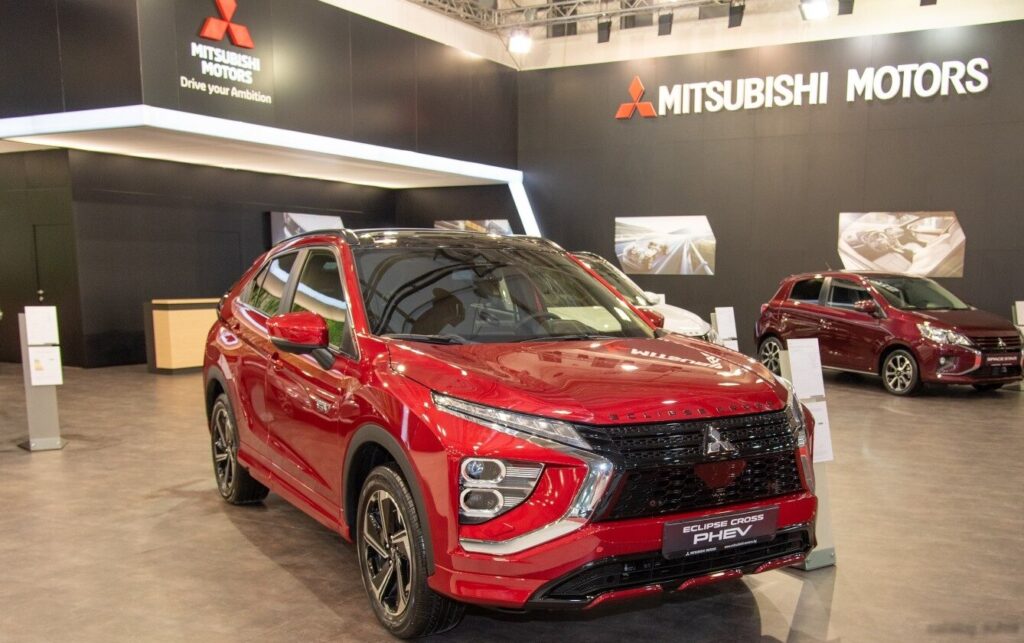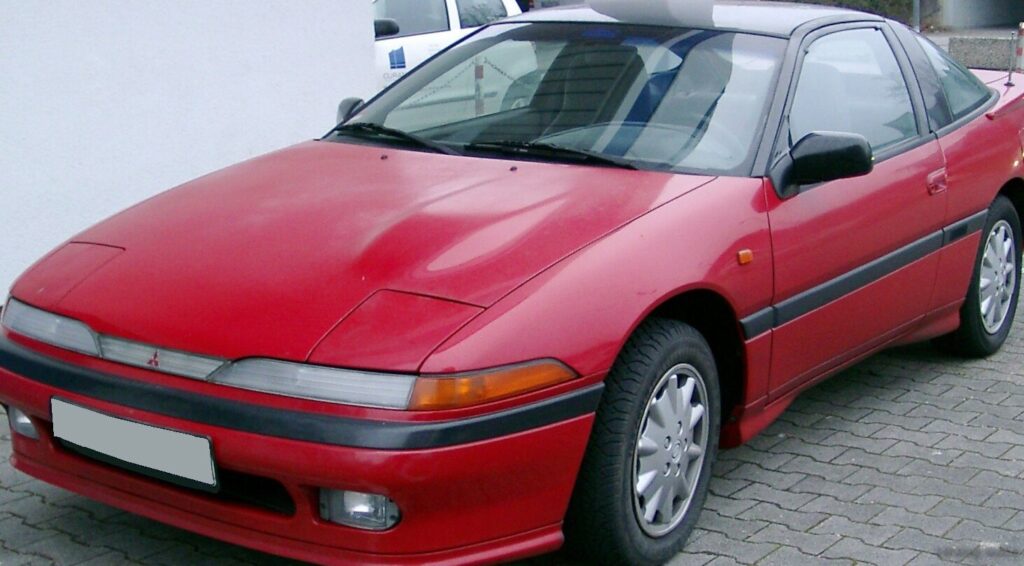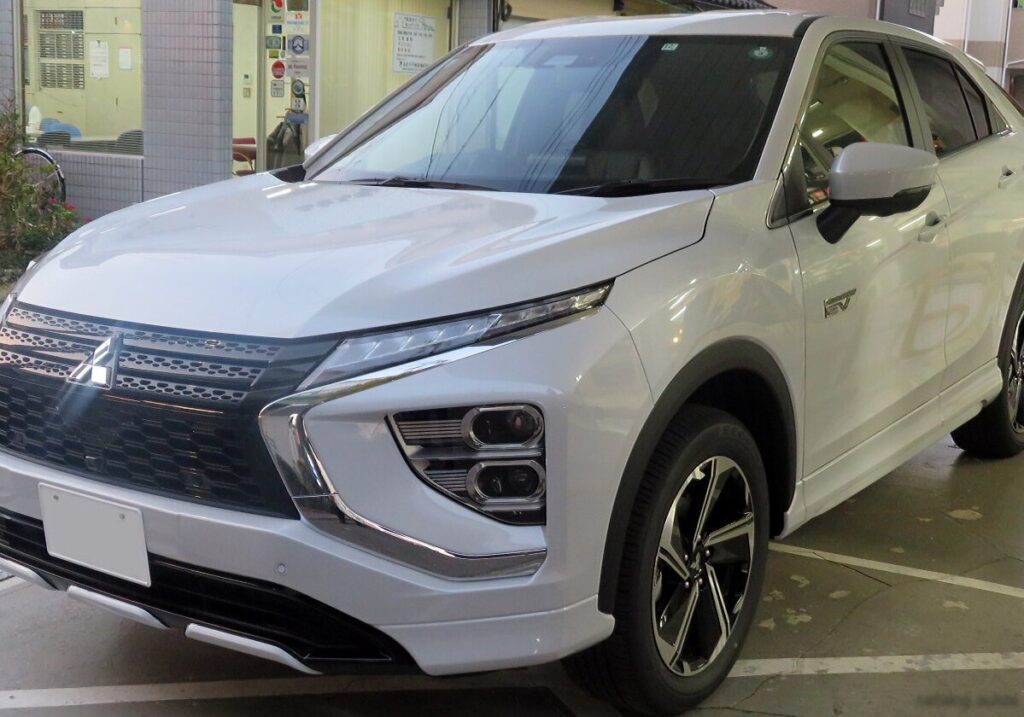
The Mitsubishi Eclipse Cross, launched in 2017, represented Mitsubishi’s entry into the highly competitive compact SUV segment. The first generation, known internally as the GA2W, aimed to blend sporty styling with practical functionality. The 2021 facelift, often referred to as the Eclipse Cross I (facelift 2021), brought significant updates to the exterior, interior, and technology. Among the powertrain options offered, the 1.5-liter MIVEC turbocharged engine paired with a continuously variable transmission (CVT) became a prominent configuration, delivering a balance of fuel efficiency and adequate performance. This variant, producing 152 horsepower, occupied a mid-range position within the Eclipse Cross lineup, appealing to buyers seeking a comfortable and economical daily driver.
Technical Specifications
| Brand | Mitsubishi |
| Model | Eclipse Cross |
| Generation | Eclipse Cross I (facelift 2021) |
| Type (Engine) | 1.5 MIVEC (152 Hp) CVT |
| Start of production | 2021 |
| Powertrain Architecture | Internal Combustion engine |
| Body type | SUV |
| Seats | 5 |
| Doors | 5 |
| Fuel Type | Petrol (Gasoline) |
| Emission standard | TIER 3-BIN 70 (50S) LEV III – |
| Weight-to-power ratio | 9.8 kg/Hp, 102 Hp/tonne |
| Weight-to-torque ratio | 6 kg/Nm, 167.1 Nm/tonne |
| Power | 152 Hp @ 5500 rpm |
| Power per litre | 101.4 Hp/l |
| Torque | 249 Nm @ 2000-3500 rpm, 183.65 lb.-ft. @ 2000-3500 rpm |
| Maximum engine speed | 6000 rpm |
| Engine layout | Front, Transverse |
| Engine Model/Code | 4B40 |
| Engine displacement | 1499 cm3, 91.47 cu. in. |
| Number of cylinders | 4 |
| Engine configuration | Inline |
| Cylinder Bore | 75 mm, 2.95 in. |
| Piston Stroke | 84.8 mm, 3.34 in. |
| Compression ratio | 10:1 |
| Number of valves per cylinder | 4 |
| Fuel injection system | Direct injection |
| Engine aspiration | Turbocharger, Intercooler |
| Valvetrain | DOHC |
| Engine oil capacity | 4.3 l, 4.54 US qt | 3.78 UK qt |
| Coolant | 6 l, 6.34 US qt | 5.28 UK qt |
| Kerb Weight | 1490-1525 kg, 3284.89 – 3362.05 lbs. |
| Max. weight | 2100 kg, 4629.71 lbs. |
| Max load | 575-610 kg, 1267.66 – 1344.82 lbs. |
| Trunk (boot) space – minimum | 657-663 l, 23.2 – 23.41 cu. ft. |
| Trunk (boot) space – maximum | 1419 l, 50.11 cu. ft. |
| Fuel tank capacity | 63 l, 16.64 US gal | 13.86 UK gal |
| Permitted trailer load with brakes (12%) | 680 kg, 1499.14 lbs. |
| Permitted towbar download | 68 kg, 149.91 lbs. |
| Length | 4547 mm, 179.02 in. |
| Width | 1806 mm, 71.1 in. |
| Height | 1684 mm, 66.3 in. |
| Wheelbase | 2670 mm, 105.12 in. |
| Front track | 1544 mm, 60.79 in. |
| Rear (Back) track | 1544 mm, 60.79 in. |
| Ride height (ground clearance) | 203 mm, 7.99 in. |
| Minimum turning circle (turning diameter) | 10.7 m, 35.1 ft. |
| Drivetrain Architecture | The Internal combustion engine (ICE) drives the front wheels of the vehicle. |
| Drive wheel | Front wheel drive |
| Number of gears and type of gearbox | 8 gears, automatic transmission CVT |
| Front suspension | Independent, type McPherson with coil spring and anti-roll bar |
| Rear suspension | Independent multi-link spring suspension with stabilizer |
| Front brakes | Ventilated discs, 294.64 mm |
| Rear brakes | Disc, 302.26 mm |
| Assisting systems | ABS (Anti-lock braking system) |
| Steering type | Steering rack and pinion |
| Power steering | Electric Steering |
| Tires size | 215/70 R16; 225/55 R18 |
| Wheel rims size | 6.5J x 16; 7J x 18 |
INTRODUCTION
The 2021 Mitsubishi Eclipse Cross facelift represented a significant refresh for the model, addressing criticisms leveled at the original design and improving the overall driving experience. The 1.5 MIVEC engine with CVT transmission was a key component of this update, offering a balance between performance and fuel economy. Positioned as a mainstream offering within the Eclipse Cross range, it aimed to attract buyers prioritizing practicality and value. The facelifted model, built on the GA2W platform, focused on enhancing the vehicle’s appeal in a competitive segment dominated by rivals like the Honda CR-V, Toyota RAV4, and Mazda CX-5.
Powertrain & Engine Architecture
The heart of this Eclipse Cross variant is the 4B40 1.5-liter inline-four cylinder engine. This engine utilizes Mitsubishi’s MIVEC (Mitsubishi Innovative Valve timing and lift Electronic Control) technology, which optimizes valve timing and lift for improved efficiency and power delivery across the rev range. The engine employs direct fuel injection, further enhancing combustion efficiency and reducing emissions. A single scroll turbocharger with an intercooler is used to boost power output. The engine produces 152 horsepower at 5500 rpm and 249 Nm (183.65 lb-ft) of torque between 2000 and 3500 rpm. The engine is transversely mounted in the front of the vehicle.
The engine is paired with a Jatco-sourced continuously variable transmission (CVT) with eight simulated gear ratios. This CVT is designed to provide smooth, seamless acceleration and improved fuel economy compared to a traditional automatic transmission. While CVTs are known for their efficiency, they sometimes receive criticism for their “rubber band” feel during acceleration. Mitsubishi attempted to mitigate this by programming the CVT to simulate distinct gear shifts, providing a more conventional driving experience.
Driving Characteristics
The 1.5 MIVEC engine with CVT delivers adequate performance for everyday driving. Acceleration is linear, with the CVT keeping the engine in its optimal power band. While not particularly sporty, the powertrain provides sufficient power for merging onto highways and overtaking slower traffic. Compared to the higher-output engine options available in some markets, this variant feels less eager to accelerate. The CVT’s programming contributes to a smoother driving experience than some other CVTs, but it doesn’t offer the engaging feel of a traditional automatic or manual transmission. The weight of the vehicle, ranging from 1490 to 1525 kg (3284.89 – 3362.05 lbs), does impact overall responsiveness.
Equipment & Trim Levels
The 1.5 MIVEC CVT Eclipse Cross typically came standard with features such as automatic climate control, a touchscreen infotainment system with Apple CarPlay and Android Auto compatibility, and a suite of safety features including automatic emergency braking and lane departure warning. Higher trim levels added features like leather upholstery, a panoramic sunroof, and a premium sound system. Interior upholstery was typically cloth on base models, with leather options available on higher trims. Dashboard configurations were consistent across the range, with a focus on a clean and modern design.
Chassis & Braking
The Eclipse Cross utilizes a front-wheel-drive platform with an independent McPherson strut suspension in the front and an independent multi-link suspension in the rear. This suspension setup provides a comfortable ride quality, absorbing bumps and irregularities in the road surface effectively. Stabilizer bars are fitted to both the front and rear axles to reduce body roll during cornering. Braking duties are handled by ventilated discs in the front and solid discs in the rear. The braking system is assisted by ABS (Anti-lock Braking System) and electronic brake-force distribution.
Market Reception & Comparison
The 1.5 MIVEC CVT Eclipse Cross was generally well-received by critics as a practical and fuel-efficient option. However, some reviewers noted that the powertrain lacked the punch of competitors’ offerings. Fuel economy was a strong point, with the Eclipse Cross achieving competitive MPG figures. Reliability reports have been generally positive, although some owners have reported minor issues with the CVT. Compared to other trims in the Eclipse Cross lineup, this variant offered a more affordable entry point, making it attractive to budget-conscious buyers. It provided a good balance of features and performance for its price point.
Legacy
The 2021 Eclipse Cross facelift, including the 1.5 MIVEC CVT variant, represents a significant step forward for Mitsubishi in the compact SUV segment. While the CVT has been a point of concern for some owners, the powertrain has proven to be generally reliable. On the used car market, these models offer a compelling value proposition, providing a well-equipped and fuel-efficient SUV at a reasonable price. The Eclipse Cross continues to be a relevant contender in the compact SUV market, offering a unique blend of style, practicality, and affordability.