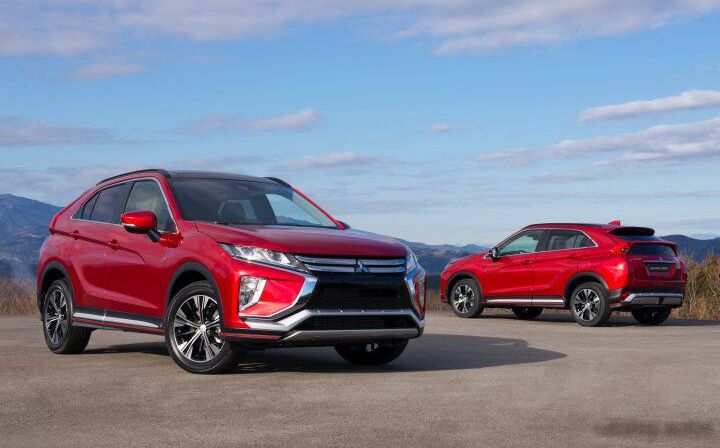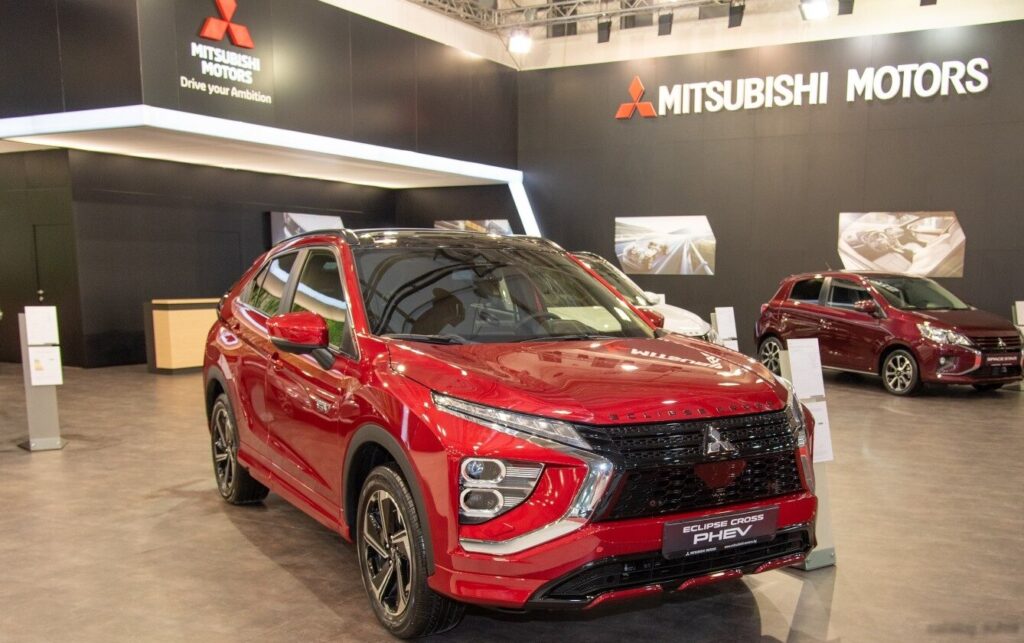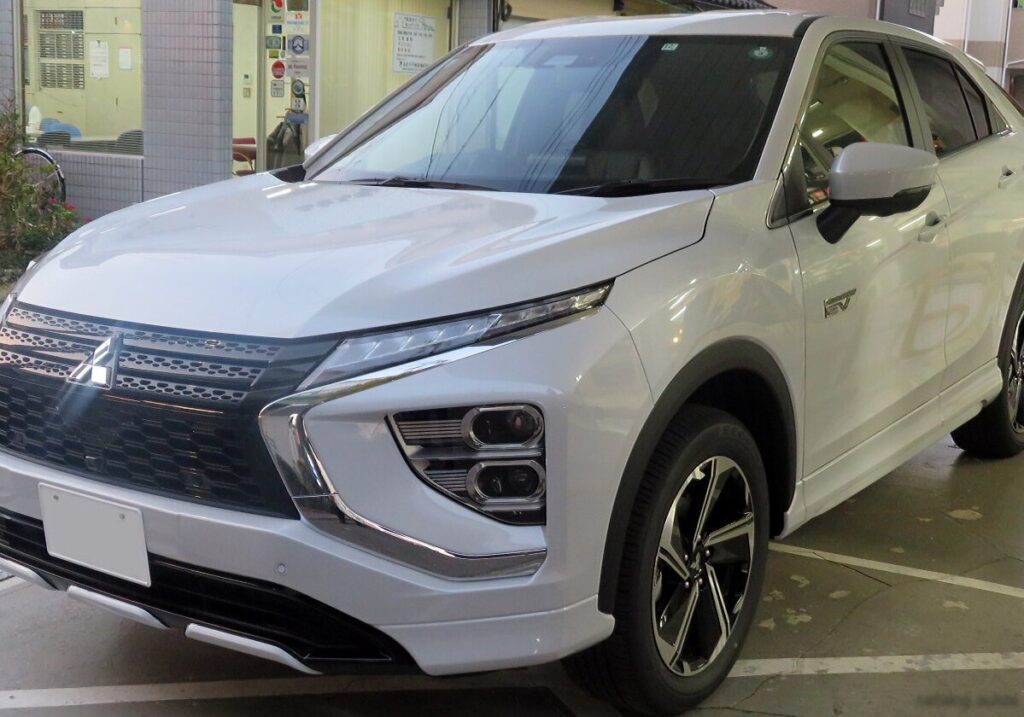
The Mitsubishi Eclipse Cross, launched in 2017, represented Mitsubishi’s entry into the highly competitive compact SUV segment. The first generation, known internally as the GA2W, underwent a significant facelift in 2021, bringing revised styling, improved technology, and refinements to the powertrain. This article focuses specifically on the 2021 facelifted Eclipse Cross equipped with the 1.5-liter MIVEC turbocharged engine producing 152 horsepower, paired with Mitsubishi’s S-AWC (Super All-Wheel Control) system and a continuously variable transmission (CVT). This configuration was positioned as a mid-range offering within the Eclipse Cross lineup, balancing performance, fuel efficiency, and available features.
Technical Specifications
| Brand | Mitsubishi |
| Model | Eclipse Cross |
| Generation | Eclipse Cross I (facelift 2021) |
| Type (Engine) | 1.5 MIVEC (152 Hp) S-AWC CVT |
| Start of production | 2021 |
| Powertrain Architecture | Internal Combustion engine |
| Body type | SUV |
| Seats | 5 |
| Doors | 5 |
| Fuel Type | Petrol (Gasoline) |
| Emission standard | LEV III-ULEV70 |
| Weight-to-power ratio | 10.2 kg/Hp, 97.7 Hp/tonne |
| Weight-to-torque ratio | 6.2 kg/Nm, 160.1 Nm/tonne |
| Power | 152 Hp @ 5500 rpm |
| Power per litre | 101.4 Hp/l |
| Torque | 249 Nm @ 2000-3500 rpm (183.65 lb.-ft. @ 2000-3500 rpm) |
| Maximum engine speed | 6000 rpm |
| Engine layout | Front, Transverse |
| Engine Model/Code | 4B40 |
| Engine displacement | 1499 cm3 (91.47 cu. in.) |
| Number of cylinders | 4 |
| Engine configuration | Inline |
| Cylinder Bore | 75 mm (2.95 in.) |
| Piston Stroke | 84.8 mm (3.34 in.) |
| Compression ratio | 10:1 |
| Number of valves per cylinder | 4 |
| Fuel injection system | Direct injection |
| Engine aspiration | Turbocharger, Intercooler |
| Valvetrain | DOHC |
| Engine oil capacity | 4.3 l (4.54 US qt | 3.78 UK qt) |
| Coolant | 6 l (6.34 US qt | 5.28 UK qt) |
| Kerb Weight | 1555-1590 kg (3428.19 – 3505.35 lbs.) |
| Max. weight | 2100 kg (4629.71 lbs.) |
| Max load | 510-545 kg (1124.36 – 1201.52 lbs.) |
| Trunk (boot) space – minimum | 657-663 l (23.2 – 23.41 cu. ft.) |
| Trunk (boot) space – maximum | 1419 l (50.11 cu. ft.) |
| Fuel tank capacity | 60 l (15.85 US gal | 13.2 UK gal) |
| Permitted trailer load with brakes (12%) | 680 kg (1499.14 lbs.) |
| Permitted towbar download | 68 kg (149.91 lbs.) |
| Length | 4547 mm (179.02 in.) |
| Width | 1806 mm (71.1 in.) |
| Height | 1689 mm (66.5 in.) |
| Wheelbase | 2670 mm (105.12 in.) |
| Front track | 1539 mm (60.59 in.) |
| Rear (Back) track | 1539 mm (60.59 in.) |
| Ride height (ground clearance) | 216 mm (8.5 in.) |
| Minimum turning circle (turning diameter) | 10.6 m (34.78 ft.) |
| Drivetrain Architecture | All wheel drive (4×4). Internal Combustion engine. |
| Number of gears and type of gearbox | 8 gears, automatic transmission CVT |
| Front brakes | Ventilated discs, 294.64 mm |
| Rear brakes | Disc, 302.26 mm |
| Tires size | 215/70 R16; 225/55 R18 |
| Wheel rims size | 6.5J x 16; 7J x 18 |
INTRODUCTION
The 2021 Mitsubishi Eclipse Cross 1.5 MIVEC S-AWC CVT represents a mid-cycle refresh of Mitsubishi’s compact SUV. Building upon the original Eclipse Cross launched in 2017, the facelift aimed to address criticisms regarding styling and interior refinement. The 1.5-liter engine and CVT combination was a key part of the lineup, offering a balance between fuel economy and acceptable performance for everyday driving. Positioned between the base engine options and potentially higher-performance trims (depending on regional availability), this variant targeted buyers seeking a well-equipped and capable all-wheel-drive SUV.
Powertrain & Engine Architecture
At the heart of this Eclipse Cross variant lies the 4B40 1.5-liter inline-four cylinder engine. This engine utilizes Mitsubishi’s MIVEC (Mitsubishi Innovative Valve timing and lift Electronic Control) technology, allowing for variable valve timing on both the intake and exhaust camshafts. This system optimizes engine performance and efficiency across a wider range of engine speeds. The engine employs direct fuel injection, further enhancing combustion efficiency and reducing emissions. A single turbocharger with an intercooler provides forced induction, boosting power output. The engine produces 152 horsepower at 5500 rpm and 249 Nm (183.65 lb-ft) of torque between 2000 and 3500 rpm.
The engine is mated to a continuously variable transmission (CVT) with eight simulated gear ratios. While CVTs are known for their smooth operation and fuel efficiency, they sometimes receive criticism for their lack of traditional gear changes and potential for a “rubber band” feel. Mitsubishi’s implementation of simulated gear ratios aims to mitigate this by providing a more familiar driving experience. The S-AWC system, a key feature of this variant, is a sophisticated all-wheel-drive system that utilizes sensors and control algorithms to distribute torque between the front and rear wheels, and even between the left and right rear wheels, enhancing stability and traction in various driving conditions.
Driving Characteristics
The 1.5-liter MIVEC engine and CVT combination delivers adequate performance for typical commuting and highway driving. Acceleration is not particularly brisk, but the readily available torque from the turbocharger provides sufficient power for merging and overtaking. The CVT effectively keeps the engine in its optimal power band, resulting in a smooth and linear power delivery. Compared to a manual transmission, the CVT prioritizes fuel efficiency over outright performance. Higher-output versions of the Eclipse Cross, if available in certain markets, would offer noticeably quicker acceleration. The S-AWC system provides confident handling in various weather conditions, enhancing stability and grip, particularly on slippery surfaces. The simulated gear ratios in the CVT are generally well-tuned, minimizing the “rubber band” effect often associated with CVTs.
Equipment & Trim Levels
The 2021 Eclipse Cross 1.5 MIVEC S-AWC CVT typically came standard with a range of features, including automatic climate control, a touchscreen infotainment system with Apple CarPlay and Android Auto compatibility, and a suite of safety features such as automatic emergency braking, lane departure warning, and adaptive cruise control. Interior upholstery was typically cloth, with options for leather upgrades on higher trim levels. Available optional extras included a panoramic sunroof, premium audio system, and heated front seats. The specific standard and optional equipment varied depending on the regional market and package selections.
Chassis & Braking
The Eclipse Cross utilizes an independent McPherson strut suspension in the front and an independent multi-link suspension in the rear. This setup provides a comfortable ride quality while maintaining reasonable handling characteristics. Stabilizer bars are fitted to both the front and rear axles to reduce body roll during cornering. Braking duties are handled by ventilated discs in the front and solid discs in the rear. The anti-lock braking system (ABS) is standard, along with electronic brake-force distribution (EBD) and brake assist. The suspension tuning is geared towards comfort, prioritizing ride quality over sporty handling.
Market Reception & Comparison
The 2021 Eclipse Cross facelift was generally well-received by critics, with praise directed towards the improved styling and enhanced technology. The 1.5-liter engine and CVT combination was considered adequate for most drivers, although some reviewers noted that it lacked the punch of more powerful engines. Fuel economy was a strong point, with the Eclipse Cross achieving competitive figures in its class. Compared to other compact SUVs with similar engine displacements, the Eclipse Cross offered a compelling value proposition, particularly with its standard S-AWC system. Reliability reports have been generally positive, although long-term durability data is still emerging.
Legacy
The Mitsubishi Eclipse Cross, and specifically the 1.5 MIVEC S-AWC CVT variant, represents a solid offering in the competitive compact SUV segment. The powertrain, while not exceptionally powerful, provides a good balance of fuel efficiency and usability. The S-AWC system remains a standout feature, offering enhanced all-weather capability. On the used car market, these models are becoming increasingly attractive due to their affordability and feature set. Regular maintenance, including timely oil changes and CVT fluid replacements, is crucial for ensuring the long-term reliability of this powertrain. As with any turbocharged engine, it’s important to be mindful of oil quality and avoid prolonged periods of hard driving without allowing the turbocharger to cool down.