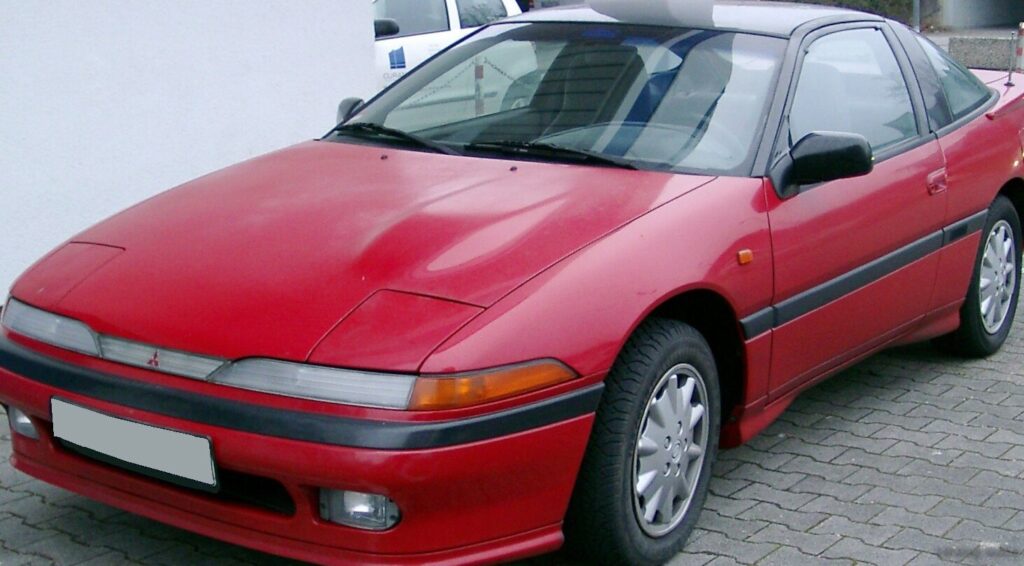
The Mitsubishi Eclipse first generation (1G), produced from 1989 to 1994, represented Mitsubishi’s entry into the competitive American compact coupe market. The 2.0i 16V variant, available from 1990-1992, was a key model within the lineup, offering a balance between performance and affordability. Positioned as a step up from the base 1.6L engine, the 2.0L 16V provided a noticeable increase in power, appealing to buyers seeking a more engaging driving experience. This generation of Eclipse was significant for its sleek styling, influenced by the Diamond Star Motors (DSM) partnership with Chrysler, and its focus on sporty handling. It was sold primarily in North America and some export markets.
Technical Specifications
| Brand | Mitsubishi |
| Model | Eclipse |
| Generation | Eclipse I (1G) |
| Type (Engine) | 2.0 i 16V (135 Hp) |
| Start of production | 1990 year |
| End of production | 1992 year |
| Powertrain Architecture | Internal Combustion engine |
| Body type | Coupe, Liftback |
| Seats | 4 |
| Doors | 2 |
| Fuel Type | Petrol (Gasoline) |
| Weight-to-power ratio | 9 kg/Hp, 111.1 Hp/tonne |
| Weight-to-torque ratio | 7.1 kg/Nm, 139.9 Nm/tonne |
| Power | 135 Hp |
| Power per litre | 67.6 Hp/l |
| Torque | 170 Nm (125.39 lb.-ft.) |
| Engine layout | Front, Transverse |
| Engine displacement | 1997 cm3 (121.86 cu. in.) |
| Number of cylinders | 4 |
| Engine configuration | Inline |
| Cylinder Bore | 85 mm (3.35 in.) |
| Piston Stroke | 88 mm (3.46 in.) |
| Compression ratio | 9:1 |
| Number of valves per cylinder | 4 |
| Engine aspiration | Naturally aspirated engine |
| Valvetrain | DOHC |
| Kerb Weight | 1215 kg (2678.62 lbs.) |
| Max. weight | 1620 kg (3571.49 lbs.) |
| Max load | 405 kg (892.87 lbs.) |
| Fuel tank capacity | 60 l (15.85 US gal | 13.2 UK gal) |
| Length | 4330 mm (170.47 in.) |
| Width | 1690 mm (66.54 in.) |
| Height | 1306 mm (51.42 in.) |
| Wheelbase | 2470 mm (97.24 in.) |
| Front track | 1465 mm (57.68 in.) |
| Rear (Back) track | 1450 mm (57.09 in.) |
| Front overhang | 950 mm (37.4 in.) |
| Rear overhang | 910 mm (35.83 in.) |
| Ride height (ground clearance) | 160 mm (6.3 in.) |
| Approach angle | 16.5° |
| Departure angle | 19° |
| Drivetrain Architecture | The Internal combustion engine (ICE) drives the front wheels of the vehicle. |
| Drive wheel | Front wheel drive |
| Number of gears and type of gearbox | 5 gears, manual transmission |
| Front suspension | Independent coil spring |
| Rear suspension | Independent multi-link suspension |
| Front brakes | Disc |
| Rear brakes | Disc |
| Steering type | Steering rack and pinion |
Powertrain & Engine Architecture
The heart of the 2.0i 16V Eclipse was the 4G63 inline-four cylinder engine. This 1997cc (121.86 cubic inches) engine featured a cast iron block and an aluminum cylinder head. The “16V” designation refers to the dual overhead camshafts (DOHC) operating four valves per cylinder, a key feature contributing to its improved breathing and power output compared to the single overhead cam engines available in lower trims. Fuel delivery was managed by a multi-point fuel injection system, enhancing efficiency and responsiveness. The engine’s 9:1 compression ratio was a compromise between performance and the fuel quality available in the target markets. The 4G63 engine was known for its robustness and potential for modification, becoming a popular choice for aftermarket tuning. The standard transmission for this variant was a 5-speed manual, providing direct control over the engine’s power.
Driving Characteristics
The 135 horsepower and 170 Nm (125 lb-ft) of torque offered by the 2.0L engine provided a noticeable improvement in acceleration and overall driving enjoyment compared to the base 1.6L model. While not a high-performance machine by modern standards, the 2.0i 16V Eclipse offered brisk acceleration for its time. The 5-speed manual transmission allowed drivers to keep the engine in its optimal power band, resulting in a more engaging driving experience. The front-wheel-drive layout provided predictable handling, although it could exhibit some understeer when pushed hard. The gear ratios were relatively well-spaced, providing adequate acceleration in each gear. Compared to later, more powerful Eclipse models like the GSX with its turbocharged engine, the 2.0i 16V offered a more balanced and accessible driving experience, prioritizing everyday usability over outright speed.
Equipment & Trim Levels
The 2.0i 16V Eclipse typically came standard with features such as power steering, a basic audio system, and cloth upholstery. Air conditioning was often included, but could be optional depending on the specific package. The interior design was functional and driver-focused, with a straightforward dashboard layout. Optional extras included a sunroof, upgraded audio systems, and alloy wheels. The trim level often dictated the exterior color options and the availability of certain convenience features. The 2.0i 16V trim generally sat in the mid-range of the Eclipse lineup, offering a step up in performance and features compared to the base models, but lacking the more aggressive styling and performance enhancements of the higher-end trims.
Chassis & Braking
The Eclipse 1G utilized an independent coil spring suspension in the front and an independent multi-link suspension in the rear, providing a comfortable ride and reasonably good handling. The suspension was tuned to prioritize comfort over outright sportiness, but still offered a stable and controlled driving experience. Braking duties were handled by disc brakes on all four wheels, providing adequate stopping power for the vehicle’s weight and performance. The steering system employed a rack and pinion setup, offering precise and responsive steering feel. Stabilizer bars were included to reduce body roll during cornering, further enhancing handling stability.
Market Reception & Comparison
The Mitsubishi Eclipse 1G 2.0i 16V was generally well-received by automotive critics as a stylish and capable compact coupe. It was praised for its attractive design, comfortable interior, and improved performance compared to the base models. Fuel economy was considered reasonable for its class, and the engine was noted for its reliability. Compared to competitors like the Honda Civic Coupe and Toyota Celica, the Eclipse offered a more aggressive styling and a slightly more sporty driving experience. However, some critics noted that the interior materials were not as refined as those found in some of its rivals. The 2.0i 16V offered a good balance between performance, features, and price, making it a popular choice among buyers seeking a sporty and affordable coupe.
Legacy
The Mitsubishi Eclipse 1G, particularly the 2.0i 16V variant, has developed a loyal following among enthusiasts. The 4G63 engine’s reputation for durability and tunability has ensured its continued popularity in the aftermarket. While finding well-maintained examples can be challenging today, the 1G Eclipse remains a relatively affordable and enjoyable classic car. The 2.0i 16V powertrain is generally considered reliable, although regular maintenance is essential to prevent issues. Common issues include oil leaks and wear on suspension components. In the used car market, the 2.0i 16V Eclipse represents a good value for those seeking a stylish and engaging classic coupe with a proven powertrain.