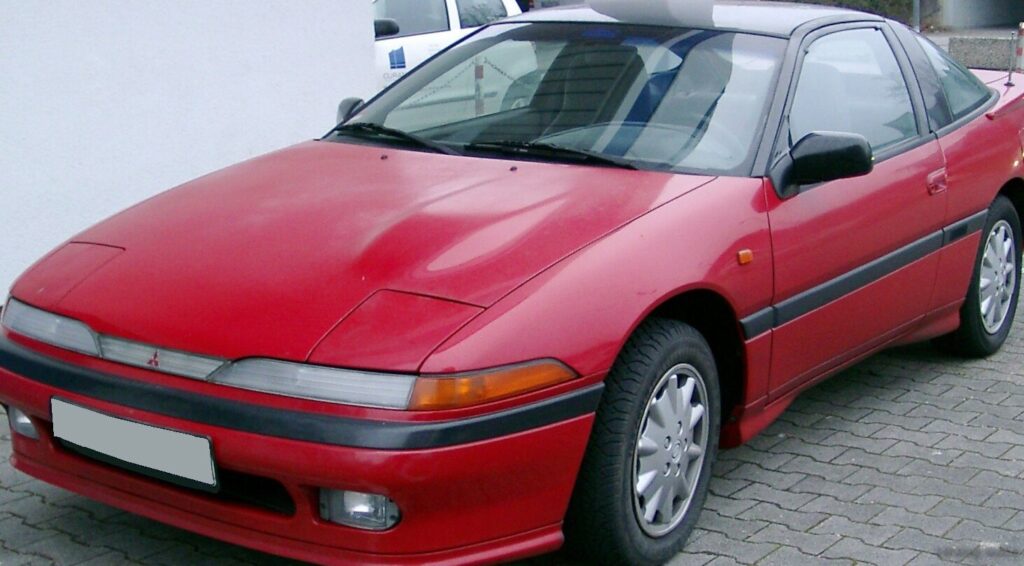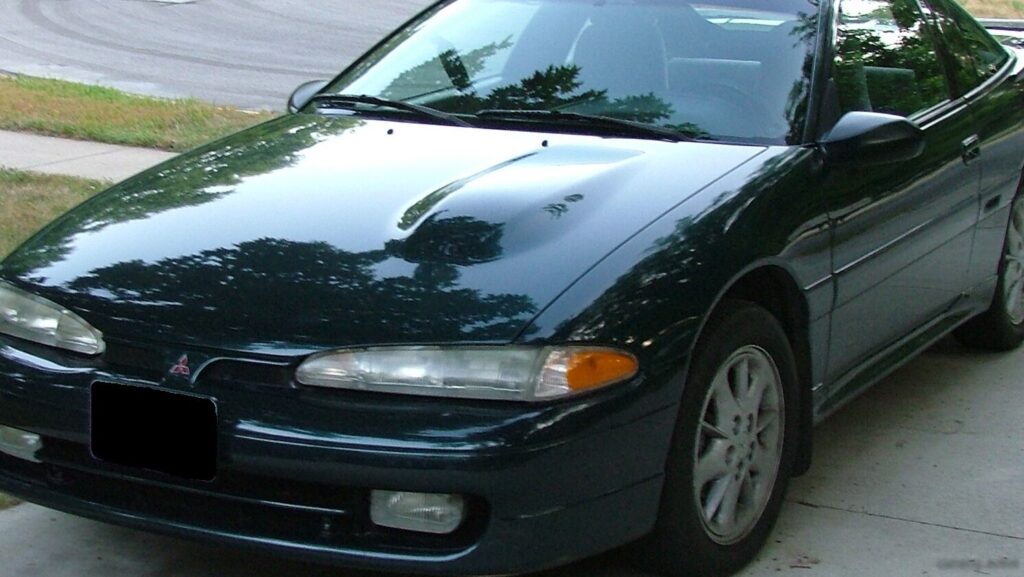
The Mitsubishi Eclipse first generation (1G), particularly the facelifted model introduced in 1992, represented Mitsubishi’s entry into the increasingly popular compact coupe and liftback market. Produced from 1992 through 1994, this variant, equipped with the 1.8-liter 4G37 engine producing 92 horsepower, served as the base model for the Eclipse range in many markets. It was positioned as an affordable and accessible option, appealing to buyers seeking a stylish and relatively economical vehicle. The 1G Eclipse shared its platform – the 1HX0 – with the Eagle Talon and Plymouth Laser, a result of the Diamond-Star Motors joint venture with Chrysler. This collaboration allowed Mitsubishi to expand its presence in North America while offering a competitive product.
Technical Specifications
| Brand | Mitsubishi |
| Model | Eclipse |
| Generation | Eclipse I (1G, facelift 1992) |
| Type (Engine) | 1.8 (92 Hp) |
| Start of production | 1992 |
| End of production | 1994 |
| Powertrain Architecture | Internal Combustion engine |
| Body type | Coupe, Liftback |
| Seats | 4 |
| Doors | 3 |
| Fuel Type | Petrol (Gasoline) |
| Weight-to-power ratio | 12.5 kg/Hp, 79.8 Hp/tonne |
| Weight-to-torque ratio | 8.1 kg/Nm, 123.2 Nm/tonne |
| Power | 92 Hp @ 5000 rpm |
| Power per litre | 52.4 Hp/l |
| Torque | 142 Nm @ 3500 rpm (104.73 lb.-ft. @ 3500 rpm) |
| Engine layout | Front, Transverse |
| Engine Model/Code | 4G37 |
| Engine displacement | 1755 cm3 (107.1 cu. in.) |
| Number of cylinders | 4 |
| Engine configuration | Inline |
| Cylinder Bore | 80.6 mm (3.17 in.) |
| Piston Stroke | 86 mm (3.39 in.) |
| Compression ratio | 9.5:1 |
| Number of valves per cylinder | 2 |
| Fuel injection system | Multi-port manifold injection |
| Engine aspiration | Naturally aspirated engine |
| Valvetrain | SOHC |
| Engine oil capacity | 3.9 l (4.12 US qt | 3.43 UK qt) |
| Coolant | 6 l (6.34 US qt | 5.28 UK qt) |
| Kerb Weight | 1153 kg (2541.93 lbs.) |
| Trunk (boot) space – minimum | 289 l (10.21 cu. ft.) |
| Fuel tank capacity | 60 l (15.85 US gal | 13.2 UK gal) |
| Length | 4390 mm (172.83 in.) |
| Width | 1695 mm (66.73 in.) |
| Height | 1306 mm (51.42 in.) |
| Wheelbase | 2470 mm (97.24 in.) |
| Drag coefficient (Cd) | 0.33 |
| Drivetrain Architecture | The Internal combustion engine (ICE) drives the front wheels of the vehicle. |
| Drive wheel | Front wheel drive |
| Number of gears and type of gearbox | 5 gears, manual transmission |
| Front suspension | Independent type McPherson, Transverse stabilizer |
| Rear suspension | Transverse stabilizer, Coil spring, Elastic beam |
| Front brakes | Ventilated discs |
| Rear brakes | Disc |
| Steering type | Steering rack and pinion |
| Tires size | 185/70 R14 |
| Wheel rims size | 5.5J x 14 |
Powertrain & Engine Architecture
The heart of this Eclipse variant is the 4G37 engine, an inline four-cylinder gasoline engine displacing 1.8 liters (1755 cc). This engine utilized a single overhead camshaft (SOHC) valvetrain operating two valves per cylinder. Fuel delivery was managed by a multi-port fuel injection system, a common feature for the time, contributing to improved fuel efficiency and smoother operation compared to carbureted engines. The 4G37 produced 92 horsepower at 5000 rpm and 142 Nm (104.73 lb-ft) of torque at 3500 rpm. While not a powerhouse, the engine was known for its relative reliability and ease of maintenance. The engine’s design prioritized fuel economy and everyday usability over outright performance. The transmission offered was a 5-speed manual, providing drivers with a degree of control over the engine’s power band.
Driving Characteristics
The 1.8-liter Eclipse, particularly with the 5-speed manual transmission, offered a reasonably engaging driving experience for its class. Acceleration was adequate for daily commuting and highway merging, but it wasn’t particularly quick. The engine’s torque peak at 3500 rpm meant that most of the usable power was available in the mid-range, making it suitable for typical driving conditions. Compared to the more powerful 2.0-liter variants, the 1.8 felt noticeably slower, especially when fully loaded or climbing hills. The manual transmission allowed drivers to maximize the engine’s potential, while the gear ratios were tuned for a balance between fuel economy and performance. The front-wheel-drive configuration provided predictable handling, although it lacked the all-weather capability of an all-wheel-drive system.
Equipment & Trim Levels
The base 1.8-liter Eclipse typically came with a fairly basic level of equipment. Standard features generally included cloth upholstery, manual windows and door locks, and a basic AM/FM radio. Air conditioning was often an optional extra. Interior trim was functional and durable, prioritizing practicality over luxury. Higher trim levels, such as the RS or GS, offered upgrades like power windows and locks, upgraded audio systems, and sportier interior appointments. The exterior styling was consistent across the range, but higher trims often featured alloy wheels and a rear spoiler.
Chassis & Braking
The Eclipse 1G utilized a McPherson strut front suspension and a coil spring rear suspension with an elastic beam. This setup provided a comfortable ride quality, although it wasn’t particularly sporty. A transverse stabilizer bar was included at both the front and rear to reduce body roll during cornering. Braking duties were handled by ventilated discs at the front and solid discs at the rear. The braking system was adequate for the vehicle’s weight and performance, but it lacked the stopping power of more advanced systems found on higher-performance models. The steering was a rack-and-pinion system, providing precise and responsive steering feel.
Market Reception & Comparison
The 1.8-liter Eclipse was generally well-received as an affordable and stylish entry-level coupe. Critics praised its attractive design and relatively fuel-efficient engine. However, some reviewers noted that the engine lacked the power to truly deliver a sporty driving experience. Compared to the 2.0-liter models, the 1.8 offered a more economical option, but at the expense of performance. The 1.8 was often seen as a good choice for first-time car buyers or those seeking a reliable and economical commuter car. Fuel economy was a strong point, making it a practical choice for daily driving.
Legacy
The first-generation Mitsubishi Eclipse, including the 1.8-liter variant, holds a nostalgic place in the hearts of many car enthusiasts. While not known for exceptional performance, the 4G37 engine proved to be relatively durable and reliable. Today, well-maintained examples of the 1G Eclipse are becoming increasingly collectible. The 1.8-liter version, while not as sought after as the more powerful trims, remains a viable option for those seeking an affordable and classic Japanese coupe. Parts availability is generally good, and the engine’s simplicity makes it relatively easy to maintain. The Eclipse 1G laid the foundation for the subsequent generations of the Eclipse, establishing it as a popular and recognizable model in Mitsubishi’s lineup.