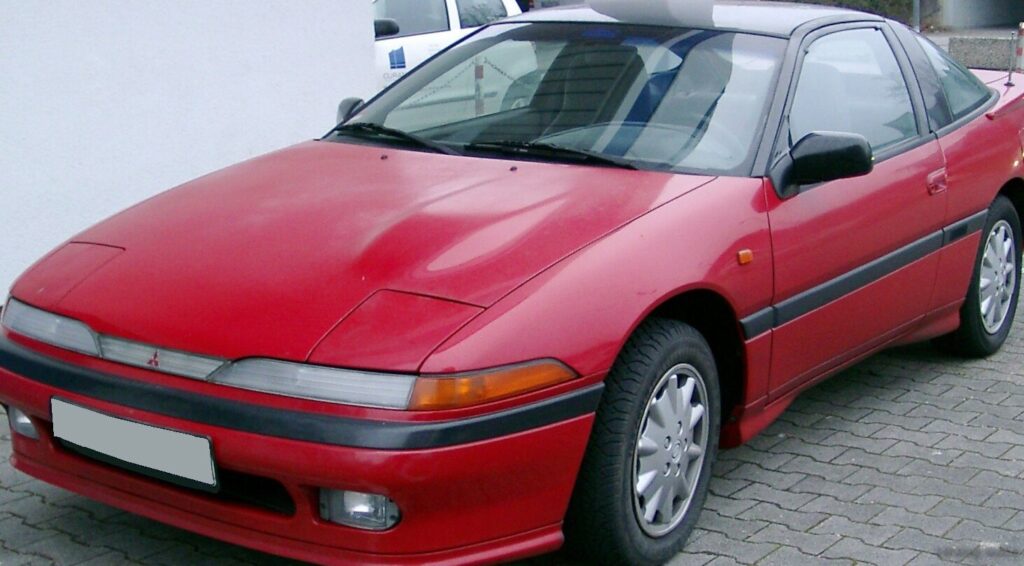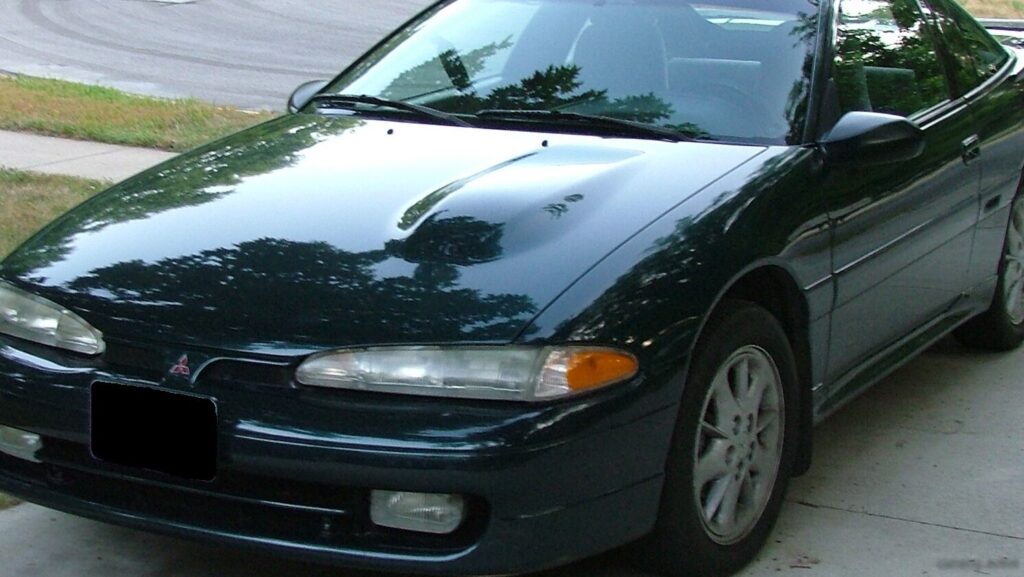
The Mitsubishi Eclipse first generation (1G), particularly the facelifted model from 1992-1994, represented a significant entry for Mitsubishi into the increasingly popular compact, sporty coupe market. Positioned as a competitor to the Toyota Celica and Honda Prelude, the Eclipse offered a blend of aggressive styling, available turbocharged power, and a relatively affordable price point. The 1992-1994 facelift brought subtle but noticeable changes to the exterior, including revised headlights and taillights, and refinements to the interior. This generation, built on the Mitsubishi Diamond Star platform (shared with the Eagle Talon and Plymouth Laser), quickly gained a following, especially among enthusiasts drawn to its tuning potential and available all-wheel drive configurations in other trims. The 2.0 Turbo variant, producing 195 horsepower, sat at the top of the performance hierarchy for the Eclipse 1G.
Technical Specifications
| Brand | Mitsubishi |
| Model | Eclipse |
| Generation | Eclipse I (1G, facelift 1992) |
| Type (Engine) | 2.0 Turbo (195 Hp) |
| Start of production | 1992 |
| End of production | 1994 |
| Powertrain Architecture | Internal Combustion engine |
| Body type | Coupe, Liftback |
| Seats | 4 |
| Doors | 3 |
| Fuel Type | Petrol (Gasoline) |
| Weight-to-power ratio | 6.5 kg/Hp, 154.8 Hp/tonne |
| Weight-to-torque ratio | 4.6 kg/Nm, 218.3 Nm/tonne |
| Power | 195 Hp @ 6000 rpm |
| Power per litre | 97.6 Hp/l |
| Torque | 275 Nm @ 3000 rpm (202.83 lb.-ft. @ 3000 rpm) |
| Engine layout | Front, Transverse |
| Engine Model/Code | 4G63T |
| Engine displacement | 1997 cm3 (121.86 cu. in.) |
| Number of cylinders | 4 |
| Engine configuration | Inline |
| Cylinder Bore | 85 mm (3.35 in.) |
| Piston Stroke | 88 mm (3.46 in.) |
| Number of valves per cylinder | 4 |
| Fuel injection system | Multi-port manifold injection |
| Engine aspiration | Turbocharger, Intercooler |
| Valvetrain | DOHC |
| Engine oil capacity | 4.5 l (4.76 US qt | 3.96 UK qt) |
| Coolant | 7 l (7.4 US qt | 6.16 UK qt) |
| Kerb Weight | 1260 kg (2777.82 lbs.) |
| Trunk (boot) space – minimum | 289 l (10.21 cu. ft.) |
| Fuel tank capacity | 60 l (15.85 US gal | 13.2 UK gal) |
| Length | 4390 mm (172.83 in.) |
| Width | 1695 mm (66.73 in.) |
| Height | 1306 mm (51.42 in.) |
| Wheelbase | 2470 mm (97.24 in.) |
| Drag coefficient (Cd) | 0.33 |
| Drivetrain Architecture | The Internal combustion engine (ICE) drives the front wheels of the vehicle. |
| Drive wheel | Front wheel drive |
| Number of gears and type of gearbox | 5 gears, manual transmission |
| Front suspension | Independent type McPherson, Transverse stabilizer |
| Rear suspension | Transverse stabilizer, Coil spring, Elastic beam |
| Front brakes | Ventilated discs |
| Rear brakes | Disc |
| Assisting systems | ABS (Anti-lock braking system) |
| Steering type | Steering rack and pinion |
| Power steering | Hydraulic Steering |
| Tires size | 205/55 R16 |
| Wheel rims size | 6J x 16 |
Powertrain & Engine Architecture
The heart of the 1992-1994 Eclipse 2.0 Turbo was the 4G63T engine, a 2.0-liter, inline-four cylinder powerplant. This engine was a significant departure from the naturally aspirated options available in lower trims. The 4G63T featured a cast iron block and an aluminum cylinder head, incorporating a turbocharger with an intercooler to boost power output. Fuel delivery was handled by a multi-port fuel injection system, providing precise fuel metering for optimal combustion. The engine utilized a double overhead camshaft (DOHC) valvetrain, contributing to its improved breathing and higher revving capability. The 5-speed manual transmission was the only transmission option offered with this engine, designed to handle the increased torque. The transmission featured relatively short gear ratios, geared towards maximizing acceleration.
Driving Characteristics
The 2.0 Turbo Eclipse offered a noticeably more engaging driving experience compared to its naturally aspirated counterparts. The turbocharger provided a surge of power in the mid-range, making for quick acceleration. While not a corner-carving machine by modern standards, the Eclipse’s front-wheel-drive chassis and well-tuned suspension provided decent handling characteristics. The 5-speed manual transmission allowed drivers to fully exploit the engine’s powerband. Turbo lag was present, typical of turbochargers of that era, but manageable once familiar with the engine’s characteristics. Compared to the base model 2.0L, the turbo variant offered a substantial performance increase, making it a popular choice for those seeking a sporty and fun-to-drive coupe.
Equipment & Trim Levels
The 2.0 Turbo Eclipse typically came with a more comprehensive list of standard features than the base models. These included power windows, power locks, and a more upscale interior trim. Sport seats with enhanced bolstering were also standard, providing better support during spirited driving. Options included a premium sound system, sunroof, and upgraded wheels. The interior design was functional and driver-focused, with a clear instrument cluster and well-placed controls. While not luxurious, the interior offered a comfortable and sporty environment.
Chassis & Braking
The Eclipse 1G utilized a McPherson strut front suspension and a coil spring rear suspension with an elastic beam. This setup provided a reasonable balance between ride comfort and handling. The 2.0 Turbo model featured ventilated disc brakes on the front wheels and solid disc brakes on the rear, providing adequate stopping power for its performance level. An Anti-lock Braking System (ABS) was available, enhancing safety and control during hard braking. The steering was rack and pinion, offering precise and responsive steering feel. The standard tire size was 205/55 R16, mounted on 6J x 16 inch wheels.
Market Reception & Comparison
The 1992-1994 Mitsubishi Eclipse 2.0 Turbo was generally well-received by automotive critics. It was praised for its strong performance, sporty handling, and relatively affordable price. However, some critics noted the presence of turbo lag and the somewhat basic interior. Compared to other turbocharged coupes of the era, such as the Toyota Celica GT-Four, the Eclipse offered a more accessible and affordable entry point into the forced-induction market. Fuel economy was reasonable for a turbocharged vehicle, averaging around 20-24 mpg in mixed driving. Reliability was generally good, although the turbocharger and associated components required regular maintenance.
Legacy
The Mitsubishi Eclipse 1G 2.0 Turbo holds a special place in the hearts of many automotive enthusiasts. Its tuning potential and relatively simple mechanical design made it a popular platform for modifications. Today, well-maintained examples are becoming increasingly collectible. The 4G63T engine is renowned for its durability and ability to handle significant power upgrades. While finding a pristine, unmodified example can be challenging, the Eclipse 1G 2.0 Turbo remains a desirable and rewarding classic coupe. Common issues with used examples include turbocharger wear, oil leaks, and corrosion. However, parts availability is generally good, and the 4G63T engine is well-documented, making it relatively easy to maintain and repair.