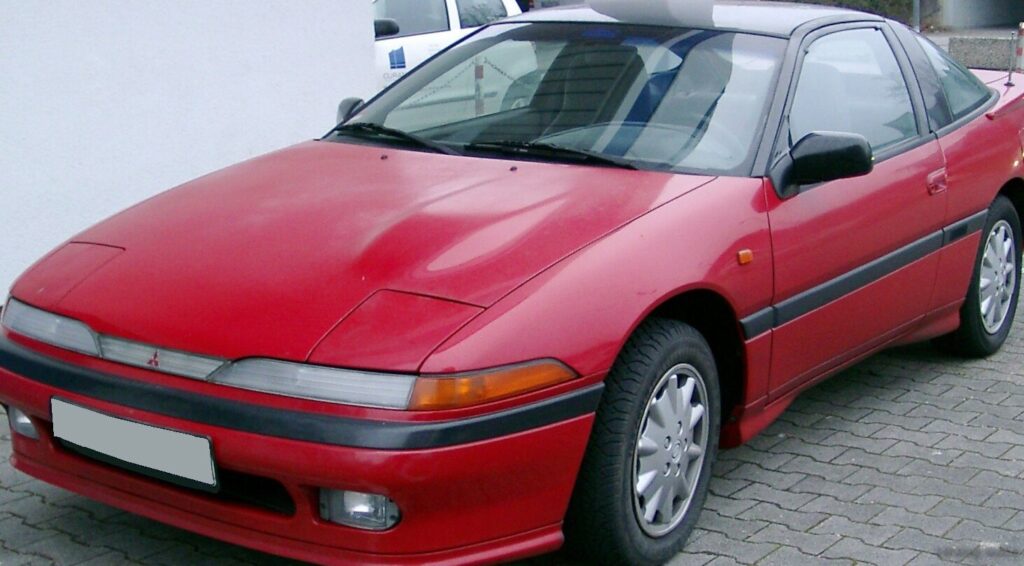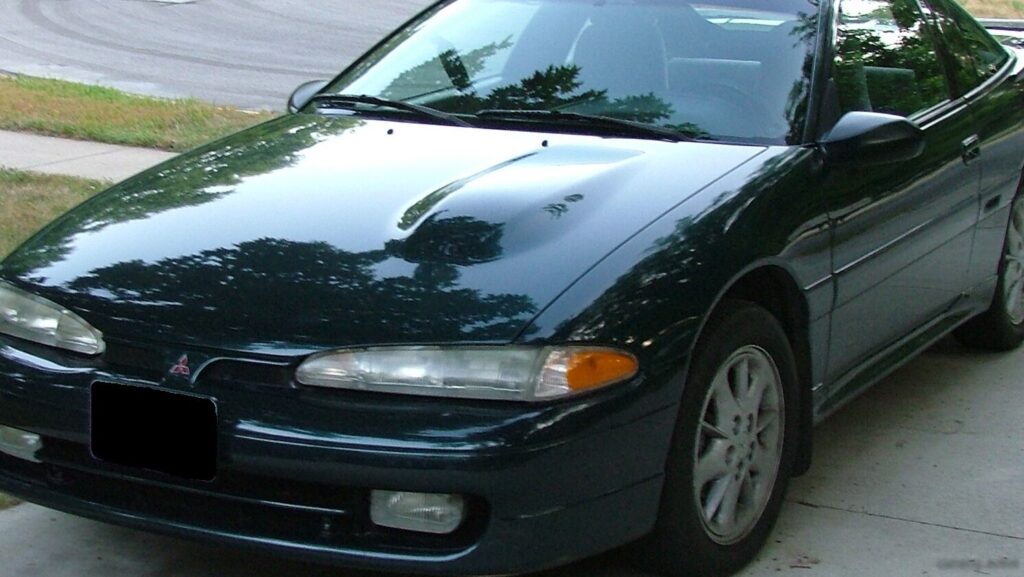
The Mitsubishi Eclipse GSX 2.0 Turbo, produced from 1992 to 1994, represented a significant offering in the first generation (1G) Eclipse lineup. This facelifted version of the 1G, internally designated as the 1HX0, aimed to deliver a sporty and technologically advanced coupe experience. Positioned as a premium trim, the GSX combined a turbocharged engine with all-wheel drive and an automatic transmission, catering to drivers seeking performance and all-weather capability without the complexity of a manual gearbox. It played a key role in establishing the Eclipse as a popular choice in the American sports coupe market, competing with models like the Toyota Celica and Honda Prelude.
Technical Specifications
| Brand | Mitsubishi |
| Model | Eclipse |
| Generation | Eclipse I (1G, facelift 1992) |
| Type | GSX 2.0 Turbo (180 Hp) AWD Automatic |
| Start of production | 1992 |
| End of production | 1994 |
| Powertrain Architecture | Internal Combustion engine |
| Body type | Coupe, Liftback |
| Seats | 4 |
| Doors | 3 |
| Fuel Type | Petrol (Gasoline) |
| Weight-to-power ratio | 7.8 kg/Hp, 128.3 Hp/tonne |
| Weight-to-torque ratio | 5.3 kg/Nm, 188.2 Nm/tonne |
| Power | 180 Hp @ 5500 rpm |
| Power per litre | 90.1 Hp/l |
| Torque | 264 Nm @ 3000 rpm, 194.72 lb.-ft. @ 3000 rpm |
| Engine layout | Front, Transverse |
| Engine Model/Code | 4G63T |
| Engine displacement | 1997 cm3, 121.86 cu. in. |
| Number of cylinders | 4 |
| Engine configuration | Inline |
| Cylinder Bore | 85 mm, 3.35 in. |
| Piston Stroke | 88 mm, 3.46 in. |
| Number of valves per cylinder | 4 |
| Fuel injection system | Multi-port manifold injection |
| Engine aspiration | Turbocharger, Intercooler |
| Valvetrain | DOHC |
| Engine oil capacity | 4.5 l, 4.76 US qt | 3.96 UK qt |
| Coolant | 7 l, 7.4 US qt | 6.16 UK qt |
| Kerb Weight | 1403 kg, 3093.09 lbs |
| Trunk (boot) space – minimum | 195 l, 6.89 cu. ft |
| Fuel tank capacity | 60 l, 15.85 US gal | 13.2 UK gal |
| Length | 4390 mm, 172.83 in |
| Width | 1695 mm, 66.73 in |
| Height | 1321 mm, 52.01 in |
| Wheelbase | 2470 mm, 97.24 in |
| Drag coefficient (Cd) | 0.33 |
| Drivetrain Architecture | The Internal combustion engine (ICE) drives permanently the four wheels of the vehicle. |
| Drive wheel | All wheel drive (4×4) |
| Number of gears and type of gearbox | 4 gears, automatic transmission |
| Front suspension | Independent type McPherson, Transverse stabilizer |
| Rear suspension | Double wishbone, Transverse stabilizer |
| Front brakes | Ventilated discs |
| Rear brakes | Disc |
| Assisting systems | ABS (Anti-lock braking system) |
| Steering type | Steering rack and pinion |
| Power steering | Hydraulic Steering |
| Tires size | 205/55 R16 |
| Wheel rims size | 6J x 16 |
Powertrain & Engine Architecture
The heart of the Eclipse GSX was the 4G63T 2.0-liter inline-four cylinder engine. This engine was a cornerstone of Mitsubishi’s performance offerings during the early 1990s, also finding use in the Lancer Evolution and other models. The ‘T’ designation signified the presence of a turbocharger and an intercooler, significantly boosting power output. The 4G63T featured multi-port fuel injection, a double overhead camshaft (DOHC) valvetrain, and a robust cast iron block. The turbocharger provided 10.5 psi of boost, contributing to the engine’s 180 horsepower and 264 Nm (194.72 lb-ft) of torque. The automatic transmission was a four-speed unit, designed to handle the increased power and torque of the turbocharged engine. While not known for lightning-fast shifts, it offered a smoother driving experience compared to the available five-speed manual.
Driving Characteristics
The GSX’s automatic transmission altered the driving experience compared to its manual counterpart. While the manual offered more direct control and quicker acceleration, the automatic prioritized ease of use. The four-speed automatic had relatively conservative gear ratios, prioritizing fuel economy and smooth cruising over outright performance. Acceleration from a standstill was respectable, but the automatic transmission did rob some of the engine’s potential. The all-wheel drive system provided excellent traction, particularly in inclement weather, making the GSX a capable year-round vehicle. Handling was generally good, thanks to the independent McPherson strut front suspension and double wishbone rear suspension, although the added weight of the automatic transmission and AWD system did contribute to some understeer.
Equipment & Trim Levels
The GSX trim level was well-equipped for its time. Standard features included power windows, power locks, air conditioning, and a decent sound system. The interior typically featured cloth upholstery, although leather was available as an option. The dashboard layout was functional and driver-focused, with easy-to-read gauges. Optional extras included a sunroof, upgraded audio systems, and alloy wheels. The GSX aimed to provide a balance of performance and comfort, appealing to buyers who wanted a sporty coupe without sacrificing everyday usability.
Chassis & Braking
The Eclipse GSX utilized a unibody construction for rigidity. The front suspension employed independent McPherson struts with a transverse stabilizer bar, while the rear featured a double wishbone setup, also with a stabilizer bar. This suspension configuration aimed to provide a comfortable ride while maintaining reasonable handling characteristics. Braking duties were handled by ventilated discs at the front and solid discs at the rear. An Anti-lock Braking System (ABS) was standard, enhancing safety and control during hard braking. The tires were typically 205/55 R16, providing a good balance of grip and ride comfort.
Market Reception & Comparison
The Eclipse GSX 2.0 Turbo Automatic received generally positive reviews. Critics praised its performance, all-wheel drive system, and comfortable interior. However, the automatic transmission was often criticized for being somewhat sluggish compared to the manual version. Fuel economy was also a concern, as the turbocharged engine and AWD system consumed more fuel than naturally aspirated, front-wheel drive models. Compared to the base model Eclipse, the GSX offered a significant performance upgrade. Against competitors like the Toyota Celica GT-Four and Nissan NX Turbo, the Eclipse GSX held its own, offering a compelling combination of features and performance.
Legacy
The Mitsubishi Eclipse GSX 2.0 Turbo Automatic has become a sought-after vehicle among enthusiasts. The 4G63T engine is renowned for its durability and tunability, making it a popular choice for modifications. While the automatic transmission isn’t as highly regarded as the manual, it remains a reliable unit when properly maintained. Today, well-maintained examples of the GSX command a premium in the used car market. The 1G Eclipse, and particularly the GSX variant, is remembered as a pivotal model in Mitsubishi’s history, helping to establish the brand as a serious player in the sports coupe segment. Its blend of performance, technology, and all-weather capability continues to appeal to car enthusiasts today.