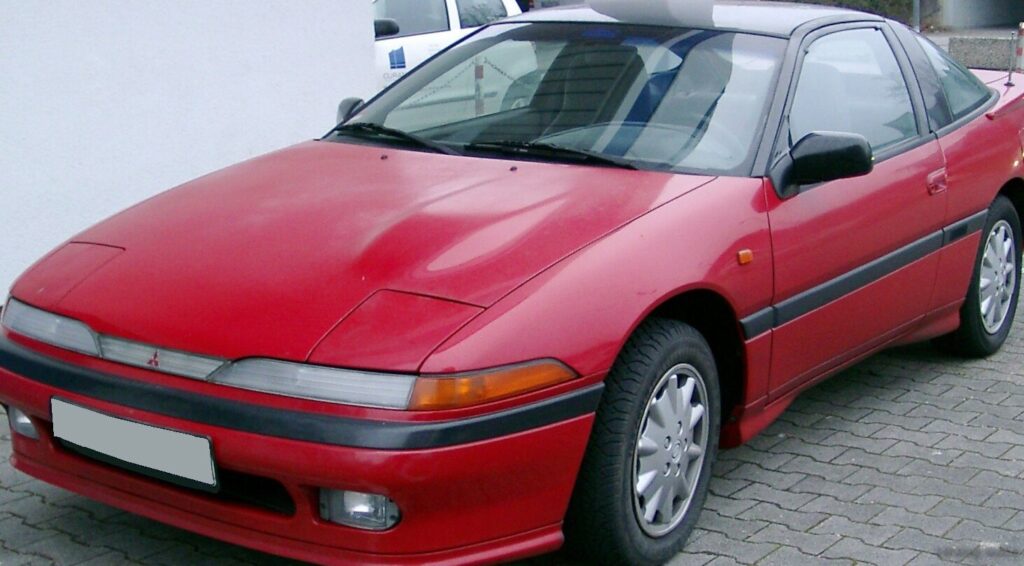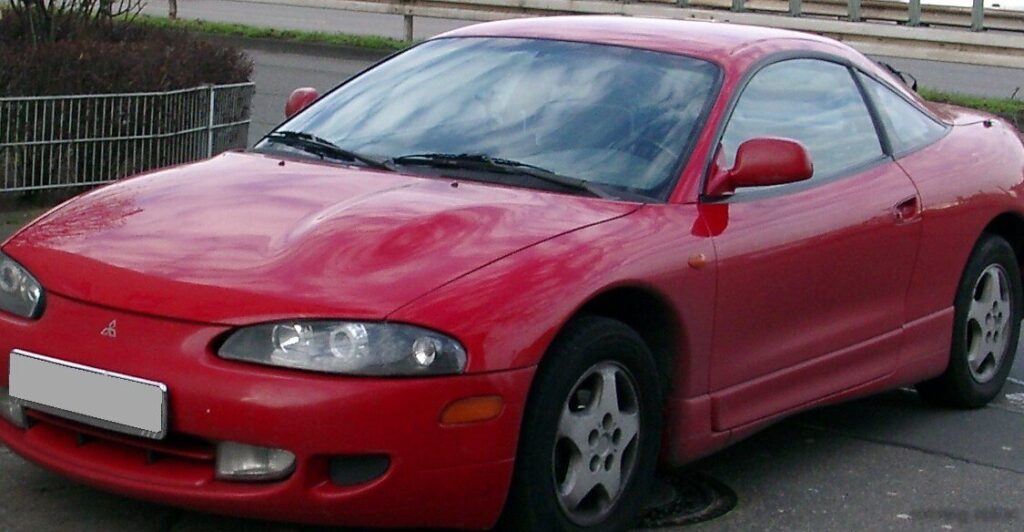
The Mitsubishi Eclipse II (2G) 2.0i 16V, produced from 1995 to 1996, represented a significant evolution of Mitsubishi’s popular sports coupe. Falling within the second generation of the Eclipse (1994-1999), designated the 2G, this variant occupied a middle ground in the lineup, offering a balance between performance and affordability. It was primarily marketed towards younger drivers seeking a stylish and relatively accessible entry into the sporty coupe segment. The 2G Eclipse was a key model for Mitsubishi in the North American market, where it competed with vehicles like the Honda Prelude, Toyota Celica, and Nissan 240SX.
Technical Specifications
| Brand | Mitsubishi |
| Model | Eclipse |
| Generation | Eclipse II (2G) |
| Type (Engine) | 2.0i 16V (141 Hp) |
| Start of production | 1995 |
| End of production | 1996 |
| Powertrain Architecture | Internal Combustion engine |
| Body type | Coupe, Liftback |
| Seats | 4 |
| Doors | 2 |
| Fuel consumption (urban) | 11.1 l/100 km (21.2 US mpg) |
| Fuel consumption (extra urban) | 5.8 l/100 km (40.6 US mpg) |
| Fuel consumption (combined) | 7.7 l/100 km (30.5 US mpg) |
| Fuel Type | Petrol (Gasoline) |
| Acceleration 0 – 100 km/h | 9.4 sec |
| Acceleration 0 – 62 mph | 9.4 sec |
| Acceleration 0 – 60 mph | 8.9 sec |
| Maximum speed | 220 km/h (136.7 mph) |
| Weight-to-power ratio | 8.8 kg/Hp |
| Weight-to-torque ratio | 7 kg/Nm |
| Power | 141 Hp @ 6000 rpm |
| Torque | 176 Nm @ 5000 rpm (129.81 lb.-ft. @ 5000 rpm) |
| Engine layout | Front, Transverse |
| Engine displacement | 1996 cm3 (121.8 cu. in.) |
| Number of cylinders | 4 |
| Engine configuration | Inline |
| Cylinder Bore | 87.5 mm (3.44 in.) |
| Piston Stroke | 83 mm (3.27 in.) |
| Compression ratio | 9.6:1 |
| Number of valves per cylinder | 4 |
| Fuel injection system | Multi-port manifold injection |
| Engine aspiration | Naturally aspirated engine |
| Valvetrain | DOHC |
| Kerb Weight | 1235-1280 kg (2722.71 – 2821.92 lbs.) |
| Max. weight | 1690-1750 kg (3725.81 – 3858.09 lbs.) |
| Max load | 455-470 kg (1003.1 – 1036.17 lbs.) |
| Fuel tank capacity | 60 l (15.85 US gal | 13.2 UK gal) |
| Length | 4375 mm (172.24 in.) |
| Width | 1735 mm (68.31 in.) |
| Height | 1295 mm (50.98 in.) |
| Wheelbase | 2510 mm (98.82 in.) |
| Front track | 1515 mm (59.65 in.) |
| Rear track | 1510 mm (59.45 in.) |
| Front overhang | 930 mm (36.61 in.) |
| Rear overhang | 935 mm (36.81 in.) |
| Ride height (ground clearance) | 145 mm (5.71 in.) |
| Approach angle | 11.5° |
| Departure angle | 15.8° |
| Drivetrain Architecture | Front wheel drive |
| Drive wheel | Front wheel drive |
| Number of gears | 5 gears, manual transmission |
| Front suspension | Independent multi-link suspension |
| Rear suspension | Independent multi-link suspension |
| Front brakes | Ventilated discs |
| Rear brakes | Ventilated discs |
| Assisting systems | ABS (Anti-lock braking system) |
| Steering type | Steering rack and pinion |
| Power steering | Hydraulic Steering |
| Tires size | 205/60 R15 |
| Wheel rims size | 15 |
Powertrain & Engine Architecture
The 2.0i 16V variant of the Eclipse 2G was powered by Mitsubishi’s 4G63 inline-four cylinder engine. This engine, displacing 1996cc, featured a double overhead camshaft (DOHC) valvetrain with four valves per cylinder, contributing to its relatively high output for its displacement. The engine utilized multi-port fuel injection, a common feature for the time, ensuring efficient fuel delivery. The 4G63 engine was known for its robustness and potential for modification, although in this particular iteration, it was tuned for a balance of performance and fuel economy. The engine’s 9.6:1 compression ratio was a compromise between power and the ability to run on readily available gasoline grades. This engine was not the most powerful in the 2G Eclipse lineup; the turbocharged and V6 versions offered significantly more horsepower.
Driving Characteristics
The 2.0i 16V Eclipse offered a reasonably engaging driving experience, though it wasn’t a performance leader. With 141 horsepower, acceleration from 0 to 60 mph took around 8.9 seconds, which was competitive for its class but noticeably slower than the turbocharged models. The five-speed manual transmission provided precise shifts, allowing drivers to make the most of the engine’s powerband. The front-wheel-drive configuration offered predictable handling, although it could exhibit some understeer when pushed hard. The suspension, featuring independent multi-link setups front and rear, provided a comfortable ride while maintaining reasonable body control. Compared to the more powerful V6 models, the 2.0i 16V felt less urgent in acceleration, but it offered better fuel economy and a more forgiving driving experience.
Equipment & Trim Levels
The 2.0i 16V Eclipse typically came standard with features like power windows, power locks, and an AM/FM stereo. Air conditioning was often standard, but could be optional depending on the specific package. Interior upholstery was typically cloth, with options for upgraded materials available. The dashboard layout was functional and driver-focused, with easy-to-read gauges. Optional extras included a sunroof, upgraded sound system, and alloy wheels. The trim level of the 2.0i 16V generally positioned it as a mid-range offering, bridging the gap between the base models and the more luxurious or performance-oriented trims.
Chassis & Braking
The Eclipse 2G featured a monocoque chassis designed for rigidity and crash safety. The suspension system, as mentioned, utilized independent multi-link setups at both ends, providing a good balance of ride comfort and handling. Braking duties were handled by ventilated discs on all four wheels, providing adequate stopping power. An Anti-lock Braking System (ABS) was standard, enhancing safety by preventing wheel lockup during hard braking. The steering system employed a rack-and-pinion setup with hydraulic power assistance, offering precise and responsive steering feel. The 2.0i 16V models typically featured a slightly softer suspension setup compared to the higher-performance trims, prioritizing ride comfort over ultimate handling precision.
Market Reception & Comparison
The 2.0i 16V Eclipse was generally well-received by automotive critics as a stylish and competent coupe. It was praised for its comfortable ride, responsive handling, and relatively fuel-efficient engine. However, some critics noted that its acceleration was not as impressive as some of its competitors, particularly the turbocharged models. Compared to the V6-powered Eclipse, the 2.0i 16V offered better fuel economy (around 30.5 US mpg combined) and a lower purchase price. In terms of reliability, the 4G63 engine proved to be durable and relatively trouble-free, although regular maintenance was essential.
Legacy
The Mitsubishi Eclipse 2G, including the 2.0i 16V variant, has maintained a loyal following among enthusiasts. The 4G63 engine, in particular, is highly regarded for its robustness and tunability. Today, well-maintained examples of the 2.0i 16V Eclipse are sought after by collectors and enthusiasts looking for a classic 1990s sports coupe. While not the fastest or most luxurious model in the lineup, the 2.0i 16V offers a compelling combination of style, affordability, and reliability, making it a desirable and increasingly rare vehicle in the used car market. Parts availability remains reasonable, contributing to its continued viability as a project car or daily driver.