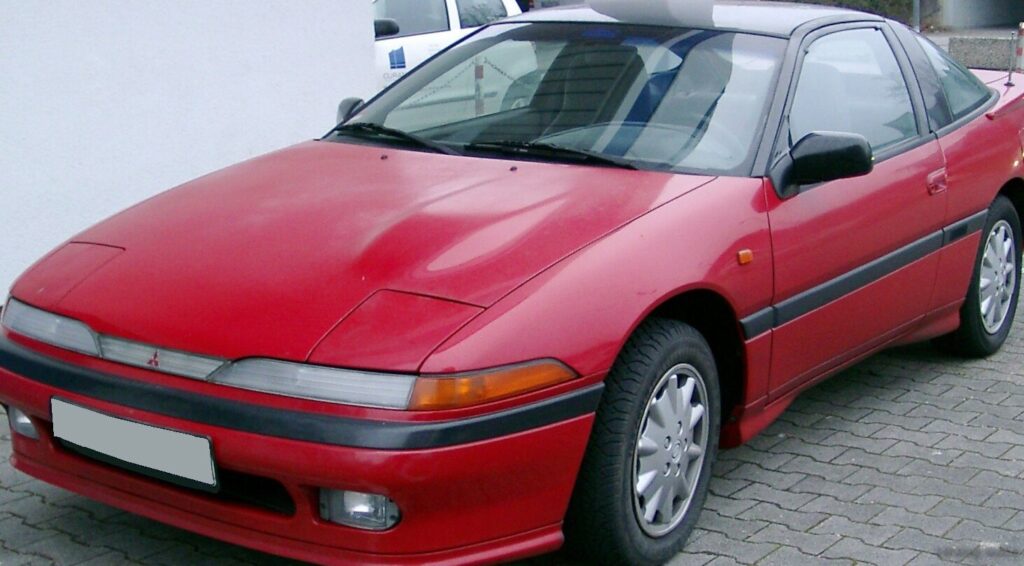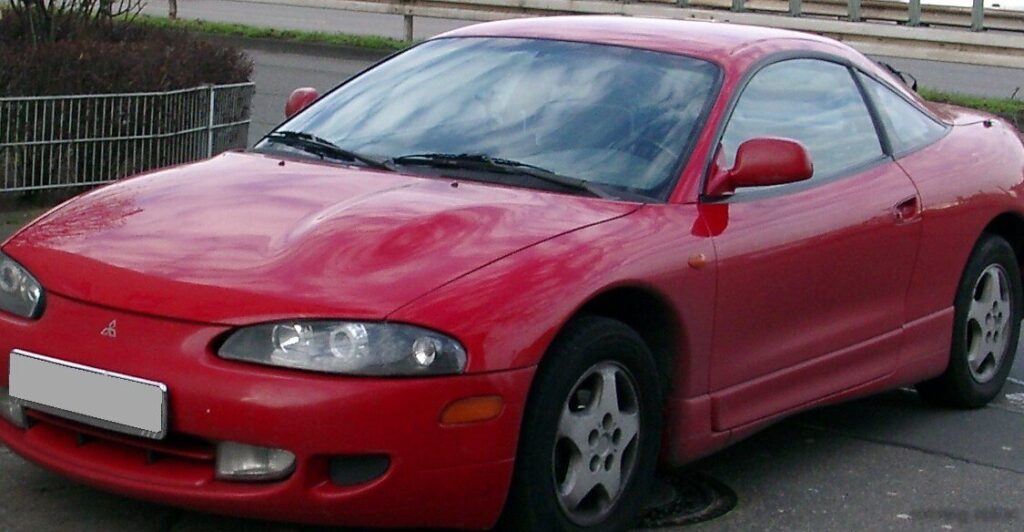
The Mitsubishi Eclipse II (2G) 2.0i 16V Automatic, produced from 1995 to 1996, represented a significant evolution of Mitsubishi’s popular sports coupe. Falling within the second generation of the Eclipse (1994-1999), designated the 2G, this variant occupied a middle ground in the lineup, offering a balance between performance and affordability. It was primarily marketed towards buyers seeking a stylish, comfortable coupe with a degree of sporting capability, without the higher price tag of the more powerful turbocharged models or the economy focus of the base engine options. The 2G Eclipse was a key model for Mitsubishi in the North American market, contributing to the brand’s growing reputation for sporty and reliable vehicles.
Technical Specifications
| Brand | Mitsubishi |
| Model | Eclipse |
| Generation | Eclipse II (2G) |
| Type (Engine) | 2.0i 16V (141 Hp) Automatic |
| Start of production | 1995 |
| End of production | 1996 |
| Powertrain Architecture | Internal Combustion engine |
| Body type | Coupe, Liftback |
| Seats | 4 |
| Doors | 2 |
| Fuel Type | Petrol (Gasoline) |
| Weight-to-power ratio | 9 kg/Hp, 111 Hp/tonne |
| Weight-to-torque ratio | 7.2 kg/Nm, 138.6 Nm/tonne |
| Power | 141 Hp @ 6000 rpm |
| Power per litre | 70.6 Hp/l |
| Torque | 176 Nm @ 5000 rpm (129.81 lb.-ft. @ 5000 rpm) |
| Engine layout | Front, Transverse |
| Engine Model/Code | 420A |
| Engine displacement | 1996 cm3 (121.8 cu. in.) |
| Number of cylinders | 4 |
| Engine configuration | Inline |
| Cylinder Bore | 87.5 mm (3.44 in.) |
| Piston Stroke | 83 mm (3.27 in.) |
| Compression ratio | 9.6:1 |
| Number of valves per cylinder | 4 |
| Fuel injection system | Multi-port manifold injection |
| Engine aspiration | Naturally aspirated engine |
| Valvetrain | DOHC |
| Kerb Weight | 1270-1315 kg (2799.87 – 2899.08 lbs.) |
| Max. weight | 1750 kg (3858.09 lbs.) |
| Max load | 435-480 kg (959.01 – 1058.22 lbs.) |
| Fuel tank capacity | 60 l (15.85 US gal | 13.2 UK gal) |
| Length | 4375 mm (172.24 in.) |
| Width | 1735 mm (68.31 in.) |
| Height | 1295 mm (50.98 in.) |
| Wheelbase | 2510 mm (98.82 in.) |
| Front track | 1515 mm (59.65 in.) |
| Rear (Back) track | 1510 mm (59.45 in.) |
| Front overhang | 930 mm (36.61 in.) |
| Rear overhang | 935 mm (36.81 in.) |
| Ride height (ground clearance) | 145 mm (5.71 in.) |
| Drag coefficient (Cd) | 0.29 |
| Approach angle | 11.5° |
| Departure angle | 15.8° |
| Drivetrain Architecture | The Internal combustion engine (ICE) drives the front wheels of the vehicle. |
| Drive wheel | Front wheel drive |
| Number of gears and type of gearbox | 4 gears, automatic transmission |
| Front suspension | Independent multi-link suspension |
| Rear suspension | Independent multi-link suspension |
| Front brakes | Ventilated discs |
| Rear brakes | Ventilated discs |
| Assisting systems | ABS (Anti-lock braking system) |
| Steering type | Steering rack and pinion |
| Power steering | Hydraulic Steering |
| Tires size | 205/60 R15 |
| Wheel rims size | 15 |
Powertrain & Engine Architecture
The heart of the 2.0i 16V Automatic Eclipse was the 420A engine, a 1.996-liter (2.0L) inline-four cylinder powerplant. This engine featured a double overhead camshaft (DOHC) valvetrain operating four valves per cylinder, contributing to its relatively high output for a naturally aspirated engine of its displacement. Fuel delivery was handled by a multi-port fuel injection system, optimizing combustion efficiency and responsiveness. The 420A engine produced 141 horsepower at 6000 rpm and 176 Nm (129.81 lb-ft) of torque at 5000 rpm. The engine’s design prioritized smooth operation and reasonable fuel economy over outright performance. Paired with the engine was a four-speed automatic transmission. This transmission was chosen to provide ease of use and accessibility for a wider range of drivers, particularly in the North American market where automatic transmissions were, and remain, highly popular.
Driving Characteristics
The 2.0i 16V Automatic Eclipse offered a comfortable and predictable driving experience. While not as exhilarating as the turbocharged GSX or GS-T models, it provided adequate power for everyday driving and occasional spirited runs. The automatic transmission, while convenient, did result in some power loss compared to the available five-speed manual. Gear ratios were tuned for acceleration and cruising, but downshifts could sometimes feel sluggish. The weight-to-power ratio of around 9 kg/hp meant that acceleration was respectable, but not particularly quick. Compared to the manual transmission version of the same engine, the automatic offered a more relaxed driving experience, but at the expense of some driver engagement and fuel efficiency.
Equipment & Trim Levels
The 2.0i 16V Automatic typically came equipped with a reasonable level of standard features. These included power windows, power locks, air conditioning, and an AM/FM stereo. Interior upholstery was typically cloth, with a choice of color schemes. Optional extras included a sunroof, upgraded sound system, and alloy wheels. The trim level often dictated the availability of these options. The automatic transmission variant was often bundled with convenience packages that included features like cruise control and keyless entry. The interior dashboard configuration was fairly standard for the era, with analog gauges and a straightforward layout.
Chassis & Braking
The Eclipse II utilized an independent multi-link suspension system at both the front and rear, providing a comfortable ride and decent handling characteristics. The front suspension was designed to minimize body roll during cornering, while the rear suspension aimed to maintain stability. Braking duties were handled by ventilated disc brakes on all four wheels, providing adequate stopping power for the vehicle’s weight and performance. An Anti-lock Braking System (ABS) was included as standard equipment, enhancing safety by preventing wheel lockup during hard braking. The chassis was designed to balance rigidity with weight savings, contributing to the car’s overall handling dynamics.
Market Reception & Comparison
The 2.0i 16V Automatic Eclipse received generally positive reviews from automotive critics. It was praised for its stylish design, comfortable interior, and reasonable performance. However, some critics noted that the automatic transmission dulled the driving experience compared to the manual version. Fuel economy was considered average for its class. Compared to the turbocharged GSX and GS-T models, the 2.0i 16V Automatic offered a more affordable entry point into the Eclipse lineup, but lacked the same level of performance. Compared to other coupes in its price range, such as the Honda Prelude or Toyota Celica, the Eclipse offered a distinctive styling and a slightly more aggressive driving experience.
Legacy
The Mitsubishi Eclipse II (2G) 2.0i 16V Automatic has become a popular choice among enthusiasts and collectors. The 420A engine, while not known for being exceptionally powerful, is generally considered reliable and relatively easy to maintain. The automatic transmission, while not as sought after as the manual, offers a convenient and comfortable driving experience. Today, well-maintained examples of this variant can be found on the used car market, often at affordable prices. Its enduring appeal lies in its combination of sporty styling, comfortable features, and relative reliability, making it a desirable classic for those seeking a taste of 1990s Japanese automotive design.