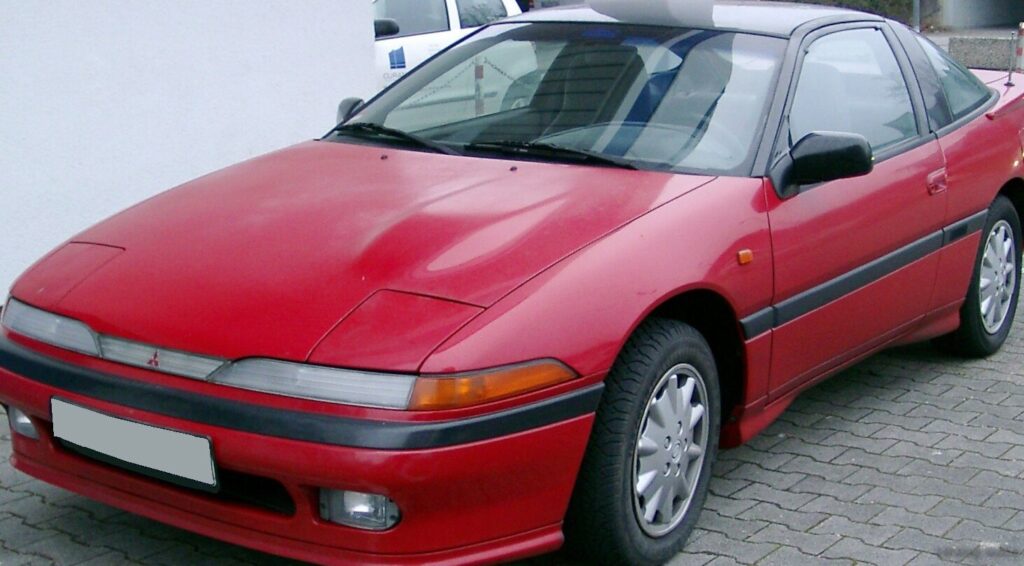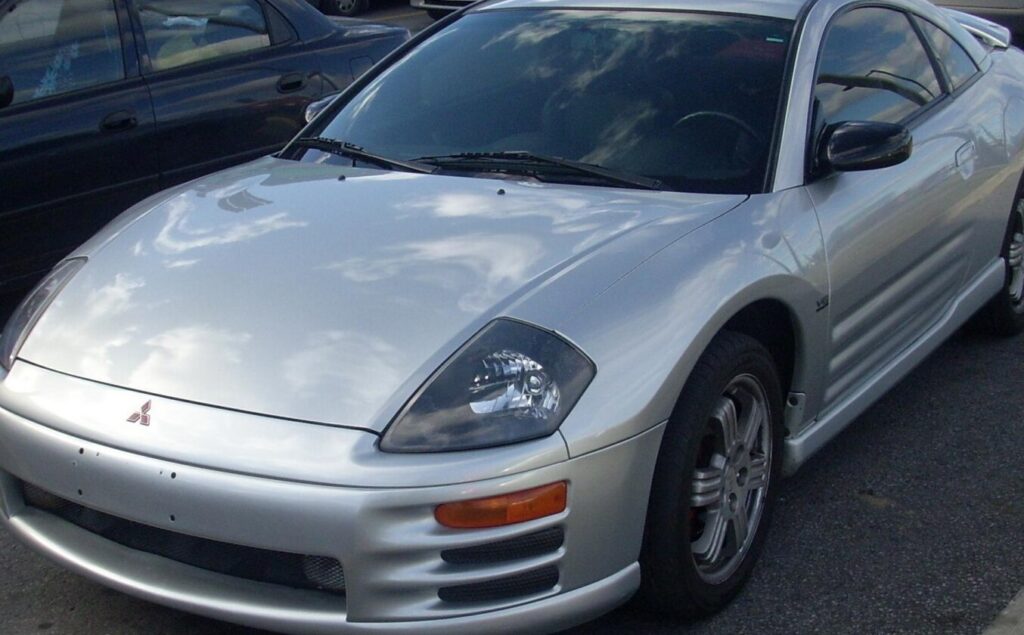
The Mitsubishi Eclipse III (3G), produced between 1999 and 2002, represented a significant evolution for the popular Eclipse sports coupe and liftback. This generation, built on the DS platform (shared with the Chrysler Sebring and Dodge Stratus), aimed to broaden the Eclipse’s appeal with a more refined interior and a wider range of engine options. The 2.4-liter inline-four cylinder variant, producing 142 horsepower and paired with a four-speed automatic transmission, occupied a middle ground in the lineup, offering a balance between performance and affordability. It was positioned as a step up from the base 2.0-liter engine, while remaining more accessible than the high-performance turbocharged and V6 options.
Technical Specifications
| Brand | Mitsubishi |
| Model | Eclipse |
| Generation | Eclipse III (3G) |
| Type (Engine) | 2.4 i 16V (142 Hp) Automatic |
| Start of production | 1999 |
| End of production | 2002 |
| Powertrain Architecture | Internal Combustion engine |
| Body type | Coupe, Liftback |
| Seats | 4 |
| Doors | 3 |
| Fuel consumption (urban) | 10.2 l/100 km (23.1 US mpg) |
| Fuel consumption (extra urban) | 7.6 l/100 km (30.9 US mpg) |
| Fuel Type | Petrol (Gasoline) |
| Weight-to-power ratio | 9.3 kg/Hp |
| Weight-to-torque ratio | 6.2 kg/Nm |
| Power | 142 Hp @ 5500 rpm |
| Power per litre | 60.4 Hp/l |
| Torque | 214 Nm @ 4000 rpm (157.84 lb.-ft. @ 4000 rpm) |
| Engine layout | Front, Transverse |
| Engine displacement | 2351 cm3 (143.47 cu. in.) |
| Number of cylinders | 4 |
| Engine configuration | Inline |
| Cylinder Bore | 86.5 mm (3.41 in.) |
| Piston Stroke | 100 mm (3.94 in.) |
| Compression ratio | 9:1 |
| Number of valves per cylinder | 4 |
| Fuel injection system | Multi-port manifold injection |
| Engine aspiration | Naturally aspirated engine |
| Valvetrain | SOHC |
| Coolant Capacity | 7 l (7.4 US qt | 6.16 UK qt) |
| Kerb Weight | 1325-1365 kg (2921.12 – 3009.31 lbs.) |
| Max. weight | 1750 kg (3858.09 lbs.) |
| Max load | 385-425 kg (848.78 – 936.96 lbs.) |
| Fuel tank capacity | 62 l (16.38 US gal | 13.64 UK gal) |
| Length | 4455 mm (175.39 in.) |
| Width | 1750 mm (68.9 in.) |
| Height | 1310 mm (51.57 in.) |
| Wheelbase | 2560 mm (100.79 in.) |
| Front track | 1510 mm (59.45 in.) |
| Rear track | 1510 mm (59.45 in.) |
| Front overhang | 975 mm (38.39 in.) |
| Rear overhang | 920 mm (36.22 in.) |
| Ride height (ground clearance) | 148 mm (5.83 in.) |
| Drivetrain Architecture | Front wheel drive |
| Number of gears | 4 |
| Gearbox type | Automatic transmission |
| Front suspension | Independent type McPherson |
| Rear suspension | Independent multi-link suspension |
| Front brakes | Ventilated discs |
| Rear brakes | Drum |
| Steering type | Steering rack and pinion |
| Power steering | Hydraulic Steering |
Powertrain & Engine Architecture
The heart of this Eclipse variant is the 4G63 2.4-liter inline-four engine. This engine, while not as technologically advanced as the later 4G64 found in some models, is a robust and relatively simple design. It features a single overhead camshaft (SOHC) valvetrain operating four valves per cylinder. Fuel delivery is handled by a multi-port fuel injection system, providing adequate atomization for efficient combustion. The engine’s 9:1 compression ratio strikes a balance between performance and the ability to run on regular unleaded gasoline. The four-speed automatic transmission, while offering smooth shifts, is a somewhat dated design by modern standards. It lacks the efficiency and responsiveness of newer transmissions with more gears. The transmission’s gear ratios are tuned for comfortable cruising rather than aggressive acceleration.
Driving Characteristics
The 2.4-liter automatic Eclipse delivers a comfortable and predictable driving experience. With 142 horsepower, acceleration is adequate for everyday driving, but it won’t pin you back in your seat. The automatic transmission tends to prioritize fuel economy over outright performance, resulting in somewhat leisurely shifts. Compared to the five-speed manual transmission available on other Eclipse models, the automatic version feels noticeably less engaging. The manual transmission allowed for better control and quicker acceleration. The 2.4L automatic also falls short of the performance offered by the turbocharged Eclipse GS-T or the V6-powered Eclipse GT. However, it provides a smoother and more convenient driving experience for those who prefer not to shift gears themselves.
Equipment & Trim Levels
The 2.4-liter automatic Eclipse typically came standard with features such as air conditioning, power windows and locks, and an AM/FM stereo. Higher trim levels, such as the GS, added features like alloy wheels, a sunroof, and upgraded interior upholstery. Optional extras included a premium sound system, leather seats, and a rear spoiler. The interior design was generally functional and well-laid-out, although the materials used were not particularly luxurious. The dashboard featured a straightforward instrument cluster and easy-to-use controls.
Chassis & Braking
The Eclipse III utilized an independent McPherson strut suspension in the front and an independent multi-link suspension in the rear. This setup provided a comfortable ride and decent handling characteristics. The front brakes were ventilated discs, offering good stopping power, while the rear brakes were drums, which were less effective. The steering was rack-and-pinion with hydraulic power assist, providing a responsive and precise feel. Stabilizer bars were included on both the front and rear axles to reduce body roll during cornering.
Market Reception & Comparison
The 2.4-liter automatic Eclipse was generally well-received by critics as a practical and affordable sports coupe. It offered a good balance of features and performance for the price. However, some reviewers criticized the automatic transmission for its lack of responsiveness and the engine for its relatively modest power output. Compared to the manual transmission versions, the automatic models were less popular among enthusiasts. In terms of fuel economy, the 2.4-liter automatic Eclipse achieved around 23 mpg in the city and 31 mpg on the highway, which was comparable to other coupes in its class. Reliability was generally good, although some owners reported issues with the automatic transmission over time.
Legacy
The Mitsubishi Eclipse III 2.4-liter automatic has become a relatively affordable and accessible entry point into the Eclipse ownership experience. While not as sought-after as the turbocharged or V6 models, it remains a popular choice for those looking for a reliable and stylish coupe. The 4G63 engine is known for its durability and relatively simple maintenance requirements. However, finding parts for older models can sometimes be challenging. Today, these Eclipses are often found in the used car market, offering a nostalgic glimpse into the early 2000s sports coupe scene. They represent a blend of practicality, affordability, and a touch of sporty flair.