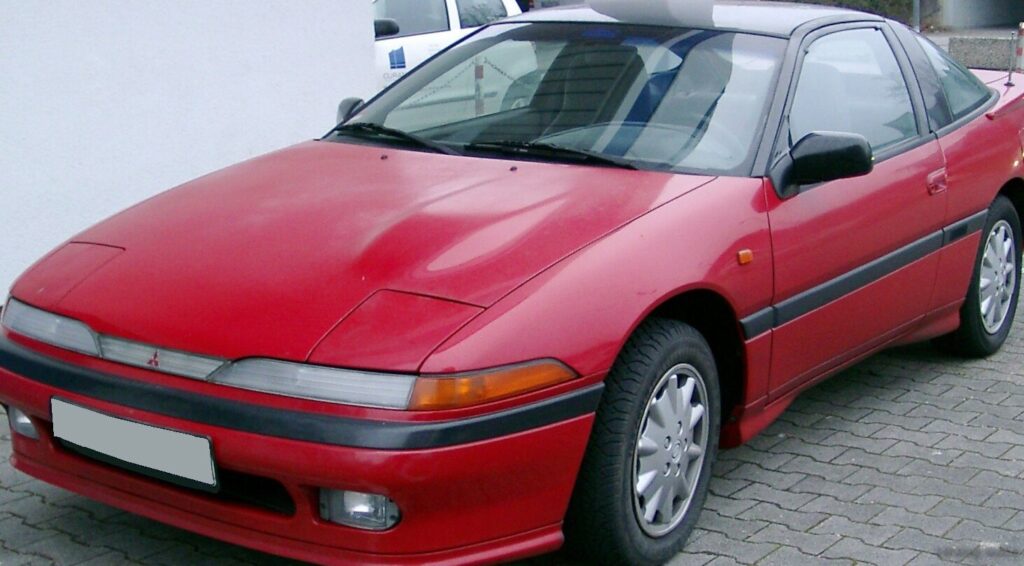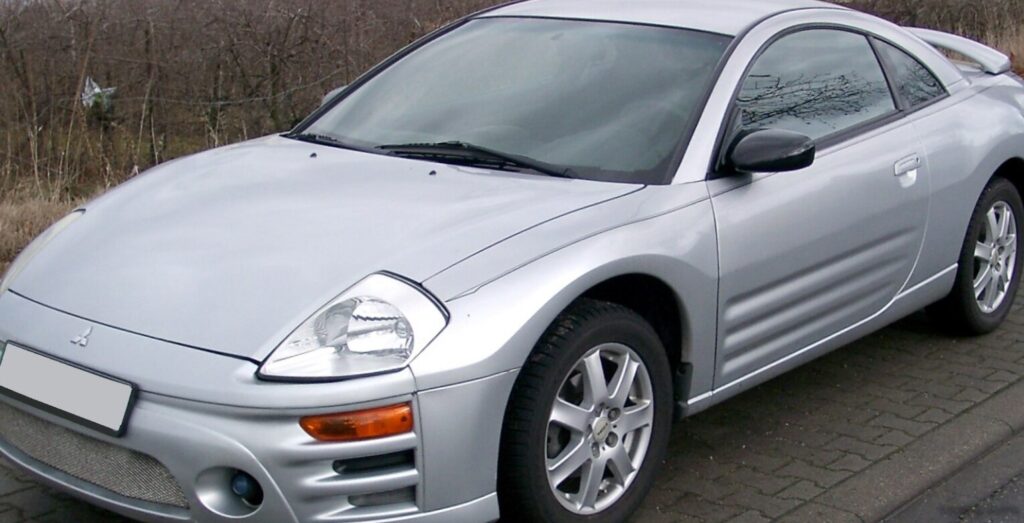
The Mitsubishi Eclipse III (3G), specifically the facelifted version produced from 2003 to 2005, represented a significant evolution for the popular sports coupe. This generation, built on the DS platform (shared with the Chrysler Sebring and Dodge Stratus), aimed to broaden the Eclipse’s appeal with a more refined interior and a wider range of engine options. The 3.0-liter V6 variant paired with an automatic transmission occupied a premium position within the lineup, offering a balance of performance and convenience. It was marketed towards buyers seeking a sporty, yet comfortable, grand tourer experience.
Technical Specifications
| Brand | Mitsubishi |
| Model | Eclipse |
| Generation | Eclipse III (3G, facelift 2003) |
| Type (Engine) | 3.0 V6 (210 Hp) Automatic |
| Start of production | 2003 |
| End of production | 2005 |
| Powertrain Architecture | Internal Combustion engine |
| Body type | Coupe, Liftback |
| Seats | 4 |
| Doors | 2 |
| Fuel consumption (urban) | 11.8 l/100 km (19.9 US mpg) |
| Fuel consumption (extra urban) | 8.7 l/100 km (27 US mpg) |
| Fuel Type | Petrol (Gasoline) |
| Weight-to-power ratio | 7.1 kg/Hp |
| Weight-to-torque ratio | 5.4 kg/Nm |
| Power | 210 Hp @ 5750 rpm |
| Power per litre | 70.7 Hp/l |
| Torque | 278 Nm @ 3750 rpm (205.04 lb.-ft. @ 3750 rpm) |
| Maximum engine speed | 6200 rpm |
| Engine layout | Front, Transverse |
| Engine Model/Code | 6G72 |
| Engine displacement | 2972 cm3 (181.36 cu. in.) |
| Number of cylinders | 6 |
| Engine configuration | V-engine |
| Cylinder Bore | 91.1 mm (3.59 in.) |
| Piston Stroke | 76 mm (2.99 in.) |
| Compression ratio | 10:1 |
| Number of valves per cylinder | 4 |
| Fuel injection system | Multi-port manifold injection |
| Engine aspiration | Naturally aspirated engine |
| Valvetrain | SOHC |
| Engine oil capacity | 4.3 l (4.54 US qt | 3.78 UK qt) |
| Coolant capacity | 8 l (8.45 US qt | 7.04 UK qt) |
| Kerb Weight | 1500 kg (3306.93 lbs.) |
| Max. weight | 1820 kg (4012.41 lbs.) |
| Max load | 320 kg (705.48 lbs.) |
| Trunk (boot) space (minimum) | 479 l (16.92 cu. ft.) |
| Fuel tank capacity | 62 l (16.38 US gal | 13.64 UK gal) |
| Length | 4490 mm (176.77 in.) |
| Width | 1750 mm (68.9 in.) |
| Height | 1310 mm (51.57 in.) |
| Wheelbase | 2560 mm (100.79 in.) |
| Front track | 1510 mm (59.45 in.) |
| Rear track | 1510 mm (59.45 in.) |
| Ride height (ground clearance) | 150 mm (5.91 in.) |
| Minimum turning circle | 12.2 m (40.03 ft.) |
| Drivetrain Architecture | Front wheel drive |
| Number of gears and type of gearbox | 4 gears, automatic transmission |
| Front suspension | Independent type McPherson, Transverse stabilizer |
| Rear suspension | Independent multi-link suspension, Transverse stabilizer |
| Front brakes | Ventilated discs, 276×26 mm |
| Rear brakes | Disc, 262×10 mm |
| Assisting systems | ABS (Anti-lock braking system) |
| Steering type | Steering rack and pinion |
| Power steering | Hydraulic Steering |
| Tires size | 215/50 R17 |
| Wheel rims size | 6.5J x 17 |
INTRODUCTION
The 2003-2005 Mitsubishi Eclipse 3.0 V6 Automatic represented the pinnacle of performance for the third-generation Eclipse, particularly in the North American market. Positioned as a step up from the base 2.4-liter four-cylinder models and the turbocharged GS-T, this variant aimed to deliver a more refined and powerful driving experience. The facelift brought subtle styling updates, but the core mechanicals remained largely unchanged from the earlier 3G models. It competed directly with other sporty coupes like the Honda Accord Coupe V6, Toyota Camry Solara, and Ford Mustang.
Powertrain & Engine Architecture
At the heart of this Eclipse variant lies the 6G72 3.0-liter V6 engine. This naturally aspirated engine, a staple of Mitsubishi’s lineup, featured a single overhead camshaft (SOHC) valvetrain and multi-port fuel injection. The 6G72 is known for its robust construction and relatively simple design, contributing to its overall reliability. The engine produced 210 horsepower at 5750 rpm and 278 lb-ft of torque at 3750 rpm. The automatic transmission was a four-speed unit, designed to provide smooth shifts and convenient operation. While not as sporty as a manual transmission, it suited the grand touring intentions of this trim level. The transmission’s gear ratios were tuned for a balance of acceleration and fuel efficiency, prioritizing comfortable cruising over outright performance.
Driving Characteristics
The 3.0 V6 Automatic Eclipse offered a noticeable step up in performance compared to the four-cylinder models. Acceleration was brisk, and the engine provided ample torque for everyday driving and highway passing. However, it didn’t possess the sharp, engaging feel of the turbocharged GS-T. The automatic transmission, while smooth, could feel somewhat sluggish during quick downshifts. The front-wheel-drive layout, while common for its class, limited traction during aggressive acceleration. The suspension was tuned for comfort, providing a relatively smooth ride, but it wasn’t as firm or responsive as some of its more performance-oriented competitors. The weight distribution, favoring the front end, contributed to a slight understeer in corners.
Equipment & Trim Levels
The 3.0 V6 Automatic Eclipse typically came well-equipped, reflecting its position as a premium trim level. Standard features often included air conditioning, power windows and locks, a CD player with multiple speakers, and cruise control. Higher-spec models could be equipped with leather upholstery, a sunroof, upgraded audio systems (often including a premium sound system from Rockford Fosgate), and automatic climate control. The interior design was generally considered modern for its time, with a driver-focused layout and comfortable seating. The liftback configuration offered a degree of practicality, providing a reasonably spacious cargo area.
Chassis & Braking
The Eclipse 3G utilized an independent McPherson strut suspension in the front and an independent multi-link suspension in the rear. This setup aimed to provide a balance of ride comfort and handling. Stabilizer bars were included at both ends to reduce body roll during cornering. Braking duties were handled by ventilated discs in the front and solid discs in the rear. Anti-lock brakes (ABS) were standard, enhancing safety and control during emergency braking situations. The braking system was adequate for the vehicle’s weight and performance, but it wasn’t particularly powerful compared to some of its competitors.
Market Reception & Comparison
Critics generally praised the 3.0 V6 Eclipse for its smooth engine, comfortable ride, and well-equipped interior. However, some reviewers noted that the automatic transmission lacked the responsiveness of a manual gearbox and that the front-wheel-drive layout limited its handling potential. Compared to the turbocharged GS-T, the V6 model offered less outright performance but greater refinement and ease of use. Fuel economy was reasonable for a V6-powered coupe, averaging around 19 mpg in the city and 27 mpg on the highway. Reliability was generally good, although some owners reported minor issues with the automatic transmission and electrical components.
Legacy
The Mitsubishi Eclipse III 3.0 V6 Automatic has become a relatively affordable and accessible entry point into the world of sporty coupes. While not as highly sought after as the turbocharged GS-T models, it remains a popular choice for enthusiasts seeking a comfortable and reliable grand tourer. The 6G72 engine is known for its durability, and parts availability is generally good. However, like any older vehicle, regular maintenance is crucial to ensure its continued reliability. Today, these Eclipses are often found in good condition, offering a nostalgic driving experience and a reminder of Mitsubishi’s once-strong presence in the American sports coupe market.