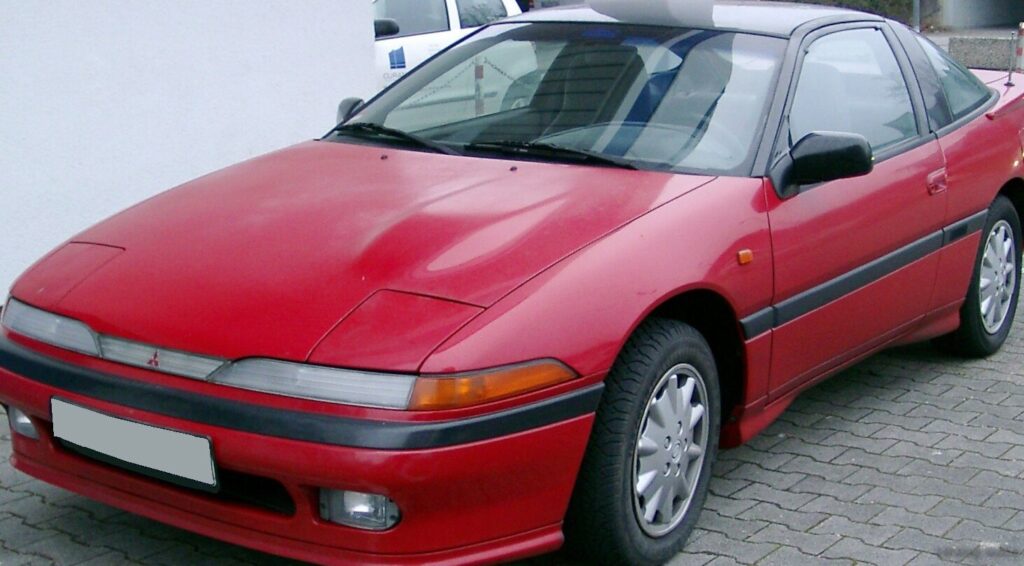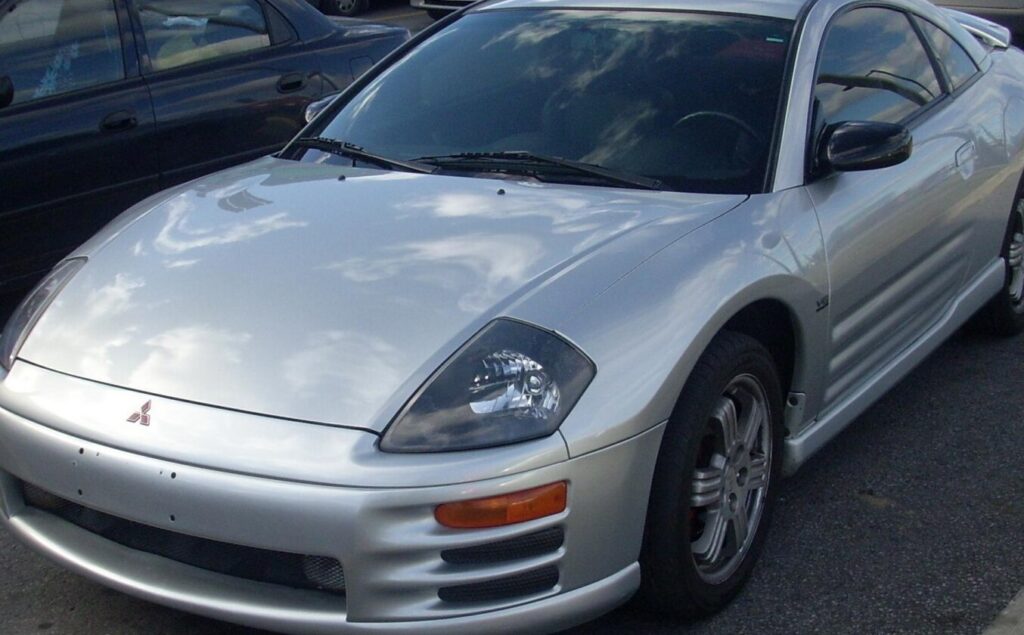
The Mitsubishi Eclipse III (3G) GT 3.0 i V6 24V, produced between 1999 and 2002, represented a significant evolution in the Eclipse lineage. Falling within the third generation (1999-2005) of the Eclipse, this variant occupied a performance-oriented niche, positioned above the base models and below the more specialized turbocharged variants like the GS-T and GSX. The 3G Eclipse, built on the shared Diamond Star Motors (DSM) platform also used by the Eagle Talon and Plymouth Laser, aimed to blend sporty styling with respectable performance and everyday usability, primarily targeting the North American market. This generation marked a shift away from the overtly aggressive styling of the 2G Eclipse towards a more refined and contemporary aesthetic.
Technical Specifications
| Brand | Mitsubishi |
| Model | Eclipse |
| Generation | Eclipse III (3G) |
| Type (Engine) | GT 3.0 i V6 24V (200 Hp) |
| Start of production | 1999 |
| End of production | 2002 |
| Powertrain Architecture | Internal Combustion engine |
| Body type | Coupe, Liftback |
| Seats | 4 |
| Doors | 3 |
| Fuel consumption (urban) | 11.8 l/100 km (19.9 US mpg) |
| Fuel consumption (extra urban) | 8.4 l/100 km (28 US mpg) |
| Fuel Type | Petrol (Gasoline) |
| Acceleration 0 – 100 km/h | 7.3 sec |
| Acceleration 0 – 62 mph | 7.3 sec |
| Acceleration 0 – 60 mph | 6.9 sec |
| Maximum speed | 225 km/h (139.81 mph) |
| Weight-to-power ratio | 7.1 kg/Hp |
| Weight-to-torque ratio | 5.1 kg/Nm |
| Power | 200 Hp @ 5500 rpm |
| Power per litre | 67.3 Hp/l |
| Torque | 278 Nm @ 4500 rpm (205.04 lb.-ft. @ 4500 rpm) |
| Engine layout | Front, Transverse |
| Engine displacement | 2972 cm3 (181.36 cu. in.) |
| Number of cylinders | 6 |
| Engine configuration | V-engine |
| Cylinder Bore | 91.1 mm (3.59 in.) |
| Piston Stroke | 76 mm (2.99 in.) |
| Compression ratio | 9:1 |
| Number of valves per cylinder | 4 |
| Fuel injection system | Multi-port manifold injection |
| Engine aspiration | Naturally aspirated engine |
| Valvetrain | SOHC |
| Engine oil capacity | 4 l (4.23 US qt | 3.52 UK qt) |
| Coolant capacity | 8 l (8.45 US qt | 7.04 UK qt) |
| Kerb Weight | 1415-1460 kg (3119.54 – 3218.75 lbs.) |
| Max. weight | 1810 kg (3990.37 lbs.) |
| Max load | 350-395 kg (771.62 – 870.83 lbs.) |
| Trunk (boot) space (minimum) | 480 l (16.95 cu. ft.) |
| Fuel tank capacity | 62 l (16.38 US gal | 13.64 UK gal) |
| Length | 4455 mm (175.39 in.) |
| Width | 1750 mm (68.9 in.) |
| Height | 1310 mm (51.57 in.) |
| Wheelbase | 2560 mm (100.79 in.) |
| Front track | 1510 mm (59.45 in.) |
| Rear track | 1510 mm (59.45 in.) |
| Front overhang | 975 mm (38.39 in.) |
| Rear overhang | 920 mm (36.22 in.) |
| Ride height (ground clearance) | 150 mm (5.91 in.) |
| Drivetrain Architecture | Front wheel drive |
| Drive wheel | Front wheel drive |
| Number of gears | 5 gears, manual transmission |
| Front suspension | Independent type McPherson |
| Rear suspension | Independent multi-link suspension |
| Front brakes | Ventilated discs |
| Rear brakes | Disc |
| Steering type | Steering rack and pinion |
| Power steering | Hydraulic Steering |
| Tires size | 215/50 R17 |
| Wheel rims size | 17 |
INTRODUCTION
The 1999-2002 Mitsubishi Eclipse GT 3.0 V6 was a key offering in the third-generation Eclipse lineup. It aimed to provide a balance between performance and affordability, appealing to buyers who desired a sporty coupe without the higher price tag and complexity of the turbocharged GS-T or GSX models. The 3G Eclipse represented a departure from the more angular design of its predecessor, adopting a smoother, more aerodynamic profile. The GT V6, with its naturally aspirated 3.0-liter engine, served as a popular choice for those prioritizing smooth power delivery and relative simplicity.
Powertrain & Engine Architecture
At the heart of the Eclipse GT 3.0 lay the 6A13 V6 engine. This 2.972-liter (181.36 cubic inches) engine featured a 60-degree V-configuration, single overhead camshaft (SOHC) valvetrain with four valves per cylinder (24V). The engine utilized multi-port fuel injection, delivering fuel directly into each intake port for optimized combustion. The 6A13 produced 200 horsepower at 5500 rpm and 278 Nm (205 lb-ft) of torque at 4500 rpm. The engine’s 9:1 compression ratio contributed to its smooth operation and reasonable fuel efficiency. The GT 3.0 was exclusively offered with a five-speed manual transmission, providing drivers with direct control over the engine’s power. This transmission was chosen to complement the V6’s characteristics, offering a more engaging driving experience than an automatic option would have.
Driving Characteristics
The Eclipse GT 3.0 V6 offered a noticeably more refined driving experience compared to the earlier turbocharged models. While lacking the raw acceleration of the GS-T or GSX, the V6 provided a broad, usable powerband. Acceleration from 0-60 mph was achieved in approximately 6.9 seconds, and the car could reach a top speed of 139.81 mph. The five-speed manual transmission allowed drivers to keep the engine in its sweet spot, maximizing performance. The gear ratios were well-matched to the engine’s torque curve, providing strong acceleration in everyday driving situations. Handling was competent, thanks to the independent McPherson strut front suspension and independent multi-link rear suspension. The steering was responsive, providing good feedback to the driver.
Equipment & Trim Levels
The GT trim level included a number of standard features designed to enhance comfort and convenience. These typically included air conditioning, power windows and locks, a CD player, and cloth upholstery. Optional extras included a sunroof, upgraded audio system, and alloy wheels. The interior design was functional and driver-focused, with a clear instrument cluster and well-placed controls. The GT trim generally offered a more upscale interior appearance compared to the base RS models, with improved materials and detailing.
Chassis & Braking
The Eclipse GT 3.0 featured a front-wheel-drive layout. The front suspension utilized independent McPherson struts, while the rear employed an independent multi-link setup. This suspension configuration provided a good balance between ride comfort and handling performance. Braking duties were handled by ventilated discs at the front and solid discs at the rear. The braking system was adequate for the car’s performance capabilities, providing confident stopping power in most driving conditions. The car rode on 17-inch alloy wheels, typically fitted with 215/50 R17 tires.
Market Reception & Comparison
The Eclipse GT 3.0 V6 was generally well-received by automotive critics. It was praised for its smooth engine, comfortable ride, and attractive styling. Compared to the turbocharged GS-T and GSX models, the GT V6 offered a more accessible price point and lower running costs. However, it lacked the outright performance of its turbocharged siblings. Fuel economy was respectable for a V6-powered coupe, averaging around 19.9 mpg in the city and 28 mpg on the highway. Reliability was generally good, although some owners reported issues with the engine’s timing belt and sensors.
Legacy
The Mitsubishi Eclipse GT 3.0 V6 remains a popular choice among enthusiasts today. Its combination of style, performance, and affordability has made it a sought-after used car. The 6A13 V6 engine is known for its durability and relatively simple maintenance requirements. However, as with any older vehicle, regular maintenance is essential to ensure long-term reliability. The Eclipse GT 3.0 V6 represents a significant chapter in Mitsubishi’s history, embodying the brand’s commitment to sporty and stylish automobiles. Well-maintained examples continue to provide an enjoyable driving experience and a nostalgic connection to the early 2000s.